




Floral Tapestry Fire Screen
These floral tapestry fire screens combine practical hearth protection with intricate needlework, offering both warmth and decorative charm to any period interior.
Floral Tapestry Fire Screen
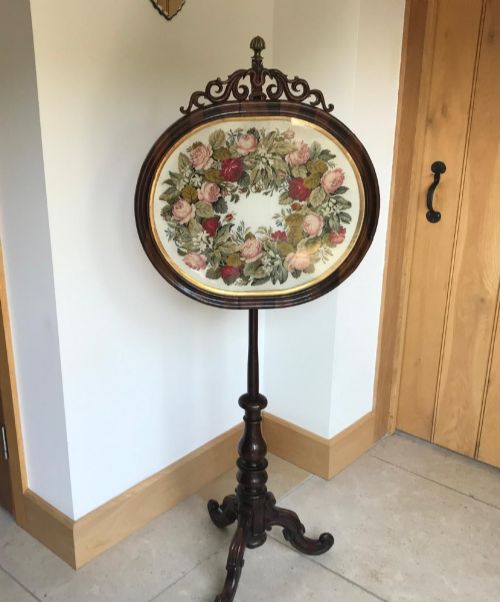
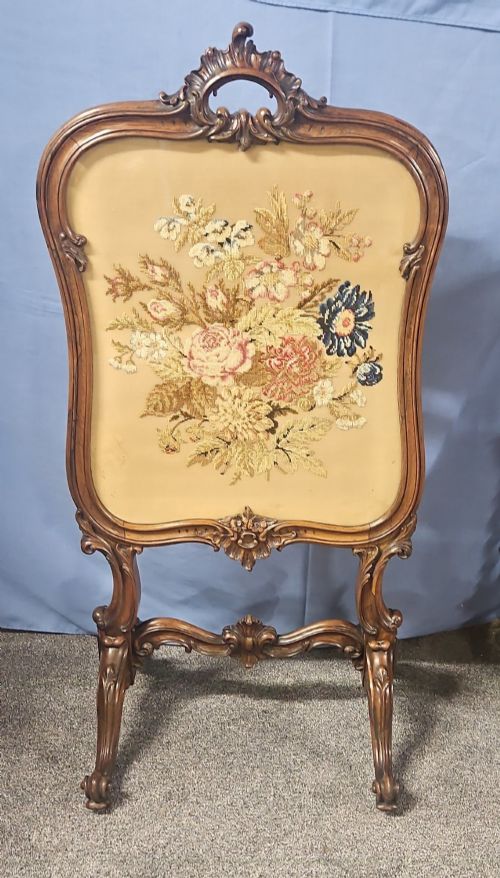
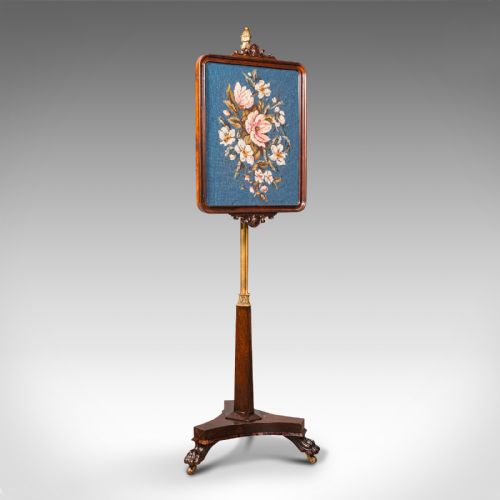
A floral tapestry fire screen serves to shield a room's occupants from the intense heat of an open hearth whilst adding a decorative focal point to the fireside. The pieces found here predominantly take the form of pole screens or freestanding frames, spanning the Georgian, Regency, William IV, and Victorian periods.
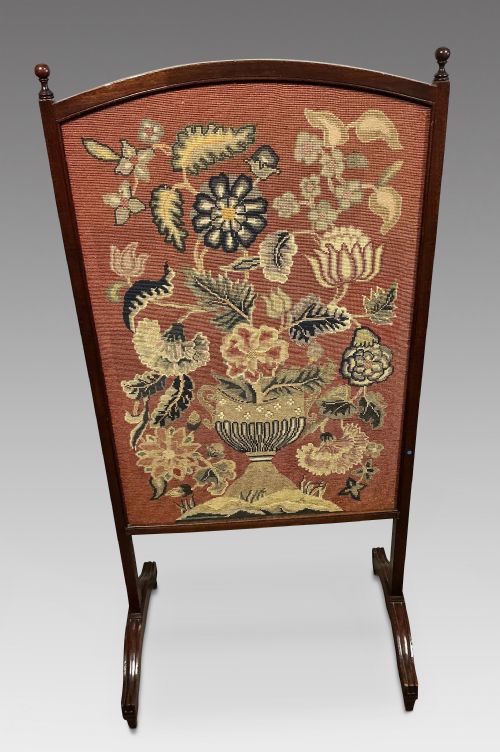
Most examples meet the eye as vertical panels mounted on tripod bases or stable wooden frames, featuring hand-stitched needlework and woolwork depictions of flowers. Makers across the nineteenth century produced these furnishings in mahogany, rosewood, walnut, and satinwood to suit formal drawing rooms.
The selection ranges from tall pole screens with adjustable panels to robust mahogany and rosewood framed screens intended for the hearth. Each piece demonstrates the domestic utility and decorative ambition characteristic of English interiors from the late eighteenth century through to the late Victorian era.
Materials and Construction
Makers utilised dense timbers such as rosewood, mahogany, walnut, and satinwood to construct the structural frames, tripod bases, and adjustable poles of these screens. These woods provided the necessary weight and durability for freestanding furniture positioned near active fireplaces.
The decorative panels rely on wool, silk, canvas, and needlepoint to create intricate floral tapestry designs. Skilled hands stitched these threads onto canvas foundations, producing detailed botanical and floral motifs that were subsequently framed or mounted onto poles.
Victorian ladies relied on these screens to protect their faces from melting their wax-based cosmetics by the hearth.
Assessing Quality
The refinement of the carved woodwork distinguishes finer examples, where tripod bases and frames display careful detailing rather than plain turning. Richly figured timbers like rosewood and mahogany indicate higher status commissions compared to simpler secondary woods.
The tightness and complexity of the needlework panel itself dictates the artistic merit of the piece. Dense woolwork and fine silkwork with subtle shading demonstrate greater time and skill in execution than sparse or coarse stitching.
The Floral Tapestry Fire Screen Glossary
- Pole screen
- A type of freestanding fireplace screen featuring a vertical wooden shaft and an adjustable panel that slides up and down to block radiant heat. This mechanism allowed occupants to adjust the height of the embroidery relative to their seating position.
- Needlepoint
- A type of canvas work embroidery stitched with yarn using a tent stitch. It forms the dense floral panels seen on these nineteenth-century screens.
- Tripod base
- A three-legged support structure commonly found beneath the upright shafts of pole screens. This design ensures stability on uneven floorboards.
- Palisander
- A dense, dark tropical timber often grouped with rosewood and utilised in fine nineteenth-century cabinet making. Its rich grain added a luxurious finish to Regency and Victorian frames.
Floral Tapestry Fire Screen: Frequently Asked Questions
How did people use a pole screen?
Occupants placed these screens between their seating and the fireplace to shield their faces from the intense heat of an open coal or wood fire. The adjustable panel could be raised or lowered depending on the height of the chair and the warmth of the hearth.
In addition to blocking heat, they prevented delicate wax makeup worn by ladies in earlier centuries from melting near the fire. They also served as decorative items that displayed the needlework skills of the household.
What is the difference between a pole screen and a standard fire screen?
A pole screen consists of a vertical wooden shaft mounted on a base with a sliding panel that moves vertically. A standard fire screen is usually a fixed freestanding frame that rests directly on the floor without a central pole.
While pole screens were designed primarily for individual use near a chair, larger folding or framed screens protected multiple people seated around the hearth.
How do I care for a tapestry fire screen?
Keep the screen away from direct sunlight and strong heat sources to prevent the wool and silk threads from fading and becoming brittle. Gentle dusting with a soft brush will help maintain the needlepoint without disturbing the fibres.
Avoid using liquid cleaners on the wooden frame or the textile panel. Professional conservation is recommended if the canvas or embroidery requires structural repair.
How can I tell the period of a screen?
The timber choice and decorative style of the frame offer the clearest indication of date, shifting from the clean lines of the Regency period to the heavier carved elements of the Victorian era. Earlier Georgian and Regency pieces often feature simpler proportions and refined tripod bases.
Later Victorian examples frequently incorporate revival styles such as Rococo or Baroque ornamentation, alongside bobbin-turned supports and darker walnut or rosewood finishes.