
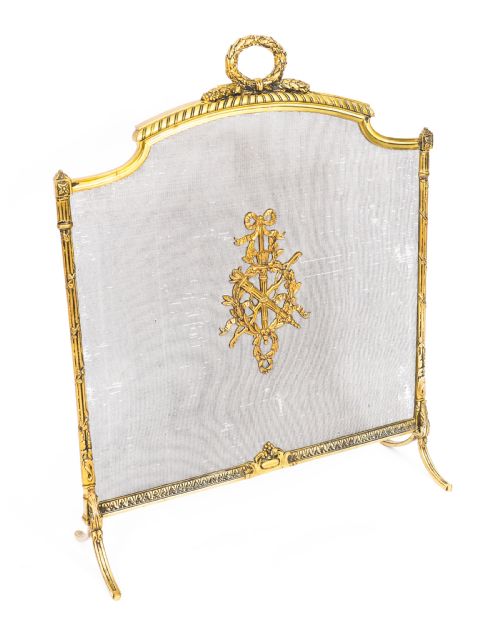


Gilt Fire Screen
A gilt fire screen brings warmth and classical French styling to a hearth, combining metalwork with decorative framing.
Gilt Fire Screen
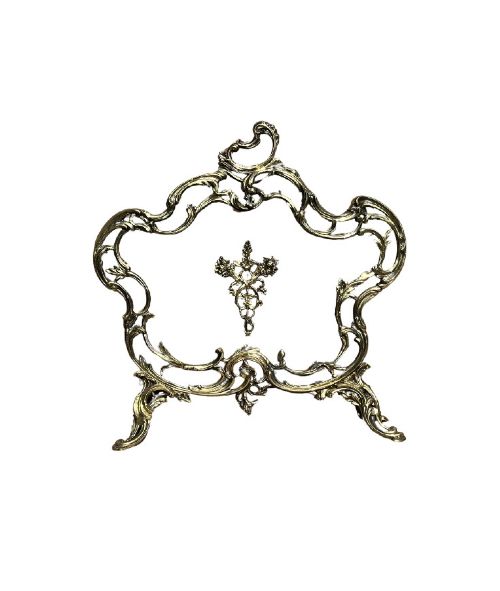
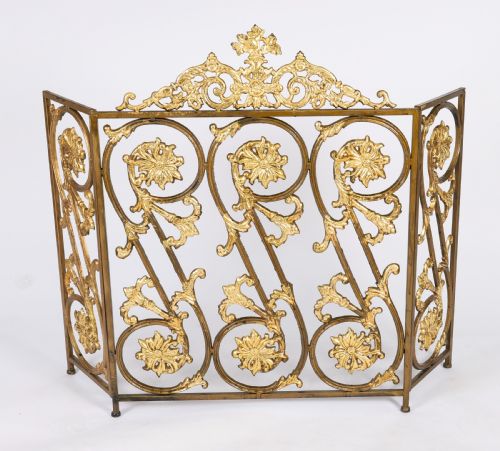
A gilt fire screen serves as both a practical hearth guard and a decorative focal point in a room, drawing on French and Victorian designs. When searching for a gilt fire screen, buyers encounter pieces ranging from ornate Rococo revival frames to simpler pole screens with needlepoint or embroidery panels.
Materials and construction
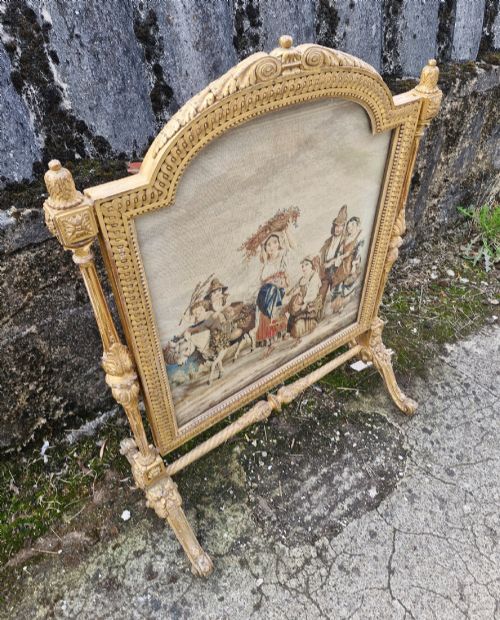
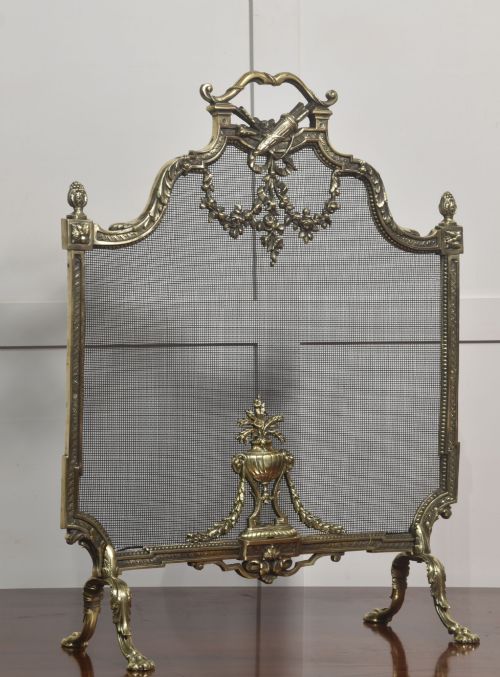
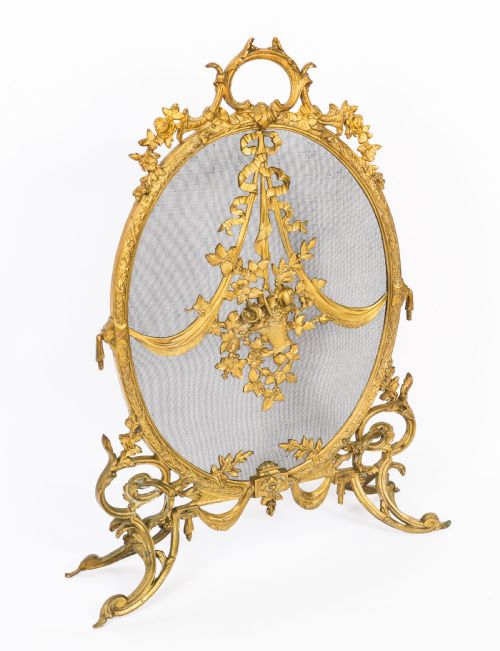
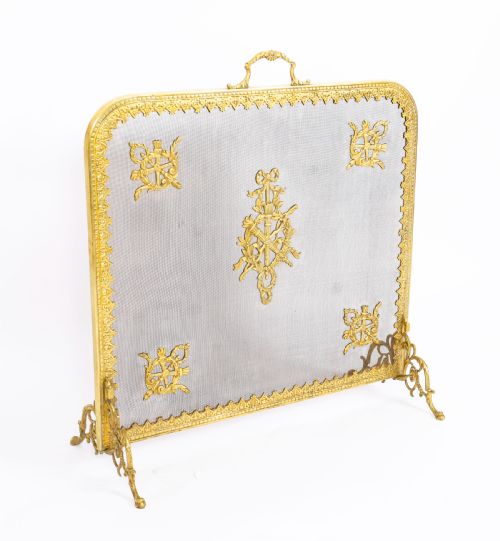
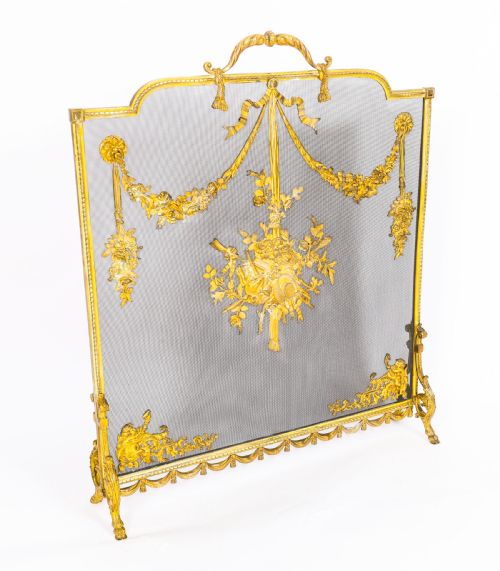
Makers utilised cast gilt bronze, ormolu, and brass to build durable frames, often incorporating wire or steel mesh to catch stray sparks. Carved giltwood and gesso frames provided alternative supports for fabric panels, tapestries, and painted surfaces.
Techniques relied on intricate metal casting, gilding, and fine hand-carving to achieve the elaborate scrollwork and trophies characteristic of revival styles. Pole screens integrated turned timber with adjustable textile banners or embroidered oval panels mounted on vertical stands.
Cardiff-born collectors can find Welsh interest papier-mâché pole screens featuring Pembrokeshire views of Haverfordwest.
Evaluating craftsmanship and detail
Quality rests in the crispness of the bronze or brass casting, where superior examples display deep relief work in motifs like flaming torches, musical trophies, and floral garlands. Heavier frames with finely chased ormolu details stand apart from mass-produced late Victorian alternatives.
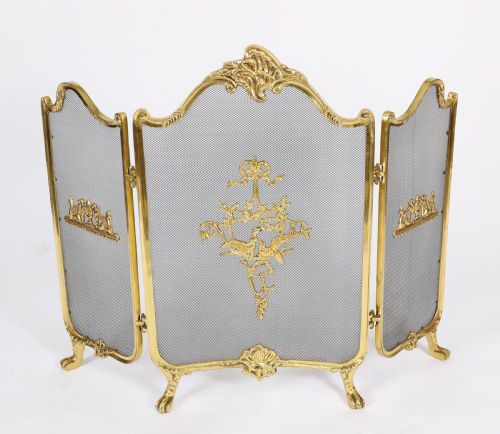
The integration of the mesh or central panel also dictates the standard of the piece. Firmly fitted wire mesh, hand-stitched needlepoint, and robust hinge mechanisms on multi-fold screens indicate higher manufacturing standards.
Bouhon Frères·Maison Marquis
The Gilt Fire Screen Glossary
- Ormolu
- Gilt bronze, typically referring to finely cast and chased decorative mounts applied to furnishings or forming standalone screen frames. This technique achieved a rich golden finish popular in French interior design.
- Pole screen
- A freestanding screen featuring a vertical wooden pole with an adjustable panel that slides up and down to block radiant heat from the fire. These often display needlepoint or embroidered inserts.
- Rococo revival
- A nineteenth century design movement that revived the asymmetrical scrolls, shell motifs, and natural curves of the eighteenth century French style. This aesthetic dominates many ornate metal hearth guards.
- Spark screen
- A functional metal mesh barrier designed to catch embers while maintaining visibility of the fire. They appear in both single panels and folding configurations.
- Gesso
- A plaster-like material applied to wooden frames and carved or moulded before gilding. It allowed makers to create elaborate low-relief decoration on Victorian frames.
Gilt Fire Screen: Frequently Asked Questions
How do I use a fire screen?
A fire screen sits before an active fireplace to shield the room from excessive radiant heat or sparks when the fire dies down. During warmer months, it serves as an ornamental centrepiece to decorate an empty hearth.
Many styles incorporate folding panels or mesh guards that adjust to fit different fireplace openings. They require stable placement on a hearth rug or stone floor to prevent tipping.
What is the difference between a pole screen and a hearth screen?
A pole screen uses a vertical stand with an adjustable panel designed to protect an individual sitter's face from the direct heat of an open fire. These are typically smaller and portable.
A hearth screen stands directly on the floor in front of the fireplace opening to protect the wider room from sparks and ash. They often feature multiple folding panels or a wide fixed frame.
How do I date a gilt metal fire screen?
Dating relies on stylistic markers such as the presence of French revival motifs, including Louis XIV, Louis XVI, or Empire styles popular through the nineteenth century. Heavier cast bronze and refined ormolu work generally point to mid-nineteenth century production.
Materials also help establish age, as nineteenth century pieces frequently employ cast brass and gilt bronze alongside wire mesh. Maker stamps or signatures, when present, provide definitive chronological reference points.
Are these screens suitable for active fireplaces?
Many examples feature sturdy brass or steel mesh designed specifically to catch sparks and embers during use. Solid bronze and brass frames withstand the ambient heat of a burning hearth.
Pieces with delicate needlepoint panels or painted surfaces require more care and are better suited for unlit fireplaces or decorative hearth displays.