

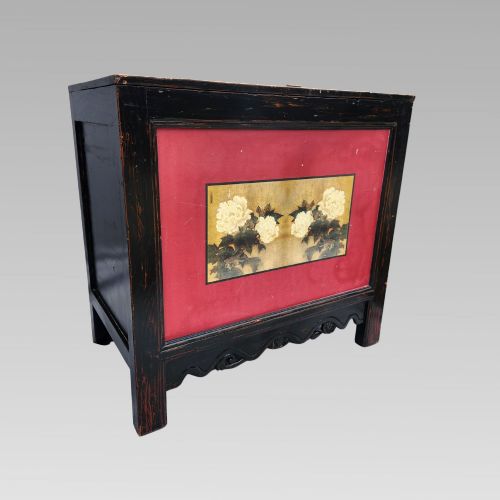
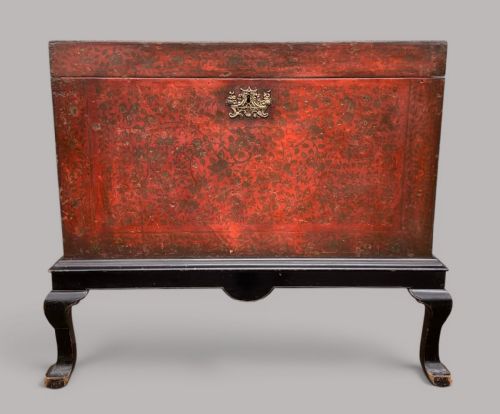


Floral Storage Box
A floral storage box brings botanical ornament and practical capacity together, offering a secure container shaped by centuries of woodworking and painting traditions.
Floral Storage Box
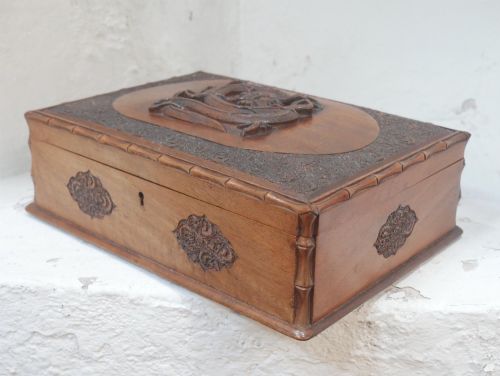
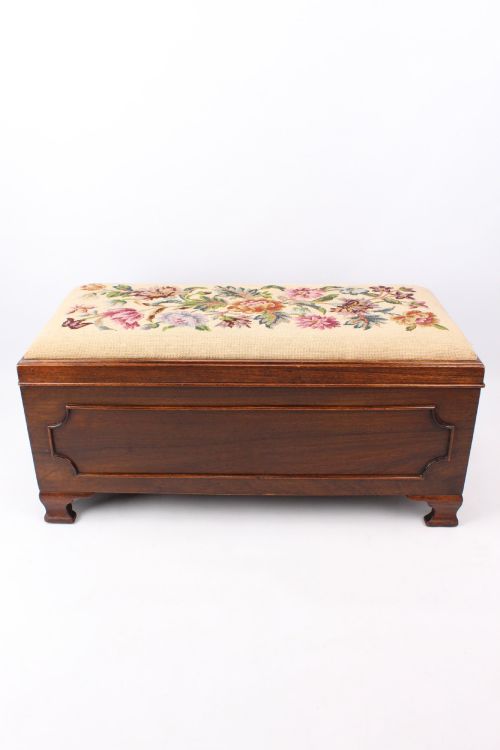
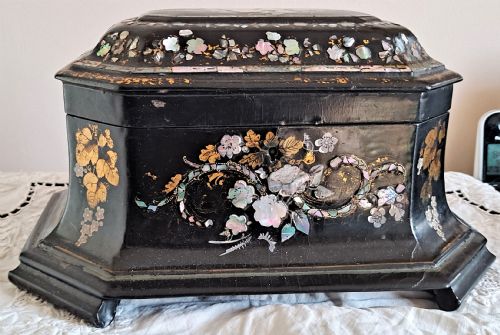
A floral storage box encompasses diverse functional vessels designed to contain domestic items while displaying surface decoration inspired by flowers and foliage. The selection spans compact tea caddies, larger travel trunks, painted coffers, and seated ottomans from various global traditions.
Most examples encountered on this page derive from the nineteenth century, though earlier seventeenth-century oak coffers and later twentieth-century painted pieces appear regularly. Forms range from modest wooden boxes to substantial leather-bound chests and intricately finished lacquerware.
Origins vary widely across the inventory, reflecting English, Scandinavian, Indian, Chinese Export, and Hungarian workshops. Buyers find both modest folk art containers and formally styled pieces executed in rosewood, mahogany, and walnut.
How they were made
Construction relies heavily on traditional timber framing, utilising oak, pine, mahogany, and camphor-wood joined by dovetails, panels, and sturdy brass or iron hardware. Heavier chests and coffers employ solid local woods, while tea caddies and decorative boxes often feature delicate marquetry and internal compartments.
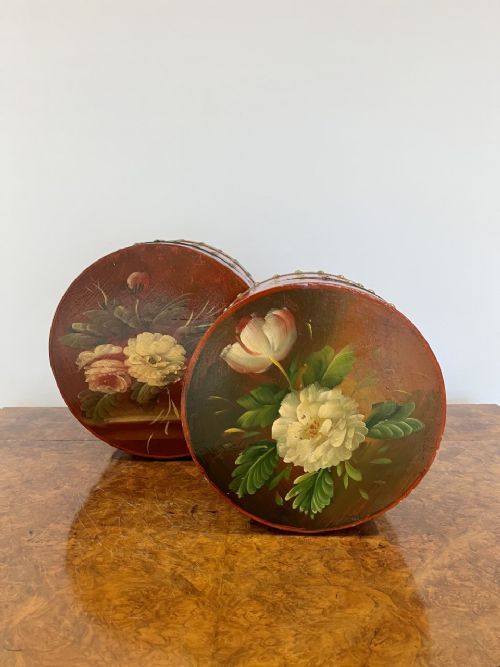
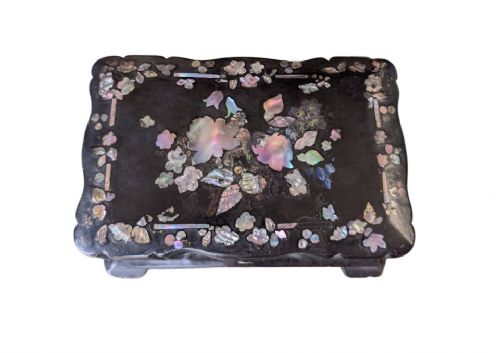
Surface ornamentation defines the category, executed through hand painting, polychrome lacquer, pokerwork, and marquetry inlay. Artisans applied pigments directly to wood or leather grounds, frequently incorporating motifs of flowers alongside mother of pearl or brass details.
Floral Storage Box Retail Price Guide 2026
Typical asking prices for floral storage box among the pieces listed under this phrase on Sellingantiques today, from the lower quarter to the upper quarter. They describe what is for sale here now, not the wider market.
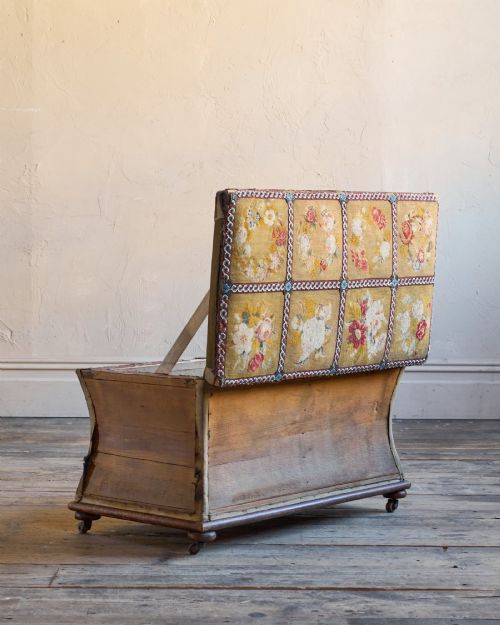
Some nineteenth-century chests enjoyed dual careers as resting places, doubling as ottoman daybeds when the tea had settled.
What varies in quality
Quality rests upon the execution of the surface decoration and the integrity of the original construction. Finely detailed hand painting and intricate marquetry distinguish superior pieces from simpler, more utilitarian containers.
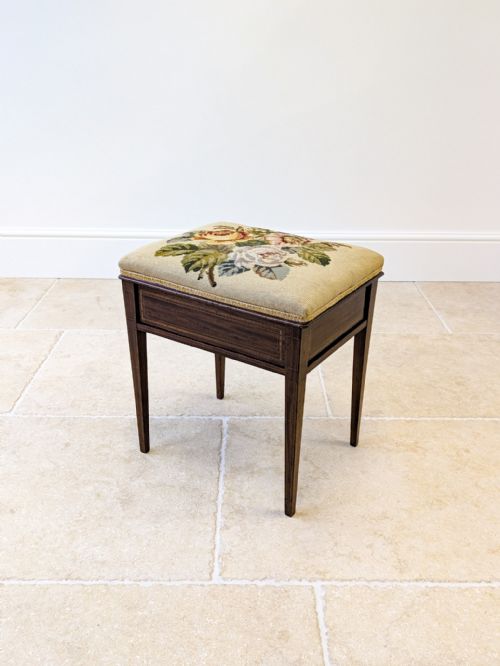
The survival of original surfaces, hinges, locks, and interior fittings determines the desirability of a box. Pieces retaining their early polychrome paint, lacquer finishes, or silk and needlework linings demonstrate a higher level of historical preservation.
The Floral Storage Box Glossary
- Coffer
- A heavy wooden chest traditionally used for storing valuables or household goods. Early examples are typically constructed from solid oak with carved panels.
- Tea caddy
- A small container specifically designed to store dry tea leaves securely. These boxes often feature internal lidded compartments and fine veneer work.
- Lacquer
- A durable resin finish applied in multiple layers and polished to a smooth sheen. It frequently serves as a ground for painted floral and figurative designs.
- Marquetry
- The art of applying small pieces of veneer to a structure to form decorative patterns. Craftsmen use various tinted woods to create pictorial floral motifs.
- Pokerwork
- A decorative technique involving the burning of designs into wood using heated metal tools. It creates shaded linear patterns across the surface of the box.
Floral Storage Box: Frequently Asked Questions
What were floral storage boxes used for?
These vessels served diverse domestic purposes ranging from holding dry tea leaves and valuables to storing linens, garments, and general household items. Many larger chests also doubled as window seats or daybeds.
Smaller decorative boxes kept personal keepsakes and jewellery secure on dressing tables. Their ornamented exteriors ensured they remained displayed openly within principal rooms rather than hidden away.
How do I date an antique wooden box?
Dating relies upon examining the construction methods, timber species, and hardware fixtures employed in the piece. Hand-cut dovetails, forged iron hinges, and native woods like oak or pine often point toward earlier periods.
Stylistic shifts in floral decoration and secondary materials such as mother of pearl inlay or lacquer help narrow the timeframe. Comparing the wear patterns around locks and handles also indicates age.
Where were painted storage boxes made?
Painted boxes originate from numerous regions, with strong traditions recorded in Scandinavia, Hungary, and China. European folk art pieces often display bright rural motifs on pine bodies.
Asian trade workshops produced lacquered and camphor-wood chests for export to Western markets. Each region applied distinct local palettes and brushwork techniques to floral subjects.
How do I care for a lacquered box?
Lquered and painted surfaces require gentle treatment to preserve the delicate pigments and finishes. Keep containers away from direct sunlight and excessive heat sources to prevent cracking.
Dusting should be performed with a soft, dry cloth without applying modern polishes or chemical cleaners. Maintaining stable indoor humidity protects both the wood substrate and the decorative layers above.