

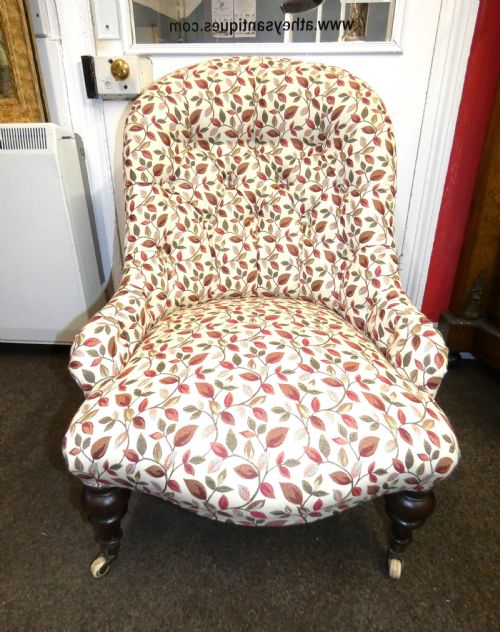
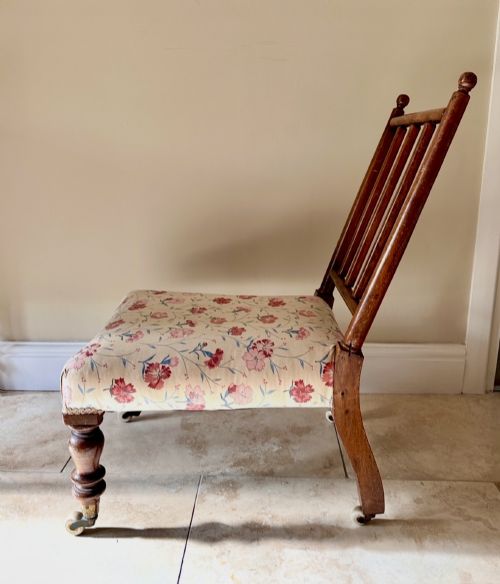
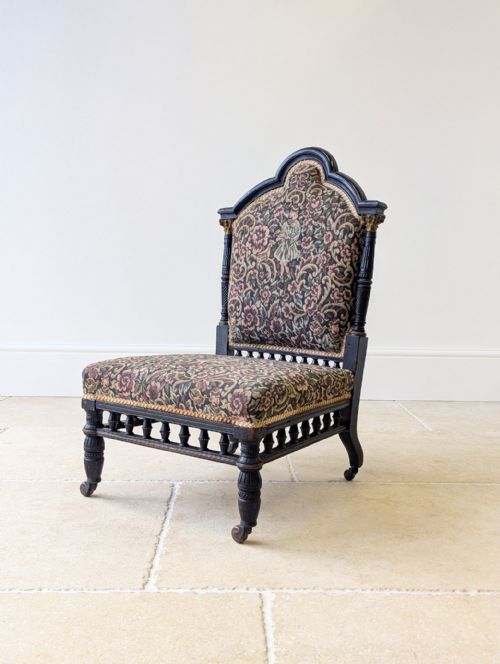
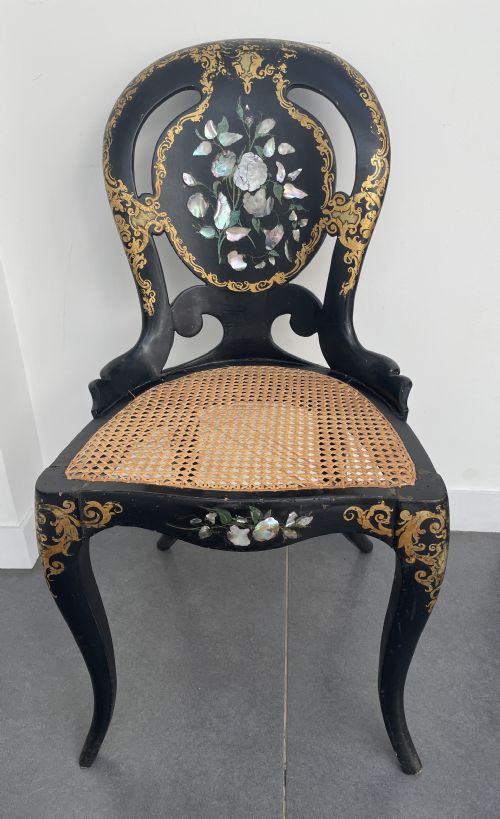


Floral Slipper Chair
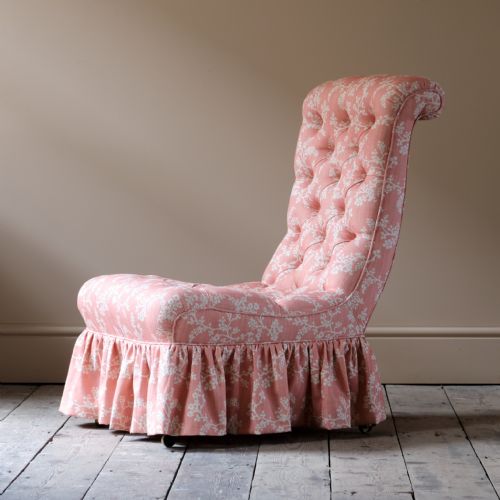
A floral slipper chair is a low, upholstered seat designed for comfort, and you will find these compact nineteenth-century pieces upholstered in traditional textiles.
Floral Slipper Chair
A floral slipper chair sits low to the floor, built originally for dressing rooms and bedrooms during the nineteenth century. These low-slung seats appear across several historical periods, including the Victorian era, Regency, and Edwardian times, often overlapping with forms like nursing chairs and boudoir chairs.
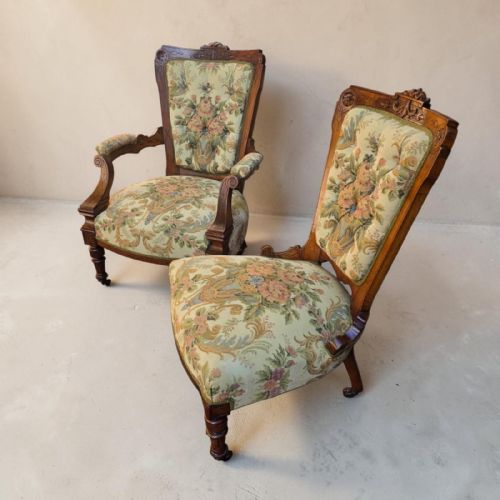
The version you are most likely to meet on this page is a Victorian walnut or mahogany frame covered in period-appropriate fabric, tapestry, or vintage linen. Makers constructed these compact chairs to allow a person to sit comfortably while putting on shoes or garments.
The selection ranges from mid-nineteenth-century examples with carved wooden details to later variations upholstered in floral slip covers. Alongside standard slipper chairs, the listings include related low seating such as prie-dieu chairs and small salon seats.
How they were made
Craftsmen built the frames of these chairs using hardwoods such as mahogany, walnut, and oak, occasionally incorporating brass elements or ceramic castors for movement. Wood carvers shaped the rails and legs in styles spanning the Aesthetic Movement, Victorian Rococo Revival, and French Napoleon III.
Upholstery involved textiles like tapestry, vintage linen, and fabric, sometimes supported by button-back padding and intricate frame inlays including mother-of-pearl. Workshops like Gillows and Howard and Sons applied traditional joinery and stuffing techniques to secure the low-profile seats.
Floral Slipper Chair Retail Price Guide 2026
Typical asking prices for floral slipper chair among the pieces listed under this phrase on Sellingantiques today, from the lower quarter to the upper quarter. They describe what is for sale here now, not the wider market.
Listings show frames primarily in walnut, mahogany, and oak, paired with textiles including tapestry, linen, and ceramic details.
What varies in quality
The degree of hand-carving on the wooden frame distinguishes standard production from exceptional pieces. Elaborate walnut framing, crisp floral inlays, and stamped maker signatures elevate the standing of a chair.
The integrity of the original timber structure and the sophistication of the upholstery choices define the upper tier of the range. Pieces retaining their original floral tapestry or executed by documented makers command closer attention from collectors.
Gillows·Howard and Sons·Hindley and Sons·R Whytock of Edinburgh·Jennens and Bettridge
The Floral Slipper Chair Glossary
- Slipper chair
- A low-seated upholstered chair traditionally used in bedrooms for changing shoes. These compact seats lack arms and sit close to the floor.
- Nursing chair
- A low nineteenth-century chair designed originally for mothers feeding infants. They share a similar low profile with slipper chairs.
- Prie-dieu chair
- A devotional chair featuring a low seat and a high, narrow back designed to support kneeling or resting arms during prayer. They appear frequently in Victorian interiors.
- Aesthetic Movement
- A late nineteenth-century design style that emphasised visual beauty over narrative content. It influenced furniture forms and decorative arts between 1860 and 1900.
- Button back
- An upholstery technique where buttons are pulled deep into the padding to create a quilted diamond pattern. This method adds structural tension and visual texture to the backrest.
Floral Slipper Chair: Frequently Asked Questions
What is a floral slipper chair used for?
These low chairs were originally placed in bedrooms and dressing rooms to provide a comfortable seat when putting on footwear or clothing.
Today, buyers use them as accent pieces in living rooms, hallways, and bedrooms where a compact seat is needed.
How do I date a Victorian slipper chair?
Dating relies on examining the timber species, framing style, and structural joinery methods used in the piece. Victorian examples often feature walnut or mahogany with characteristic mid to late nineteenth-century carving.
Cabinetmakers marks, stamps on the wood, and the specific style of upholstery support dating when visible.
Are nursing chairs the same as slipper chairs?
Nursing chairs and slipper chairs both feature low seats close to the floor, but they originated for different domestic tasks. Nursing chairs were built for feeding infants, while slipper chairs served dressing rooms.
Over time, the terms often overlap in antique listings due to their similar proportions.
How do I live with antique upholstered chairs?
Living with these chairs involves placing them out of direct sunlight to protect vintage textiles and linen from fading. Regular light vacuuming helps keep the fabric clean without disturbing the internal stuffing.
They function well as occasional seating in low-traffic areas of the home.