
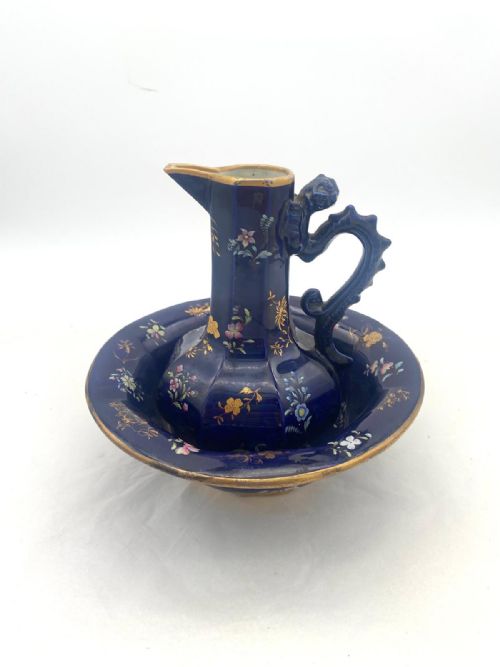
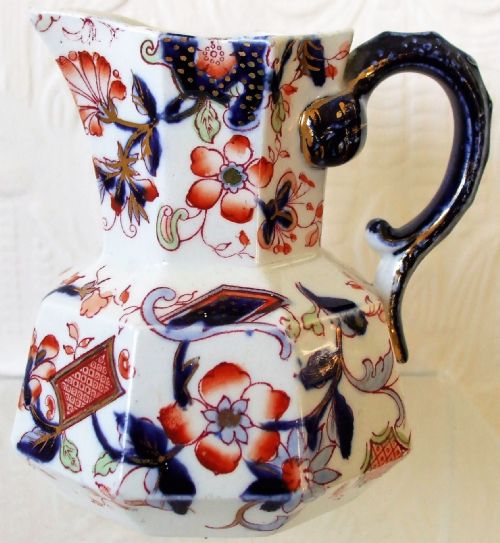
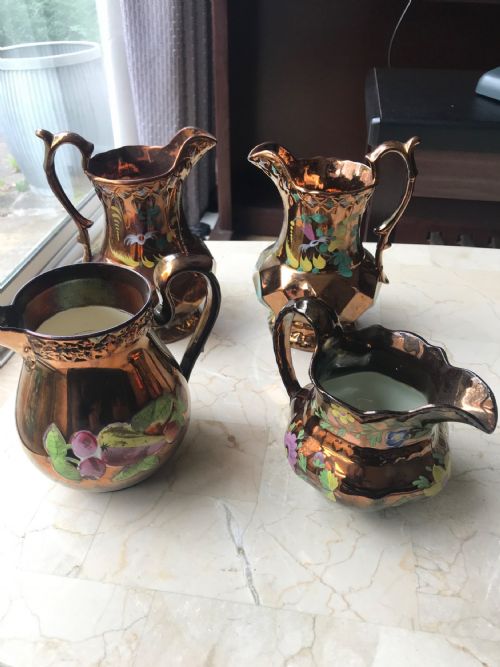
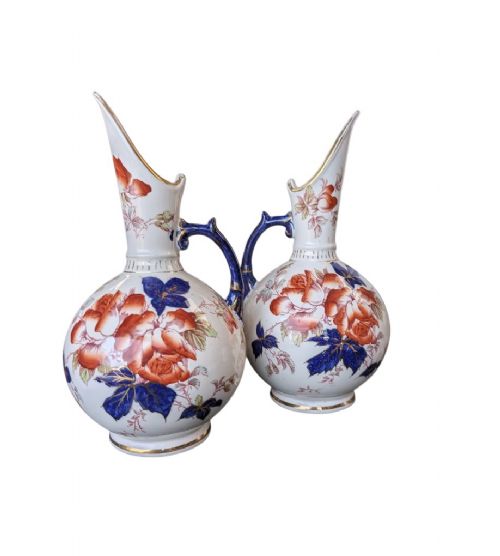


Floral Porcelain Water Jug
These floral porcelain water jug pieces bring hand-decorated botanical charm to your table or washstand, offering timeless utility.
Floral Porcelain Water Jug
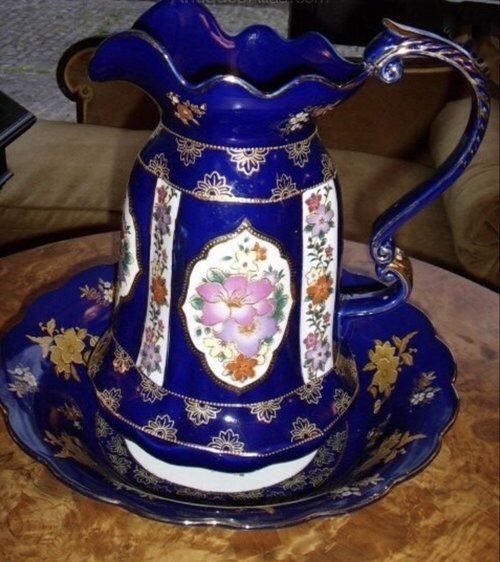
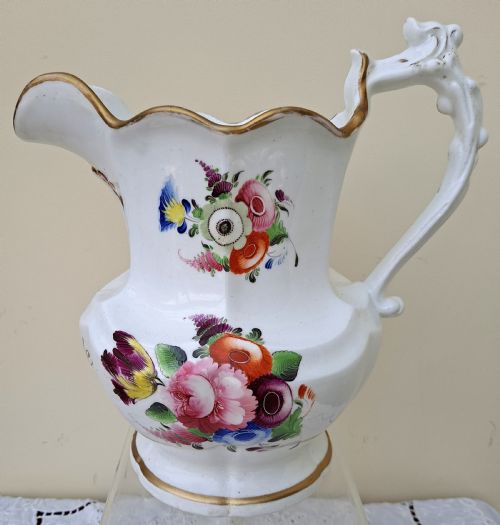
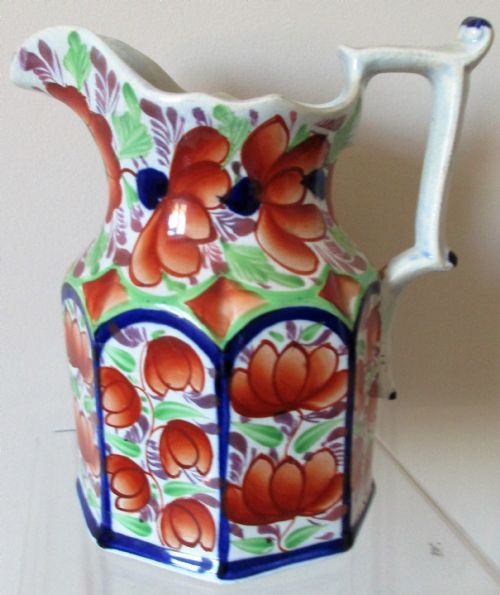
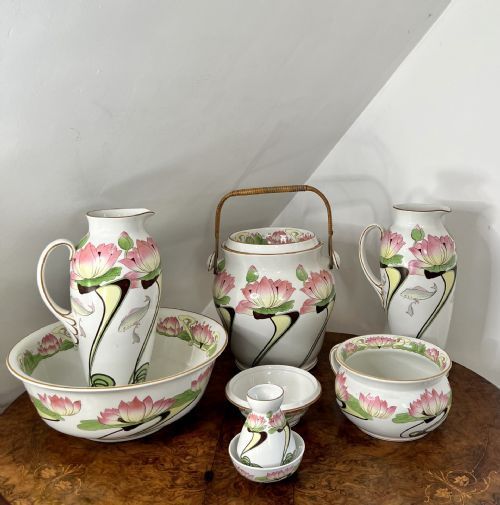
When you search for a floral porcelain water jug, you are looking at glazed ceramic vessels created to hold water, often paired with matching basins for washing or serving. The examples on this page span the eighteenth, nineteenth, and early twentieth centuries, encompassing Georgian, Victorian, Edwardian, and Art Nouveau periods.
Most pieces meet you as part of larger washstand sets or as individual ewers and pitchers featuring hand-decorated floral motifs, cobalt blue glaze, and gilding. Forms range from octagonal ironstone shapes to classical mask-head designs and delicate porcelain ewers.
How they were made
Potters shaped these vessels using porcelain, ironstone, and earthenware, applying glaze to seal the ceramic body before firing. Many pieces received hand-painted enamel botanical decoration, cobalt blue underglaze painting, or copper lustre details.
Makers finished finer examples with gold leaf and gilding applied over the glaze, occasionally utilising transfer-printed outlines filled in by hand with colour.
Listings span the 18th century to the 1930s, featuring porcelain, ironstone, and earthenware decorated with enamel and gold leaf.
What varies in quality
The distinction between standard and superior pieces rests on the crispness of the moulding and the skill of the hand-painting in the floral decoration. Crisp relief work, carefully applied gold leaf, and well-balanced forms separate standard utility items from showroom pieces.
The preservation of the enamel colours and the brightness of the underlying glaze largely determine the visual impact of an individual vessel.
Keeling and Co.·John Baley·Royal Worcester·Doulton Burslem·Crown Derby
The Floral Porcelain Water Jug Glossary
- Ewer
- A large jug with a wide spout and a curved handle, traditionally used for holding water alongside a matching basin.
- Ironstone
- A heavy, durable type of earthenware patented in the nineteenth century that mimics porcelain in strength and finish.
- Gilding
- The application of gold leaf or gold powder onto the ceramic surface to accent handles, rims, and floral designs.
- Enamel
- Opaque glass-like paint applied over the glaze and fired again to fix vibrant colours onto the body of the jug.
Floral Porcelain Water Jug: Frequently Asked Questions
Were these jugs used for washing or serving?
Many of these vessels functioned as part of washstand sets in bedrooms, holding water for morning ablutions alongside a matching basin.
Other smaller examples served liquid at the table or functioned as decorative ewers in formal rooms.
How do I care for an antique jug?
Wash ceramic pieces by hand in warm soapy water, avoiding harsh scrubbers that can damage delicate enamel and gold leaf.
Keep them away from direct heat and rapid temperature changes to protect the old glaze from crazing.
Can I use them with modern water?
While sturdy enough to hold water, older earthenware and ironstone can develop hairline cracks if exposed to prolonged moisture.
Displaying them dry or using a protective liner inside helps preserve the historical ceramic body.
How do I tell Victorian jugs apart from Edwardian ones?
Victorian pieces often lean towards heavier ornamentation, floral hand-decoration, and robust ironstone or porcelain bodies.
Edwardian wash sets tend to show lighter colour palettes and cleaner bathroom set configurations suited for turn-of-the-century homes.