

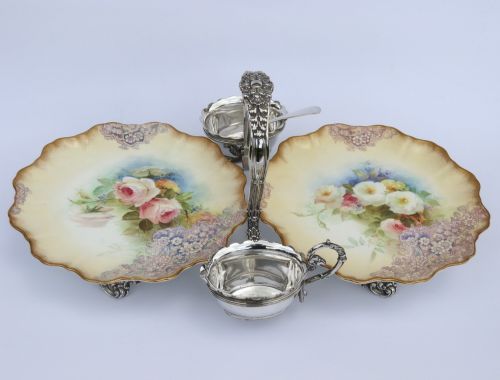


Floral Porcelain Stand
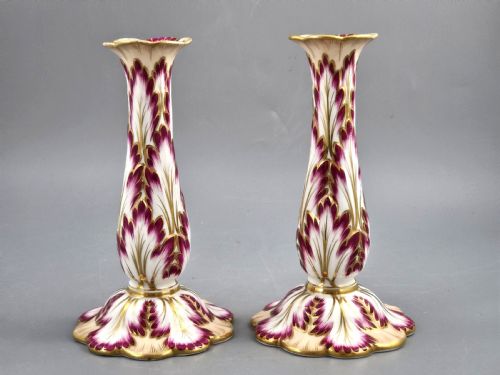
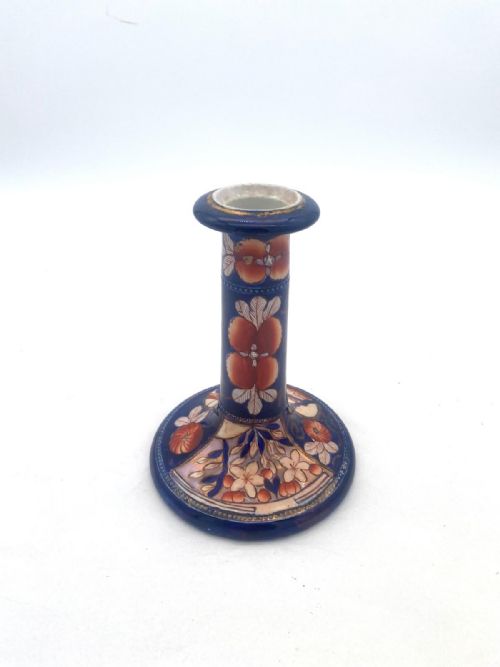
A floral porcelain stand brings painted garden motifs and sculptural ceramic forms together to hold tableware or anchor a tabletop display.
Floral Porcelain Stand
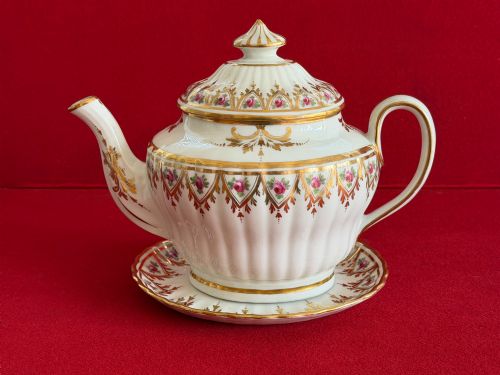
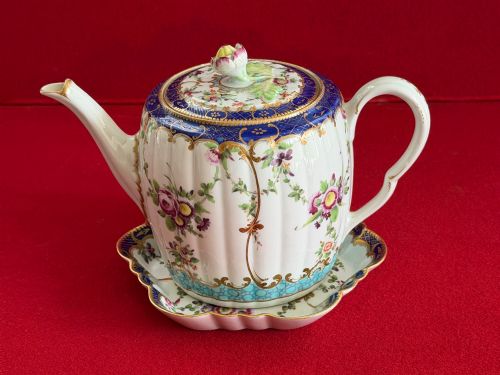
When searching for a floral porcelain stand, buyers encounter pieces ranging from Georgian teapot bases to Victorian comports and Edwardian centrepieces. These items combine ceramic platforms with botanical painting, moulded petals, or applied floral encrustations.
The selection on this page spans the eighteenth, nineteenth, and early twentieth centuries, drawing on English factories like New Hall and Worcester alongside Continental and Chinese export makers. Forms include dedicated teapot stands, comports, and centrepieces built to elevate table service.
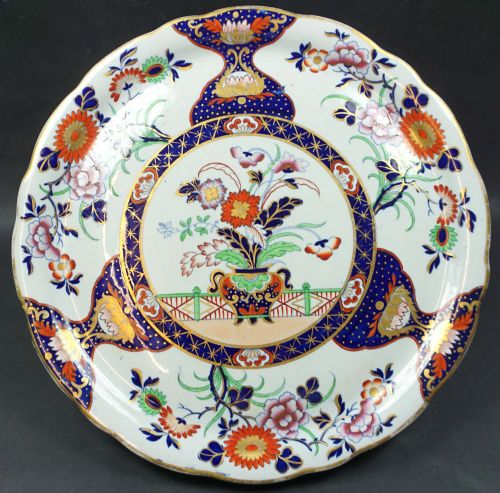
Many examples integrate floral porcelain plates or sections with metal mounts in brass, silver plate, or ormolu. The aesthetic bridges utilitarian tableware and decorative display objects.
Materials and construction
Pieces are formed from ceramic bodies including soft-paste porcelain, hard-paste porcelain, and ironstone, shaped by hand or in moulds before firing. Decoration relies on hand-painted enamel colours, sometimes enhanced with gold leaf and gilding to highlight borders and moulded details.
Support structures frequently incorporate secondary materials like brass bases, silver-plated mounts, or ebonised wood to elevate the porcelain platform. Applied three-dimensional elements, such as individual ceramic roses and putti, require careful hand-assembly prior to kiln firing.
Floral Porcelain Stand Retail Price Guide 2026
Typical asking prices for floral porcelain stand among the pieces listed under this phrase on Sellingantiques today, from the lower quarter to the upper quarter. They describe what is for sale here now, not the wider market.
Listings feature porcelain, ironstone, and ceramic pieces accompanied by brass, silver plate, and ormolu mounts across the eighteenth and nineteenth centuries.
Assessing quality and execution
Quality rests on the crispness of the porcelain moulding and the refinement of the hand-painted enamel work. Finely modelled applied flowers and well-defined figures demonstrate superior craftsmanship compared to simpler moulded surfaces.
The integration of secondary materials, such as heavy brass bases or ormolu mounts, separates standard production items from grander centrepieces and comports. Preserved gilding and clean enamel decoration without excessive rubbing indicate better preservation and superior original manufacture.
New Hall Porcelain·Masons Ironstone·Hicks and Meigh·Doulton Burslem·Schierholz Plaue·Sitzendorf·Helena Wolfsohn
The Floral Porcelain Stand Glossary
- Comport
- A large decorative dish or bowl raised on a foot, used for serving fruit or sweets at dessert. These pieces often feature painted floral scenes or applied ceramic roses.
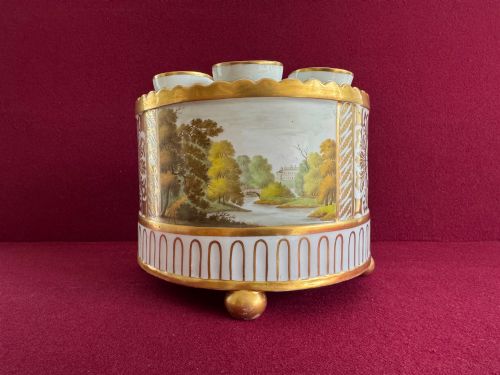
- Bough Pot
- A vessel designed for holding cut branches or flowers, typically fitted with a pierced cover. They appear in porcelain and ironstone during the Georgian period.
- Ormolu
- Gilded bronze used for mounts, feet, and decorative frames on nineteenth-century porcelain objects. It provides a metallic contrast to the ceramic body.
- Enamel
- Opaque vitreous composition applied to porcelain as decoration before firing. Enamels carry the bright botanical colours seen on floral stands.
- Famille Rose
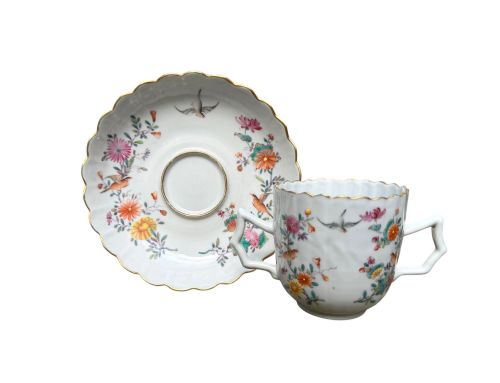
- A palette of Chinese ceramic decoration dominated by opaque pink enamel. This style appears on eighteenth-century export porcelain cups and stands.
Floral Porcelain Stand: Frequently Asked Questions
What was a floral porcelain stand used for?
These stands served practical and decorative roles on the dining table or sideboard. Many accompanied teapots or dessert services to protect surfaces from heat and moisture.
Larger versions functioned as comports and centrepieces for displaying fruit, sweets, or cut flowers during formal meals.
How do I date a floral porcelain piece?
Dating relies on factory marks, paste composition, and stylistic shifts between the Georgian and Edwardian eras. Eighteenth-century pieces often feature underglaze blue work or distinct soft-paste bodies.
Later nineteenth-century examples display transfer printing, bolder enamel palettes, and more complex applied ceramic flora.
Are these stands suitable for daily use?
Most antique porcelain stands require gentle handling rather than heavy daily service. Enamel decoration and applied flowers can wear or chip with frequent washing.
They function best as display pieces or for occasional light service during dining.
What is the difference between porcelain and ironstone?
Porcelain is a vitrified ceramic fired at high temperatures to achieve a translucent body. It forms the base of fine table wares and decorative figures.
Ironstone is a heavy earthenware developed for durability, offering a sturdier structure for nineteenth-century comports and jugs.