

Floral Painted Glass
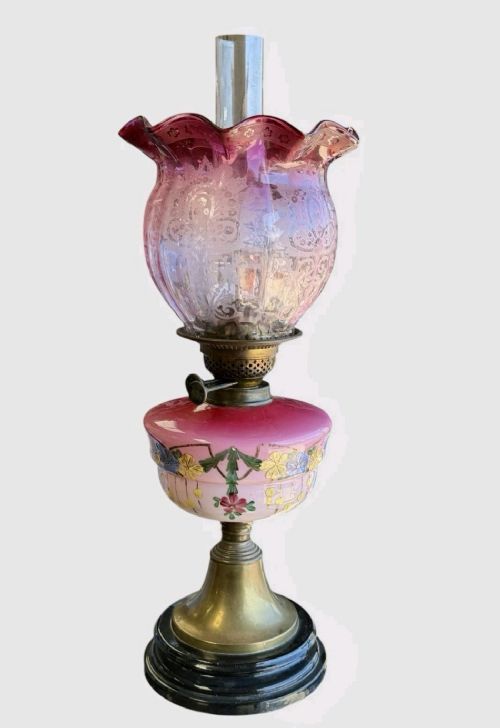
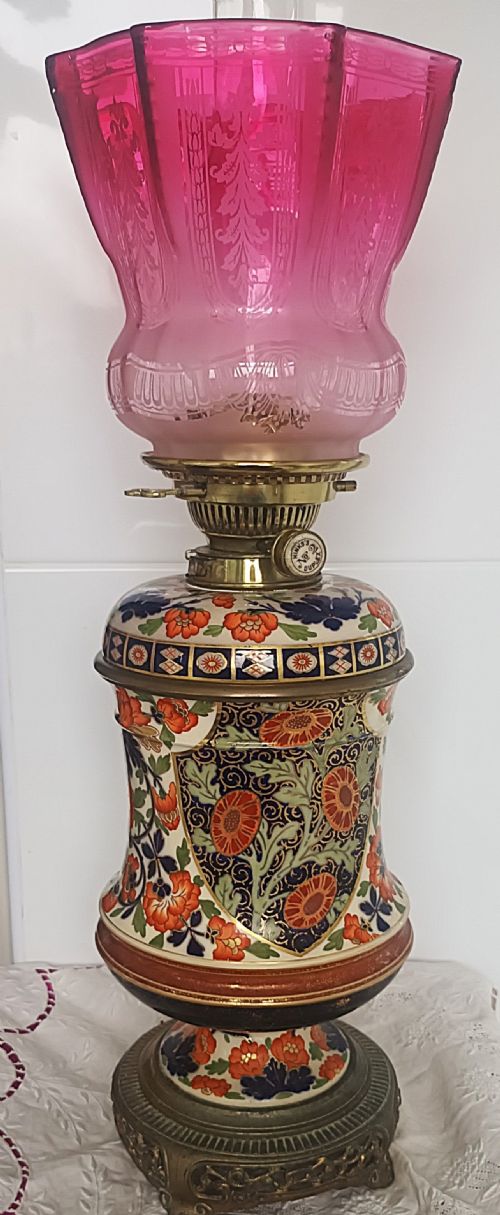
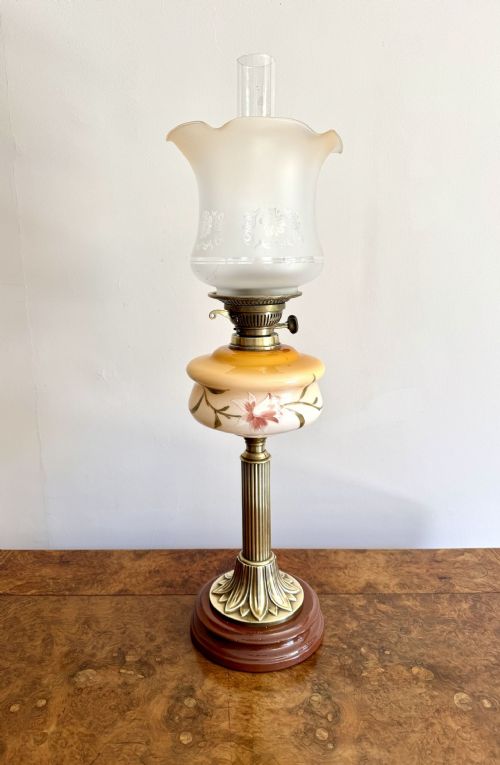
Floral painted glass brings together vibrant pigments and translucent vessels, offering collectors colourful nineteenth-century oil lamps, vases, and trinket boxes decorated with delicate botanical motifs.
Floral Painted Glass
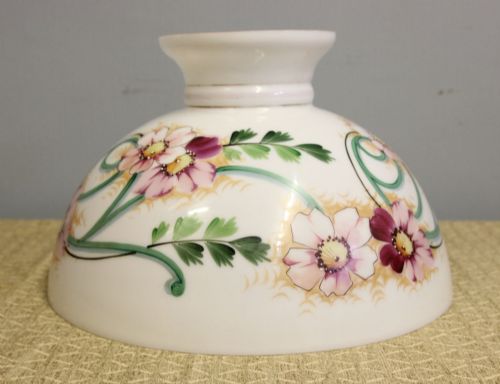
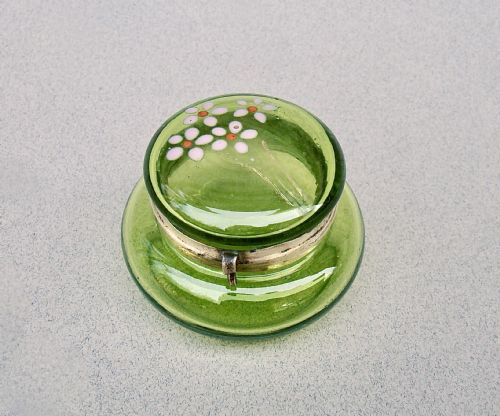
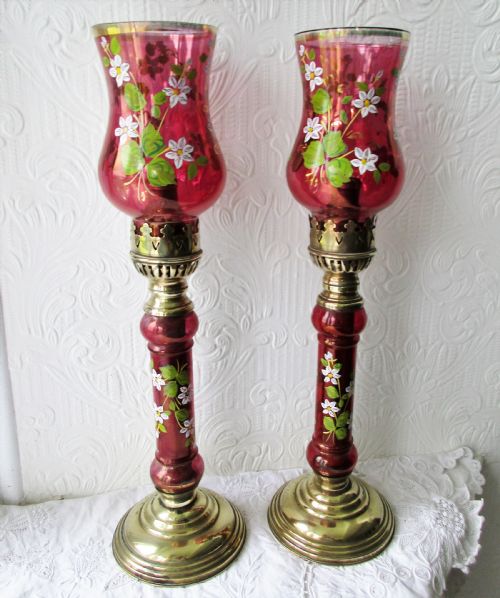
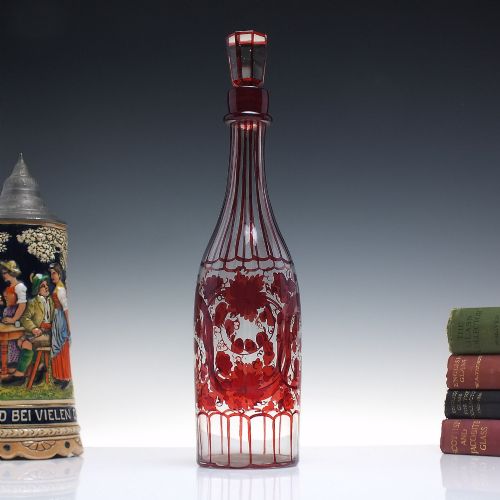
When you search for floral painted glass, you encounter items originating mainly from the nineteenth century alongside early twentieth-century examples. The selection spans domestic utility and decorative arts, incorporating oil lamps, decanters, vases, and dressing table jars.
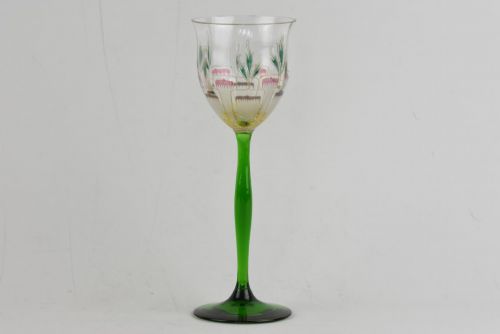
Victorian pieces dominate the selection, often taking the form of cranberry, Bristol blue, or opaline glass vessels decorated with hand-applied enamel flowers. Art Nouveau pieces appear with flowing botanical designs, while occasional Bohemian and French works expand the geographic scope.
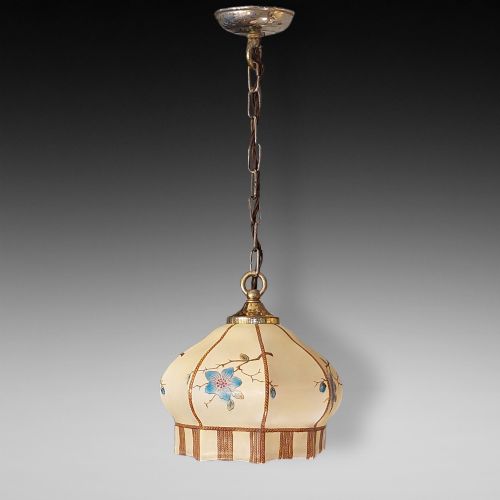
Vessels range from small wine glasses and trinket boxes to large oil lamp fonts and hanging shades. These objects serve both as functional lighting components and as standalone decorative cabinets pieces.
Materials and methods
Glass forms the primary medium, utilising coloured, opaline, cranberry, or clear glass blown into moulds or shaped by hand. Makers applied enamel paints and oil paints directly onto the cooled surfaces, sometimes adding gilding or gold leaf to highlight the botanical patterns.
Metal components such as brass, wrought iron, and silver frequently accompany the glass in items like oil lamps, candle-lamps, and inkwells. Enamelling techniques required careful firing to fuse the opaque or translucent pigments permanently to the glass body.
A tiny dab of gold leaf on a Victorian glass jug proves that even water needs a bit of theatre.
Assessing quality in painted glass
Quality rests upon the execution of the painting and the purity of the glass body itself. Fine examples display crisp brushwork, delicate shading in the floral enamel, and integrated gilding that remains crisp rather than rubbed.
The weight and clarity of the glass, whether opaline, Bristol blue, or cranberry, distinguish standard production wares from superior artistic output. Maker attribution, such as work associated with Moser or Harrach, elevates an object through superior material composition and refined decorative detailing.
Hampton & Sons·Thereisenthal·Hinks·Taylor Tunnicliff·George Tye·Moser·Harrach
The Floral Painted Glass Glossary
- Opaline glass
- Opaque or translucent pale glass that mimics porcelain, frequently serving as a ground for painted enamel flowers.
- Enamel paint
- Coloured glass paste applied to the surface and fired at high temperatures to bond permanently with the vessel.
- Cranberry glass
- Transparent red glass coloured with gold chloride, popular for Victorian tableware and oil lamp components.
- Bristol blue
- Deep cobalt blue glass traditionally produced in the English port city and utilised for decorative jars and decanters.
- Plafonnier
- A ceiling-mounted bowl light shade, often constructed from frosted or painted glass in Art Nouveau styles.
Floral Painted Glass: Frequently Asked Questions
How are floral painted glass lamps used today?
Many surviving oil lamps and lamp shades are adapted for modern electrical wiring while retaining their original brass burners and decorative glass fonts. They function as striking table or hanging lights that highlight the translucent qualities of the coloured glass.
Collectors also display them unlit on sideboards or within glass-fronted cabinets to preserve the hand-painted enamel botanical details from unnecessary handling and heat exposure.
What periods do these glass pieces come from?
The pieces span the nineteenth and early twentieth centuries, with a strong concentration of Victorian and Edwardian examples. You will also find earlier items from the late eighteenth century alongside Art Nouveau and Art Deco creations.
Victorian items often feature vibrant opaline or Bristol blue backgrounds, whereas later twentieth-century works lean towards stylized floral panels and geometric metal mounts.
How do you clean antique painted glass?
Cleaning requires gentle care because the enamel paint and gilding can be sensitive to harsh chemical detergents and abrasive cloths. Warm water and mild soap applied with a soft sponge preserve the integrity of the painted surface.
Submerging antique mounted items with brass or iron components should be avoided to prevent moisture damage to internal joins and metal finishes.
How do opaline and cranberry glass differ?
Opaline glass is an opaque, milky material that diffuses light softly and provides a solid background for brightly coloured enamel floral scenes. Cranberry glass is a transparent, rich red material created by adding gold during the melting process.
Both materials were favoured by Victorian makers for decorative vases, decanters, and oil lamp shades due to their striking visual presence.