


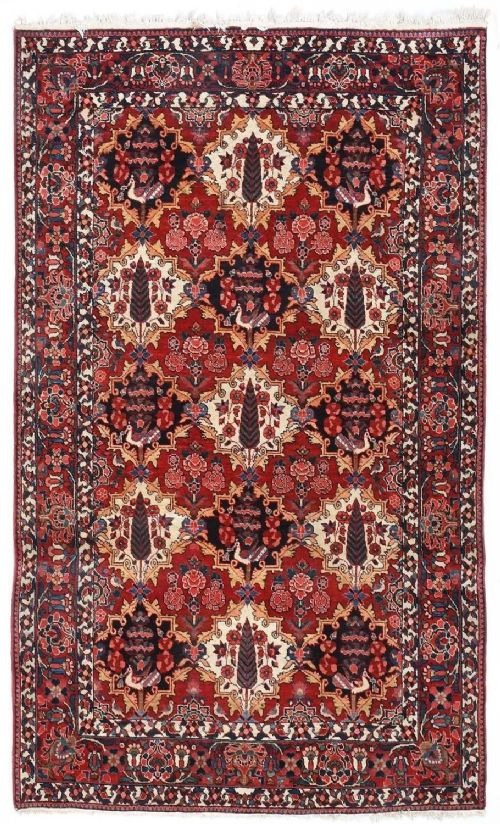


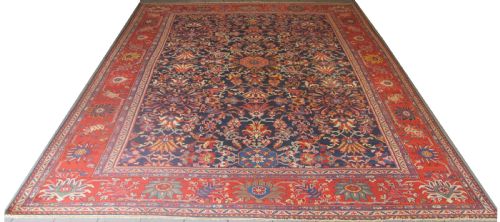


Floral Motif Rug
A floral motif rug brings garden botanicals indoors, offering centuries of woven artistry for modern floors.
Floral Motif Rug
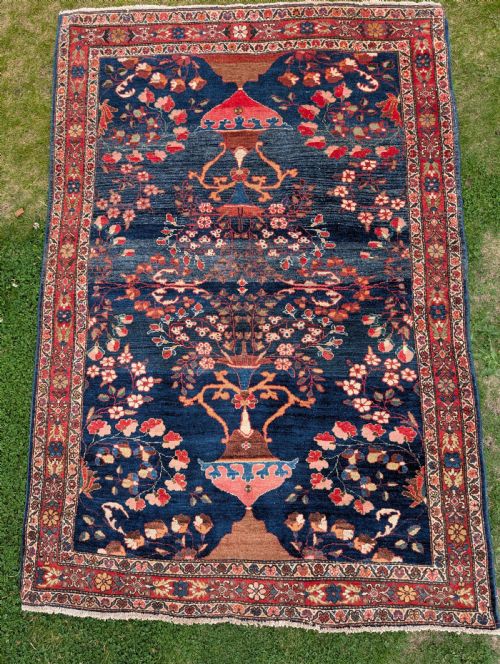
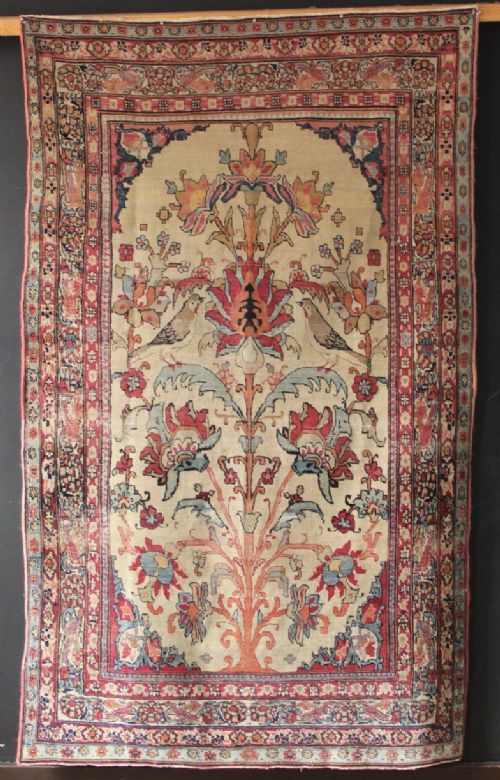
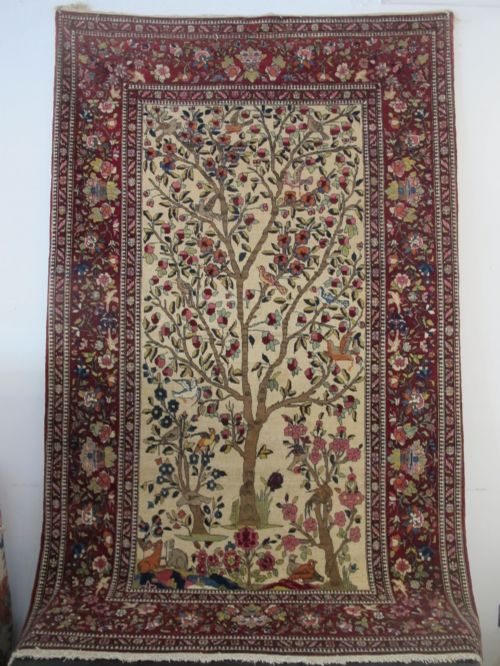
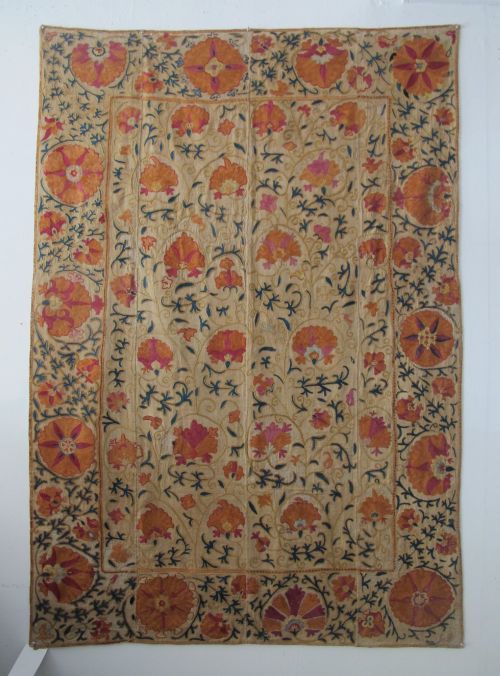
When searching for a floral motif rug, collectors encounter hand-knotted and flat-woven floor coverings spanning the late nineteenth and early twentieth centuries. These textile items originate primarily from Persian weaving centres alongside European and Central Asian workshops.
How they were made
Weavers utilised natural wool, cotton foundations, and occasional silk highlights, knotting or embroidering fibres by hand over sturdy warps. Natural dyes yielded deep indigo, madder red, and ivory grounds that soften gracefully across decades.
Flat-woven pieces such as kilims and needlepoint textiles employ alternative interlocking or stitched techniques, creating durable surfaces without a raised pile.
Floral Motif Rug Retail Price Guide 2026
Typical asking prices for floral motif rug among the pieces listed under this phrase on Sellingantiques today, from the lower quarter to the upper quarter. They describe what is for sale here now, not the wider market.
Listings span periods from the mid-nineteenth century through the 1940s, featuring wool, cotton, silk, and canvas materials.
What varies in quality
Knot density and the precision of the botanical drawing dictate the structural calibre of each piece. Finer examples display intricate petal shading and tight foundational tension.
The stability of the wool and the preservation of the original dye saturation determine long-term durability and visual impact.
The Floral Motif Rug Glossary
- Boteh
- A stylised almond or pear-shaped floral motif representing a cypress tree or flower cluster. It appears frequently in traditional Persian weaving.
- Kilim
- A flat-woven textile produced without a pile by tightly interweaving warp and weft strands. These rugs are typically lighter and reversible.
- Pile
- The upright yarn loops or cut ends that form the soft surface of a knotted rug. Pile height influences both texture and wear resistance.
- Warp
- The vertical foundation threads stretched lengthwise on the loom before weaving begins. Weft threads are passed across these structural strands.
- Weft
- The horizontal threads passed back and forth through the warp to hold the knots or flat weave in place. Proper tension ensures a balanced textile.
Floral Motif Rug: Frequently Asked Questions
How do I clean an antique rug?
Professional specialist cleaning is essential for antique textiles to protect delicate natural dyes and fragile wool foundations.
Regular gentle vacuuming without a beater bar prevents dust accumulation between washes.
Are these rugs suitable for hallways?
Runner formats and robust wool weaves withstand moderate foot traffic when placed over a quality underlay.
Softer silk or delicate needlepoint pieces suit low-traffic rooms or wall display rather than corridors.
How do I identify a Persian carpet?
Persian pieces typically exhibit specific regional knotting structures, traditional floral iconography, and city-specific colour palettes.
Inscriptions or signature panels woven into the border sometimes indicate the exact workshop.
Do antique rugs fade in sunlight?
Natural plant and insect dyes mellow when exposed to direct ultraviolet light over extended periods.
Rotating the textile periodically ensures even exposure and protects the richer tones.