
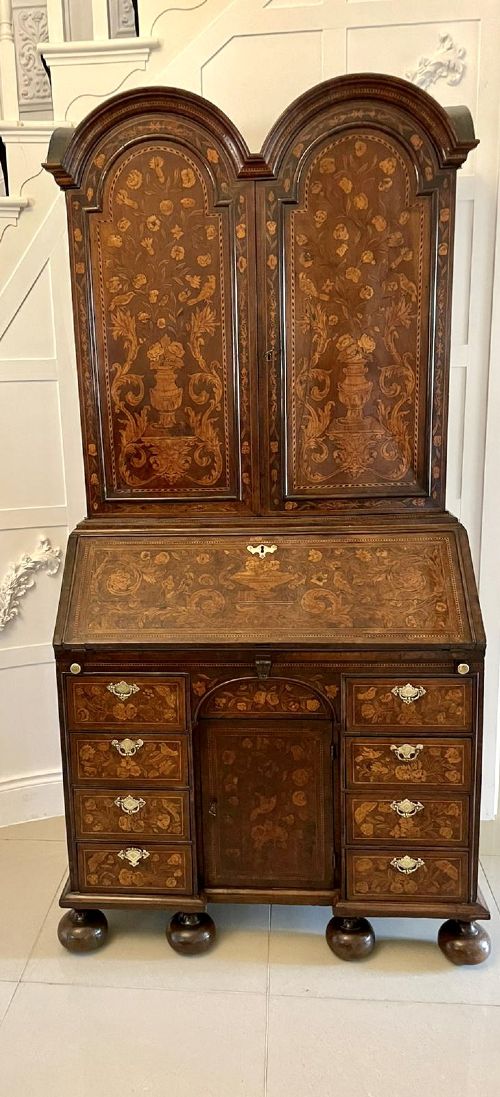
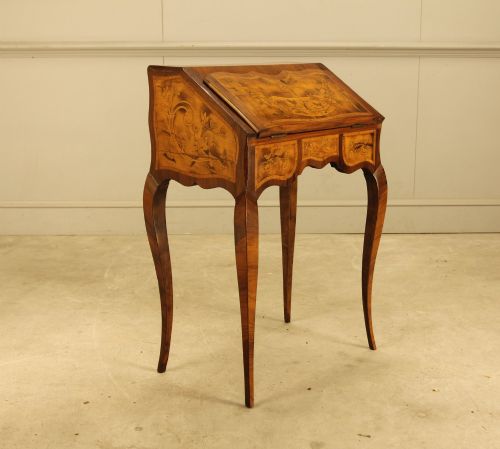
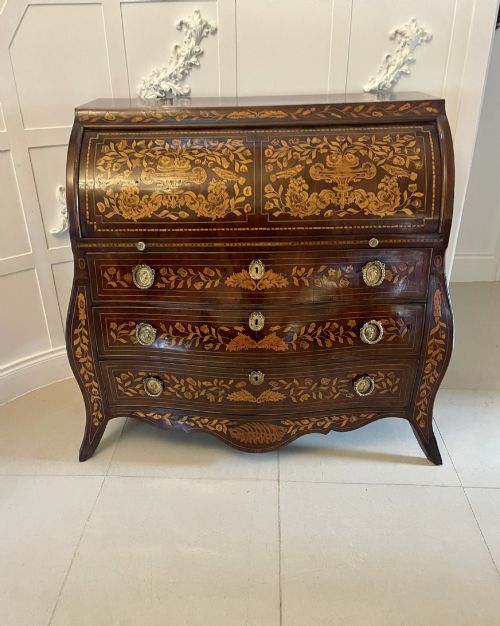

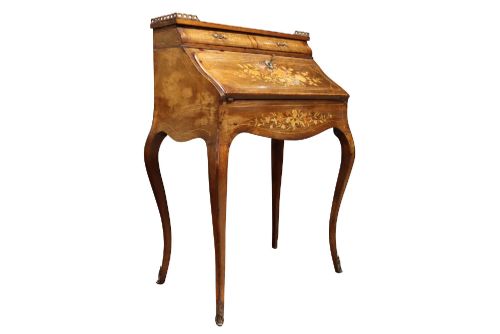
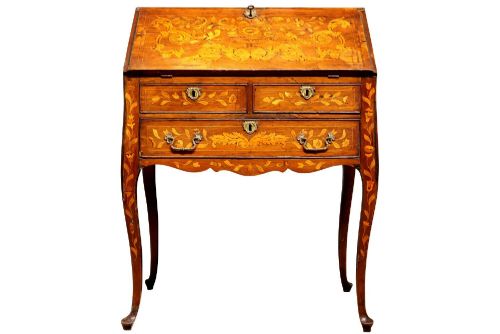

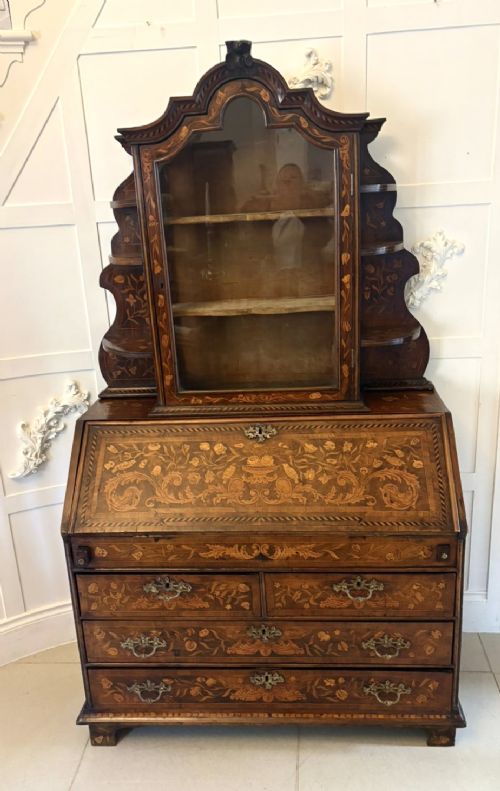


Floral Marquetry Secretary
Floral marquetry secretary desks bring together intricate wood-inlaid floral motifs and practical writing compartments, offering a striking centrepiece for a traditional study.
Floral Marquetry Secretary
A floral marquetry secretary is a form of writing furniture designed with a drop-front or cylinder lid that conceals interior drawers and pigeonholes. The surface displays detailed floral inlay work created from various contrasting timbers.
The pieces available here predominantly span the eighteenth and nineteenth centuries, featuring distinct Dutch Baroque, Dutch Rococo, and French revival aesthetics. Bureau bookcases and fall-front escritoires represent the most common forms you will encounter.
Walnut, burr walnut, and mahogany serve as the primary carcase woods upon which the intricate floral patterns are meticulously arranged. Many examples originate from Dutch and French workshops, ranging from bombe-shaped bureau bookcases to compact ladies writing desks.
Materials and construction methods
Cabinetmakers constructed the underlying carcase using sturdy timbers such as walnut, mahogany, and fruitwood, providing a stable foundation for decorative veneers. The exterior surfaces received finely sliced veneers of burr walnut, kingwood, and fruitwood.
The elaborate floral imagery relies on marquetry techniques, where different tinted woods, fruitwood inlay, and sometimes engraved bone or ivory are cut and fitted together like a puzzle. Brass handles, escutcheons, and occasional ormolu mounts complete the structural hardware.
Many bureau bookcases hide tiny secret drawers behind pigeonholes, designed for letters and coins that owners wished to keep entirely out of sight.
Assessing craftsmanship and execution
The distinction between standard and superior pieces rests on the precision of the marquetry cutting and the choice of timbers. Master makers selected burr walnut and richly grained fruitwood with great care, ensuring the floral motifs possessed natural shading and depth.
Structural integrity and the complexity of the form also dictate quality, separating simple fall-front desks from bombé-shaped bureau bookcases with fitted bookcase tops. Original brassware and the smoothness of interior writing slides contribute further to a piece's standing.
The Floral Marquetry Secretary Glossary
- Marquetry
- The art of applying decorative veneer pieces to a structure to form intricate pictures or patterns. Artisans cut contrasting woods together to create floral designs.
- Bureau bookcase
- A dual-purpose piece of furniture combining a sloping writing desk below with enclosed shelving or cabinet space above. These tall units often feature extensive marquetry.
- Bombé
- A swelling, outward-curving profile found on the sides and fronts of certain eighteenth-century case furniture. This rounded shape demands advanced woodworking skill.
- Escritoire
- A writing cabinet or desk, typically featuring a fall-front writing flap that opens to reveal internal compartments. The term often describes French variants.
- Ormolu
- Gilt bronze mounts applied to furniture for decorative effect, frequently seen on nineteenth-century revival pieces. This material adds metallic contrast to the timber.
Floral Marquetry Secretary: Frequently Asked Questions
What is a floral marquetry secretary?
A floral marquetry secretary is an antique writing desk or bureau adorned with detailed wood-inlaid flower patterns. These pieces typically feature a writing flap or cylinder front that opens to reveal internal compartments.
Originating largely from Dutch and French cabinetmakers in the eighteenth and nineteenth centuries, they combine utility with decorative artistry. Common forms include large bureau bookcases and smaller lady's writing desks.
How do I distinguish Dutch from French styles?
Dutch floral marquetry desks often display elaborate, vibrant floral and urn motifs covering the entire outer surface, frequently on walnut or burr walnut carcases. They tend to have robust proportions, sometimes with distinctive bombé shaping.
French secretaries from the nineteenth century, such as Louis XV or Louis XVI style examples, generally incorporate more restrained marquetry panels alongside ormolu mounts and curved cabriole legs. The focus leans toward refined elegance rather than all-over floral density.
How were these desks used historically?
Owners utilised these secretary desks for private correspondence, storing important documents, and managing household accounts. The enclosed pigeonholes and small drawers kept writing materials organised out of sight.
The fall-front or cylinder lid provided a sturdy writing surface when opened, then secured the contents safely when closed. In grand homes, they also functioned as display pieces that demonstrated the owner's taste and wealth.
Where should I place a secretary desk at home?
A floral marquetry secretary suits a quiet study, a living room, or a spacious hallway where its detailed woodwork can be appreciated. Direct sunlight should be avoided to protect the delicate fruitwood veneers and natural wood colours from fading.
Ensure the room maintains stable humidity levels to prevent the timbers and inlaid veneers from warping or cracking over time. Positioning the desk against a flat wall allows the drop-front to open comfortably without obstruction.
How do I identify the period of a desk?
Dating relies on examining the construction methods, secondary woods used inside the drawers, and the prevailing stylistic revival indicators. Eighteenth-century pieces generally show hand-cut dovetails and solid timber carcases with dense floral marquetry.
Nineteenth-century revival models often emulate earlier Dutch or French designs but may exhibit standardised hardware or machine-sawn elements inside. Comparing the specific floral motifs and cabinetry techniques helps narrow down the production era.