


Inlaid Slant Top Bureau
An inlaid slant top bureau offers a clever folding writing surface that drops to reveal fitted drawers, bringing warmth and character to a study.
Inlaid Slant Top Bureau
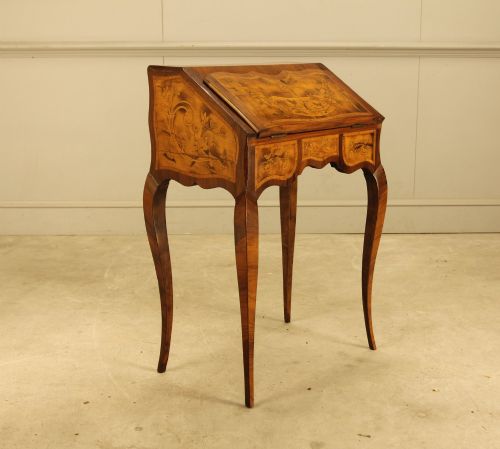
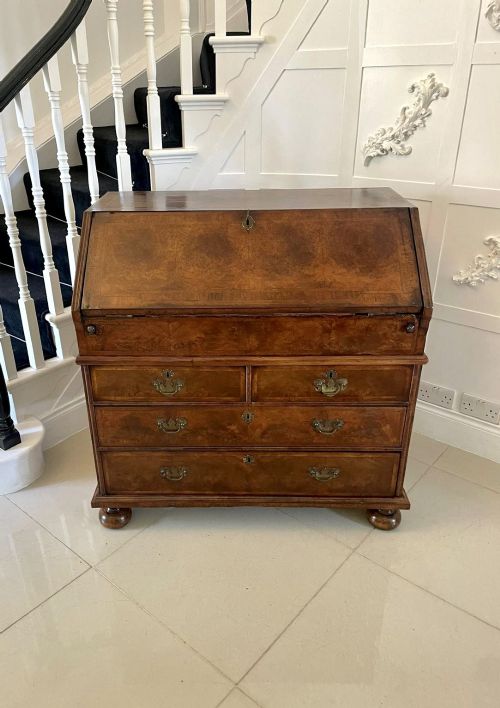
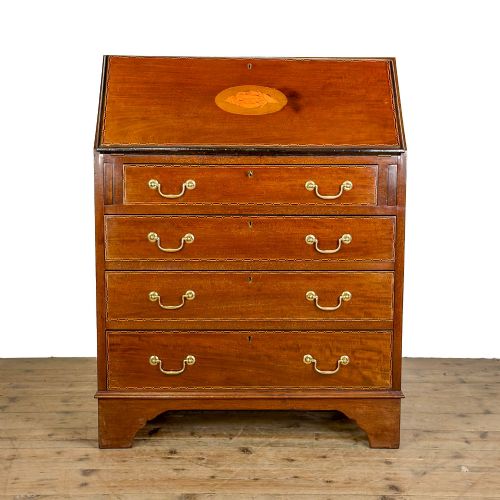
An inlaid slant top bureau is a writing cabinet featuring a sloping lid that conceals an interior arrangement of small drawers and pigeonholes. When closed, the angled fall hides the working papers and keeps the interior tidy.
The pieces seen here span multiple periods including the seventeenth century, the Victorian era, and the Edwardian epoch. Alongside traditional mahogany and walnut forms, variations range from tall davenports to bureau bookcases.
Makers utilised various regional interpretations, producing Dutch marquetry pieces alongside English mahogany and satinwood examples. These desks combine utilitarian storage with decorative cabinet work suited to period and traditional interiors.
How they were made
Cabinet makers constructed these carcases using solid timbers such as mahogany, oak, and walnut, frequently applying fine veneers to large flat surfaces. Marquetry and contrasting stringing were then inlaid into the wood to create geometric or floral motifs.
Internal components relied on traditional joinery, with small drawers assembled using dovetail joints and supported by internal runners. Brass handles, escutcheons, and hinges completed the hardware on the fall front and drawer fronts.
Some slant top desks hide secret compartments behind internal pigeonholes for storing valuables.
What varies in quality
The refinement of the timber selection dictates the visual appeal, particularly when burr walnut or figured mahogany is chosen for the exterior. Superior examples display careful grain matching across the fall front and drawer tiers.
The intricacy of the inlay work marks the difference between standard production and master craftsmanship. Crisp marquetry cutting and the integration of contrasting woods indicate a higher tier of workshop execution.
The Inlaid Slant Top Bureau Glossary
- Slant top
- The angled writing flap that hinges downward to form a horizontal desk surface. This sloping board conceals the inner stationery compartments when closed.
- Marquetry
- Decorative patterns formed by fitting together thin slices of various coloured woods and veneers. Artisans arrange these pieces to create pictorial or floral designs on the furniture facade.
- Davenport
- A compact form of writing desk featuring a sloped top with a lifting lid above a pedestal of drawers. This smaller bureau style gained popularity during the Victorian era.
- Bureau bookcase
- A writing cabinet surmounted by a glazed or panelled shelved upper section for books. This taller combination piece provides both storage and a fold down desk.
Inlaid Slant Top Bureau: Frequently Asked Questions
How do I maintain the wood surface?
Apply a traditional beeswax polish sparingly and buff with a soft lint-free cloth to nourish the timber. Avoid placing the desk near direct heat sources or strong sunlight to prevent the veneer from drying out.
Dust the intricate inlay work gently with a dry brush to remove particles from the recessed channels. Regular care preserves the polished finish without building up excessive wax layers.
Can I use this desk for daily work?
The interior compartments accommodate modern stationery items, though the writing height may differ from contemporary office furniture. Ensure the support brackets for the fold down flap are secure before resting heavy items on the surface.
Protect the leather or wood writing surface with a blotter if used extensively for writing. Closing the fall front at the end of the day keeps papers out of sight.
How do I date an inlaid bureau?
Examine the secondary woods inside the drawer linings and the style of the dovetails to establish the period of construction. Seventeenth-century examples typically feature walnut and heavy oak frames, while Edwardian pieces often utilise lighter mahogany.
The complexity of the brass hardware and the motifs used in the marquetry or stringing provide further clues to the manufacturing era. Comparing the internal drawer configuration to known period styles helps narrow down the decade.
What is a bureau de dame?
A bureau de dame is a feminine writing desk, often freestanding with elegant cabriole legs or delicate marquetry decoration. These pieces were designed for lighter correspondence and boudoir use rather than heavy estate administration.
Victorian and French revival examples often incorporate rosewood and satinwood veneers with fine brass mounts. Their smaller proportions allow them to sit comfortably in sitting rooms and reception spaces.