




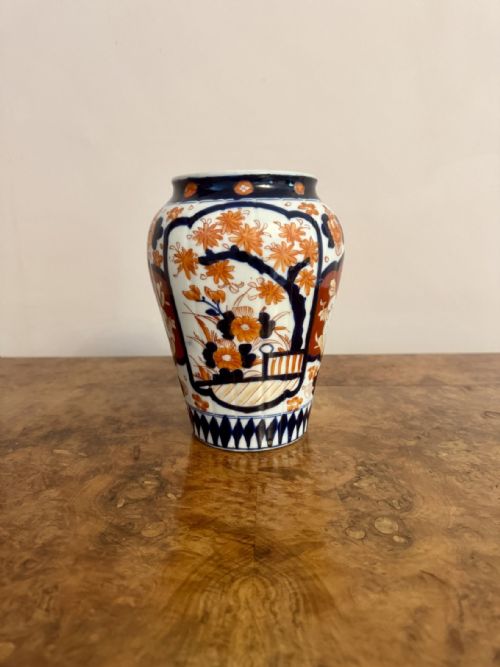
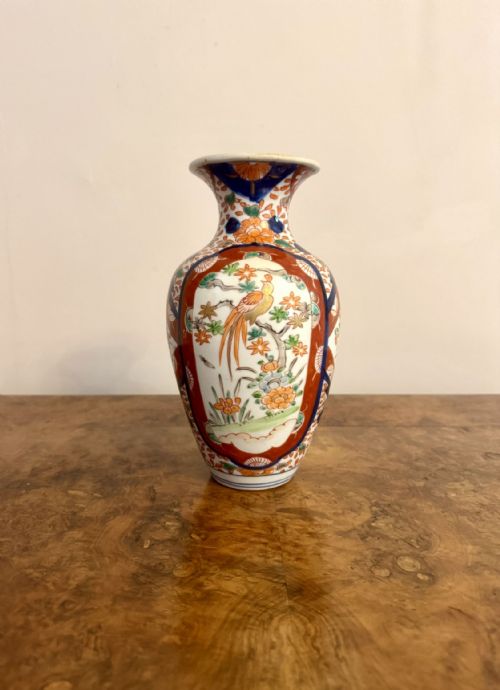


Floral Imari Vase
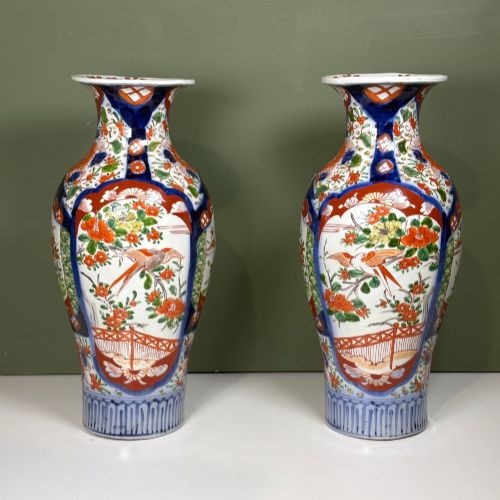
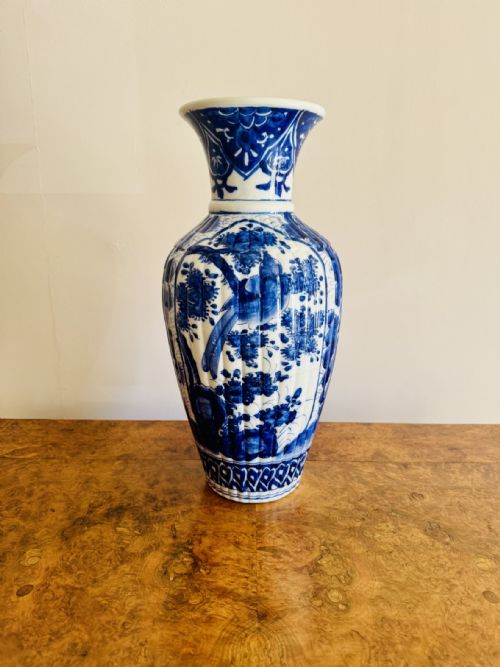
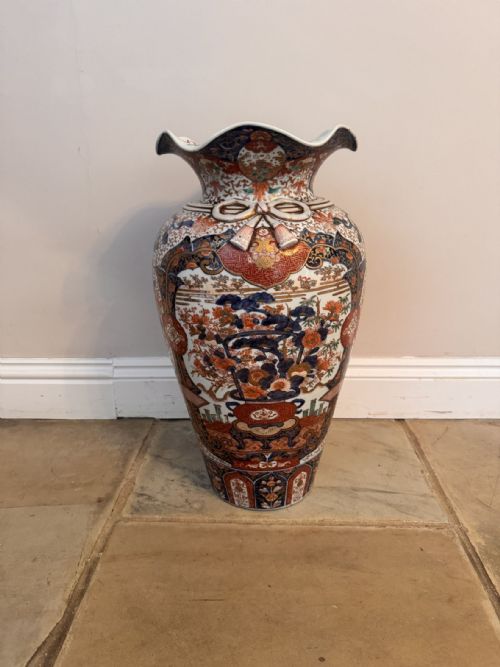
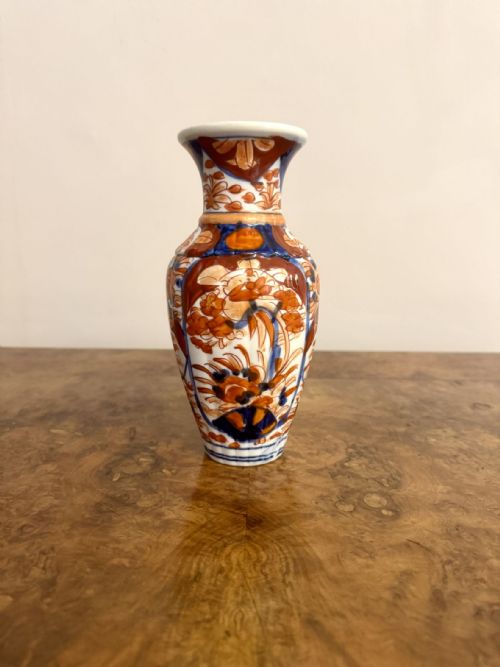
These floral imari vase examples combine rich cobalt blue and iron red pigments on white ceramic bodies for striking domestic display.
Floral Imari Vase
A floral imari vase brings together distinct Japanese and European ceramic traditions through characteristic cobalt blue, iron red, and gilt decoration. When searching for a floral imari vase, buyers encounter various forms including standard vessels, lidded jars, and double gourd shapes produced across the nineteenth and early twentieth centuries. Many pieces originate from the Meiji period and Arita kilns, alongside domestic iterations from English makers.
The selection ranges from small bud holders to large floor standing vessels and matching garnitures. Lidded ginger jars and two-handled formats appear frequently alongside slender neck designs and fluted body examples. Most surviving items date from the late nineteenth century up to the Edwardian era.
Materials and construction methods
Potters formed these pieces using ceramic, porcelain, and ironstone bodies moulded into specific vessel shapes. Glaze and enamel provide the smooth surface and vivid coloration characteristic of the palette.
Gold leaf and gilding highlight painted floral motifs and panel details across the surface. Artisans applied cobalt blue underglaze decoration before firing, followed by overglaze enamel and gold elements in subsequent lower temperature firings.
Floral Imari Vase Retail Price Guide 2026
Typical asking prices for floral imari vase among the pieces listed under this phrase on Sellingantiques today, from the lower quarter to the upper quarter. They describe what is for sale here now, not the wider market.
Some double gourd vessels mimic natural fruit shapes believed to bring good fortune.
Distinguishing quality factors
The precision of the hand-painted floral detailing and the crispness of the cobalt blue underglaze separate superior items from standard production. Richness in the application of enamel and gold leaf indicates greater care during manufacture.
Balanced proportions in moulded and ribbed bodies determine overall visual harmony. Intact covers on lidded vases and matching pairs or garnitures retain higher integrity than single mismatched vessels.
Royal Crown Derby·Spode·Mason's
The Floral Imari Vase Glossary
- Imari
- A style of Japanese porcelain decorated in underglaze blue, iron red, and gold, originating in Arita and exported widely through the port of Imari.
- Meiji Period
- The era in Japanese history spanning from 1868 to 1912, characterised by significant international trade and high production of decorative arts.
- Garniture
- A set of three or more matching vases and jars designed to be displayed together on a mantelpiece or sideboard.
- Double Gourd
- A vessel shape formed of two stacked bulbous sections resembling a traditional water carrier, seen in various porcelain designs.
- Ironstone
- A type of heavy durable earthenware developed in nineteenth-century England as a robust alternative to porcelain.
Floral Imari Vase: Frequently Asked Questions
What is an imari vase?
An imari vase is a ceramic vessel decorated in a distinct palette of cobalt blue, iron red, and gold. These pieces draw on traditional Japanese aesthetics adapted for both domestic use and export markets.
They display floral and panel motifs applied over white porcelain or ceramic bodies. Production spans centuries across Japanese kilns and later European factories.
How were these vases used?
These vessels served primarily as decorative ornaments within domestic interiors during the nineteenth and early twentieth centuries. Large examples stood on floors or large tables, while smaller pairs sat on mantelpieces.
Lidded jars and ginger jars held dry goods or functioned purely as display pieces. Garniture sets created symmetrical arrangements across formal rooms.
How do I date a piece?
Dating relies on material characteristics, potting styles, and factory marks where present. Nineteenth-century examples often display heavier ironstone or specific Meiji period manufacturing traits.
Edwardian pieces incorporate early twentieth-century aesthetic preferences while maintaining traditional colour palettes. Glaze finish and base construction offer further clues to the period of origin.
Are English and Japanese pieces different?
English iterations typically utilise ironstone or bone china bodies manufactured by factories such as Spode or Mason's. Japanese examples generally employ porcelain produced in Arita and surrounding regions.
While English makers adopted the distinctive colour scheme, the underlying clay and potting technique reflect European ceramic traditions. Both styles feature the characteristic red, blue, and gold decoration.