
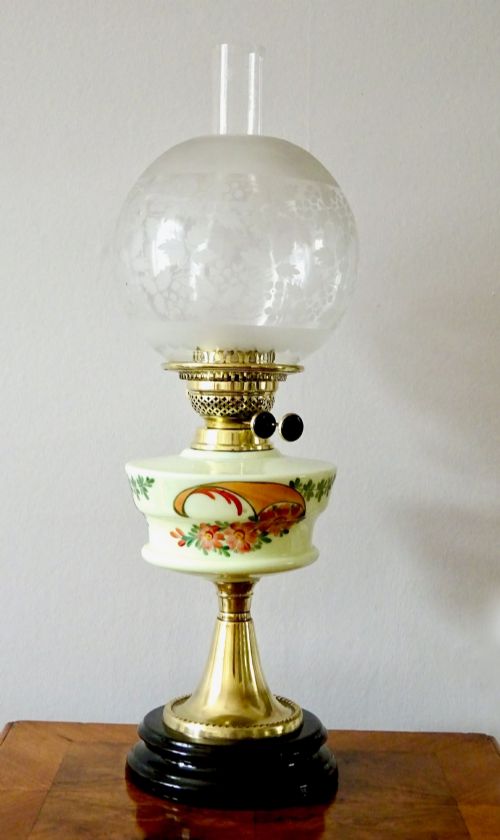


Floral Glass Oil Lamp
These floral glass oil lamp examples bring a warm period glow to a room, combining painted botanical motifs with coloured glass fonts and shades.
Floral Glass Oil Lamp
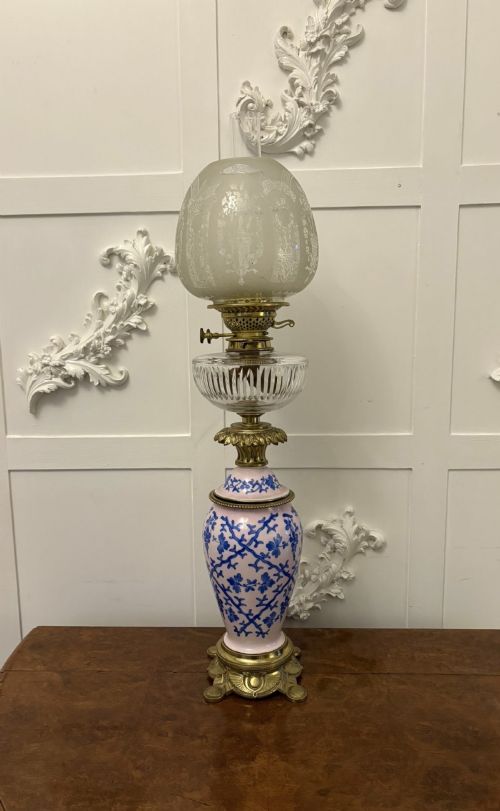
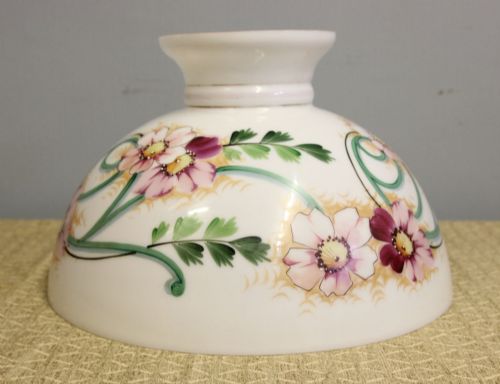
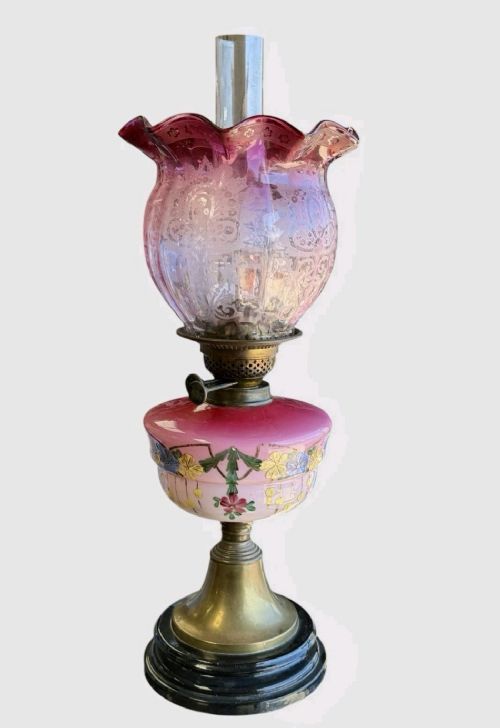
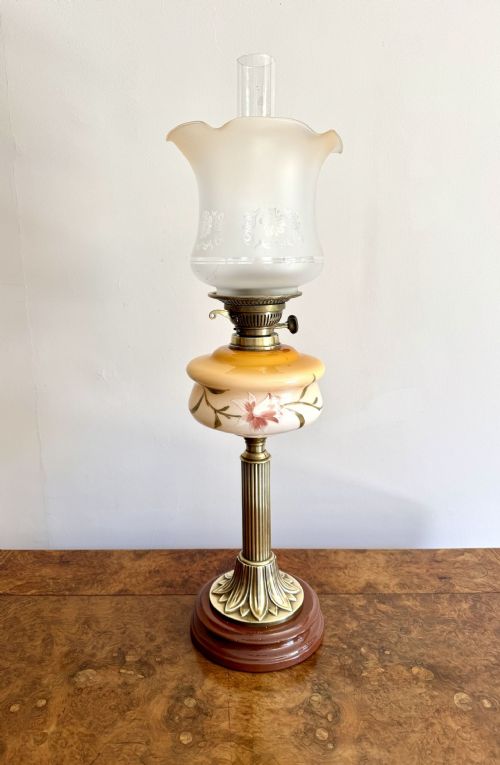
A floral glass oil lamp is a functional lighting antique designed during the nineteenth and early twentieth centuries, featuring hand-painted floral decoration on glass fonts, bowls or matching shades. When you search for a floral glass oil lamp, you encounter table lamps, hanging lamps and individual shades spanning the Victorian and Edwardian eras.
The specimens on this page originate predominantly from the Victorian and Edwardian periods, stretching from the 1860s through to the 1930s. Most examples combine glass components with brass fittings or ceramic bases, often displaying painted or enamelled botanical patterns across the body.
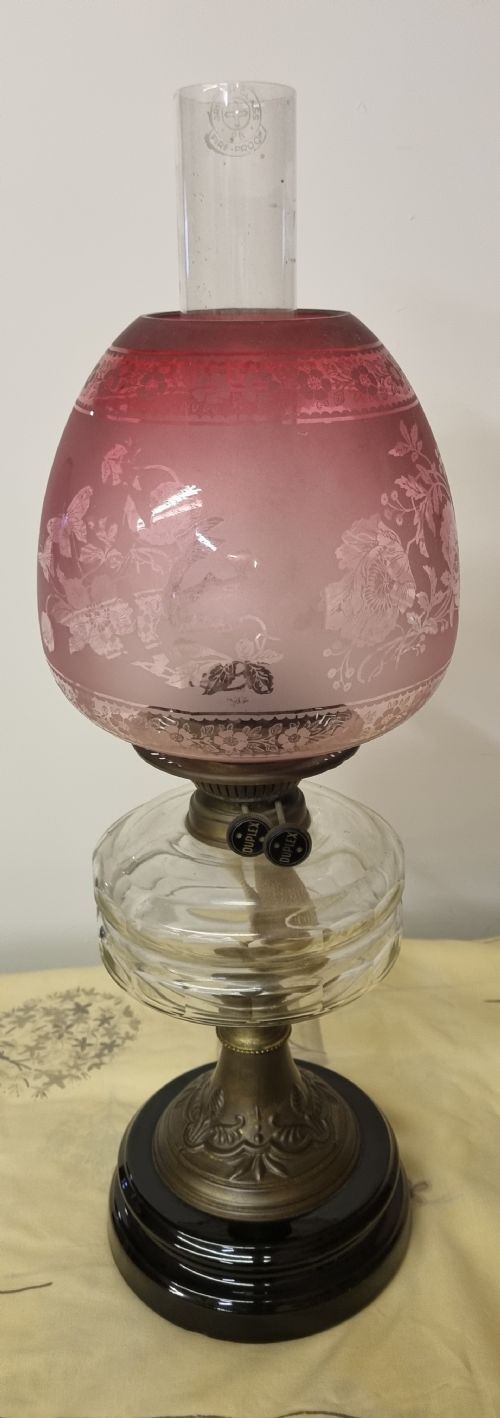
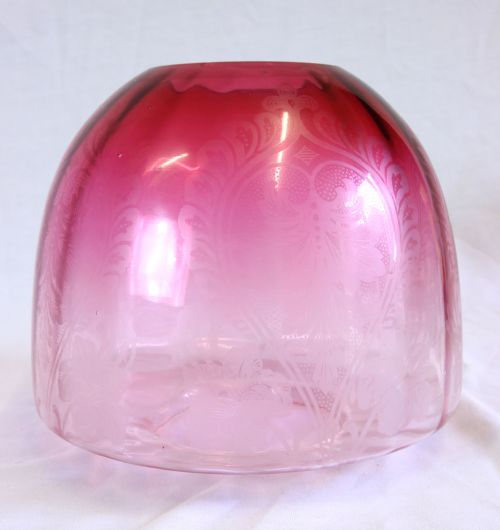
Table lamps and replacement shades form the bulk of the selections available. You will find complete lamps featuring paired glass fonts and shades alongside standalone globes in cranberry glass, opaline and milk glass.
Materials and construction
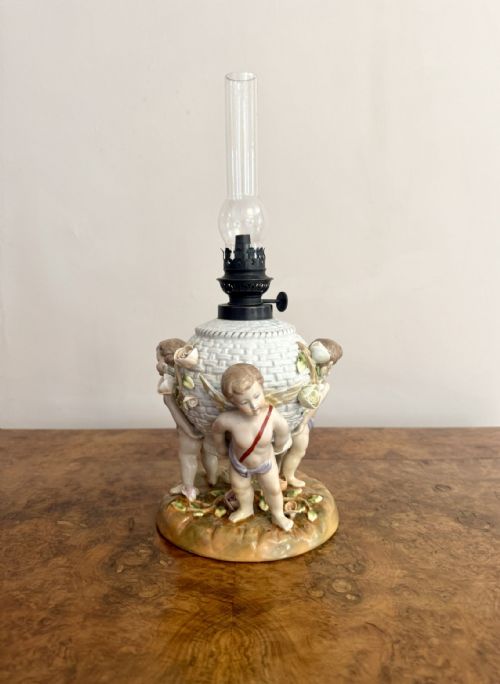
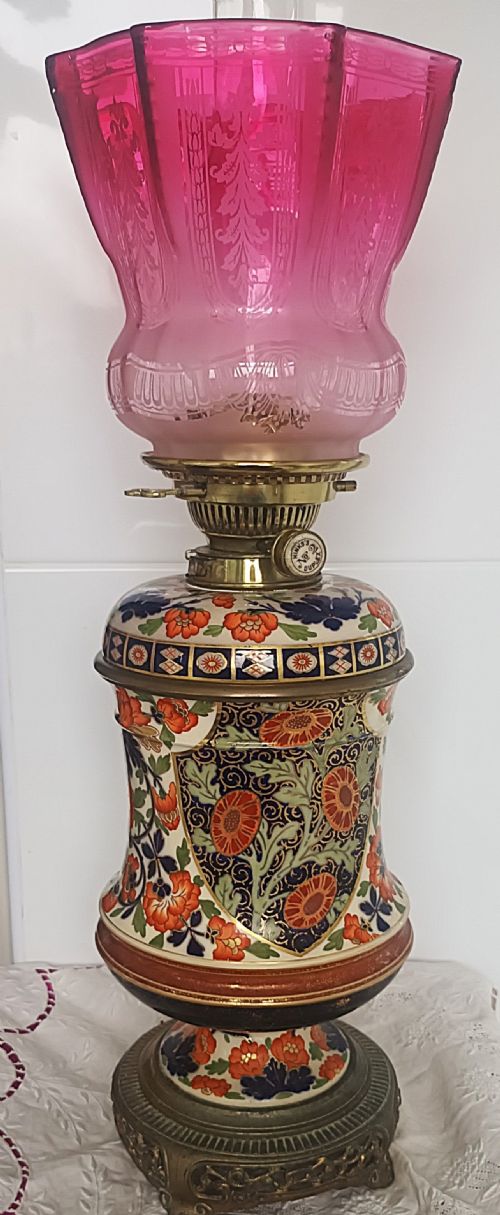
Glass forms the primary medium for these pieces, utilising coloured variants such as cranberry glass, milk glass and opaline alongside clear crystal. Makers incorporated brass for burners and mounts, while select examples integrate porcelain, faience and bronze elements into the base or font.
Decoration relies heavily on hand painting and enamel work applied directly to the glass or porcelain surfaces. Etched glass techniques and frilled or shaped rims on shades demonstrate period manufacturing methods that gave each lamp its distinct silhouette.
Markers of quality
Quality reveals itself in the execution of the hand-painted floral decoration and the depth of colour within the glass. Superior pieces display finely detailed brushwork on the botanical motifs rather than simple stencilling, paired with substantial weight in the glass body and brass components.
The presence of a matching original shade and font elevates an example, particularly when both components share coordinated floral patterns and colourways. Finer items also incorporate makers' names on the metal burners, reflecting higher manufacturing standards during the Victorian and Edwardian periods.
Sitzendorf porcelain·Hinks·Taylor Tunnicliff
The Floral Glass Oil Lamp Glossary
- Cranberry glass
- A rich red-pink transparent glass created by adding gold chloride to the molten batch. It appears frequently in Victorian lamp fonts and shades.
- Font
- The oil reservoir of the lamp, typically positioned above the base and beneath the burner. These are frequently fashioned from coloured or painted glass.
- Opaline glass
- An opaque or translucent pale glass with a milky appearance, often tinted in soft pastel shades and used as a ground for hand-painted flowers.
- Faience
- Tin-glazed earthenware used for ceramic lamp bases, decorated with coloured enamels. It brings heavier texture and opaque colour to the design.
- Burner
- The metal mechanism sitting atop the font that holds the wick and supports the glass chimney and shade. Standard period examples often bear maker stamps.
Floral Glass Oil Lamp: Frequently Asked Questions
How do I date an oil lamp?
Dating relies on stylistic clues, materials and burner mechanism patents. Victorian examples often feature heavy brass mounts and rich cranberry glass, while Edwardian pieces lean towards softer pastel glass and simpler lines.
Examining any markings on the metal burner can also point to specific manufacturing decades between the 1860s and 1930s.
Can these lamps still burn oil?
Most collectors wire these pieces for electricity to use them safely as daily table lamps. Converting them usually involves running a cord through the existing burner without altering the antique body.
Keeping the original oil reservoir intact preserves the piece for display if you prefer not to convert it.
Are the shades original to the bases?
Matching shades and bases often get separated over a century of use. You can identify matching sets by consistent glass colour, matching floral hand-painting styles and correct proportion.
Many surviving pieces bring together period-correct glass shades and fonts that were made in the same era.