
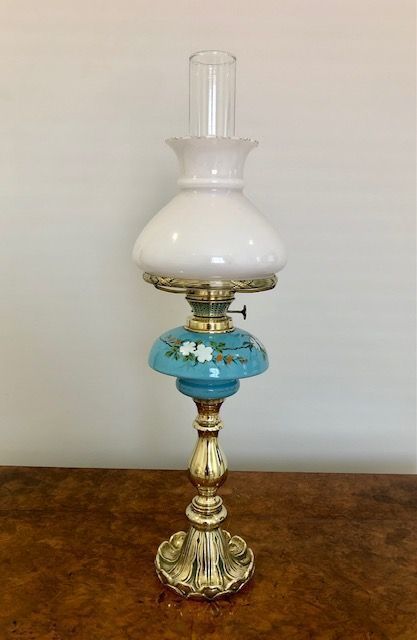
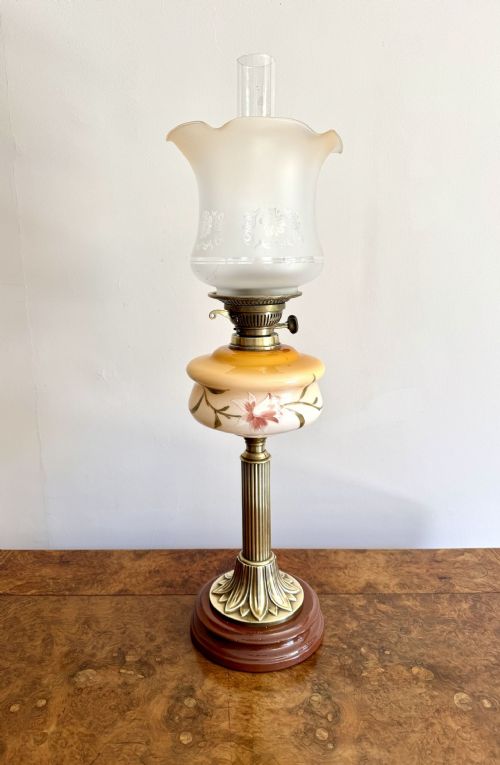


Traditional Paraffin Hurricane Lamp
These traditional paraffin hurricane lamps bring steady, reliable light and genuine period character to a room.
Traditional Paraffin Hurricane Lamp
When you search for traditional paraffin hurricane lamps, you are looking at nineteenth and early twentieth century lighting pieces designed for domestic use. These objects typically take the form of table oil lamps that burn paraffin fuel to provide illumination. The examples appearing on this page span the Victorian and Edwardian eras, running from eighteen seventy through to nineteen hundred.
The most common versions you will meet on this page are constructed from brass and fitted with glass components. Many include shades rendered in opaline glass, while others rely on the structural strength of brass columns and reservoirs. These pieces reflect the standard domestic lighting technology of their respective periods before electric lighting took over.
How they were made
The primary material combination relies on heavy cast or spun brass paired with blown and moulded glass. Brass forms the durable structural base, fuel reservoir, and burner assembly, while glass is utilised for chimneys and decorative shades.
Makers shaped the glass elements through blowing and pressing techniques, producing clear, frosted, cranberry, and opaline variants. Metal components were turned, cast, and joined to create sturdy table lamps capable of holding fuel safely.
Materials documented across these listings include solid brass, clear glass, opaline glass, frosted glass, green glass, cranberry glass, and ceramic.
What varies in quality
The distinction between standard and superior pieces rests on the weight and finish of the brass components. Heavier gauge metalwork and finer casting detail elevate an example above mass-produced counterparts.
The presence of specialised glass elements, such as coloured opaline shades, adds to the refinement of a piece. Better examples display harmonious proportions between the metal base and the glass shade.
The Traditional Paraffin Hurricane Lamp Glossary
- Paraffin lamp
- A lighting device that burns paraffin oil via a wick drawn through a metal burner. This fuel replaced earlier camphene and whale oil mixtures during the nineteenth century.
- Opaline glass
- A milk-white translucent glass frequently utilised for lamp shades during the Victorian period. It diffuses light softly without glare.
- Victorian
- The period spanning the reign of Queen Victoria from eighteen thirty-seven to nineteen hundred and one. Pieces from this era often display robust brass construction and ornamental detail.
- Edwardian
- The era covering the reign of King Edward the Seventh from nineteen hundred and one to nineteen hundred and ten. Designs from this time tend toward lighter proportions.
Traditional Paraffin Hurricane Lamp: Frequently Asked Questions
How do these lamps work?
These pieces burn paraffin fuel drawn up through a cotton wick housed inside a metal burner. A glass chimney sits atop the burner to steady the flame and protect it from draughts.
Modern users often clean the components and trim the wick before lighting. Care must be taken to use appropriate lamp oil rather than heavier fuels.
Can I still burn oil in them?
Many of these lamps remain mechanically sound and capable of burning paraffin oil. You should check the integrity of the fuel reservoir and burner mechanism before attempting to use them.
Some buyers prefer to convert them for electricity, while others keep them strictly as decorative decorative objects. Original burners require clean wicks and secure chimneys to operate safely.
How do I date a brass lamp?
Dating relies on stylistic clues and construction methods found in the metalwork and glass. Victorian pieces often feature heavier cast brass bases, while Edwardian examples can appear slightly more restrained.
Maker marks stamped onto the burner thumbwheels or collars provide the most precise chronological indicators. Comparing the shade style with period catalogues helps narrow down the decade.
What is opaline glass?
Opaline glass is a semi-translucent white material developed to soften the harsh glare of oil and gas flames. It became immensely popular for Victorian and Edwardian lamp shades.
The milky appearance comes from the addition of bone ash or metal oxides to the molten glass batch. It diffuses a warm, even glow across the room.