
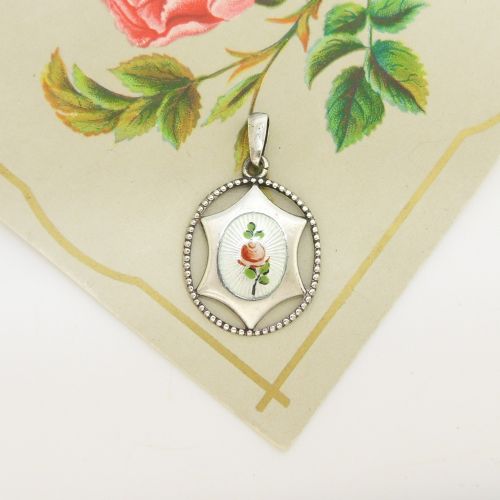
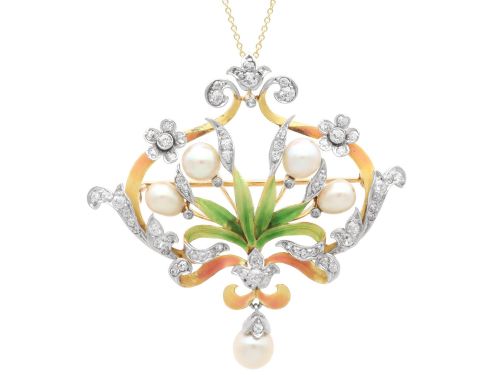
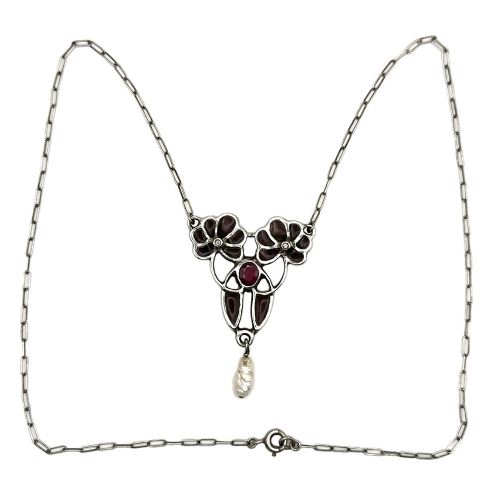
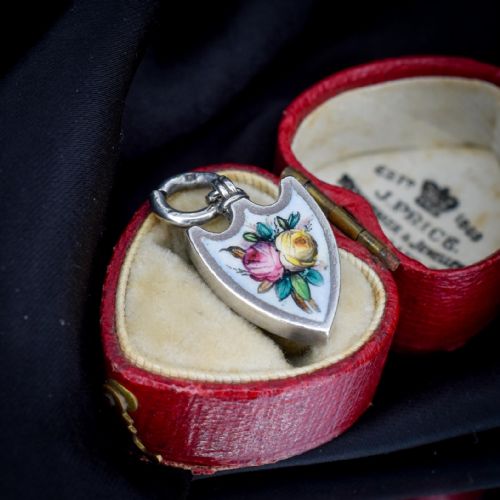


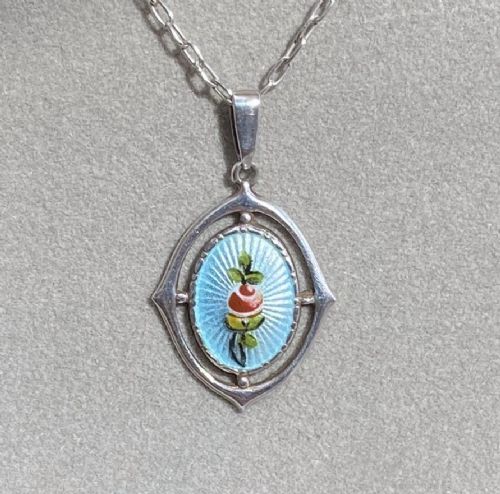


Floral Enamel Pendant
These floral enamel pendant pieces bring together coloured vitreous glass and precious metals, offering wearable botanical motifs from past centuries.
Floral Enamel Pendant
A floral enamel pendant combines precious metals with fused vitreous glass to create wearable botanical motifs. These pieces span periods from the late nineteenth century through to the mid-twentieth century.
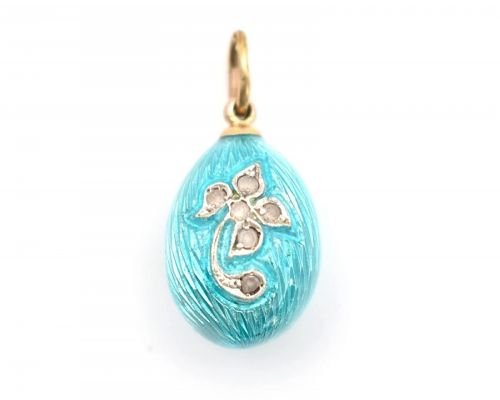
The designs draw on various historical movements, including Art Nouveau, Arts and Crafts, Victorian, and Edwardian styles. Common formats include shields, hearts, eggs, and circular lockets.
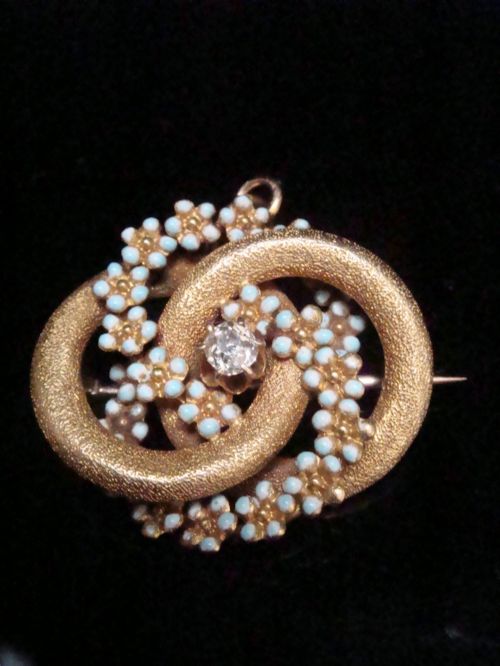
Buyers will encounter both silver and gold settings, frequently accented with small diamonds, pearls, rubies, or turquoise. Some items function as both pendants and brooches.
How they were made
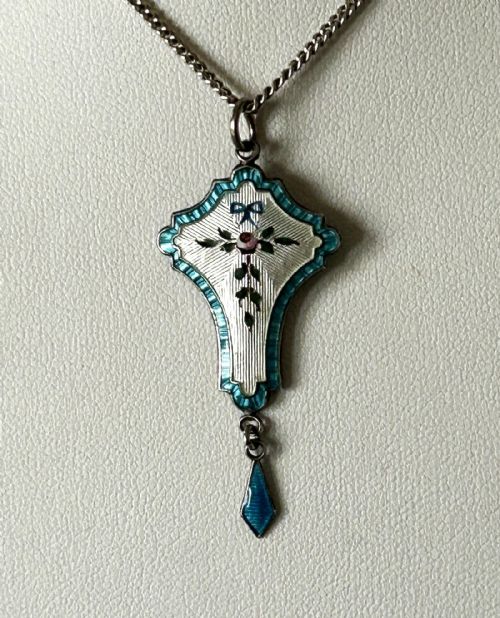
Makers fused powdered glass to metal surfaces under high heat to create the smooth coloured enamel sections. Techniques such as guilloche and cloisonne provided patterned textures beneath translucent layers of glass.
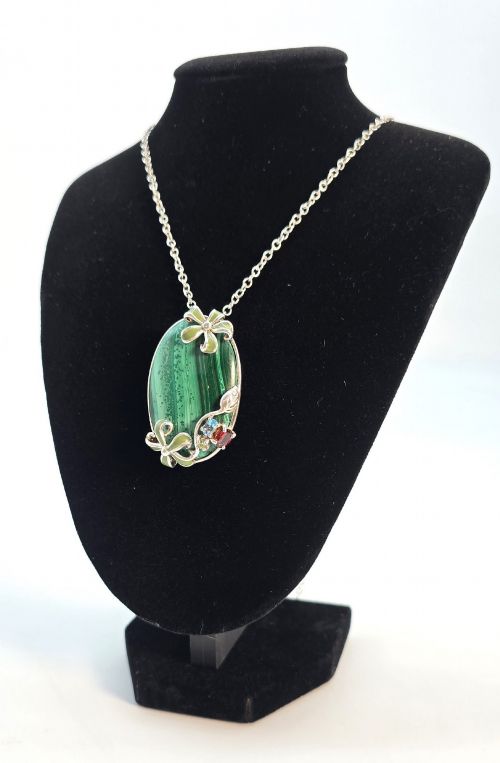
Settings were fashioned from silver, fifteen-carat yellow gold, or eighteen-carat yellow gold, shaped by hand into intricate floral and leaf designs. Gemstones like diamonds, pearls, and malachite were then set securely into the precious metal framework.
Materials recorded across the inventory include vitreous enamel, malachite, turquoise, pearls, diamonds, and rubies set in silver and gold.
What varies in quality
The refinement of the metalwork and the complexity of the enamel technique set the standard across these items. Hand-wrought silver or gold with precise guilloche patterns reflects superior workshop skill compared to simpler cast forms.
The integration of precious stones like diamonds and pearls alongside the enamel work distinguishes high-end examples. Preservation of the vitreous glass surface without loss or heavy abrasion also marks the better specimens.
Charles Horner
The Floral Enamel Pendant Glossary
- Guilloche
- Enamel technique involving a metal surface engraved with repetitive geometric patterns beneath translucent coloured glass.
- Cloisonne
- Enamel technique where thin metal wire is soldered to a metal base to form compartments filled with coloured glass paste.
- Vitreous enamel
- Glass material fused to metal at high temperatures to produce a hard, glossy decorative coloured surface.
- Puff pendant
- A rounded, three-dimensional pendant form often designed with a hollow or domed profile.
- Bespoke maker mark
- Stamp or punch applied by a silversmith or jeweller to identify their workshop origin.
Floral Enamel Pendant: Frequently Asked Questions
What periods do these pendants come from?
The available pieces originate from various eras, spanning late Victorian and Edwardian decades through to the nineteen-twenties and nineteen-fifties.
Design characteristics and metal hallmarks help distinguish between these different historical periods.
Are these pieces made of solid gold?
Many examples utilise solid yellow gold in fifteen-carat or eighteen-carat standards. Other items are fashioned from solid silver.
Precious metal hallmarks usually stamp the purity directly onto the reverse or loop of the piece.
How should I clean my enamel pendant?
Vitreous enamel requires gentle cleaning with warm soapy water and a soft cloth to protect the glossy glass surface.
Harsh chemical dips and ultrasonic cleaners can damage the delicate enamel and softer gemstones like pearls.
Can these pendants double as brooches?
Certain Victorian and Edwardian examples feature integrated pin fittings alongside loops, allowing them to serve as both necklaces and brooches.
Checking the reverse reveals whether a pin mechanism is present.