



Floral Embroidered Panel
A floral embroidered panel brings warmth and tactile depth to a room through centuries of hand-stitched botanicals.
Floral Embroidered Panel
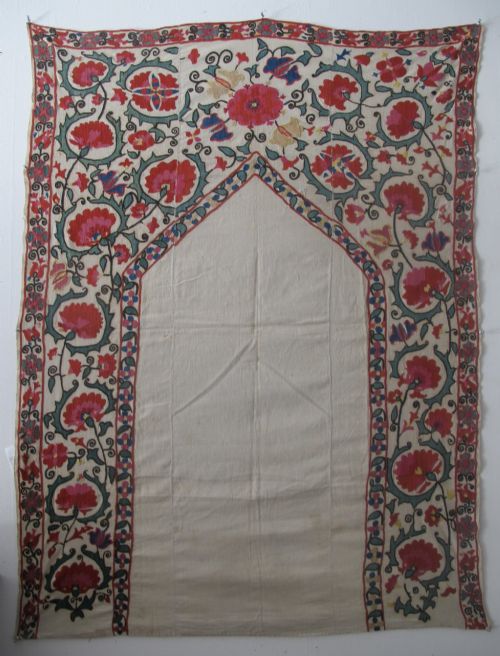
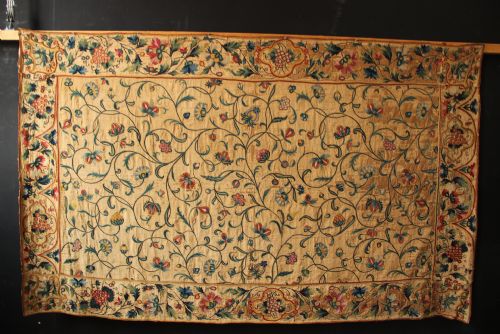
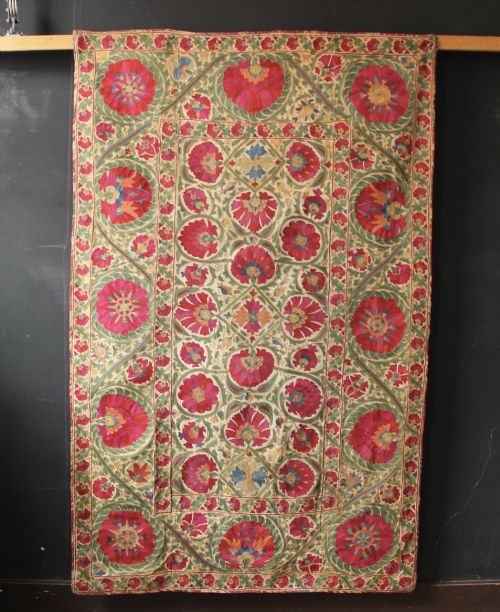
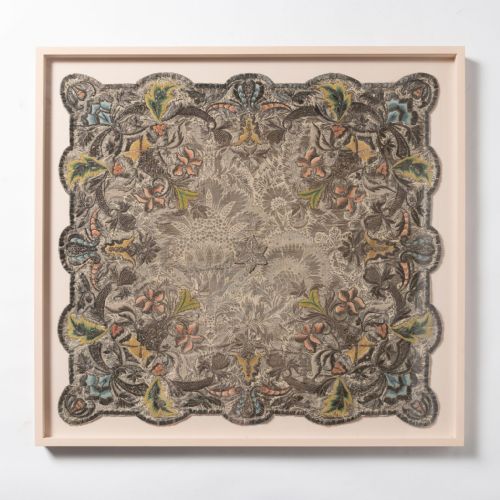
When you search for a floral embroidered panel, you encounter textiles created across multiple centuries and regions, ranging from Central Asian suzanis to English crewelwork and Persian needlework. The selection spans domestic wall art, fire screens, folding screens and textile fragments mounted for display.
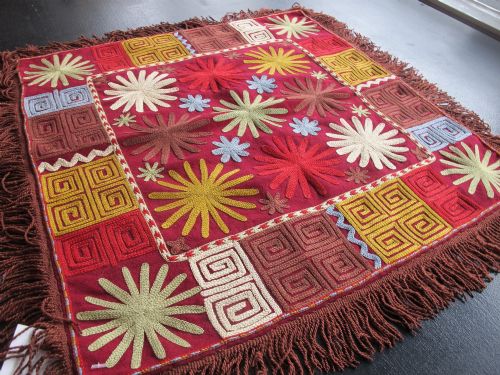
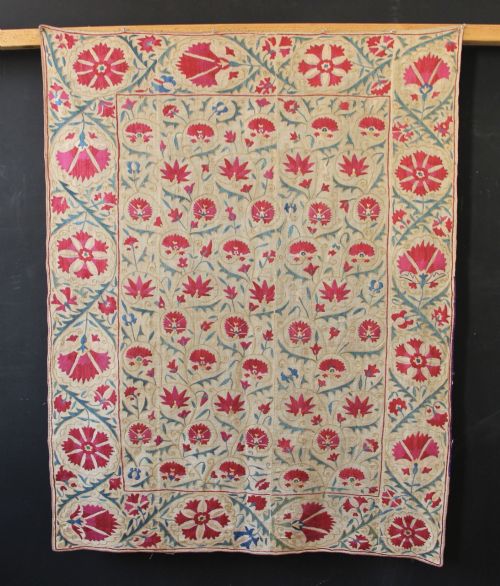
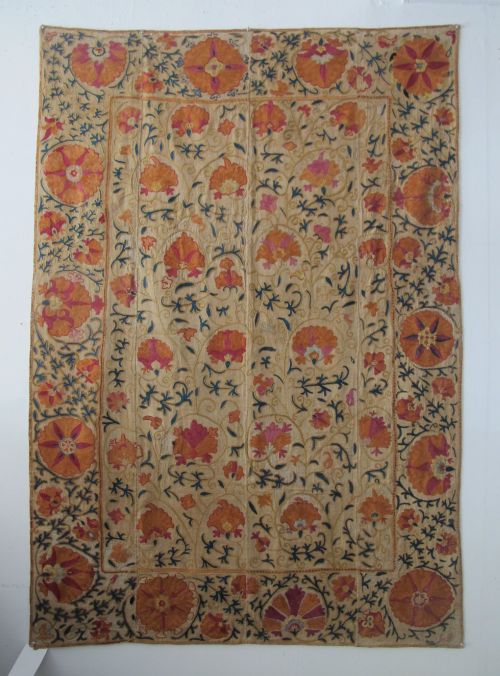
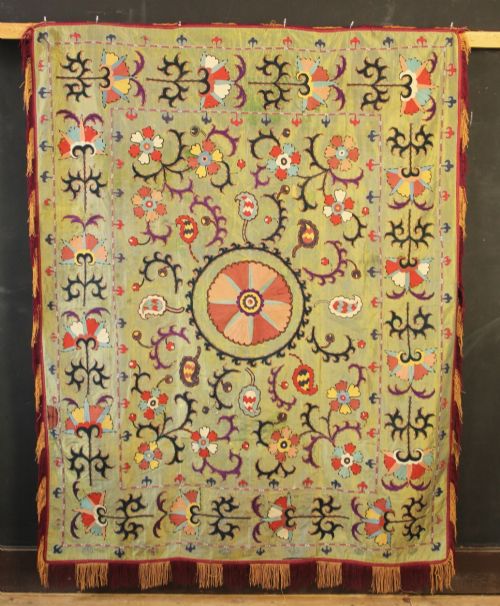
You are most likely to meet Central Asian suzanis from Uzbekistan, particularly pieces originating from Bokhara and Shahrisabz dating from the nineteenth and early twentieth centuries. These are complemented by English crewelwork, French needlepoint panels, and Persian Rasht embroidery on felt grounds.
How they were made
The makers utilised ground fabrics such as cotton, linen, silk, and wool, applying hand-dyed threads in silk and wool to build botanical motifs. Techniques include dense tambour work, applique, and crewel embroidery using wool on linen twill.
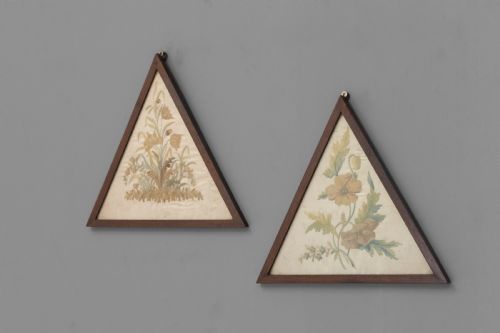
Support structures vary from simple wooden frames and mahogany or walnut fire screens to original felt and cotton backings. Many items incorporate multi-layered stitching that creates high-relief textures across the surface.
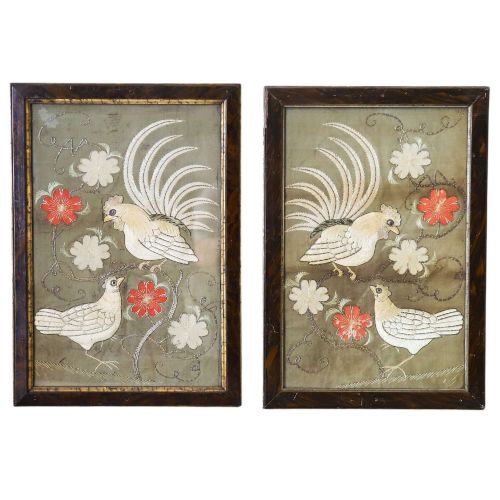
Several panels quietly capture the stubborn posture of French cockerels and hens stitched over a century ago.
What varies in quality
The distinction between standard examples and exceptional items lies in the density of the needlework and the complexity of the botanical layout. Finer pieces demonstrate precise tension, sophisticated colour palettes, and intricate secondary detailing within the floral medallions.
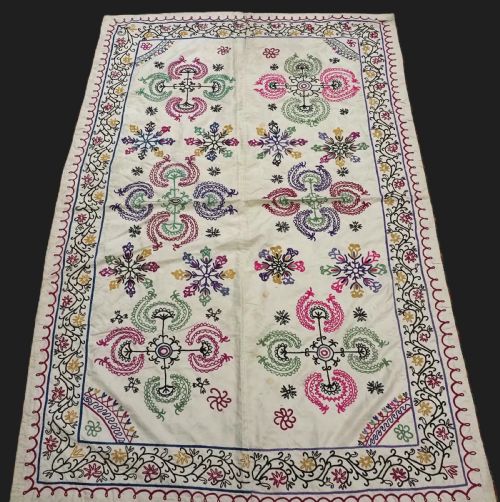
The integrity of the ground fabric and the preservation of original hand-dyed threads also influence the character of the piece. Well-balanced proportions in regional formats like nim suzanis or prayer arches reflect the skill of the original artisan.
The Floral Embroidered Panel Glossary
- Suzani
- A large embroidered textile from Central Asia, traditionally made by brides as part of their dowry. These pieces typically feature bold floral medallions on cotton or silk grounds.
- Crewelwork
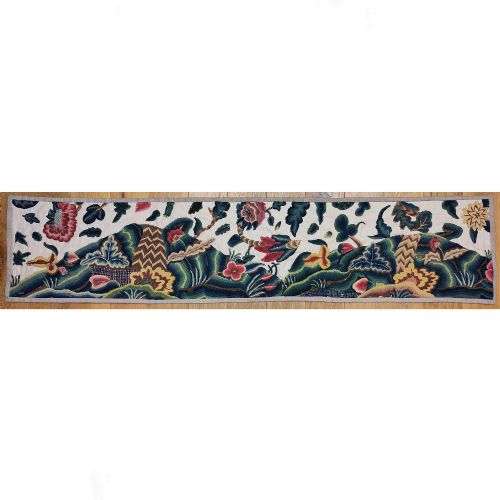
- A traditional form of embroidery utilising wool yarn on a heavy linen or cotton twill fabric. This technique often displays dense Jacobean style floral and fauna patterns.
- Nim Suzani
- A smaller or half-sized variant of the traditional Central Asian suzani. They share the same vibrant botanical iconography but on a more compact scale.
- Rasht Embroidery
- A distinctive style of Persian textile art characterised by intricate mosaic-like applique work using coloured silks on a wool felt ground.
Floral Embroidered Panel: Frequently Asked Questions
How were floral embroidered panels originally used?
These textiles served diverse practical and decorative functions in domestic interiors, from wall hangings and furniture upholstery to protective fire screens.
In Central Asia, full-scale suzanis functioned as wall coverings, bed covers, or ceremonial hangings for important family events.
How do I care for an antique textile panel?
Keep embroidered textiles away from direct sunlight to prevent the natural dyes from fading over time. Gentle surface dusting with a soft brush helps maintain the fabric without risking the fragile hand-stitched threads.
Professional conservation mounting provides proper structural support if you plan to hang a heavy piece on a wall.
How do I identify a suzani?
Suzanis are identifiable by their distinctive Central Asian floral motifs, often arranged around a central medallion or within a prayer format. They are typically worked in vibrant silk embroidery on a cotton or linen ground.
Regional variations from Bokhara, Nurata, or Lakai display specific colour combinations and stitch densities.
What is the difference between crewelwork and needlepoint?
Crewelwork involves stitching wool yarn onto a woven ground fabric like linen, focusing on flowing botanical stems and leaves. It creates a textured, raised surface through various embroidery stitches.
Needlepoint, or canvas work, covers a stiff open-weave canvas completely with counted stitches to form a dense, flat tapestry picture.