
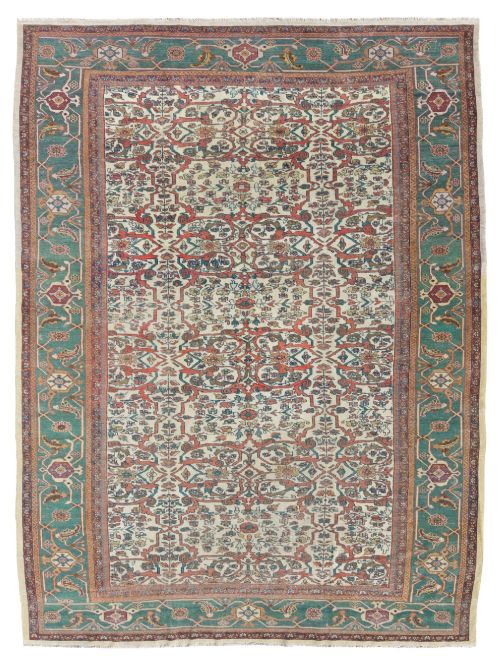
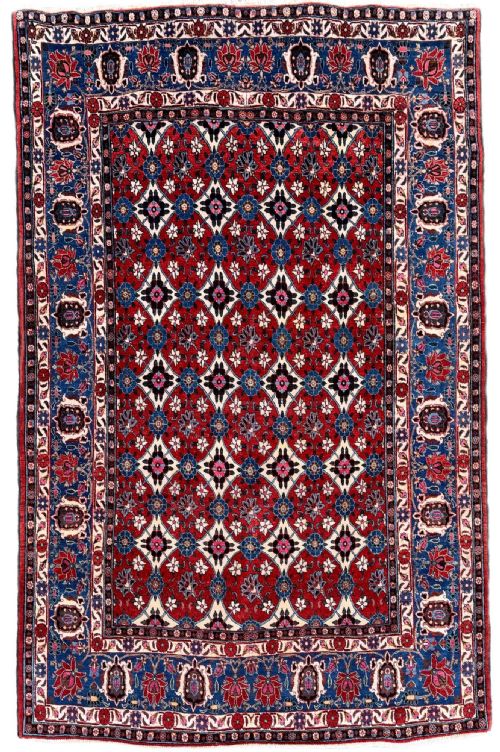
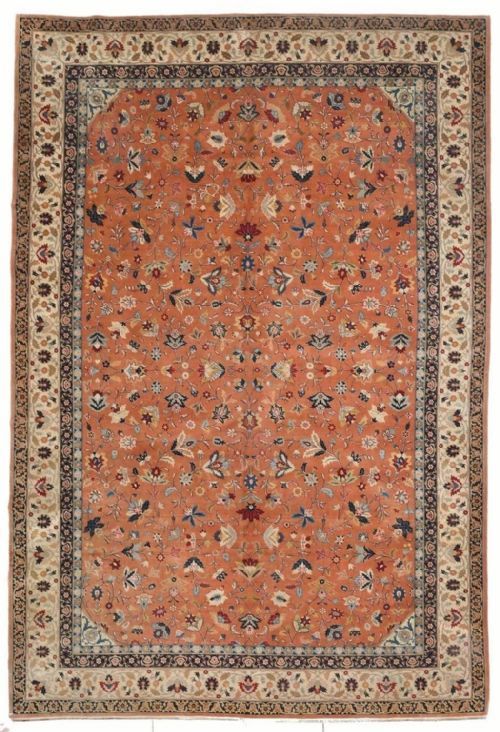
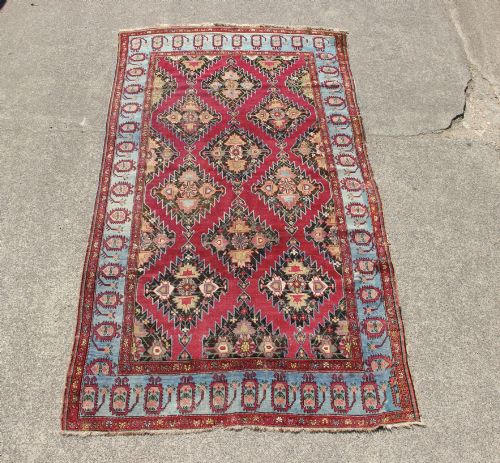

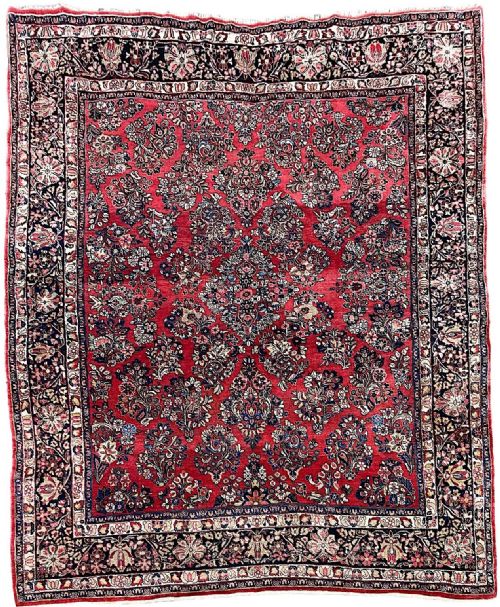
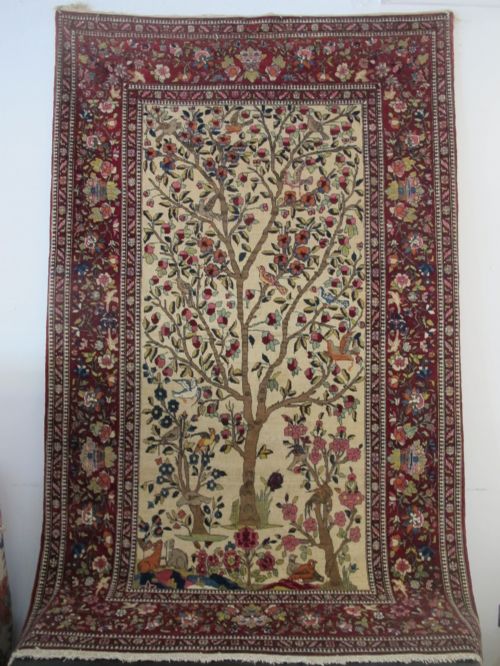


Floral Border Oriental Rug
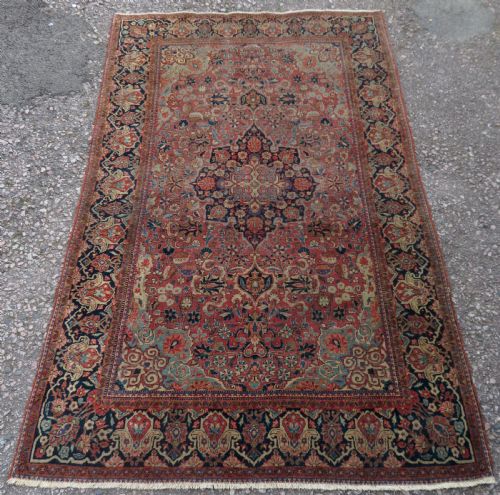
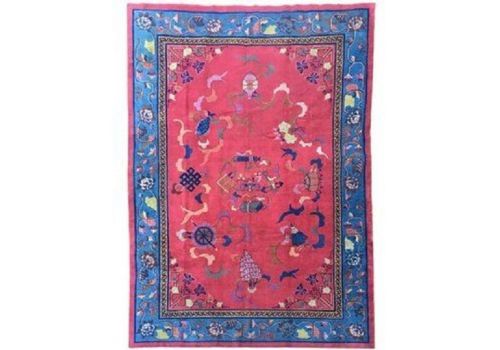
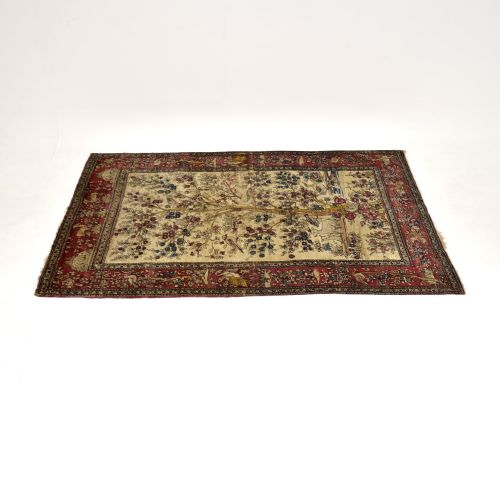
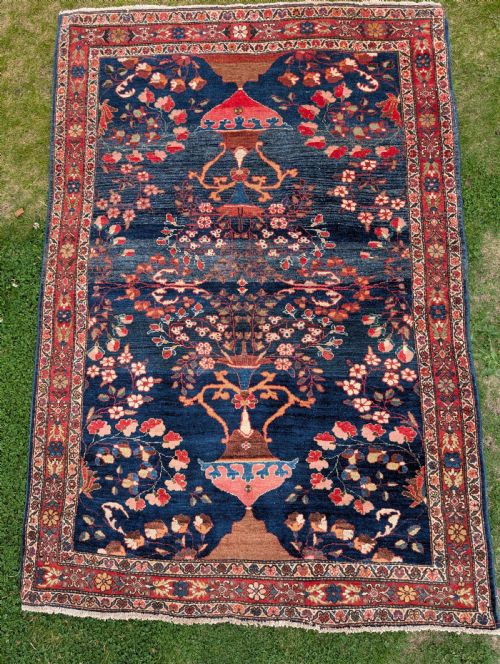
A floral border oriental rug anchors a room with time-tested motifs, offering intricate borders framing rich fields of wool and cotton.
Floral Border Oriental Rug
A floral border oriental rug gathers woven textiles originating from Persia, Turkey, China, and the broader East, spanning the latter half of the nineteenth century through the early decades of the twentieth. These pieces arrive in various scales, from compact area rugs to substantial carpets designed for expansive reception rooms.
Buyers frequently encounter Persian workshop and village pieces here, including Kashan, Sultanabad, Tabriz, and Heriz productions. Alongside these standard formats, the selection occasionally yields specialised forms such as prayer rugs, saddle covers, and embroidered fragments.
The defining characteristic remains the botanical framing, where scrolling vines, palmettes, and blossom motifs enclose central medallions or all-over field patterns. These rugs combine functional floor coverings with decorative traditions developed across centuries of weaving.
Materials and Construction
The foundation of these textiles typically relies on hand-spun wool and cotton, with warp and weft threads providing structural stability. Certain regional pieces incorporate silk highlights or metallic thread to accentuate specific areas of the design.
Weavers knotted wool pile onto cotton or wool foundations by hand, determining durability and pile density. Natural dyes yielded the characteristic terracotta, indigo, and earthy tones found across the nineteenth and early twentieth-century examples.
The listings span woven works from the eighteen-sixties through the nineteen-thirties, utilising wool, cotton, silk, and metallic thread.
Distinctions in Quality
Quality rests primarily in the precision of the knotting and the complexity of the botanical drawing within the border. Finer examples display tight, uniform pile construction that allows intricate curves in floral motifs to remain crisp and legible.
The depth and consistency of the colour palette also separate standard pieces from superior works. Natural dye variations create subtle shifts in tone across the field, adding visual resonance absent in uniform commercial dyeing.
Ahmadi Isfahan
The Floral Border Oriental Rug Glossary
- Warp
- The stationary vertical threads stretched across the loom before weaving begins. These form the skeletal grid that supports the knots and wefts.
- Weft
- The horizontal threads passed alternately over and under the warp threads to lock the rows of knots in place. This gives the textile its structural firmness.
- Pile
- The upright cut ends of the yarn that form the usable surface of the rug. Its height and density determine how the textile feels underfoot.
- Medallion
- A symmetrical ornamental design centred in the middle of the rug field. It often mirrors the botanical motifs found in the surrounding borders.
Floral Border Oriental Rug: Frequently Asked Questions
How do I clean an antique oriental rug?
Professional dusting and gentle surface washing by a specialist preserve the wool pile and natural dyes. Avoid standard household detergents and mechanical agitation.
Regular light vacuuming without a rotating power brush removes embedded grit safely between professional cleanings.
Where should I place these carpets?
These rugs suit low-traffic sitting rooms, studies, and bedrooms where footfall remains moderate. Placing them away from direct, harsh sunlight protects the natural wool and dyed fibres from fading.
Using a breathable underlay prevents slipping and cushions the foundation fibres against hard flooring.
How can I tell the age of a rug?
Structural clues such as natural dye variations, hand-spun wool irregularities, and border style indicate the period of origin. Regional weaving characteristics help narrow down the decade of production.
Examining the selvages and fringe wear provides further evidence of historical handling and usage.
What defines a Persian floral border rug?
These pieces feature botanical guard stripes and main borders framing a central field of woven motifs. The design vocabulary draws on traditional regional patterns developed over generations.
Originating cities like Tabriz, Kashan, and Heriz impart distinct colour palettes and floral stylings to the weave.