



Flint Glass Flute Glasses
These flint glass flute glasses bring eighteenth-century and nineteenth-century elegance to the table, offering collectors brilliant clarity and fine historic form.
Flint Glass Flute Glasses
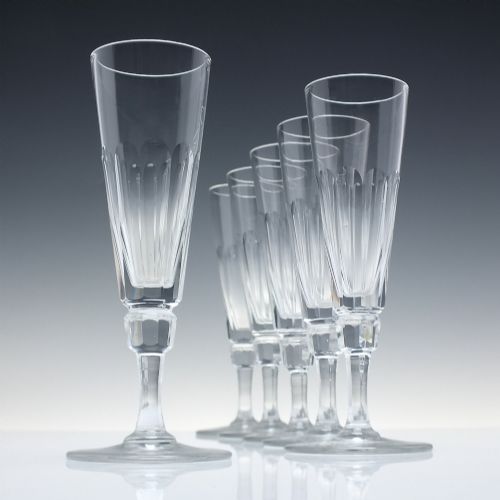
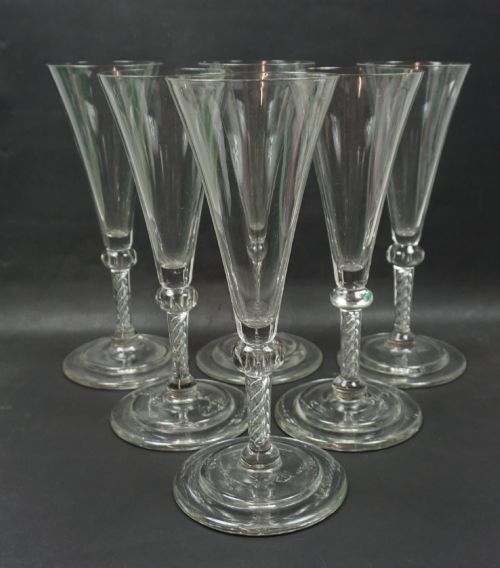
When searching for flint glass flute glasses, a buyer encounters slender drinking vessels designed primarily for champagne, wine, ale, and ratafia. The pieces recorded here span the eighteenth century, the Georgian era, the Victorian period, and nineteen-thirty.
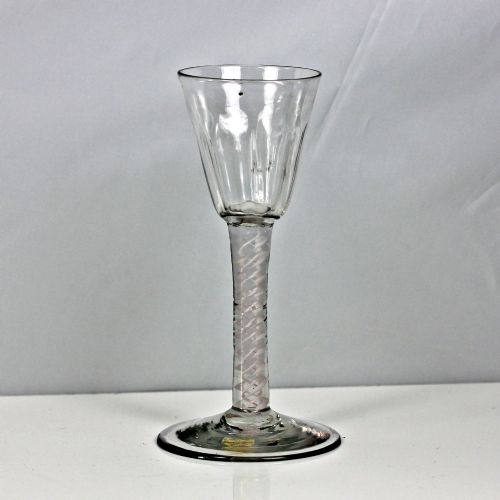
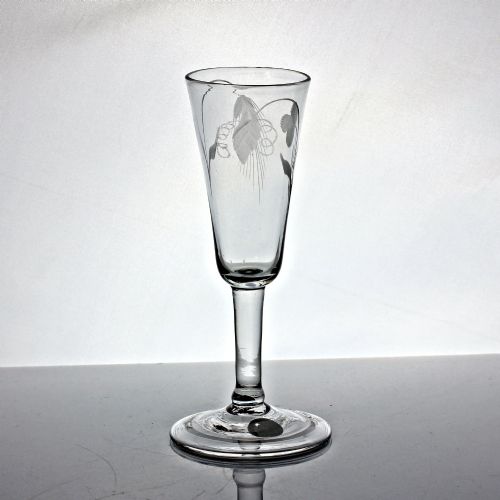
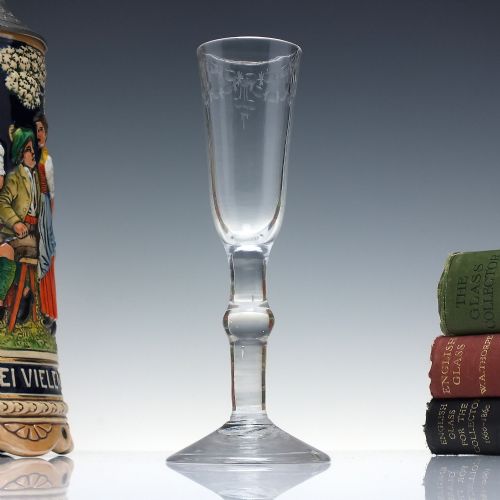
The most common forms on this page include tall wine flutes, ale glasses, and champagne glasses shaped with rounded funnel or ogee bowls. These vessels often feature distinctive stems such as opaque twists, air twists, and plain stems, resting upon folded feet or standard bases.
Originating predominantly from English workshops, these drinking glasses reflect traditional glassmaking methods of their respective periods. A buyer will find both individual specialist glasses and coordinated sets suitable for historic table settings.
How they were made
The manufacturing process relies heavily on lead glass and flint glass, valued for their refractive properties and weighty feel in the hand. Artisans shaped these materials while hot, often employing flute-moulding techniques to create vertical panels along the lower bowl.
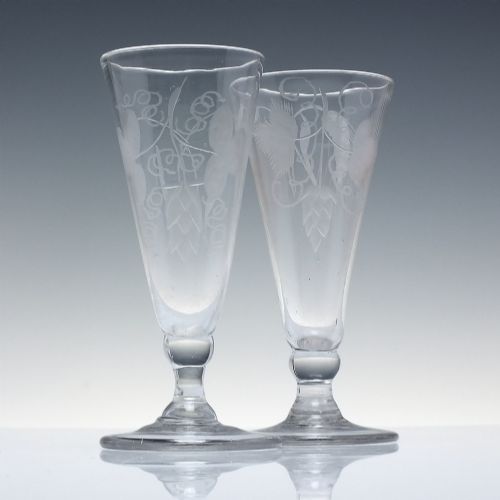
Decoration on these glasses was achieved through careful wheel engraving, as seen in the hop and barley motifs adorning eighteenth-century ale glasses. Twist stems were formed by trapping air bubbles or white enamel threads within the molten glass before drawing and twisting the stem.
Flint Glass Flute Glasses Retail Price Guide 2026
Typical asking prices for flint glass flute glasses among the pieces listed under this phrase on Sellingantiques today, from the lower quarter to the upper quarter. They describe what is for sale here now, not the wider market.
Early glassmakers occasionally trapped tiny air bubbles inside stems on purpose, turning a minor manufacturing imperfection into a celebrated collector's twist.
What varies in quality
Quality in these drinking vessels rests upon the crispness of the glass moulding and the symmetry of the stem formations. Superior examples display precise twist configurations without distortion, alongside balanced proportions between the bowl, stem, and foot.
The depth and clarity of wheel engraving further separate standard items from finer works. Well-defined floral or agricultural motifs show the hand of a skilled glass cutter rather than hurried production.
The Flint Glass Flute Glasses Glossary
- Flint glass
- A heavy, bright glass containing lead oxide, known for its clarity and ability to hold sharp cut details. This material forms the primary substance of the glassware listed here.
- Opaque twist
- A stem decoration formed by drawing white or coloured enamel glass rods through clear glass to create internal threads. It appears frequently on eighteenth-century examples.
- Air twist
- A stem feature created by stretching elongated air bubbles within the molten metal into spiral threads. This technique requires considerable skill from the glassmaker.
- Folded foot
- A base edge turned underneath during manufacture to provide extra strength and weight at the point of contact with the table. This is a common feature on earlier drinking vessels.
- Flute-moulded
- A decorative technique producing vertical concave channels around the lower portion of a bowl. It enhances the play of light through the glass.
Flint Glass Flute Glasses: Frequently Asked Questions
What were flint glass flute glasses used for?
These tall vessels served specific beverages including champagne, ale, and ratafia during the eighteenth and nineteenth centuries. Their slender proportions helped maintain effervescence in sparkling drinks.
Today, collectors use them to recreate historic table settings or display them within cabinet collections to showcase early glass manufacturing.
How do I identify an eighteenth century glass?
Eighteenth-century drinking glasses typically feature hand-formed characteristics such as pontil marks on the base, folded feet, and complex internal stem twists. The glass metal often exhibits minor bubbles or striations from period production methods.
Comparing the bowl shape and stem construction against documented examples helps confirm the period of manufacture.
What is an opaque twist stem?
An opaque twist stem contains fine white enamel glass threads trapped inside the clear stem and drawn into a spiral pattern. This decorative method gained popularity in England during the mid-eighteenth century.
Collectors prize these stems for the intricate optical effects they produce when viewed from different angles.
How should I care for antique glass?
Antique drinking glasses require gentle hand washing in warm water using mild soap, avoiding harsh scrubbing or sudden temperature changes. They should be dried promptly with a lint-free cloth to maintain their clarity.
Displaying them away from direct sunlight and vibrations ensures these historic pieces remain protected for years to come.