





Victorian Cut Crystal Stemware
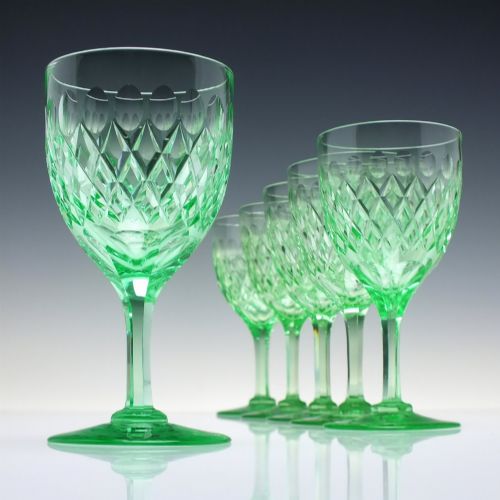
Victorian cut crystal stemware brings brilliant nineteenth-century table craft into your home, offering heavy lead handles and deeply refractive bowls that catch the candle.
Victorian Cut Crystal Stemware
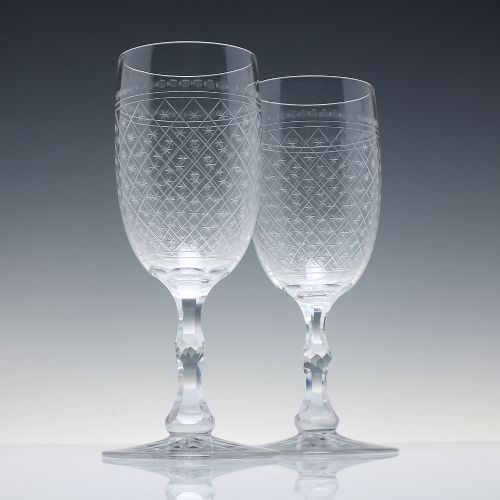
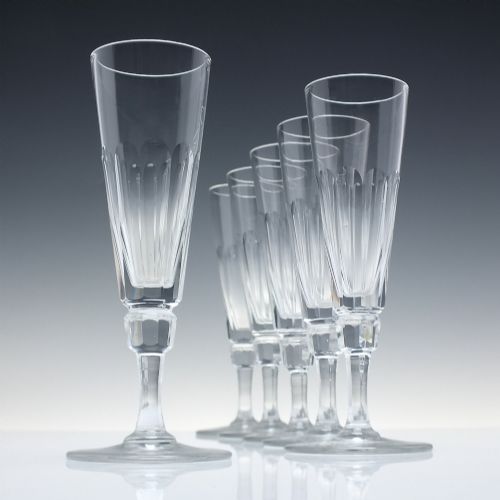
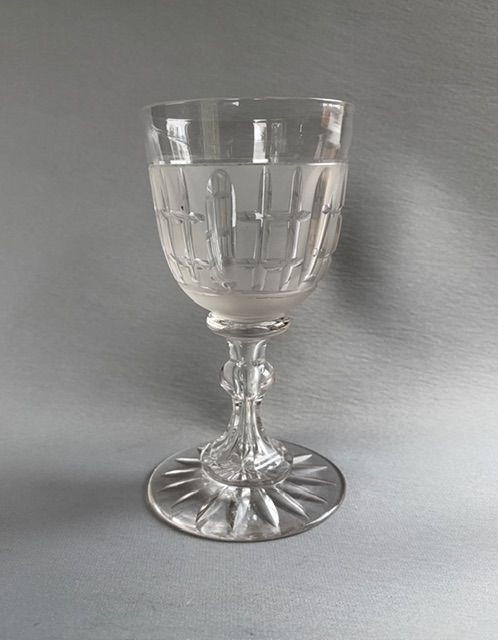
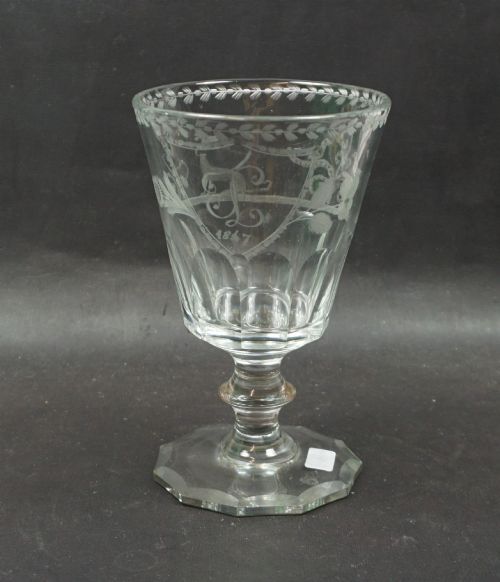
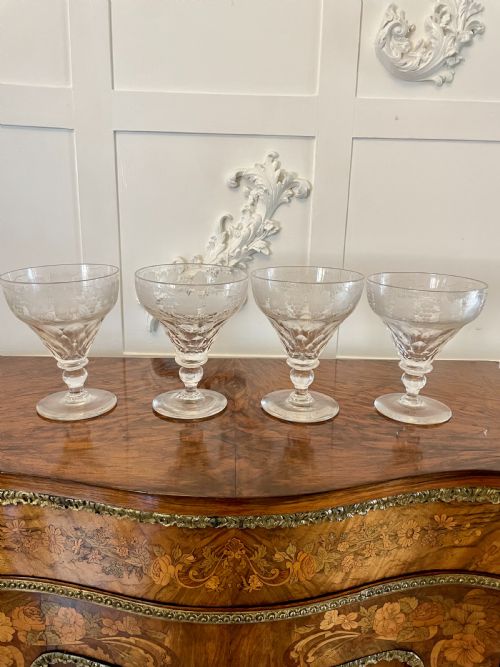
When you search for victorian cut crystal stemware, you encounter nineteenth-century drinking vessels spanning wine glasses, champagne coupes, and large goblets produced across the decades from the eighteen-fifties onward. These pieces range from matched sets to harlequin groupings of six or eight, designed for formal dining and dessert service.
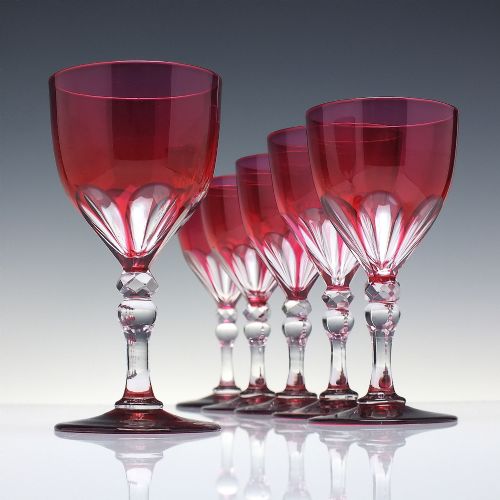
The most frequent examples on this page are English and continental vessels featuring facet cut stems, engraved foliage, and heavy bowls. You find both clear glass and flashed colour variants, particularly cranberry over crystal bowls that showcase skilled wheel-engraving.
Forms include dedicated champagne bowls and dessert wine glasses that reflect the shifting social rituals of the Victorian dining room. Each piece demonstrates the heavy lead content typical of the period, giving the glassware a distinct ring and substantial weight in the hand.
Materials and production methods
Makers utilised heavy lead crystal and clear glass, frequently casing white or cranberry glass over clear substrates to create layered effects known as cranberry over crystal. This method allowed artisans to cut through the outer layer to expose the clear glass beneath.
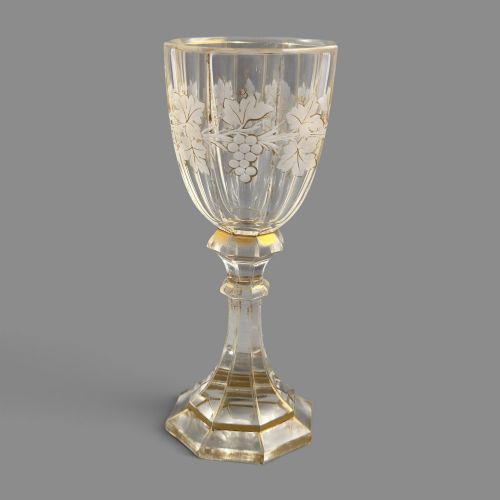
Decoration relied on deep wheel engraving, intaglio work, and acid cutting to achieve intricate botanical motifs such as convolvulus flowers. Stems often received precise facet cutting, while rims occasionally incorporated gilding applied by hand.
Victorian Cut Crystal Stemware Retail Price Guide 2026
Typical asking prices for victorian cut crystal stemware among the pieces listed under this phrase on Sellingantiques today, from the lower quarter to the upper quarter. They describe what is for sale here now, not the wider market.
Listings feature lead crystal and cranberry glass across the mid-to-late nineteenth century, spanning decades from the eighteen-fifties through the eighteen-nineties.
Assessing quality in nineteenth-century glass
Quality rests upon the crispness of the wheel cutting and the depth of the engraving, where sharp, clean facets demonstrate superior handwork. Weight and clarity of the lead crystal also set finer vessels apart from simpler commercial production.
The precision of matching in sets influences desirability, as does the complexity of decorative techniques like intaglio work and layered colour overlays. Well-executed engraving maintains fine detail without wobbling lines or uneven depth across the bowl.
Moser Bohemian·Stevens & Williams
The Victorian Cut Crystal Stemware Glossary
- Lead crystal
- Glass containing lead oxide, which increases weight, brilliance, and refractive index. This material allows for deeper and sharper cutting than standard soda-lime glass.
- Champagne coupe
- A shallow, broad-bowled glass on a stem originally designed for sparkling wine. Victorian examples often feature heavy facet-cut stems and engraved bowls.
- Intaglio
- A decorative technique where the design is carved into the surface of the glass rather than raised. It creates a frosted, recessed relief that catches the light differently than surface etching.
- Cranberry glass
- Transparent red glass coloured with gold chloride, popular during the nineteenth century. It is frequently seen combined with clear crystal in layered tablewares.
- Römer goblet
- A traditional continental European wine goblet featuring a large bowl on a patterned stem and raspberry prunts. These examples often incorporate detailed engraving and gilding.
Victorian Cut Crystal Stemware: Frequently Asked Questions
How do I clean antique crystal?
Wash these pieces by hand in warm water using a mild detergent, supporting the bowl and stem carefully. Avoid sudden temperature changes to protect the nineteenth-century lead glass.
Place a cloth at the bottom of the sink to cushion the heavy crystal during washing. Dry them immediately with a lint-free linen cloth to maintain the refractive brilliance.
Can I use these for dining?
You can use these nineteenth-century glasses for special dinners and celebrations, treating them with the care due to fragile antiques. Hand washing remains essential after every use.
Ensure guests handle them by the stem rather than the bowl to prevent greasy fingerprints on the clear facets. Store them upright on sturdy shelves away from vibrations.
How do I date Victorian stemware?
Examine the weight, pontil mark on the base, and the style of the wheel engraving to establish the period. Victorian pieces from the mid-to-late nineteenth century show distinct depth in the crystal cutting.
Compare the decorative motifs against known periods, noting that acid-cutting techniques became more prominent toward the end of the century. Maker signatures or attribution details also help narrow down the decade of production.
Are harlequin sets authentic?
Harlequin sets consist of individual glasses that share period characteristics but differ slightly in pattern or engraving style. Collectors assembled these over time to create mismatched functional groupings.
Such sets reflect historical dining practices where matching large table services was less rigid than today. Each glass maintains its individual nineteenth-century character while functioning together on the table.