


Flemish Baroque Cabinet
A flemish baroque cabinet brings heavy timber, intricate panels and centuries of craft straight into a room.
Flemish Baroque Cabinet
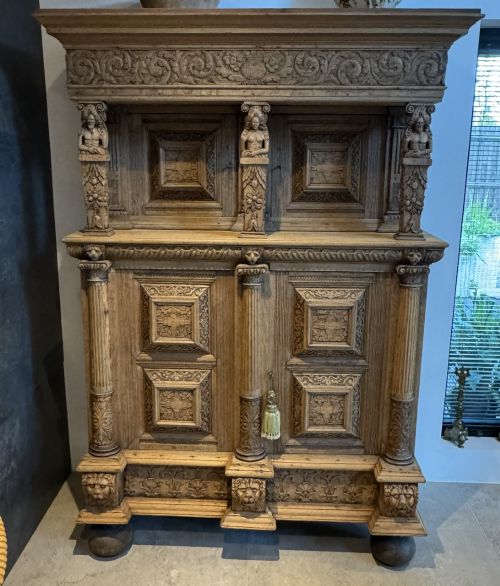
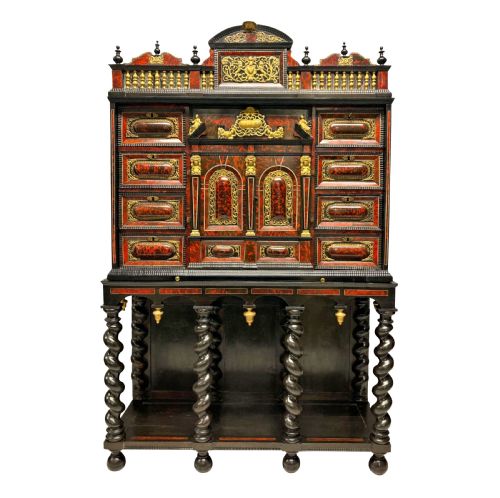
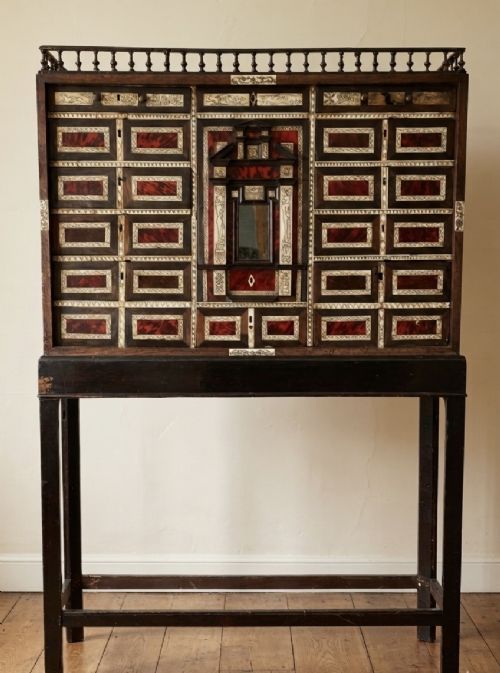
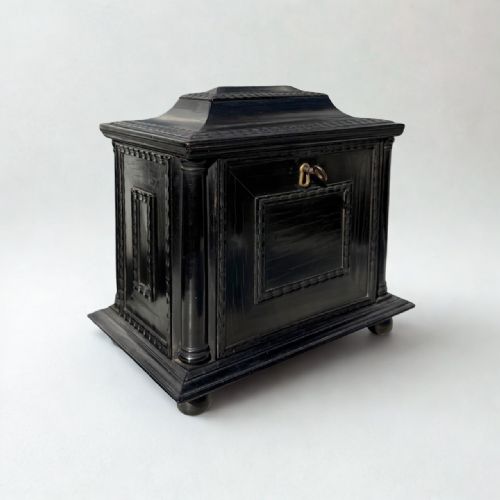
When a buyer searches for a flemish baroque cabinet, they encounter substantial storage furniture built across the seventeenth and eighteenth centuries, alongside later Victorian interpretations. These pieces take the form of table cabinets, cabinets on stands, side cabinets and large armoires.
The most common versions met on this page are table cabinets and cabinets on stands, usually dated to the seventeenth century or the eighteenth century. They serve as compact storage or display pieces for precious items.
Origins span Continental Europe with a strong Flemish focus, occasionally linked to Dutch traditions. Woods like oak, walnut and ebonised wood dominate the forms seen here.
How they were made
Cabinet makers built these structures using sturdy timbers such as oak and walnut as a foundation. They applied expensive decorative surfaces like ebony, rosewood and kingwood over the core.
Tortoiseshell, bone, brass and gilt bronze provided high-contrast detail and intricate parquetry work. Artisans combined these diverse materials to create complex architectural facades on table cabinets and cabinets on stands.
Current listings span the seventeenth century, the eighteenth century and the Victorian era, utilising oak, ebony, tortoiseshell, walnut and brass.
What varies in quality
Construction depth also defines the grade, with architectural table cabinets showing finer joinery and more elaborate brass or gilt bronze mounts than simpler oak side cabinets.
The Flemish Baroque Cabinet Glossary
- Parquetry
- Geometric wood inlay work arranged in patterns across cabinet doors and drawers. It creates a decorative textured surface using contrasting timbers.
- Ebonised wood
- Timber stained or treated to imitate genuine ebony. This dark finish provides a dramatic background for tortoiseshell and bone highlights.
- Table cabinet
- A compact storage box designed to sit on a desk, table or dedicated stand. They frequently house multiple internal drawers.
- Kast
- A large traditional Dutch or Flemish wardrobe and storage cupboard. These pieces offer deep interior space behind substantial panelled doors.
- Architectural cabinet
- A design featuring facades that mimic classical buildings with columns and pediments. They hide secret compartments behind miniature doors.
Flemish Baroque Cabinet: Frequently Asked Questions
What is a flemish baroque cabinet?
A flemish baroque cabinet is a heavy, ornate storage piece originating in the seventeenth or eighteenth century. They combine rich timbers and decorative inlays for domestic use.
These pieces range from small table cabinets to large cabinets on stands and side cabinets designed for prominent rooms.
How were table cabinets used?
Table cabinets served as secure places to store jewellery, documents, coins and other small valuables. Their internal drawers kept prized possessions organised.
Placed on tables or stands, they also acted as decorative showpieces that displayed the wealth and taste of the owner.
How do I live with a cabinet on stand?
A cabinet on stand requires stable placement away from direct heat sources and strong sunlight to protect delicate wood veneers and tortoiseshell. Its strong architectural presence suits a study, hallway or drawing room.
Ensure the floor is level so the combined weight of the cabinet and stand rests evenly without twisting the frame.
How do seventeenth and eighteenth century pieces differ?
Seventeenth century pieces frequently employ exotic surface materials like ebony, tortoiseshell and bone with architectural facades. They lean heavily into Continental Baroque aesthetics.
Eighteenth century examples often utilise native timbers like oak and walnut with simpler lines while retaining traditional proportions and multi-drawer interiors.