


Dark Rosewood Armoire
These dark rosewood armoire options offer robust timber storage with deep grain patterns, bringing substantial presence and traditional utility to a bedroom or hallway.
Dark Rosewood Armoire
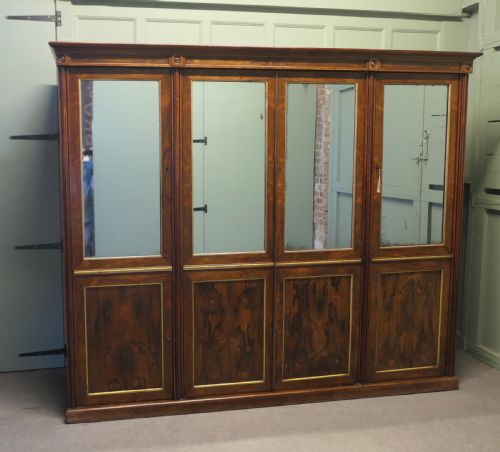
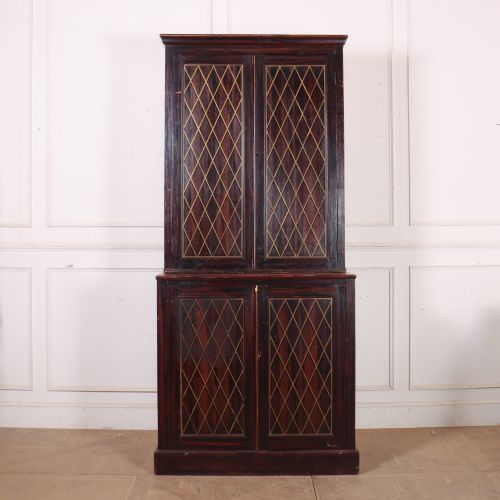
A dark rosewood armoire takes the form of large wardrobes, linen presses, cabinets, and tall cupboards. These pieces provide deep internal storage behind panelled doors, often standing on substantial plinths or bracket feet.
The selections on this page span the 17th century through the Victorian era, alongside Regency, Georgian, and Renaissance Revival designs. Continental and colonial workshops also contribute regional interpretations, including Flemish Baroque kasts and Anglo-Indian two-door cupboards.
Buyers frequently encounter Victorian inlaid examples alongside French chateau armoires and crossbanded linen presses. Each piece utilises the dense, dark qualities of the timber to anchor the room visually.
Materials and construction
Makers utilised dark rosewood as a primary solid timber or as fine veneers applied over secondary woods such as mahogany and pine. Satinwood inlay frequently provides contrasting geometric or floral detailing against the dark ground.
Structural elements incorporate brass hardware for key escutcheons and hinges, while glass panels appear in display formats. Gilt touches and painted surfaces occur on specific continental and nineteenth-century variations.
Joinery methods range from heavy panel construction in seventeenth-century kasts to breakfront configurations and crossbanding in later nineteenth-century pieces.
One towering nineteenth-century cabinet carries enough dark rosewood grain to mesmerize anyone attempting a simple inventory count.
Judging the range
Quality separates simple utility cupboards from ambitious architectural cabinets through the handling of timber selection and decorative contrast. Richly figured rosewood veneer, cleanly executed satinwood inlay, and crisply carved Renaissance Revival details distinguish the upper tier.
Proportion and scale dictate the visual success of the piece, moving from straightforward vernacular cupboards to grand French chateau armoires with commanding cornices. The integration of secondary timbers like mahogany and pine reveals the underlying standard of workshop execution.
The Dark Rosewood Armoire Glossary
- Armoire
- A tall double-door cupboard or wardrobe used primarily for hanging or folding garments. These pieces originated in France and typically offer substantial interior volume.
- Kast
- A large traditional Dutch or Flemish two-door cupboard featuring heavy architectural mouldings. They stand on bun feet and provide deep storage.
- Linen Press
- A tall piece of furniture combining sliding trays or shelves in the upper section with drawer storage below. The exterior often displays crossbanding.
- Crossbanding
- A decorative border technique where veneer strips are laid running perpendicular to the grain of the primary surface. This frames the central panels of a door or drawer.
- Breakfront
- A cabinet design where the central section projects forward from the flanking wings. This configuration breaks up a long flat facade.
Dark Rosewood Armoire: Frequently Asked Questions
What is a dark rosewood armoire used for?
These large cabinets provide substantial storage for clothing, linens, and household goods behind secure panelled doors. They function as primary storage furniture in bedrooms and large dressing areas.
The deep internal proportions accommodate hanging garments as well as folded items. Their imposing presence also allows them to serve as architectural focal points in living spaces.
How do I identify a 17th century kast?
Seventeenth-century kasts, such as Flemish or Dutch examples, feature heavy architectural cornices, panelled doors, and robust turned feet. Their construction relies on thick timbers and traditional joinery methods distinct from later styles.
These cabinets display the dense grain of early rosewood without the refined satinwood stringing seen in later Victorian or Regency furniture.
What is the difference between an armoire and a linen press?
An armoire is primarily designed for hanging garments behind full-length doors, while a linen press traditionally houses sliding shelves or trays for folded textiles in the upper section.
Linen presses frequently incorporate bank drawers in the lower base portion, combining vertical and horizontal storage compartments.
How do I care for rosewood furniture?
Maintain rosewood surfaces by keeping them away from direct sunlight and maintaining stable indoor humidity levels to protect the dense timber and veneer.
Apply traditional wax sparingly and buff with a soft cloth to preserve the natural sheen of the dark wood without building up heavy chemical residues.