

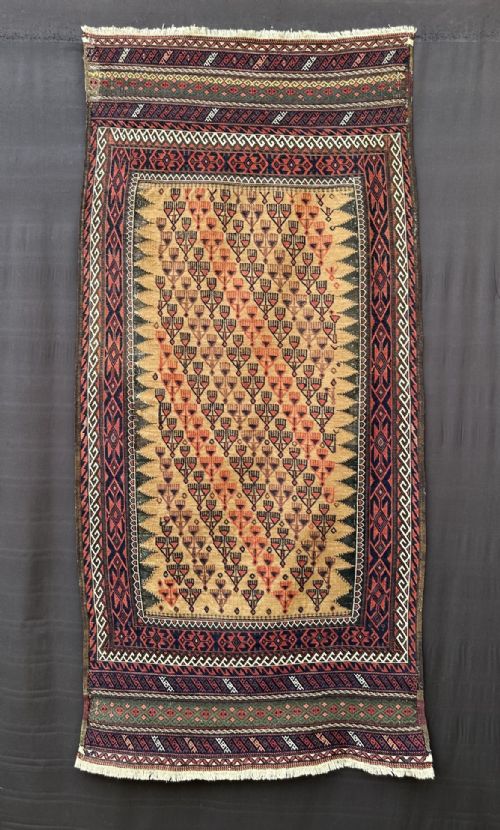
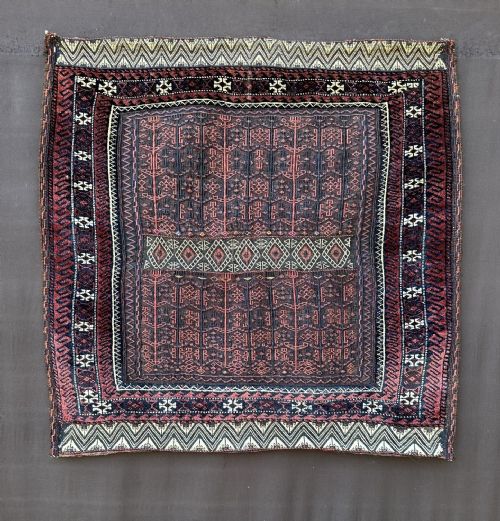
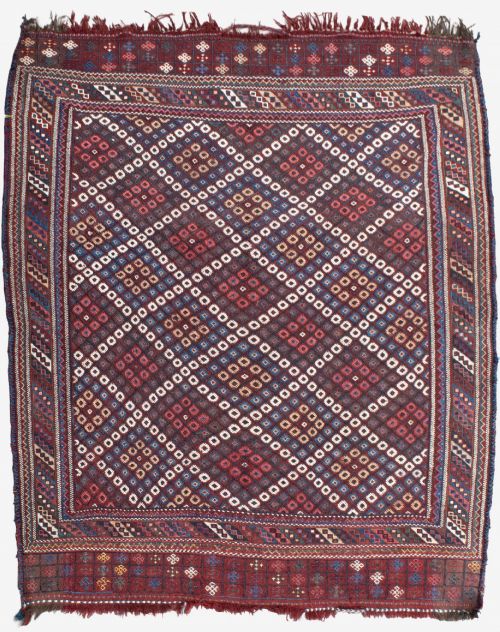


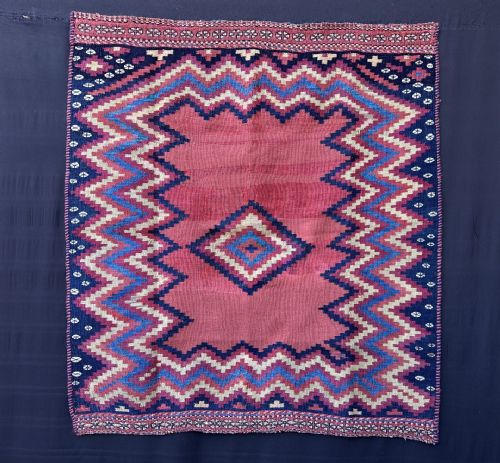
Flatweave Bread Mat
A flatweave bread mat is a tribal textile designed for domestic life, offering genuine utility and rich regional character.
Flatweave Bread Mat
The pieces listed on this page span the late nineteenth century into the early twentieth century, specifically covering the decades from eighteen seventy to nineteen twenty. Tribal makers such as the Afshar, Timuri Sangtshuli, Djhan Beghi, and Lor tribes produced these flatweaves for specific domestic rituals surrounding food preparation and communal dining.
Materials and construction methods
Makers utilised natural materials such as wool, cotton, and camel hair to weave these flatweaves on portable horizontal looms. The reliance on these robust fibres ensures a sturdy textile structure suited to daily domestic service.
Colour comes from natural dyes, imparting organic tones that settle into the wool and camel hair over generations of use. The flatweave technique produces a smooth, pileless surface devoid of knots, relying purely on the interweaving of warp and weft.
Flatweave Bread Mat Retail Price Guide 2026
Typical asking prices for flatweave bread mat among the pieces listed under this phrase on Sellingantiques today, from the lower quarter to the upper quarter. They describe what is for sale here now, not the wider market.
Nomadic weavers designed these flatweaves to catch stray crumbs during daily bread preparation.
Factors determining quality
Quality rests upon the tightness of the weave and the precision of the geometric layout within the flatweave structure. Tighter structures demonstrate greater skill from the tribal weaver and better longevity in the textile.
The depth and preservation of the natural dyes also separate standard examples from superior ones. Well-preserved colour palettes and intact tribal borders indicate careful handling and superior initial material selection.
The Flatweave Bread Mat Glossary
- Sofreh
- A spread or cloth used for dining or food preparation in tribal households. These flatweaves often served specific functions related to bread making.
- Flatweave
- A textile produced without knots by interweaving warp and weft threads directly. This technique creates a thin, durable fabric without a pile.
- Natural Dyes
- Colouring agents derived from plants, insects, and minerals rather than synthetic compounds. They create nuanced tones that develop patina over time.
- Warp
- The vertical foundation threads stretched lengthwise on a loom before weaving begins. The weft threads pass horizontally through these structural elements.
Flatweave Bread Mat: Frequently Asked Questions
What is a flatweave bread mat?
A flatweave bread mat is a traditional tribal textile, commonly known as a sofreh, used historically for preparing and serving bread.
These flatweaves were woven by nomadic and village groups in Persia and Afghanistan using natural materials.
How were these textiles used?
Nomadic families utilised these flatweaves as dining spreads and functional covers during meal times.
Their sturdy weave protected food and communal spaces in domestic environments.
How do I care for a flatweave?
Protect the textile by keeping it out of direct sunlight and using appropriate rug underlays if placed on floors.
Gentle vacuuming without a rotating brush helps maintain the clean surface of the flatweave.
How do I identify tribal origins?
Tribal attributions rely on specific geometric motifs, border designs, and structural traits characteristic of groups like the Afshar or Timuri.
Comparing regional patterns helps connect a piece to specific areas in Persia or Afghanistan.