




Flatweave Bag Face
A flatweave bag face brings the tactile geometry of nineteenth-century nomadic life directly onto a wall or cushion.
Flatweave Bag Face
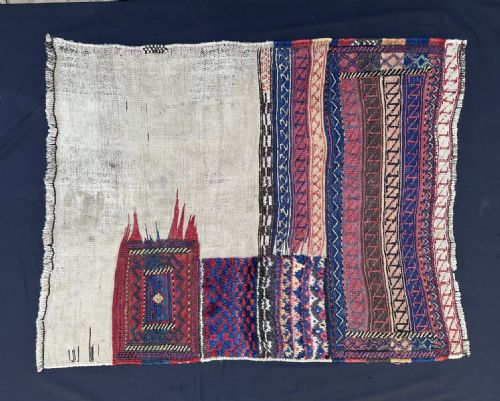
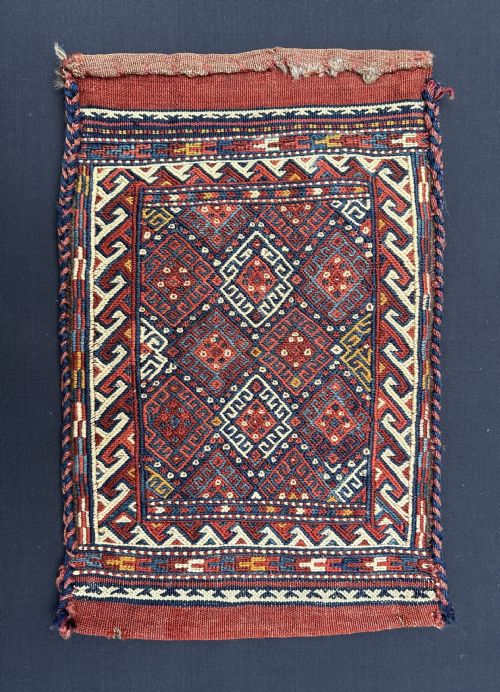
A flatweave bag face represents the front panel of a nomad storage sack or saddle bag, created by tribal groups across Persia, the Caucasus and Central Asia. These textile fragments include examples from Shahsavan, Tekke Turkmen, Yomut, Lori-Bakhtiari and Kurdish makers dating from the nineteenth and early twentieth centuries. When searching for a flatweave bag face, collectors encounter resilient wool panels woven for utilitarian storage before transition into decorative interior objects.
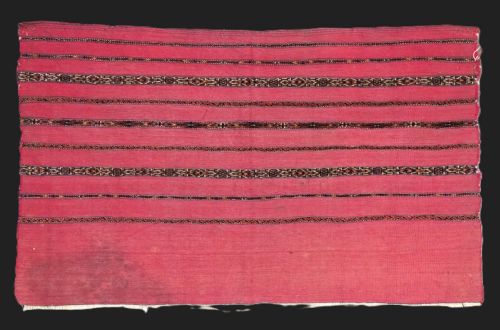
The format typically arrives as a detached panel or complete storage container, ranging from soumak weave saddlebag faces to banded flatweave grain sacks and wheat sacks known as tacheh. Regional tribal workshops produce distinct visual vocabularies, such as the geometric bird and dragon motifs of Shahsavan weaving or the banded designs of Yomut and Baluch nomads. Buyers find these textiles utilised as wall hangings or fashioned into cushions.
How they were made
Weavers constructed these pieces using hand-spun wool and cotton foundation threads, dyed with natural vegetable and mineral colourants that produced deep madder reds, indigos and earthy yellows. Artisans employed flatweave techniques including plain weave and soumak wrapping, creating durable surfaces without pile knots.
Nomadic groups utilised portable vertical and horizontal looms set up in camps, resulting in regional variations in tension, density and structural technique. The combination of hand-spun wool and natural dyes yields a shifting, nuanced surface texture that distinguishes period pieces from later work.
The selection spans tribal weaving traditions from the nineteenth and early twentieth centuries, featuring wool, cotton, and natural dyes across Persian, Caucasian and Central Asian origins.
What varies in quality
Quality rests upon the fineness of the weave, the clarity of the structural technique, and the integrity of the natural dye palette. Tighter soumak wrapping and precise geometric execution demonstrate superior tribal craftsmanship.
The vitality of the natural dyes and the preservation of the original hand-spun wool create greater depth in the better examples. Pieces retaining intact structure and balanced composition command more attention from collectors.
The Flatweave Bag Face Glossary
- Soumak
- A flatweave technique where pattern threads wrap over and under warp threads to produce a textured, durable surface. This method creates raised details resembling embroidery.
- Chuval
- A large tent storage bag produced by Turkmen tribes for domestic belongings. These face panels display traditional guls and repetitive tribal motifs.
- Tacheh
- A large square grain or wheat sack woven by Lori-Bakhtiari nomads. These pieces utilise sturdy flatweave construction for agricultural storage.
- Torba
- A small utility bag utilised by nomadic groups for household storage. They hang inside tents to hold personal items.
- Khorjin
- A double saddlebag used for transport on animals during tribal migrations. Surviving examples often separate into individual bag faces.
Flatweave Bag Face: Frequently Asked Questions
How were flatweave bag faces used?
Nomadic tribes utilised these bags for storing grain, bedding, clothing and household utensils inside tents or for transporting possessions across terrain on pack animals. The thick weave protected contents from moisture and dust during seasonal migrations.
Over time, as families settled or goods dispersed, the decorative front panels separated from their plain weave backs to be preserved as individual textiles or converted into cushions.
How do I hang a bag face on the wall?
Mounting a textile requires methods that distribute weight evenly across the top edge without puncturing the wool or cotton foundation. A fabric sleeve stitched to the reverse or conservation-grade Velcro systems work effectively.
Keep textiles away from direct sunlight and damp environments to protect the natural dyes and wool fibres from degradation over time.
How can I tell tribal groups apart?
Tribal groups indicate their origins through distinct colour palettes, structural techniques and characteristic motifs. Shahsavan weaving often displays soumak work with dragons and birds, whilst Turkmen pieces feature geometric guls in deep reds.
Kurdish and Lori-Bakhtiari makers favour banded flatweaves and earthy tones. Examining the weave structure helps confirm the regional workshop.
What is the difference between a chuval and a torba?
A chuval is a large tent storage bag designed by Turkmen tribes for bulky domestic goods like bedding and clothing. These pieces measure significantly larger than other utility sacks.
A torba is a smaller storage bag intended for personal items or smaller household gear. Both share flatweave or piled construction depending on the specific tribe.