


Flatback Ceramic Figures
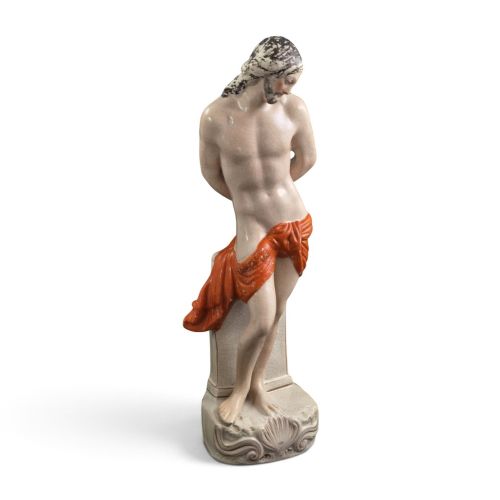
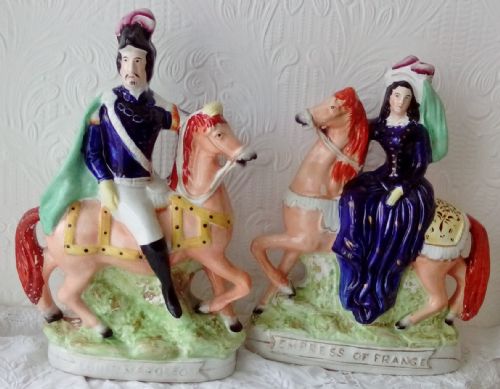
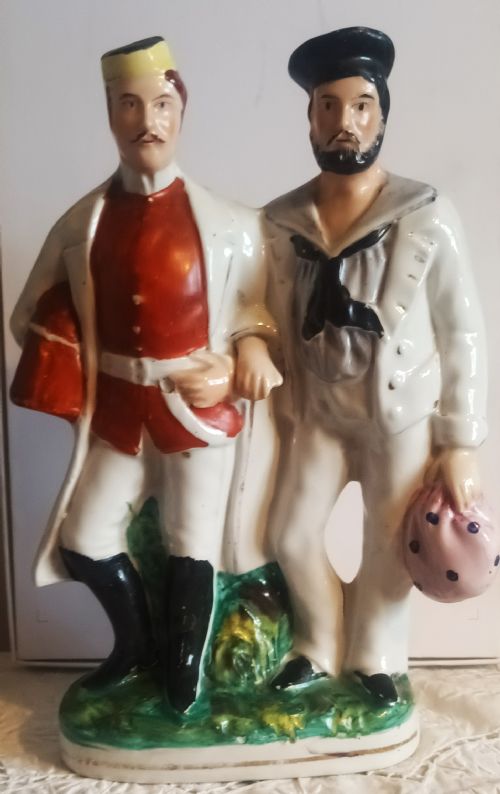
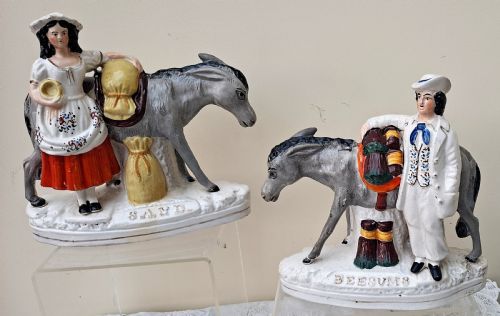
These flatback ceramic figures are nineteenth-century mantelpiece ornaments modelled to face the room, depicting royalty, military heroes, animals, and architectural follies.
Flatback Ceramic Figures
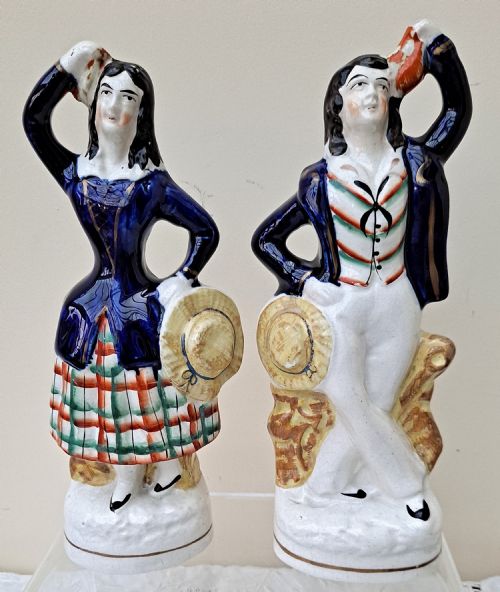
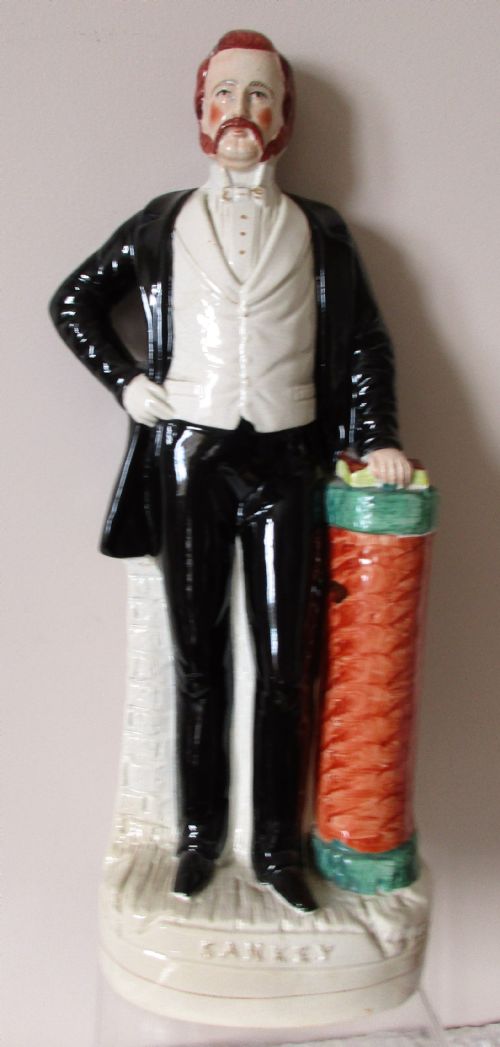
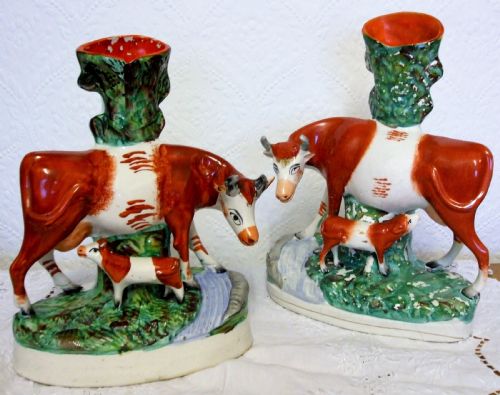
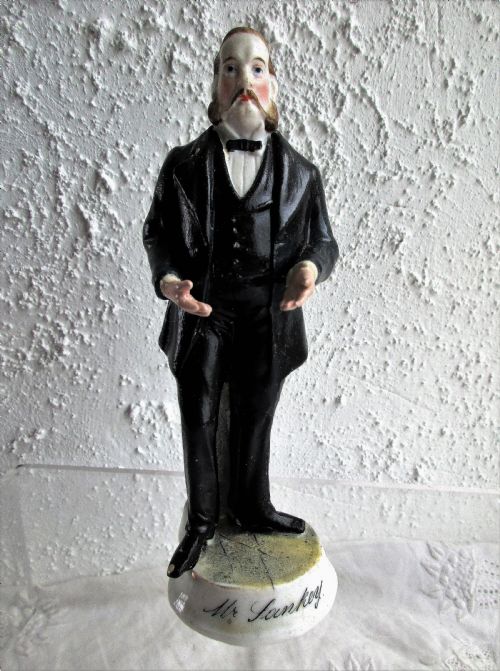
When you search for flatback ceramic figures, you encounter nineteenth-century Staffordshire pottery designed to stand against a wall rather than in the round. The versions you are most likely to meet on this page are Victorian portrait pieces, theatrical groups, and spill vases.
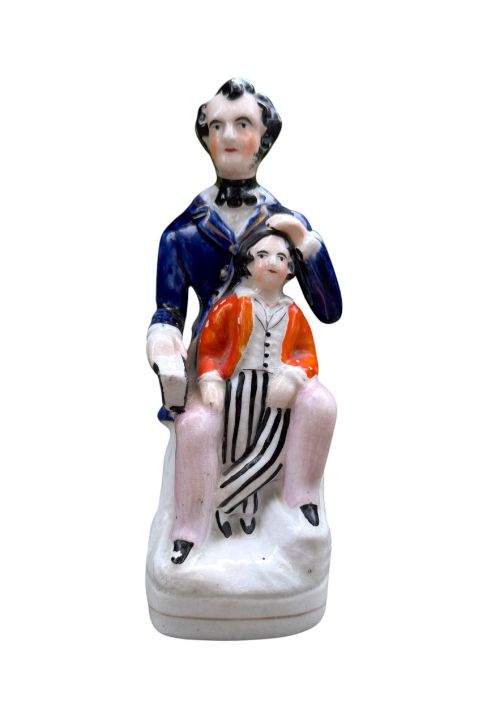
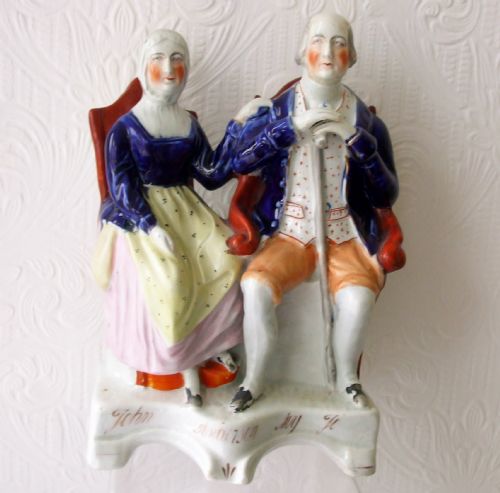
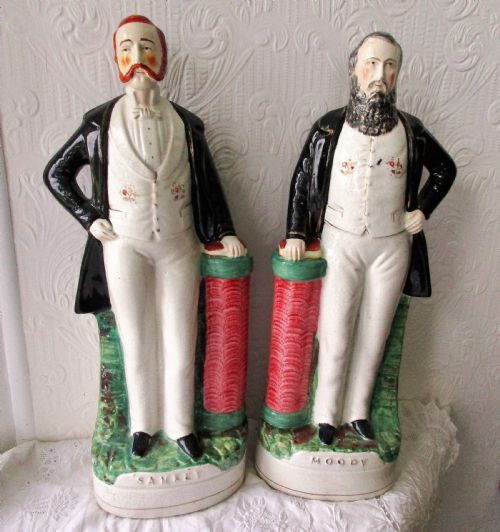
Makers shaped these ornaments to represent contemporary events, literary characters, and romanticized country scenes. Subjects range from political leaders and military alliances to pastoral couples and exotic animals.
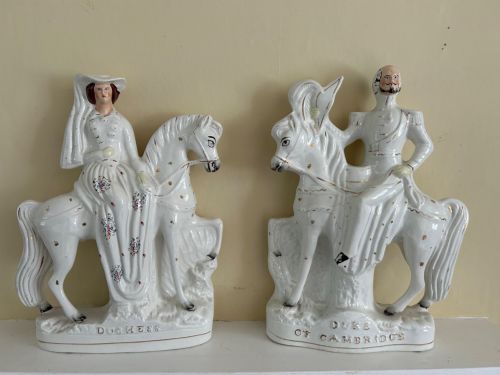
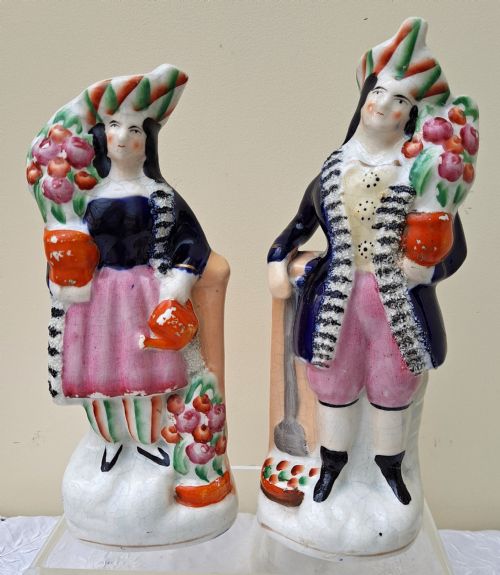
The form developed primarily to decorate chimney breasts in modest homes, meaning the backs are usually unglazed or simply finished. Pairs of figures frequently depict symmetrical subjects or companion characters from popular culture.
Materials and Manufacture
Potters shaped the pieces using earthenware clay, often cast in moulds and finished by hand. Workers applied lead glaze and enamel paint to colour the surfaces before firing the ceramics in kilns.
Gilt highlights and cobalt blue details frequently accent the primary colours on Victorian Staffordshire figures. The unglazed flat backs lack the detailed modelling found on the fronts, as the pieces were intended for frontal display.
The periods represented among these ceramics span the nineteenth century, with specific dates clustering in the 1850s, 1860s, and 1880s.
Assessing Quality
Larger models and architectural subjects such as castles or cottages demand greater skill in construction to prevent sagging during firing. The presence of clear naming inscriptions on portrait figures also indicates higher workshop standards.
The Flatback Ceramic Figures Glossary
- Flatback
- A ceramic figure modelled with a finished front and a plain, unglazed, or flat back designed to stand against a wall. This construction saved materials and suited the mantelpiece placement common in the nineteenth century.
- Spill vase
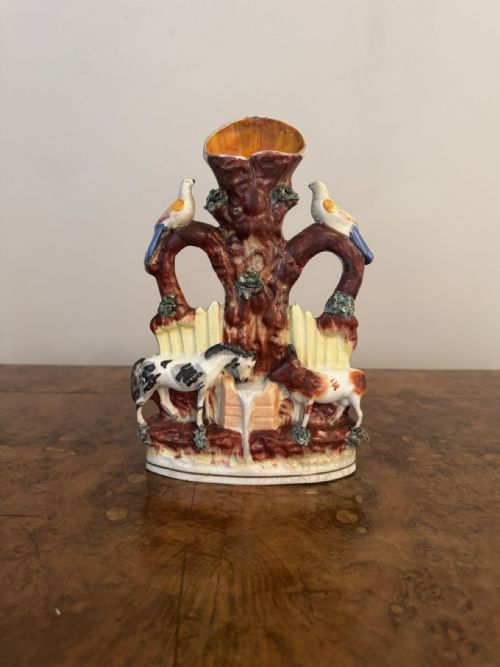
- A hollow ceramic tube incorporated into a figure group, designed to hold wooden spills for lighting fires or pipes. These practical vessels often depict animals or rustic couples standing beside the holder.
- Earthenware
- A porous pottery body fired at lower temperatures than stoneware or porcelain. It forms the standard ceramic base for nineteenth-century Staffordshire ornamental figures.
- Lead glaze
- A glossy coating containing lead oxide applied to pottery to create a smooth, waterproof surface. It gives the ceramic body its characteristic shine and protects the painted decoration.
Flatback Ceramic Figures: Frequently Asked Questions
What are flatback ceramic figures?
These pieces are nineteenth-century earthenware ornaments shaped to sit on mantelpieces and shelves. They are modelled with detailed fronts and flat backs because they stood against cottage and parlour walls.
Potters produced them in large numbers to portray royalty, literary figures, and theatrical scenes. Collectors prize them for their folk art charm and historical subjects.
How were these figures displayed?
Victorian households placed them upon chimney mantels, sideboard tops, and chest of drawers. Pairs of figures often stood symmetrically on either side of a clock or mirror.
Some examples incorporate spill vases to serve a practical purpose in lighting candles and fires. Their bright enamel colours enlivened dimly lit nineteenth-century rooms.
How do I identify Victorian pieces?
Look for the characteristic earthenware body, hand-painted enamel colours, and flat unglazed backs associated with nineteenth-century production. The subjects often reference specific historical events, military campaigns, or Victorian theatrical performances.
Potters frequently included raised lettering on the base to identify portrait figures like political leaders or literary characters. These stylistic clues separate nineteenth-century Staffordshire work from later reproductions.
Why do some figures have holes?
Holes on these ceramic pieces usually function as spill vases designed to hold wooden tapers. Victorian households used these tapers to transfer flames from the hearth to lamps and pipes. Nooks and hollow sections within the modelling also prevented the thick earthenware clay from exploding during the kiln firing process.
What subjects are most common?
Portraits of British royalty, military commanders, and political figures appear frequently among nineteenth-century Staffordshire pieces. Crimean War alliances and royal weddings inspired numerous commemorative portrait groups.
Domestic animals, equestrian riders, and country cottages also form a large share of the available ceramic figures. Theatrical pairs and literary characters complete the standard repertoire of the potteries.