


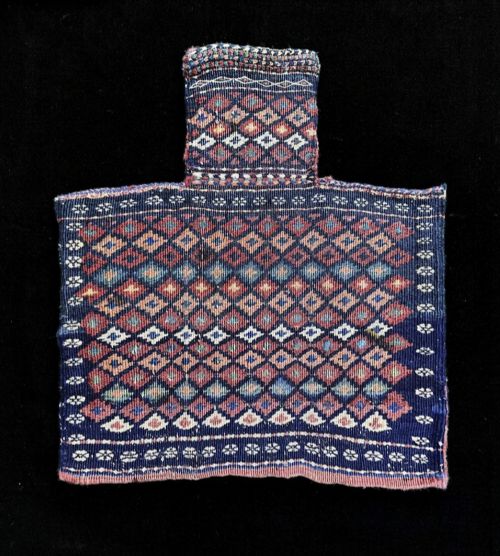
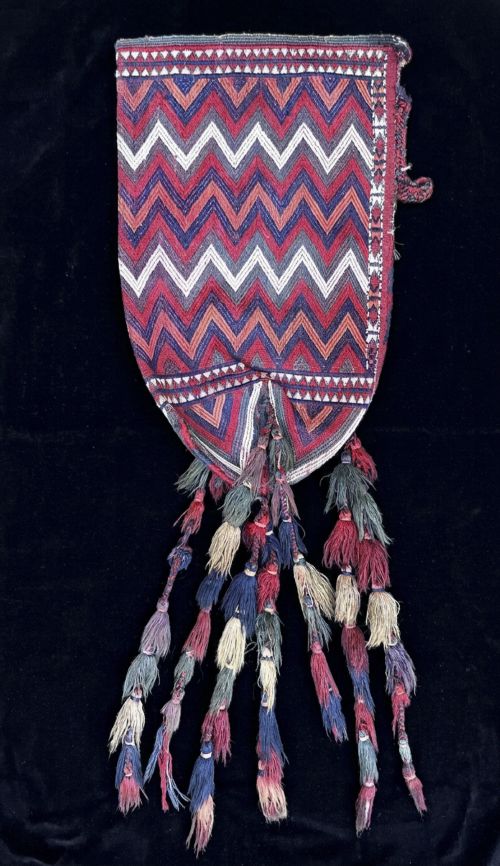
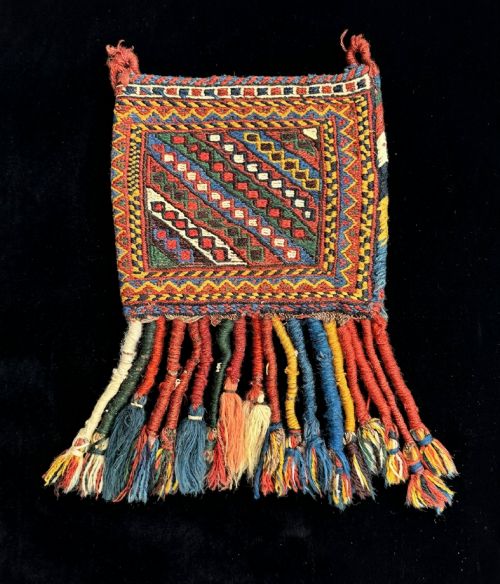


Flat Weave Tribal Bag
A flat weave tribal bag brings authentic nomadic character into a room through bold geometric motifs and rich vegetable dyes.
Flat Weave Tribal Bag
A flat weave tribal bag is a utilitarian textile created by nomadic groups across Persia, Anatolia, the Caucasus, and Central Asia for storage during migration. These pieces include salt-bags, vanity-bags, saddlebags, and mafrash storage panels made by weavers such as the Afshar, Shahsavan, Yomut, and Saryk tribes. Buyers encountering this selection will find various formats ranging from complete saddlebags with plain weave backs to single bag faces adapted as cushions.
The regional origins dictate the visual vocabulary, with Persian examples often showing intricate Kerman province patterns and Turkmen pieces displaying deep madder red tones and banded designs. Most items date from the mid-nineteenth century up to the early twentieth century, reflecting a period before synthetic colourants fully displaced traditional methods. Each object serves as a direct record of pastoral life, combining domestic utility with tribal artistry.
How they were made
Makers utilised hand-spun wool and natural dyes to build durable structures designed to withstand the rigours of nomadic transit. Cotton frequently appears in the foundational warps or supplementary details, providing structural stability to the flexible fabric.
Techniques range from basic slit tapestry weaving to complex soumak work, which involves wrapping supplementary weft threads around the warps to create a raised, textured surface. These methods allowed weavers to produce dense, hardwearing textiles without the use of pile knots.
Flat Weave Tribal Bag Retail Price Guide 2026
Typical asking prices for flat weave tribal bag among the pieces listed under this phrase on Sellingantiques today, from the lower quarter to the upper quarter. They describe what is for sale here now, not the wider market.
Dates span from the mid-nineteenth century in the eighteen-fifties through to the nineteen-twenties.
What varies in quality
The refinement of the weave and the precision of the geometric design separate standard utility pieces from exceptional tribal examples. Greater density in the flat weave structure and tighter hand-spun wool preparation indicate superior craftsmanship.
The depth and clarity of the natural dyes significantly influence the visual impact of the textile. Examples retaining vibrant, unblemished vegetable colours and intact original backs or borders demonstrate higher preservation.
The Flat Weave Tribal Bag Glossary
- Sumac
- A supplementary weft wrapping technique that produces a textured, durable surface resembling embroidery. This method allows weavers to create crisp diagonal lines and intricate geometric patterns without a pile.
- Khorjin
- A traditional double saddlebag used by nomads for carrying household possessions on pack animals. These pieces typically feature two matching pouches connected by a central web.
- Mafrash
- A large rectangular storage container or chest panel woven by tribal groups for bedding and clothes. They often display striking banded designs and soumak work.
- Chuval
- A large storage bag produced by Turkmen tribes, frequently featuring guls and traditional banded decoration. Complete examples retain their flat woven backs.
- Uk Bash
- A specific type of Turkmen headgear bag or decorative hanging associated with Yomut tribes. These items display distinctive regional motifs and narrow proportions.
Flat Weave Tribal Bag: Frequently Asked Questions
What is a flat weave tribal bag?
A flat weave tribal bag is a nomadic textile created for storage and transport without a pile knot.
These functional objects were woven by pastoral groups in Central Asia, Persia, and the Caucasus using wool and natural dyes.
How were these bags used?
Nomadic communities utilised these bags to transport salt, vanity items, and household goods during seasonal migrations.
They functioned as portable furniture and storage containers within tents, designed to withstand heavy daily handling.
How do I care for a textile bag?
Protect these textiles from direct sunlight to prevent natural dyes from fading over time.
Gentle vacuuming with a low suction setting across a mesh screen helps remove dust without damaging the wool fibres.
How can I tell tribal groups apart?
Tribal attribution relies on distinctive regional palettes, structural techniques, and repeating geometric motifs.
Turkmen weaving often displays deep red grounds and guls, whereas Persian nomadic work incorporates finer Afshar or Shahsavan detailing.