


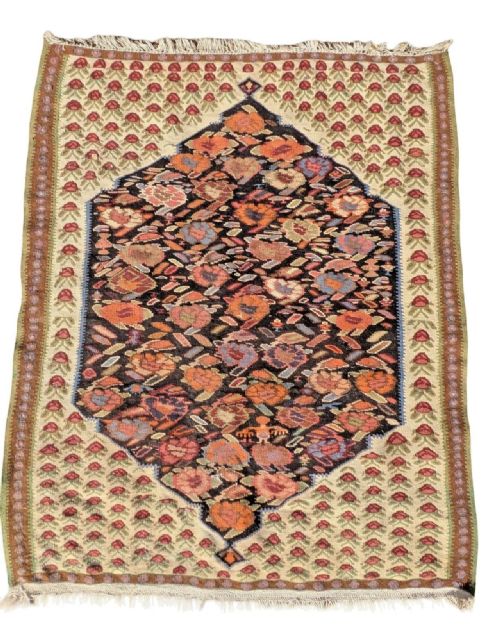


Flat Weave Oriental Carpet
A flat weave oriental carpet brings authentic tribal geometry and heritage wool work directly to the floor.
Flat Weave Oriental Carpet
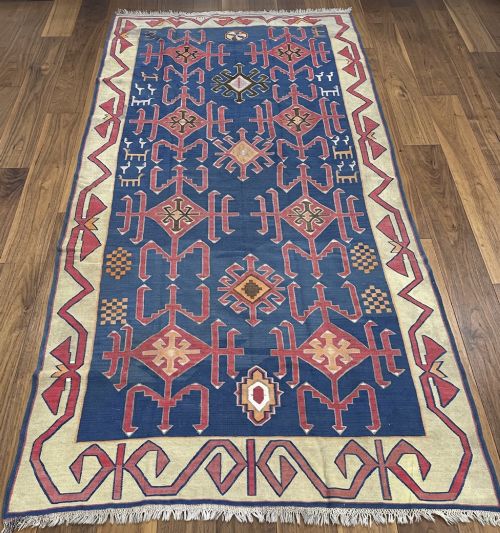
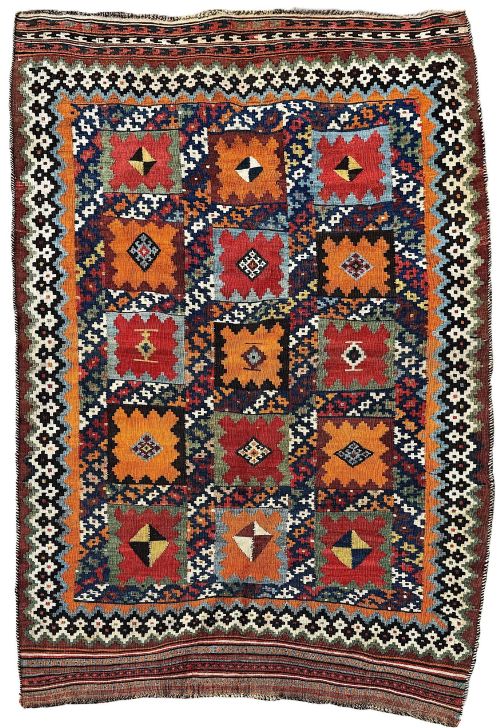
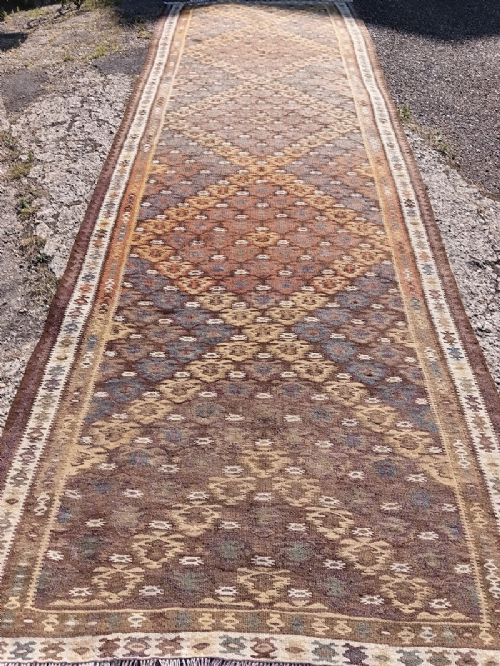
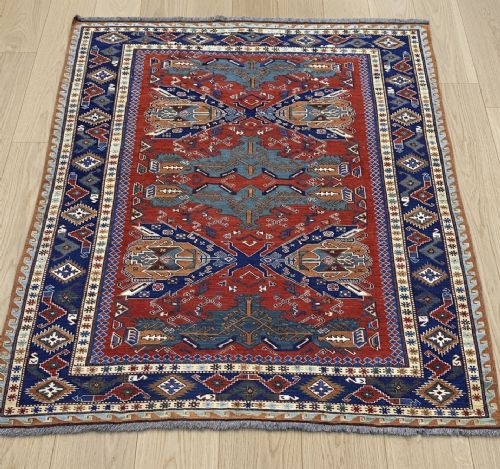
A flat weave oriental carpet refers to pileless textiles originating from nomadic and village traditions across the Caucasus, Turkey, Persia, and the Balkans. When searching for a flat weave oriental carpet, buyers encounter kilims, soumaks, and palas pieces spanning the late nineteenth century through to the mid-twentieth century.
The regional forms range from Caucasian Shirvan and Daghestan pieces to Turkish Malatya, Konya, and Esme kilims, alongside large Pirot or Sarkoy weaves. These textiles serve as versatile floor coverings, prayer rugs, runners, and structural nomadic bags.
The visual vocabulary relies on banded layouts, repeat medallions, eye dazzler motifs, and traditional tribal geometries. Buyers meeting these pieces on this page find formats extending from compact saddlebags to large room-size carpets.
Materials and Construction
These textiles are built using natural wool and cotton fibres manipulated through interlacing warp and weft threads without a knotted pile. Natural dyes provide the palette, yielding soft pastel shades alongside bold and colourful compositions depending on the origin.
Techniques diverge between standard flat-weaving and specialised methods such as soumak wrapping or palas construction. Certain larger examples are woven in two separate parts and joined along the centre to achieve room proportions.
Flat Weave Oriental Carpet Retail Price Guide 2026
Typical asking prices for flat weave oriental carpet among the pieces listed under this phrase on Sellingantiques today, from the lower quarter to the upper quarter. They describe what is for sale here now, not the wider market.
Listings feature flat weave oriental carpet examples utilising wool, cotton, and natural dyes across Caucasian, Turkish, and Persian tribal traditions.
Assessing Quality
Quality rests on the tightness of the weave and the precision of the geometric execution. Finer structures display sharper motif boundaries and tighter structural integrity across the field.
The character of the palette influences the standing of a piece, with balanced soft colours or strong integrated dyes elevating the visual impact. The complexity of the design - ranging from standard repeat layouts to scarce regional patterns - also distinguishes the work.
The Flat Weave Oriental Carpet Glossary
- Kilim
- A flat-woven carpet or rug produced without a pile. This term covers numerous regional styles across the Near East and Eastern Europe.
- Soumak
- A flat-weave technique utilising a wrapping stitch that leaves trailing threads on the reverse. This method yields a thicker, more durable textile than standard tapestry weaving.
- Warp
- The stationary vertical threads stretched on the loom that form the structural foundation. Weft threads are passed horizontally through these foundational strands.
- Weft
- The horizontal threads passed through the warp to create the pattern and colour of the textile. In flat weaves, the weft entirely covers the warp.
- Palas
- A regional term applied to specific flat-woven rugs and covers, particularly associated with Turkmen weaving traditions. These pieces often feature crisp geometric compartmentalisation.
Flat Weave Oriental Carpet: Frequently Asked Questions
What is a flat weave oriental carpet?
A flat weave oriental carpet is a textile constructed without a traditional raised pile, created by tightly interweaving warp and weft threads on a loom.
These pieces originate from nomadic and village workshops across regions like the Caucasus, Anatolia, and Persia, displaying distinct regional geometries and flat surfaces.
How do I clean a flat weave carpet?
Gentle regular vacuuming without a rotating brush helps remove surface dust and loose debris from the weave.
Professional specialist cleaning is recommended for deeper maintenance to protect natural wool fibres and traditional dyes.
Where were these carpets made?
Production centres span the Caucasus, Turkey, Persia, and the Balkans, driven by tribal groups such as the Shahsevan, Yomut, and various regional weavers.
Each area utilises distinct motifs, colour palettes, and weaving structures specific to its local heritage.
Are these carpets durable for floors?
Their dense flat-woven structure provides high durability, making them well-suited for high-traffic domestic floor areas.
Using an appropriate underlay helps prevent slipping and reduces friction against hard flooring surfaces.
How do I identify regional designs?
Design attribution relies on recognising specific structural techniques, colour combinations, and repeating geometric motifs unique to a culture.
Comparing border bands and central medallions against documented tribal examples helps pinpoint the origin.