


Flat Top Storage Trunk
A flat top storage trunk offers robust utility and honest character, serving as both a practical repository and a tactile piece of history in any room.
Flat Top Storage Trunk
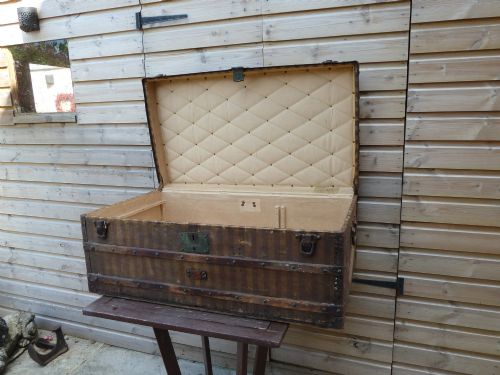
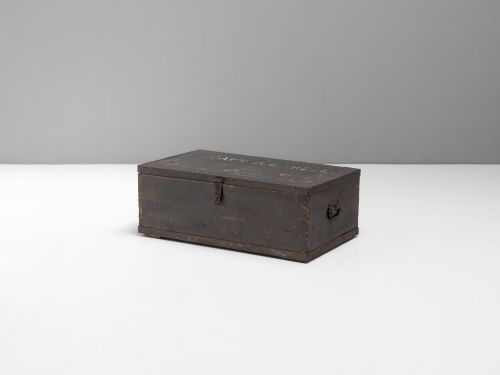
A flat top storage trunk provides sturdy containment and a level surface that readily doubles as a coffee table or blanket box in modern interiors. These practical chests span the nineteenth century through the early twentieth century, taking forms such as sea chests, travelling trunks, and painted blanket boxes.
Buyers will most frequently encounter nineteenth-century and early twentieth-century pine examples finished with iron or brass hardware, alongside specialised canvas and leather-covered travel pieces. Origins range from British Victorian workshops to Scandinavian country settings and maritime contexts, reflecting diverse domestic and travel needs.
Materials and construction
Construction relies primarily on solid woods like pine and elm, assembled to withstand the rigours of domestic storage and long-distance travel. Carpenters utilised durable dovetail or tongue-and-groove joints to ensure structural integrity across heavy lids and deep bases.
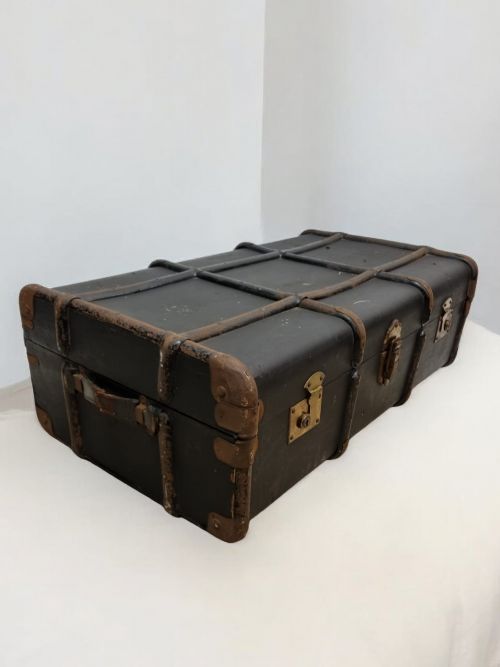
Functional metal components, including brass and iron hinges, latches, and reinforced corners, were fastened securely to protect the edges during transit. Exterior surfaces often received protective layers of paint, wax, canvas, or leather to guard against moisture and wear.
Listings feature pieces spanning the nineteenth century through the 1930s, constructed from pine, elm, canvas, iron, and brass.
Assessing quality and character
Quality in a flat top storage trunk rests upon the integrity of the original timber and the retention of authentic structural hardware. Trunks retaining their primary locks, handles, and corner brackets demonstrate superior preservation compared to those altered by modern replacements.
Finer examples distinguish themselves through thoughtful proportion, such as low, wide profiles suited for domestic placement, and untouched painted or waxed surfaces. The presence of internal fitted compartments or maker details further elevates the standing of an individual piece.
Louis Vuitton
The Flat Top Storage Trunk Glossary
- Pine
- A soft yet resilient softwood frequently utilised for nineteenth-century domestic chests and travelling trunks due to its availability and workability.
- Steamer trunk
- A lower-profile luggage chest designed specifically to fit beneath the berth in passenger ships during the late nineteenth and early twentieth centuries.
- Sea chest
- A robust wooden box built for maritime use, housing a sailor's personal possessions during long voyages.
- Coffer
- A traditional heavy box with a hinged lid, primarily used for storing valuables, textiles, or documents before the widespread adoption of modern wardrobes.
- Hardware
- The metal latches, handles, hinges, and corner brackets attached to a trunk for security and reinforcement during travel.
Flat Top Storage Trunk: Frequently Asked Questions
Can I use a flat top storage trunk as a coffee table?
Their sturdy flat lids and low profiles make these chests exceptionally well-suited for placement in front of a sofa, providing both a stable surface and accessible internal storage.
Selecting a wider, lower nineteenth-century pine or elm box ensures comfortable proportions for daily living spaces while keeping blankets or books neatly tucked away.
How do I care for the original finish on a trunk?
Preserving the character of old pine, canvas, or leather requires gentle maintenance using appropriate waxes or dry dusting rather than harsh chemical cleaners.
Keeping the wood away from direct heat sources prevents the timber and historical adhesives from drying out or splitting over time.
What is the difference between a steamer trunk and a standard travel trunk?
Steamer trunks were intentionally built with lower heights to comply with the strict luggage regulations and tight storage spaces aboard passenger steamships.
Standard travel trunks often featured domed or taller flat lids designed for general railway and carriage transport, accommodating more voluminous clothing items.
How can I tell a Victorian trunk from an Edwardian one?
Victorian pieces from the nineteenth century frequently display heavier iron hardware, hand-cut dovetailing, and darker waxed pine or painted finishes.
Edwardian and early twentieth-century examples often incorporate lighter construction methods, specialised canvas or leather coverings, and early utility hardware suited for modern travel.