

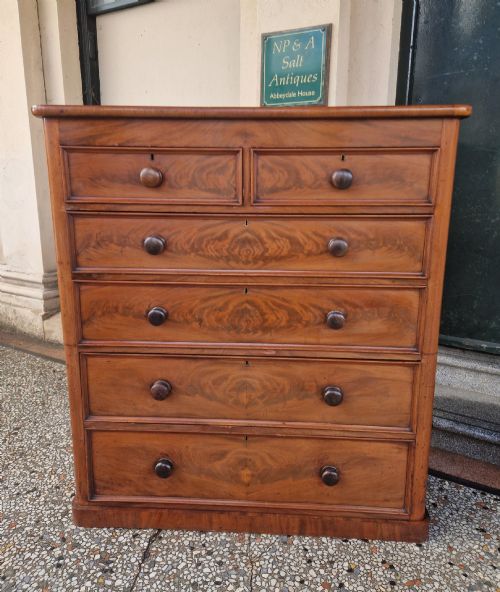
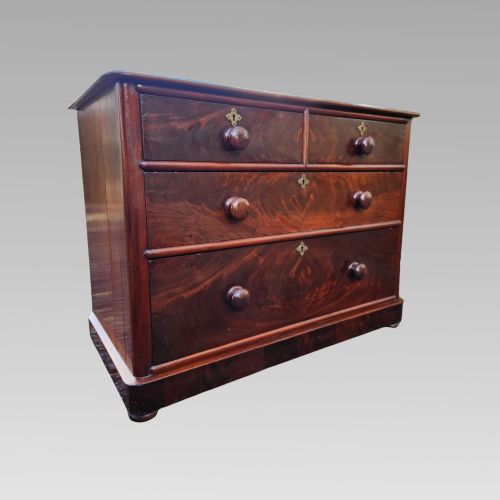
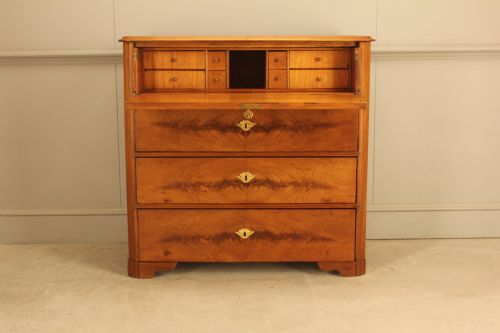
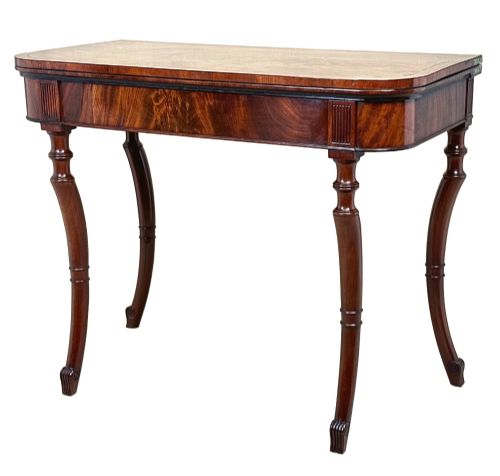
Flamed Mahogany Furniture
These pieces of flamed mahogany furniture bring rich grain patterns and warm tones into a room, making them sought after for traditional and period interiors alike.
Flamed Mahogany Furniture
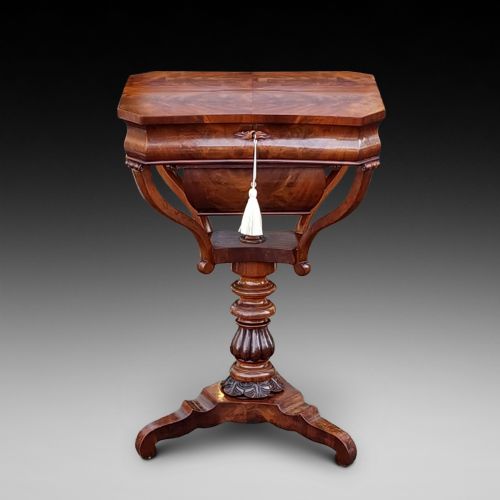
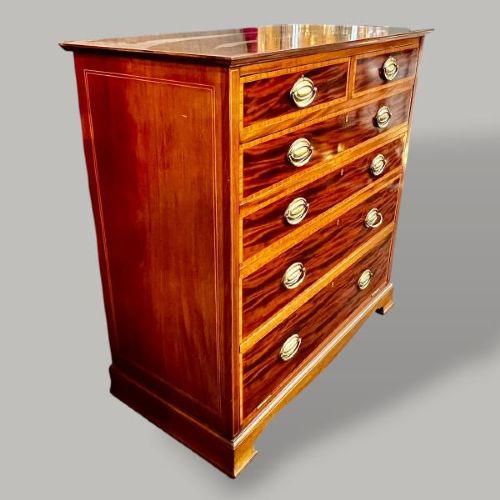
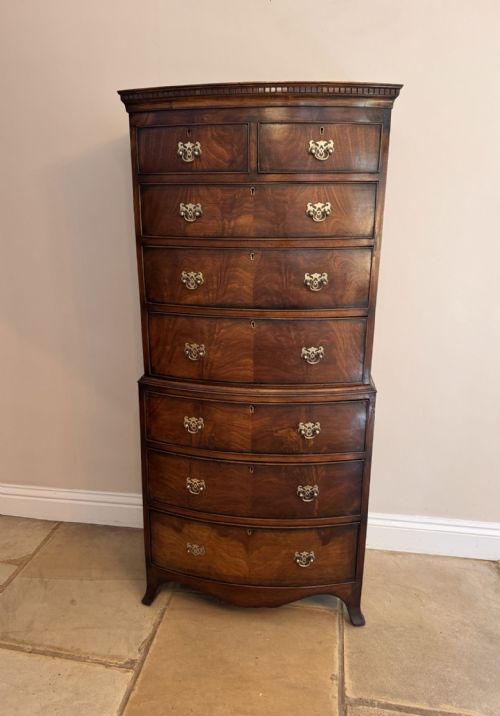
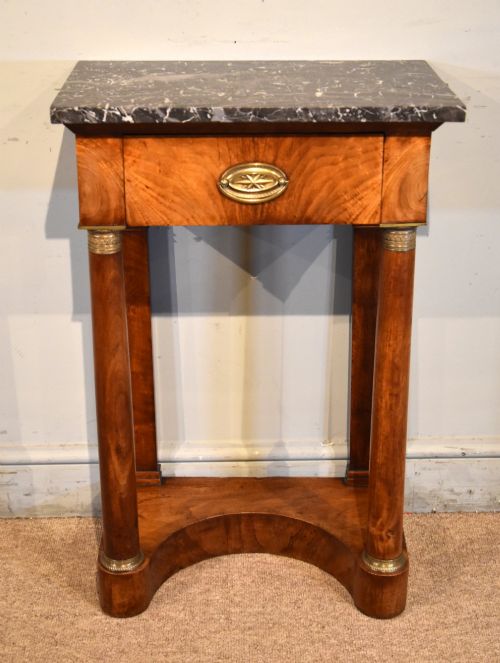
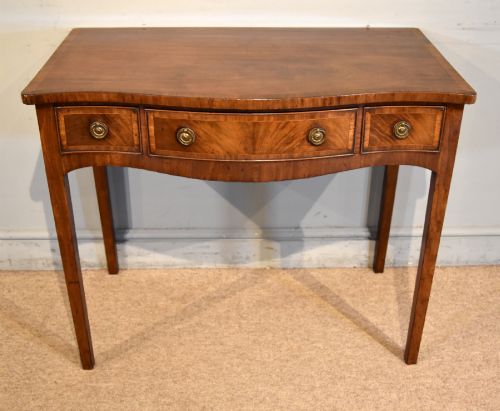
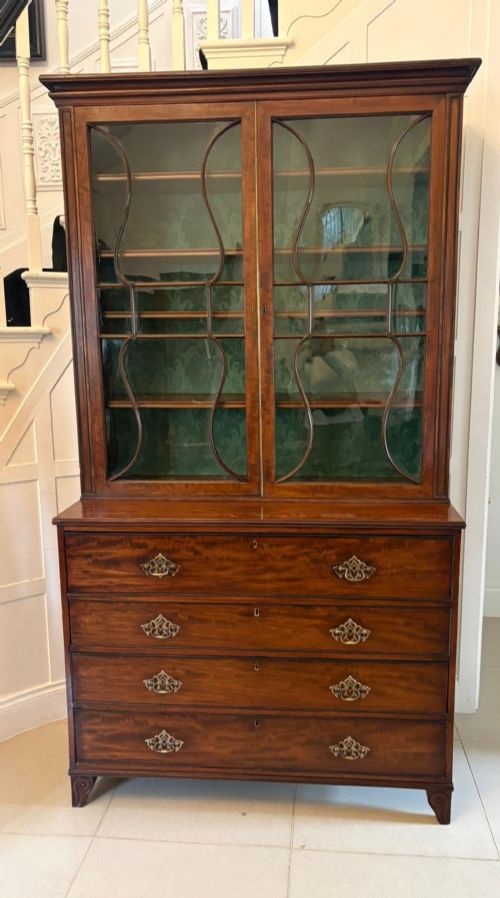
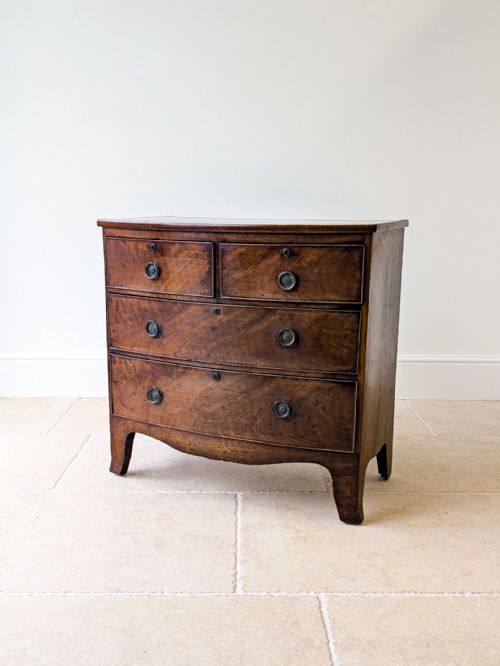
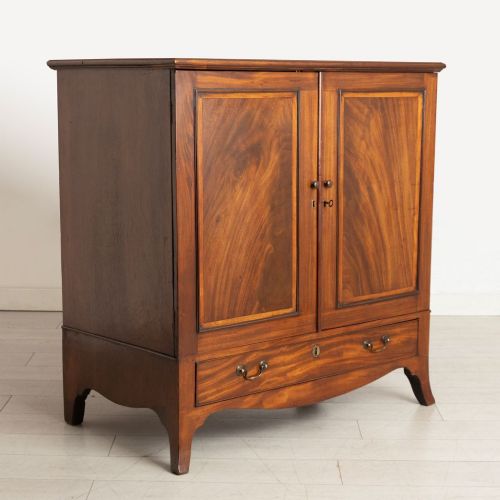
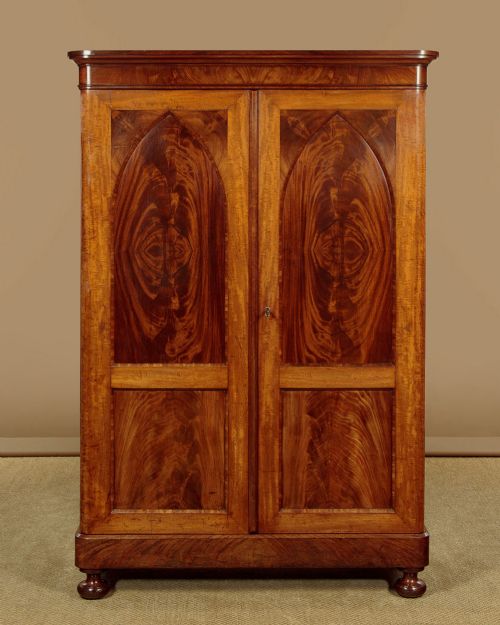
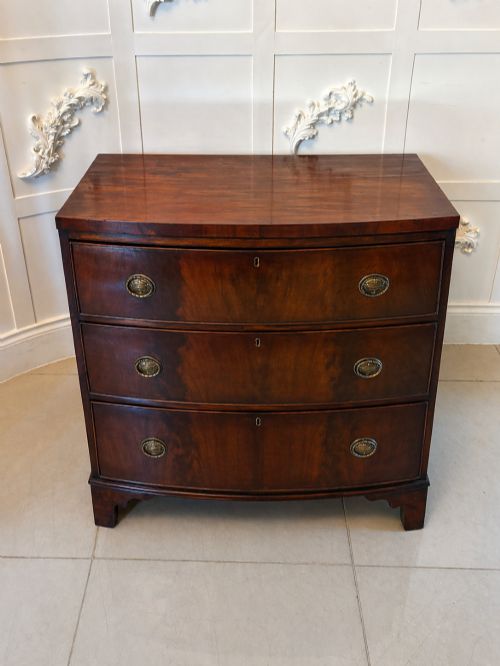
Flamed mahogany furniture encompasses substantial storage pieces and display items built primarily during the Georgian, Regency, and Victorian periods. Buyers seeking these items encounter chests of drawers, sideboards, linen presses, and wardrobes featuring prominent timber figures.
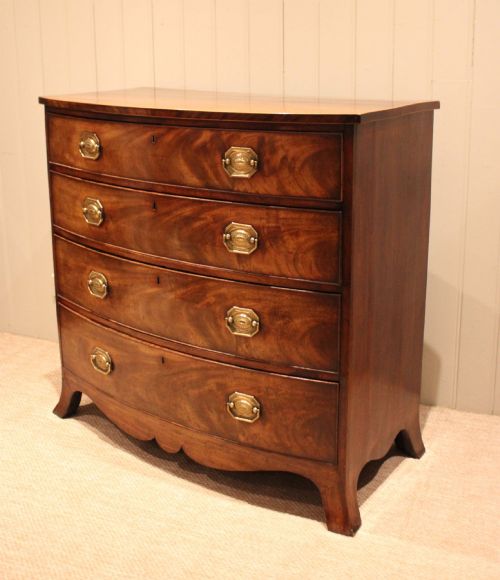
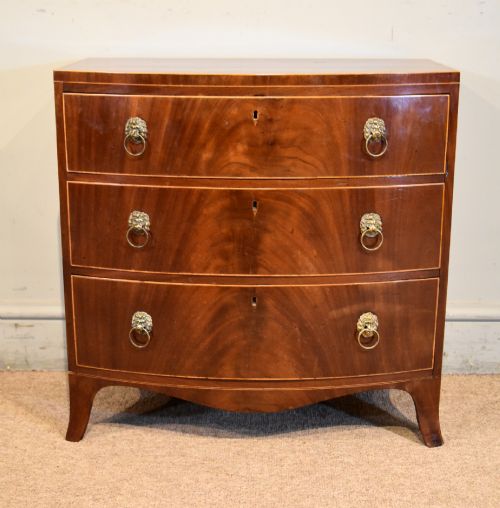
The most common forms on this page are bowfront chests of drawers and sideboards dating from the late eighteenth century through the nineteenth century. These items showcase the distinctive figuring of the wood across primary drawer fronts and cabinet doors.
Makers and workshops across Britain and continental Europe utilised this figured timber to elevate utilitarian storage into statement pieces. The survival of these items demonstrates the enduring appeal of dense grain patterns combined with traditional cabinetmaking forms.
What varies in quality
The intensity and symmetry of the flame veneer dictate the visual impact of each piece. Finer examples display lively, highly figured grain patterns matched carefully across multiple drawers or cabinet doors.
Construction methods and secondary timbers reflect the standard of the workshop. Superior pieces maintain tight joints, original brass hardware, and well-fitted interiors without extensive structural replacement.
Flamed Mahogany Furniture Retail Price Guide 2026
Typical asking prices for flamed mahogany furniture among the pieces listed under this phrase on Sellingantiques today, from the lower quarter to the upper quarter. They describe what is for sale here now, not the wider market.
Listings feature mahogany, oak, and satinwood combined with brass hardware and glass across Georgian and Victorian periods.
Hille·Whytock & Reid
The Flamed Mahogany Furniture Glossary
- Flame mahogany veneer
- A thin slice of timber cut from specific parts of a mahogany tree to display a flame-like or feathery grain pattern. This veneer is applied to the primary surfaces of furniture.
- Bowfront
- A curved front on a chest of drawers or sideboard where the central section projects outward in a convex arc. This shape frequently appears on Georgian and Regency pieces.
- Crossbanding
- A narrow strip of veneer laid perpendicular to the grain of the surrounding surface, often bordering drawer fronts or tabletops. It provides a neat contrasting frame.
- Linen press
- A tall storage cabinet featuring upper sliding trays or shelves enclosed by doors, traditionally used for storing household linen. Lower sections typically incorporate multiple drawers.
- Secretaire
- A desk or cabinet containing a drop-down writing flap that conceals small drawers and pigeonholes. It combines the storage of a chest or sideboard with a writing surface.
Flamed Mahogany Furniture: Frequently Asked Questions
What is flame mahogany?
Flame mahogany is a highly figured wood grain obtained from specific cuts of timber, creating a distinctive rippling pattern.
Cabinetmakers used these thin veneers on prominent surfaces like drawer fronts to catch the light and create visual depth.
How do I date a chest of drawers?
Dating relies on carcass construction, handle styles, timber choice, and overall proportions relative to known historical periods.
Georgian and Regency pieces often feature hand-cut dovetails and specific bracket or feet designs that help identify their era of manufacture.
Where were these pieces used?
These items served functional roles in principal rooms such as bedrooms, dining rooms, and libraries.
Sideboards held dining silver and linens, while chests of drawers and wardrobes provided domestic storage in private chambers.
How should I care for the veneer?
Maintenance involves keeping pieces away from direct sunlight and steady heat sources to prevent the wood and veneer from drying out.
Polishing with appropriate traditional wax helps nourish the timber and maintain the lustre of the grain.