

Flamed Mahogany Chest
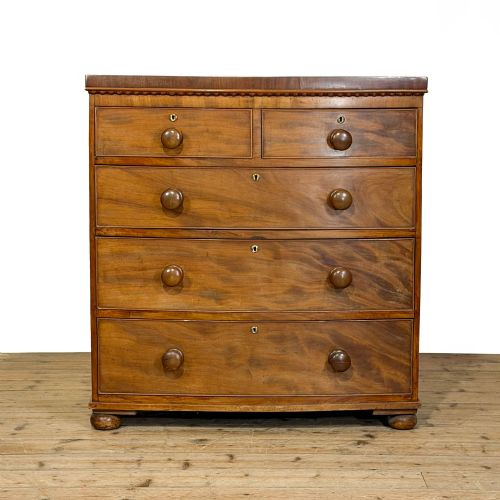
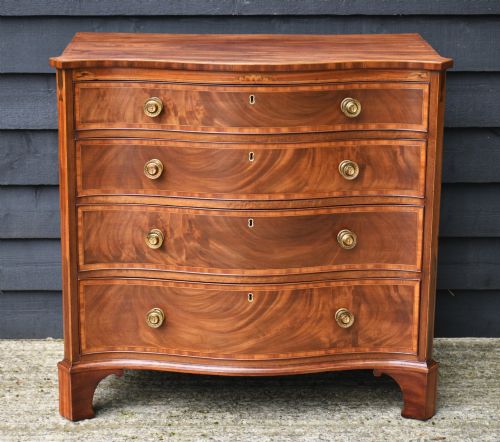
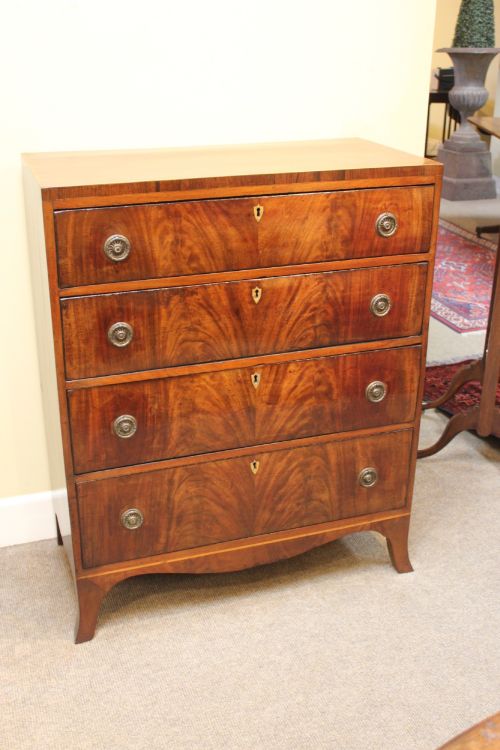
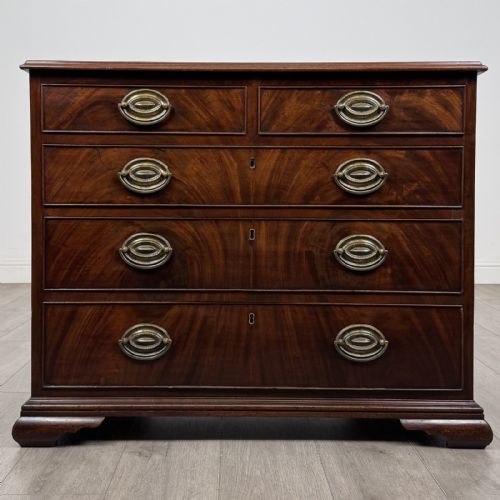
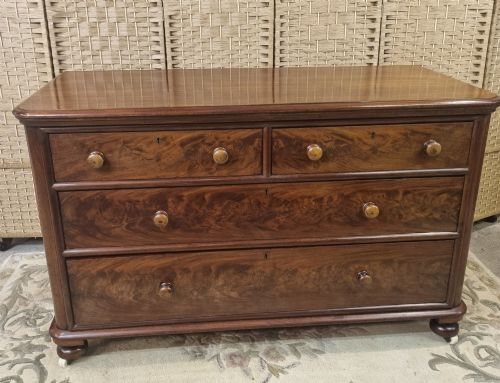
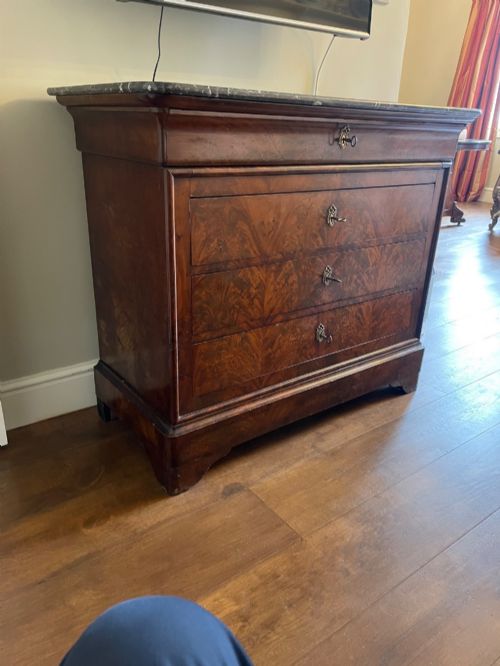
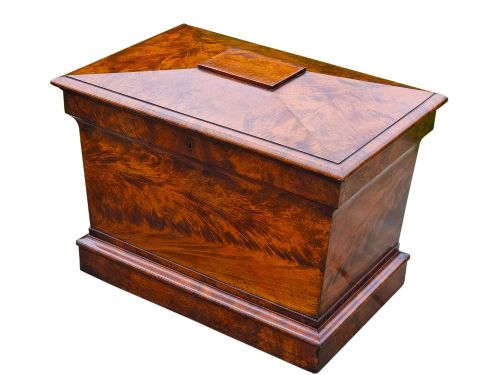
A flamed mahogany chest brings together rich, swirling timber grain and disciplined cabinet-making from the Georgian, Regency and Victorian periods.
Flamed Mahogany Chest
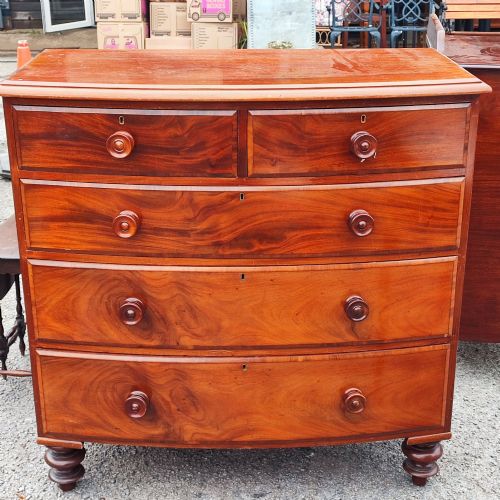
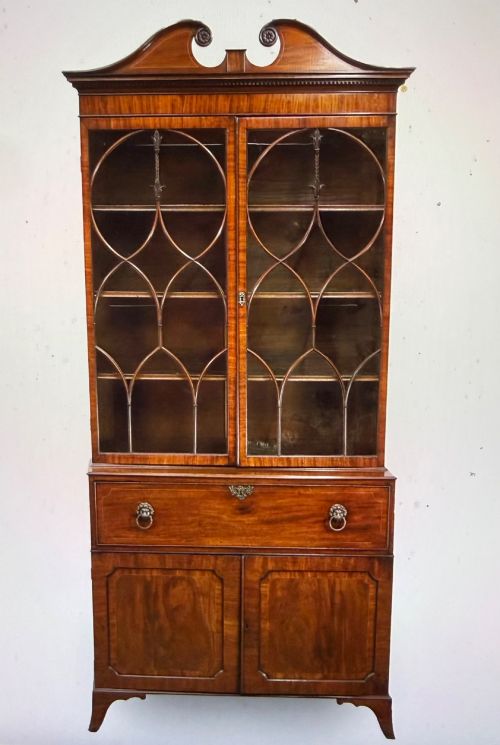
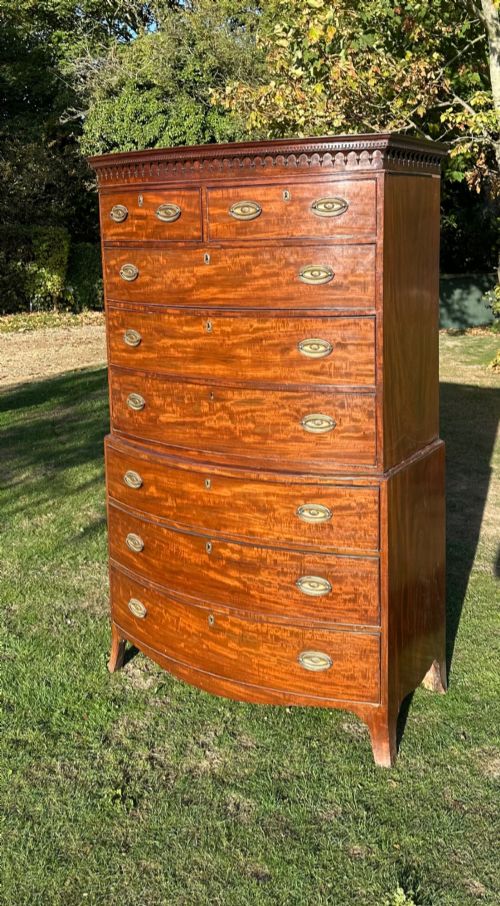
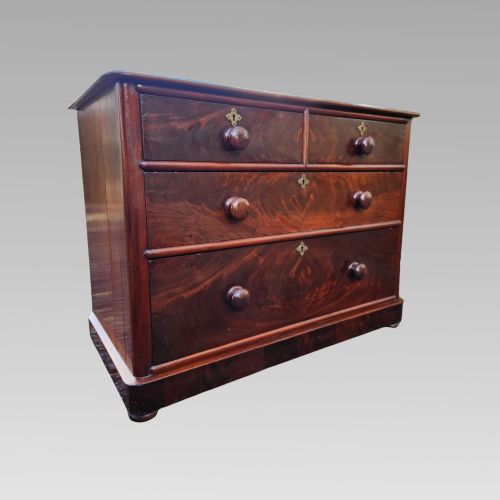
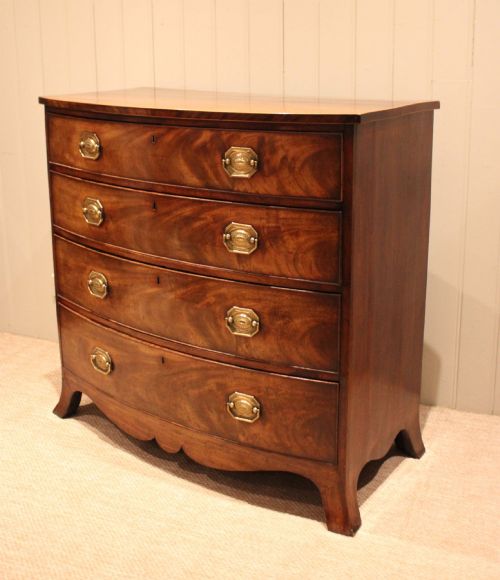
A flamed mahogany chest satisfies the demand for storage with high visual impact, utilising striking wood figures across periods ranging from the eighteenth century to the Edwardian era. Buyers seeking a flamed mahogany chest will most frequently encounter bow-fronted designs and tall forms from the Georgian and Regency periods.
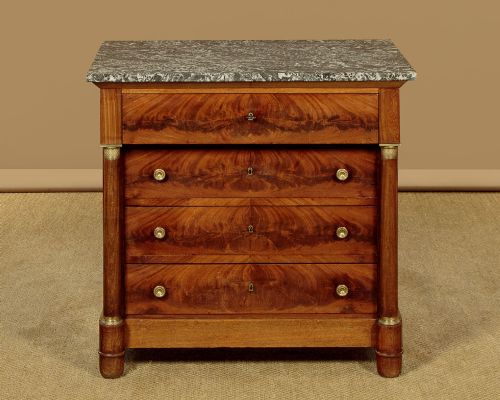
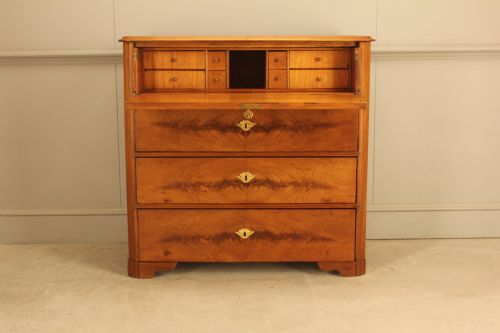
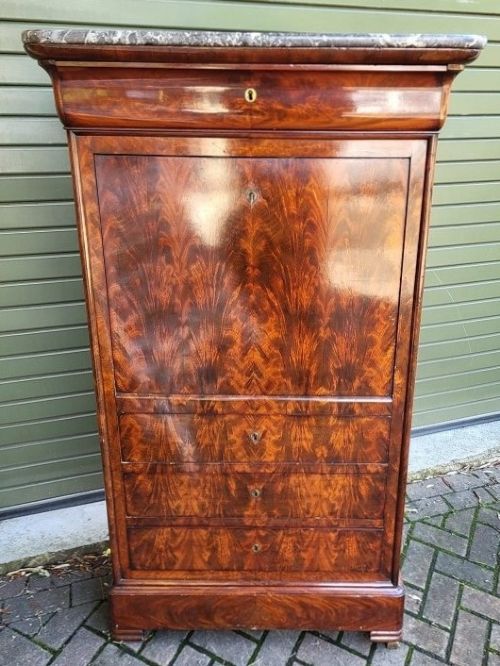
The selection extends beyond standard chests to include collectors cabinets, linen presses, secretaire desks and miniature furniture. These pieces reflect diverse stylistic influences, such as French Empire, Biedermeier and Sheraton Revival, alongside traditional British forms.
Craftsmen utilised the distinctive grain of flame mahogany veneer and solid mahogany to create functional furniture that doubles as a decorative focal point. Each piece demonstrates the enduring appeal of figured timber in domestic interiors.
Assessing Quality
Quality in a flamed mahogany chest rests on the selection and matching of the timber veneer across the drawer fronts. Superior examples display balanced, symmetrical flame figures that flow naturally from one drawer to the next.
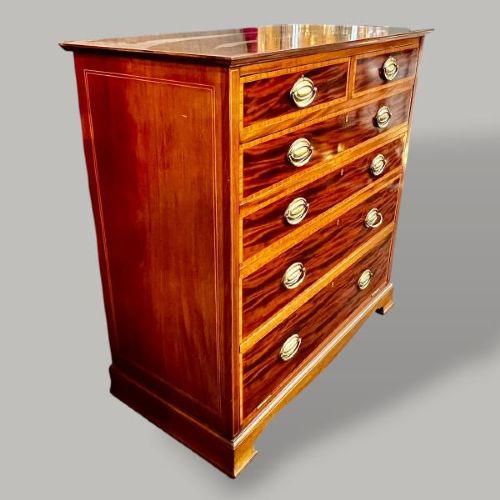
The crispness of secondary details such as boxwood stringing, brass hardware and carcase mouldings distinguishes high-tier workshop output from standard production. Construction integrity, including drawer linings and backboards, remains a reliable indicator of period craftsmanship.
Flamed Mahogany Chest Retail Price Guide 2026
Typical asking prices for flamed mahogany chest among the pieces listed under this phrase on Sellingantiques today, from the lower quarter to the upper quarter. They describe what is for sale here now, not the wider market.
Miniature chests were often apprentice masterpieces, proving a young cabinet-maker could handle complex curves and tiny dovetails before graduating to full-sized furniture.
Gillows·Whytock & Reid
The Flamed Mahogany Chest Glossary
- Flame mahogany veneer
- A thin slice of wood cut from where branches join the main trunk, producing a distinctive fire-like grain pattern. This veneer is prized for its decorative movement on prominent surfaces.
- Bow front
- A convex curved front profile popular in Georgian and Regency cabinet-making. This shape softens the room and showcases figured timber across a wider viewing angle.
- Secretaire
- A piece of furniture incorporating a fitted writing drawer with a drop-down front. It combines the storage capacity of a chest with a concealed workspace.
- Tallboy
- A tall chest of drawers, often constructed in two sections with one chest stacked upon another. This form maximises vertical storage while occupying a modest floor footprint.
Flamed Mahogany Chest: Frequently Asked Questions
What is a flamed mahogany chest?
A flamed mahogany chest is a storage piece featuring highly figured wood veneer with characteristic flame-like patterns. These chests date primarily from the Georgian, Regency and Victorian eras.
Cabinet-makers utilised the timber's natural grain to create decorative surfaces on drawers and doors. The resulting furniture combines practical storage with striking visual depth.
How do I date a mahogany chest?
Dating relies on architectural proportions, handle styles, construction methods and secondary timbers like oak. Georgian and Regency pieces often feature tighter proportions and specific bracket or feet types.
Later Victorian and Edwardian examples may incorporate machine-sawn elements or different internal framing. Comparing hardware fixings and dovetail construction helps narrow the period of manufacture.
Where should I place a flamed mahogany chest?
These chests suit bedrooms, hallways and living spaces where the rich timber grain can catch natural light. Direct sunlight should be avoided to prevent fading of the sensitive mahogany finish.
Pairing the chest with neutral walls allows the intricate veneer patterns to remain the focal point of the room. Stable indoor humidity levels protect the timber and veneer over time.
What is the difference between solid and veneered mahogany?
Solid mahogany uses single pieces of timber for structural components and visible surfaces. Veneered mahogany applies thin, highly figured sheets of timber over a stable carcase.
Veneering allowed craftsmen to display dramatic flame patterns that would be unstable or unavailable if cut as solid boards. Both methods represent traditional high-end cabinet-making techniques.