

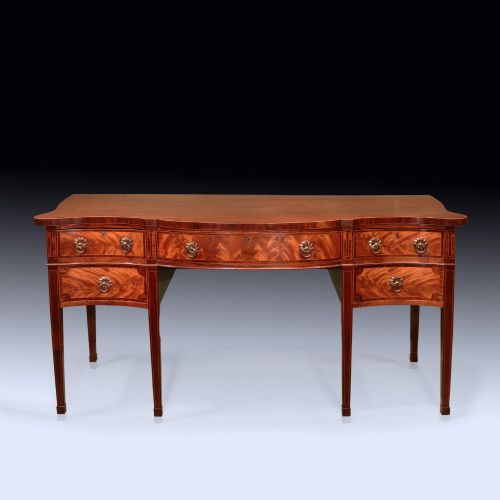
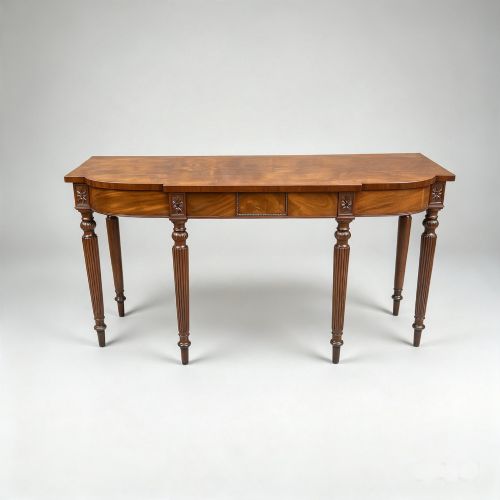
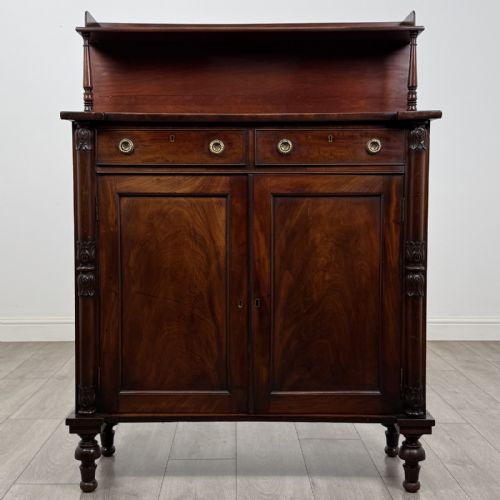
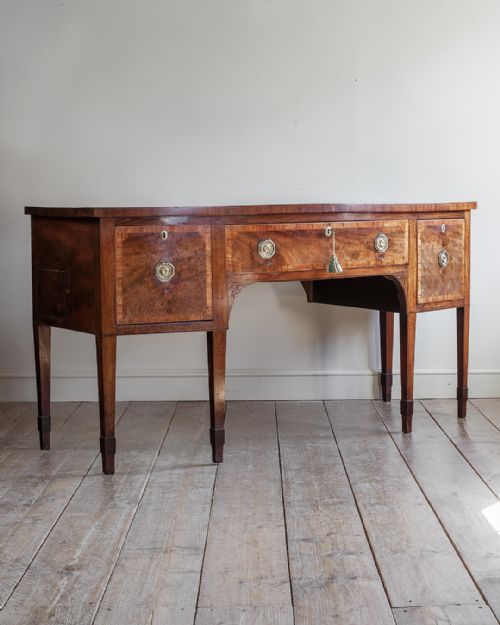
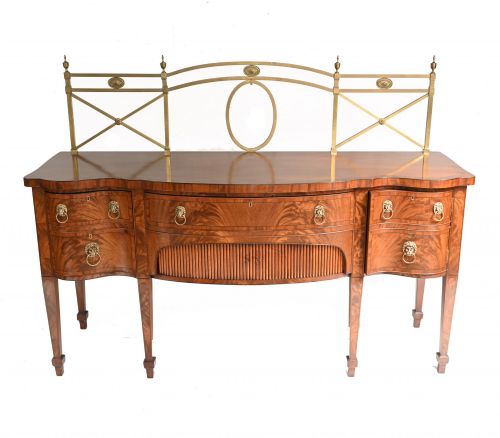
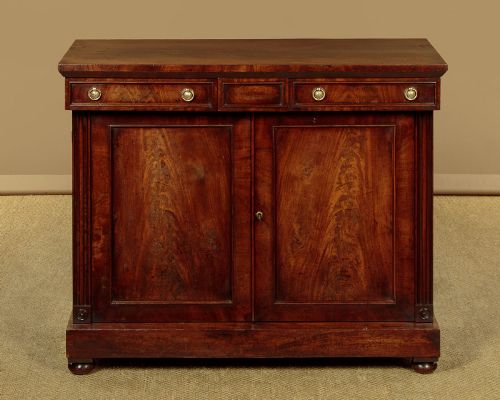
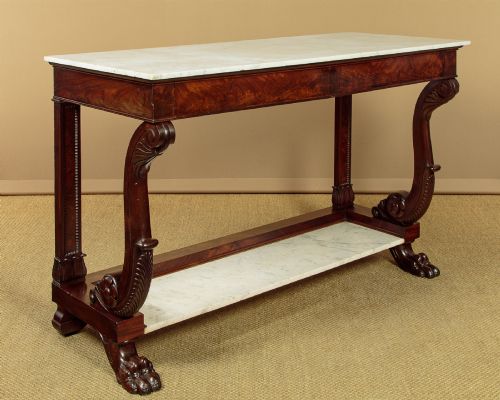
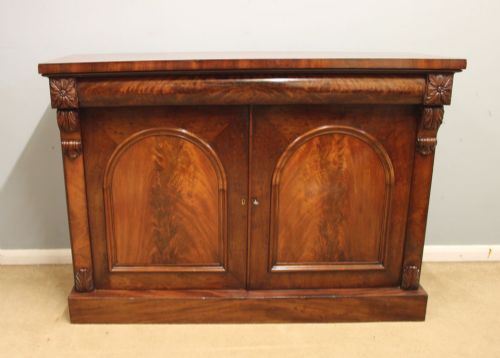
Flamed Mahogany Buffet
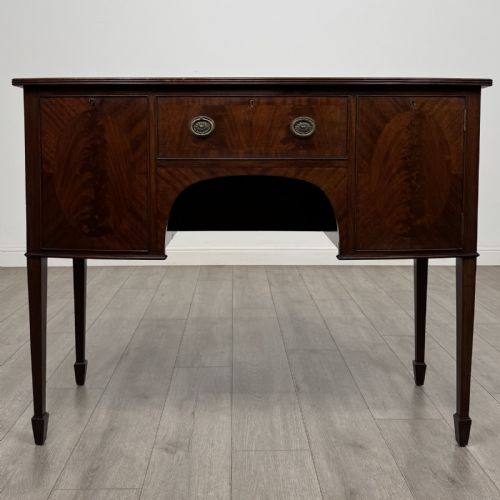
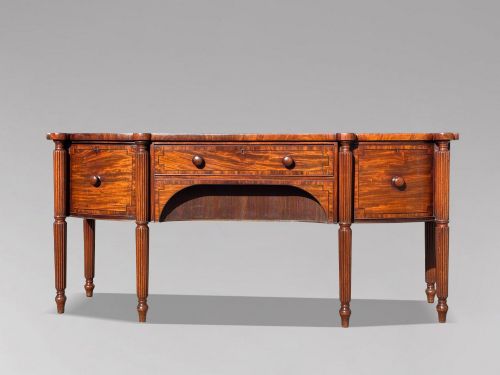
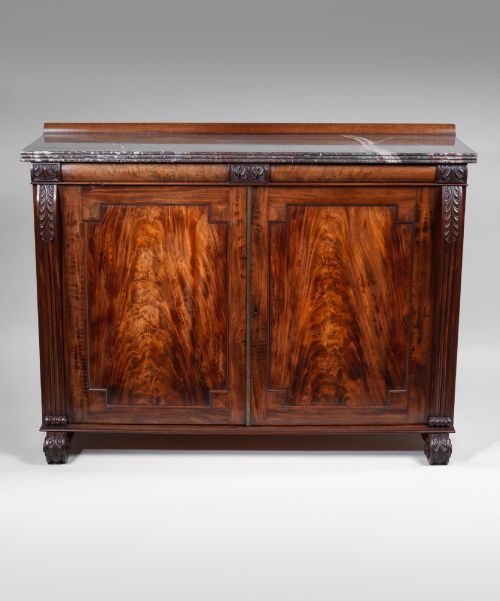
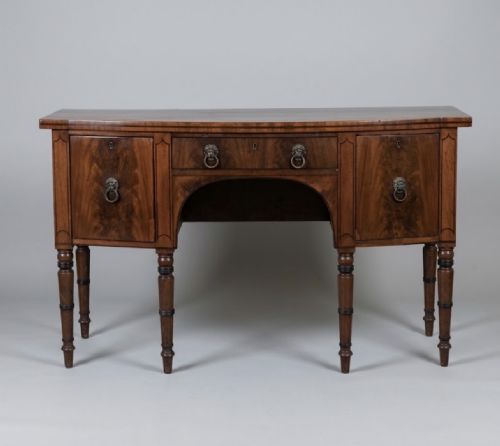
A flamed mahogany buffet offers deep, swirling grain patterns that catch the eye and bring warmth to a formal dining room.
Flamed Mahogany Buffet
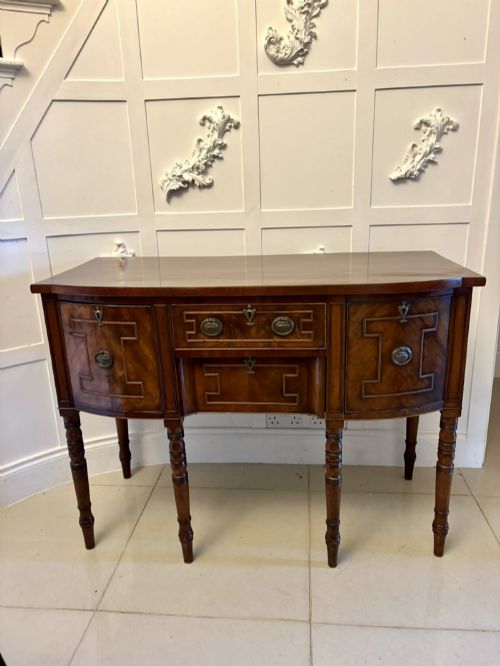
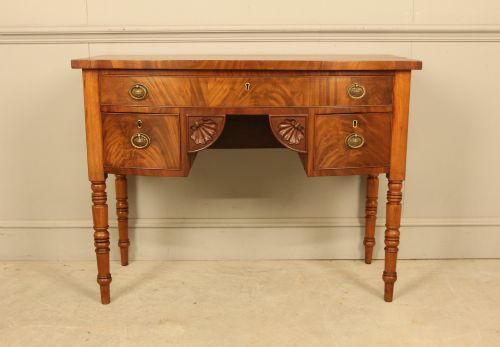
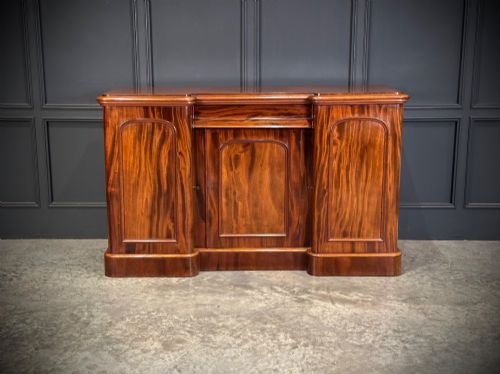
When you search for a flamed mahogany buffet, you encounter large dining room furniture designed for serving food and storing silver, most commonly appearing as sideboards, chiffoniers, and servers.
The pieces on this page span the Georgian, Regency, Victorian, and Edwardian periods, alongside later revival pieces, presenting forms from simple bow fronts to grand breakfronts with mirror backs.
Makers built these items using dense timbers, applying decorative veneers to the front surfaces while pairing them with cupboards, drawers, and occasionally marble tops or brass galleries.
Materials and construction methods
Cabinetmakers constructed the carcase using solid mahogany for structural strength, then applied thin layers of flame mahogany veneer to the drawer fronts and doors to achieve dramatic grain figures.
Workshops often incorporated secondary timbers such as satinwood and boxwood for stringing and inlay work, adding sharp linear contrast to the dark, rich body of the wood.
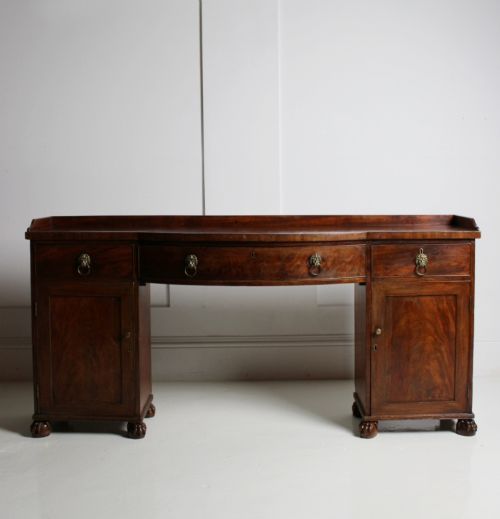
Moulders and carvers shaped solid elements into claw and ball feet, lion paws, or scrolled brackets, securing joints with traditional cabinetmaking methods.
Flamed Mahogany Buffet Retail Price Guide 2026
Typical asking prices for flamed mahogany buffet among the pieces listed under this phrase on Sellingantiques today, from the lower quarter to the upper quarter. They describe what is for sale here now, not the wider market.
Several Victorian sideboards proudly stand upon carved lion paw feet, ready to pounce across your dining room floor.
Judging the quality of the finish and timber
The value of a piece rests heavily on the symmetry and intensity of the veneer selection, where book-matched flame figures create mirrored patterns across the doors and drawers.
Construction details distinguish workshop standards, seen in the hand-cut dovetails of the drawer construction and the crispness of any carved wooden or applied brass ornamentation.
The Flamed Mahogany Buffet Glossary
- Flame mahogany veneer
- A thin slice of wood cut from the fork of the tree where branches meet the trunk, producing a rippling, flame-like grain pattern. Cabinetmakers laid these leaves symmetrically across prominent surfaces.
- Breakfront
- A piece of furniture where the central section projects forward from the flanking outer sections. This layout creates architectural depth on large dining room sideboards.
- Bow front
- A convex, curved front elevation that softens the rigid corners of a cabinet. This curved profile requires precise carpentry to bend the wood and veneer.
- Chiffonier
- A compact sideboard or low cabinet equipped with drawers and enclosed shelving. These pieces became common during the Regency and Victorian eras for smaller dining spaces.
- Pedestal sideboard
- A design featuring two heavy cupboards connected by a central serving table or recessed board. This form often dates to the Regency period.
Flamed Mahogany Buffet: Frequently Asked Questions
What is a flamed mahogany buffet used for?
These items serve as storage and display units in dining rooms, holding heavy silver, linen, and serving dishes within their cupboards and drawers.
The flat top surface functions as a serving area during meals or holds decorative lamps and porcelain objects when not in use.
How do I date a mahogany sideboard?
Cabinet shapes, handle styles, and construction methods indicate the era of manufacture, moving from geometric Georgian proportions to ornate Victorian carvings.
Early nineteenth-century pieces often feature distinct pedestals and brass inlays, whereas Edwardian examples display lighter satinwood banding and softer lines.
How do I care for flame mahogany?
Keep the wood away from direct sunlight and heat sources to prevent the thin veneer from drying out, lifting, or fading over time.
Apply a traditional beeswax polish sparingly and buff with a soft cloth to maintain the natural lustre of the grain without building up heavy wax residues.
Are all these buffets British?
The listings include British styles such as George III and Regency alongside continental pieces like Biedermeier cabinets that utilise similar mahogany timbers.
Regional variations in craftsmanship and secondary woods help identify the workshop origins of individual pieces.