



Flame Mahogany Tilt Top
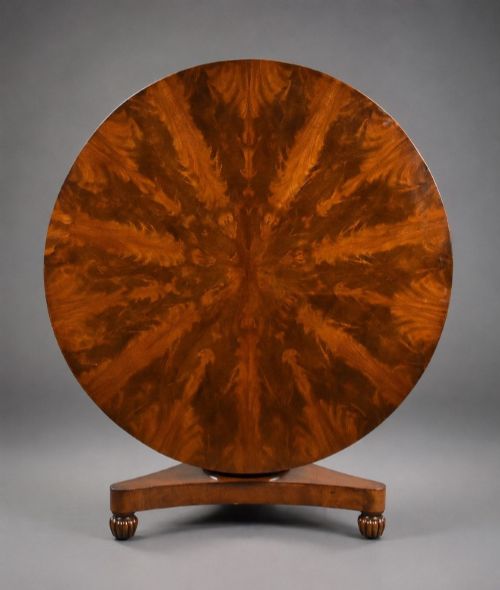
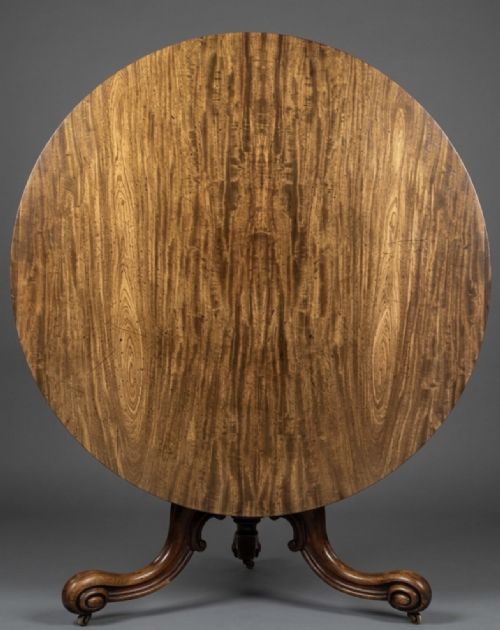
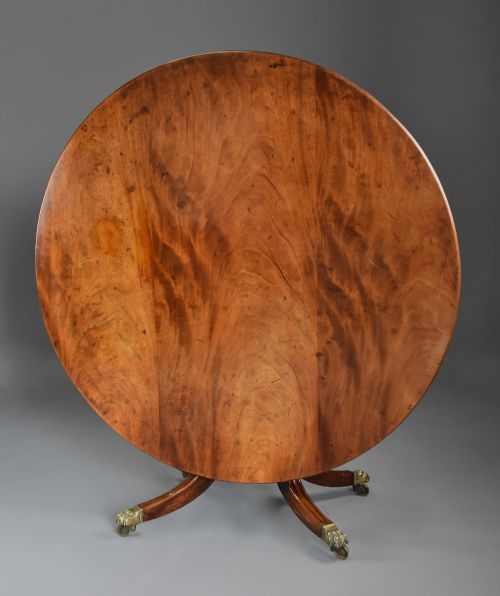
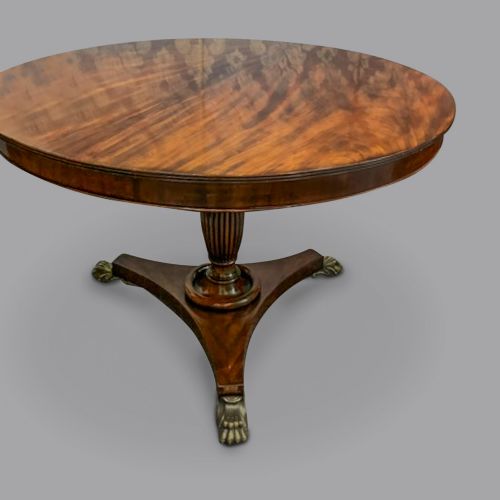
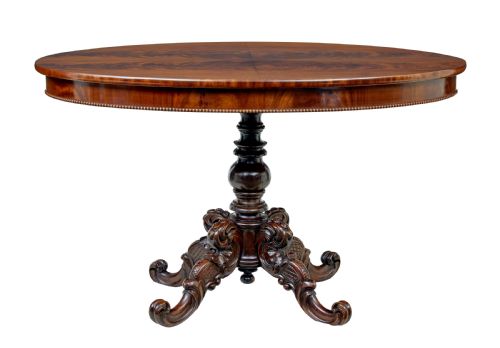
Flame mahogany tilt top tables bring dramatic grain patterns and practical pivoting surfaces together in dining, breakfast and wine tables.
Flame Mahogany Tilt Top
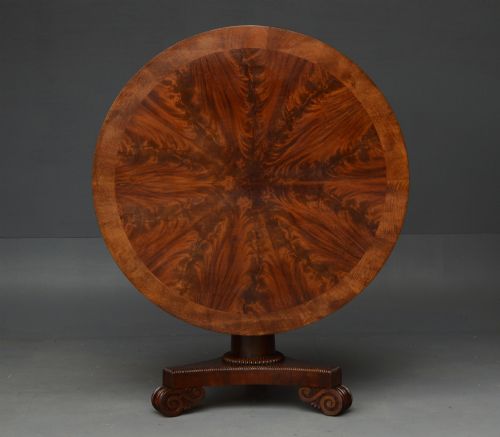
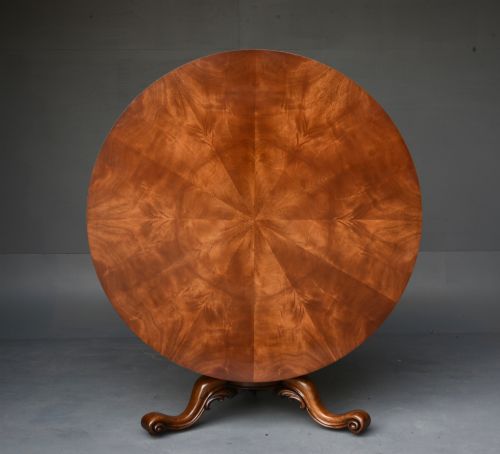
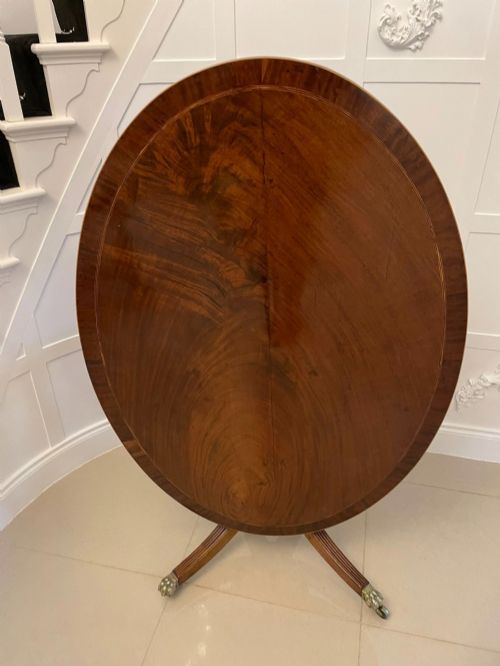
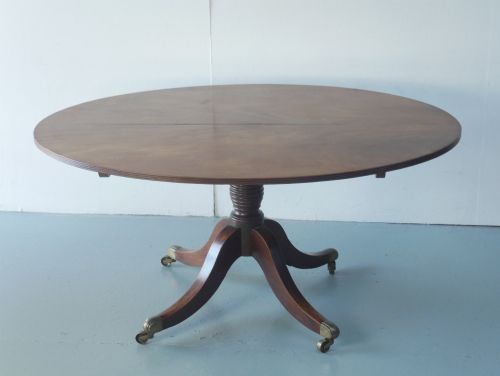
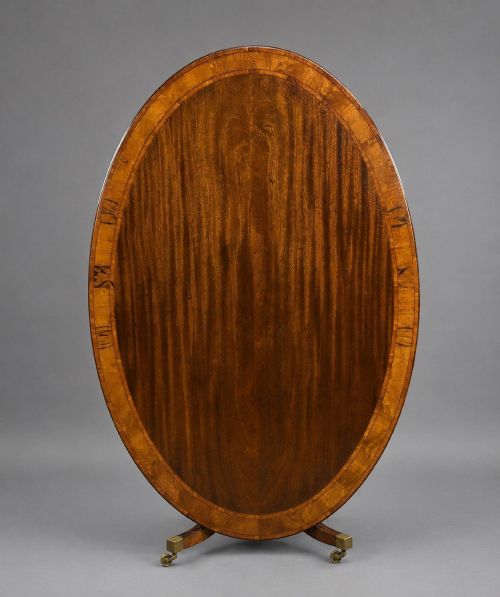
A flame mahogany tilt top table serves multiple functions across different domestic spaces, appearing as large breakfast tables, pedestal dining tables, compact wine tables and occasional tables. Buyers seeking a flame mahogany tilt top encounter pieces spanning the Georgian, Regency, William IV and Victorian periods, with origins recorded in English and Scandinavian workshops.
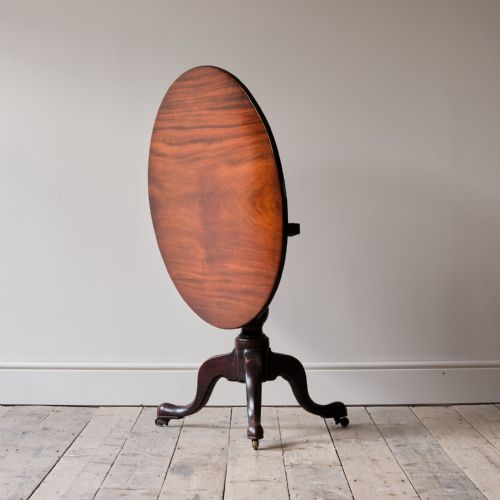
The primary forms include large circular or oval breakfast tables supported by central pedestals and tripod bases, alongside smaller wine and occasional tables designed to tilt upright when not in use. These tables date predominantly from the late 18th century through the mid 19th century.
The domestic role of these pieces shifted from formal dining and breakfast service to versatile centre tables and lamp tables, though the tilting mechanism remained a defining characteristic across all sizes.
Materials and Construction
Makers utilised solid mahogany and flame mahogany veneer applied to secondary woods such as oak, creating intense rippled grain patterns across the top surfaces. Secondary materials like brass provide inlay and structural support, whilst satinwood appears in specific decorative details.
Carpenters constructed the tilting mechanisms using sturdy pivoting blocks and brass catches that allowed heavy circular and oval tops to lock securely into horizontal or vertical positions. Pedestal bases typically feature carved tripod or pillar supports designed to bear the weight of large timber tops.
Flame Mahogany Tilt Top Retail Price Guide 2026
Typical asking prices for flame mahogany tilt top among the pieces listed under this phrase on Sellingantiques today, from the lower quarter to the upper quarter. They describe what is for sale here now, not the wider market.
Some tables double as writing desks, proving that Regency folk enjoyed penning letters whilst keeping breakfast securely on hand.
Quality and Connoisseurship
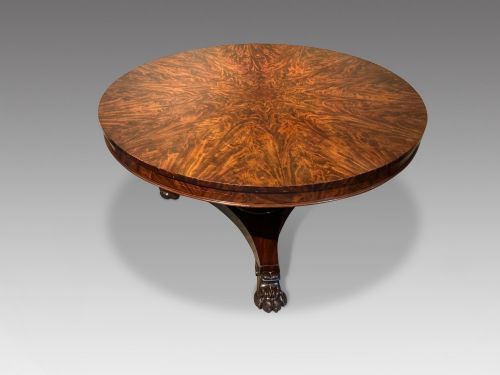
Quality rests in the intensity and symmetry of the flame mahogany veneer figure across the tabletop, alongside the crispness of hand carving on the pedestal and base. Superior examples display carefully matched veneer segments that create harmonious patterns from a central point.
Structural integrity of the tilt mechanism and the stability of the central pillar dictate the functional success of the piece. Well-balanced proportions between the heavy top and the supporting tripod legs separate finer workshop productions from simpler utilitarian items.
Walker-Lancaster·Gillows
The Flame Mahogany Tilt Top Glossary
- Flame mahogany
- A veneer cut from the branch junctions or fork of a mahogany tree, producing a distinctive, flickering grain pattern resembling flames. This decorative surface defines the aesthetic of many Regency and Victorian tables.
- Tilt top
- A pivoting tabletop mounted on a catch mechanism that allows the surface to tilt into a vertical position when not in use. This design saved floor space in period drawing rooms and dining parlours.
- Breakfast table
- A large circular or oval pedestal table originating in the Georgian and Regency periods, designed for morning meals or as a freestanding centre table. They frequently incorporate the tilting mechanism.
- Tripod base
- A pedestal support terminating in three individual feet or legs, commonly carved with scrolls or paw details. This configuration provides stability for heavy circular tabletops.
- Centre table
- A freestanding table designed to be viewed from all sides and placed in the middle of a room rather than against a wall. Many examples in this category feature multi-use surfaces including writing slopes.
Flame Mahogany Tilt Top: Frequently Asked Questions
How do I use a tilt top table safely?
Release the brass catch beneath the tabletop to pivot the surface into a vertical position for storage or movement against a wall. Ensure the catch locks securely back into place before lowering the table for daily use.
Keep heavy objects off the surface when tilting, and support the weight of the timber with both hands to protect the pivot mechanism from sudden strain.
What rooms suit a flame mahogany table?
Large breakfast tables fit spacious dining rooms or central hall spaces where their figured grain patterns can be viewed from all angles. Smaller wine and occasional tables suit sitting rooms as lamp or side tables.
The reflective quality of the polished veneer works well in rooms with natural light that highlights the grain patterns.
How do I date a flame mahogany table?
Examine the pedestal design, base construction and secondary timbers to identify the period. Georgian and Regency pieces often feature crisp carved tripod bases and finer brass fittings, whilst Victorian examples frequently introduce heavier proportions and barley twist supports.
Look for hand-cut joinery and timber characteristics beneath the tabletop to confirm the era of manufacture.
How should I care for flame mahogany veneer?
Polish the wood surfaces regularly with a traditional beeswax to maintain the moisture and depth of the flame veneer. Avoid placing the table in direct sunlight or near heat sources to prevent the timber from drying and splitting.
Use coasters and mats to protect the polished finish from moisture rings and heat damage during daily use.