

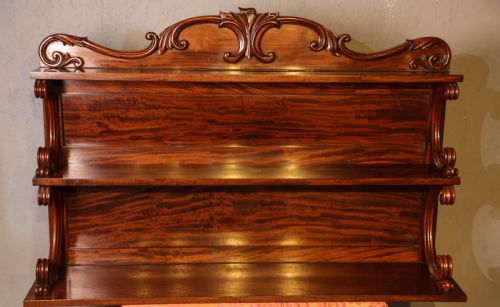


Flame Mahogany Shelves
Flame mahogany shelves bring deep, figured wood grain and functional storage to a room through Georgian, Regency and Victorian forms.
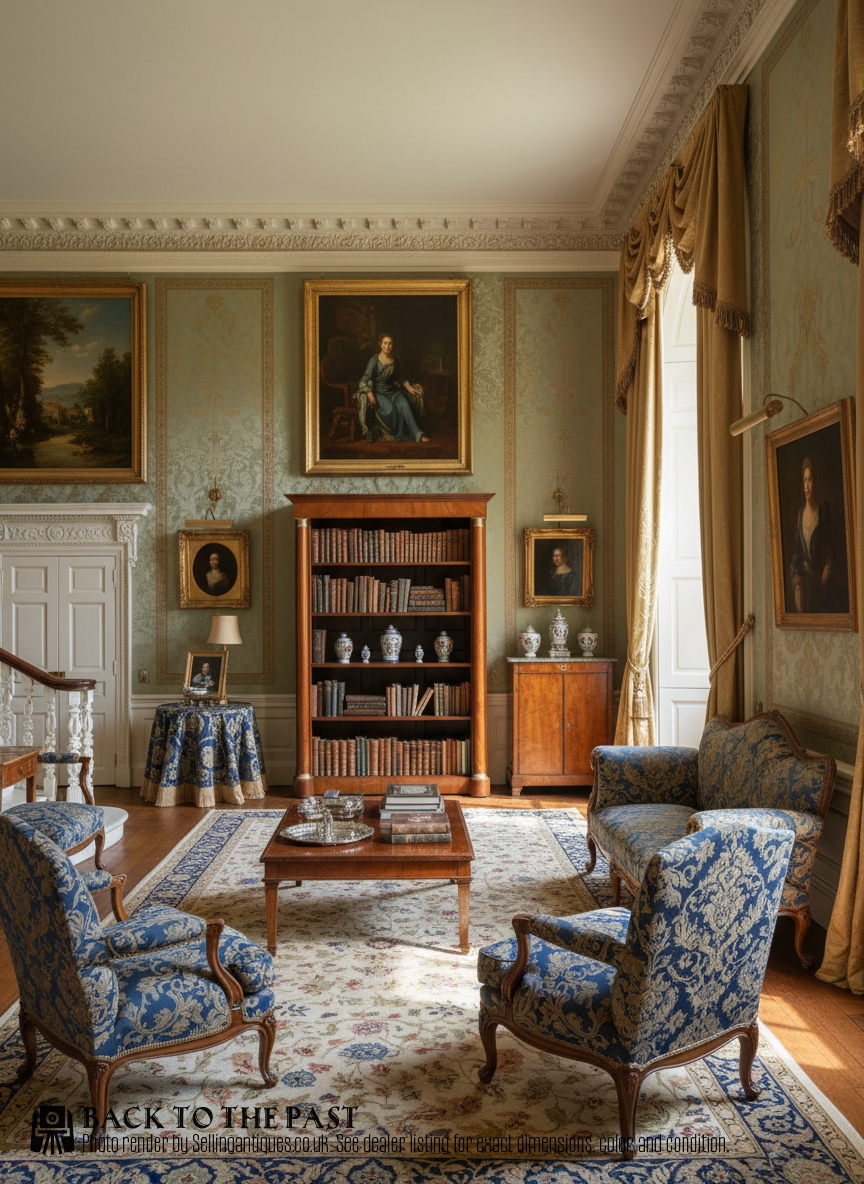
Flame Mahogany Shelves
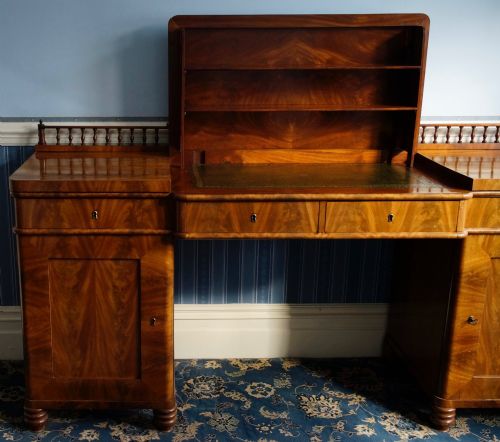
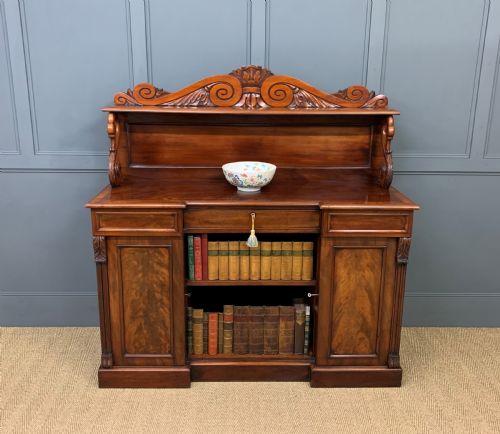
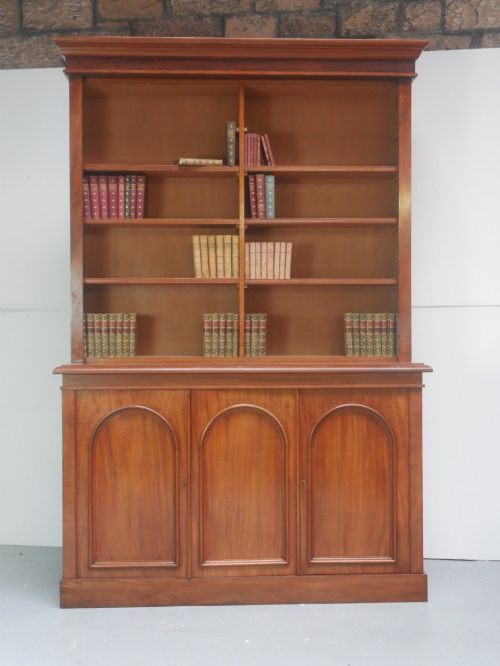
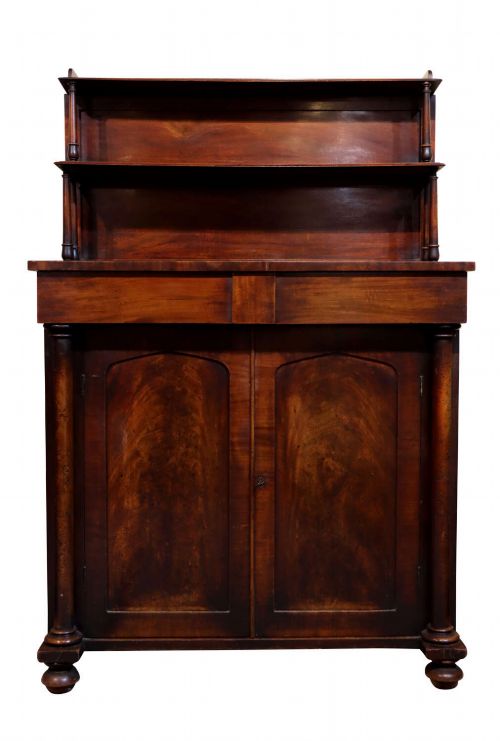
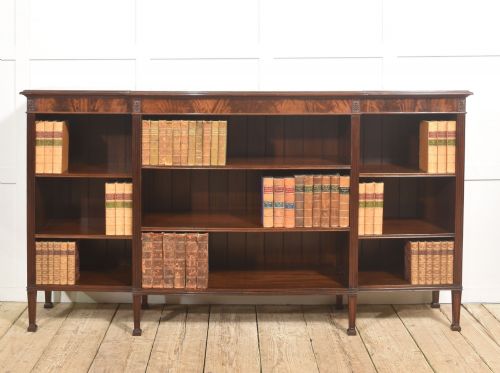
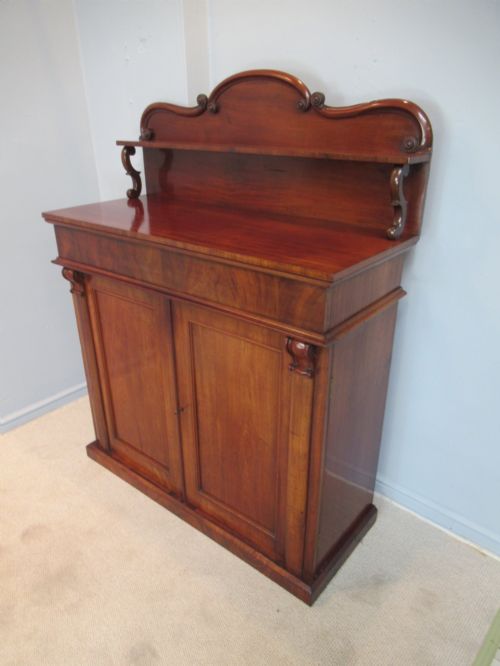
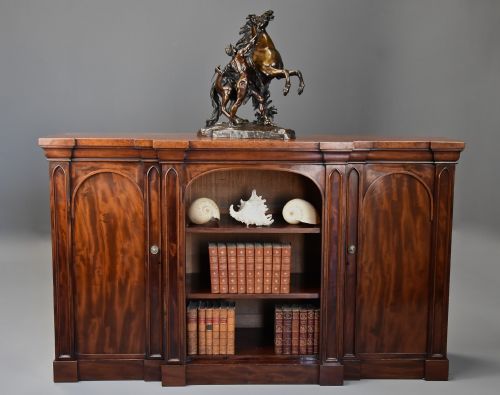
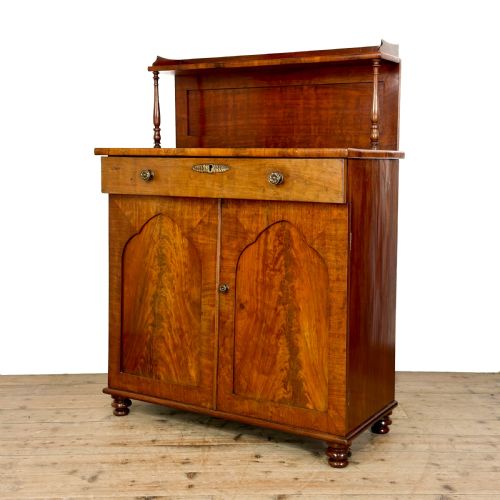
Flame mahogany shelves encompass bookcases, chiffoniers, side cabinets and open shelving units originating from the Georgian, Regency, William IV and Victorian periods.
The most common forms on this page are chiffoniers and breakfront bookcases, which combine enclosed cupboard bases with open or shelved upper sections.
Pieces span the nineteenth century into the early twentieth century, showing styles from classical Regency to Victorian Gothic Revival and Edwardian production.
How they were made
Cabinet makers applied flame mahogany veneer over solid secondary timbers to create striking, rippled grain patterns across the primary surfaces of doors and panels.
Construction frequently incorporated brass hardware, glass panels, and occasionally fabric or leather accents within bookcase interiors and cabinet backs.
Listings span the Georgian, Regency, William IV, Victorian and Edwardian eras, executed in solid mahogany and flame mahogany veneer with brass and glass.
What varies in quality
Quality rests on the selection and matching of the veneer figures, where superior examples display symmetrical, fiery grain patterns across wider expanses.
Proportion and scale dictate the success of a piece, separating grand breakfront library bookcases from more diminutive chiffoniers and wall shelves.
Gillows
The Flame Mahogany Shelves Glossary
- Flame mahogany veneer
- A thin slice of wood cut from the fork of the mahogany tree where the branch meets the trunk. This produces a distinctive, flame-like rippled grain pattern prized by cabinet makers.
- Chiffonier
- A small sideboard or low cabinet typically fitted with shelves on top and enclosed cupboards below. Originating in the Regency and Victorian eras, it served for storing dining silver or books.
- Breakfront
- A piece of furniture whose central section projects forward from the flanking wings. This architectural arrangement creates depth and shadow on large bookcases and sideboards.
- Whatnot
- A piece of open shelving supported by slender columns or uprights used for displaying ornaments and small books. These tiered stands date predominantly from the nineteenth century.
- Escritoire
- A writing cabinet featuring a fall-front desk flap concealing pigeonholes and small drawers. They combine practical writing surfaces with enclosed storage compartments.
Flame Mahogany Shelves: Frequently Asked Questions
How do I style flame mahogany shelves at home?
Pair these rich wooden tones with neutral walls to let the figured grain patterns stand out as the primary visual focus in the room.
Balance heavy bookcase bases by placing lighter decorative objects or books on the upper open shelves.
What is the difference between a chiffonier and a bookcase?
A chiffonier typically combines a low enclosed cupboard base with a smaller tiered shelving superstructure attached to the back.
Standard bookcases focus primarily on tall vertical storage with full-length shelving behind doors or open frames.
How do I date a nineteenth-century mahogany cabinet?
Examine the hardware, secondary timbers, and construction methods used inside the drawers and cabinet backs to establish the era.
Stylistic cues such as Regency brass inlay or Victorian Gothic arches provide reliable markers for specific decades.
Are these shelves suitable for modern rooms?
The compact proportions of small chiffoniers and wall shelves allow them to fit easily into contemporary apartment layouts.
Their warm timber tones introduce tactile contrast against minimalist architectural finishes.