
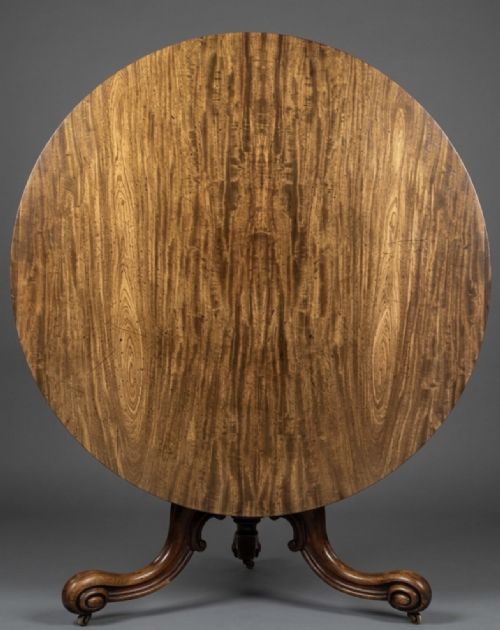
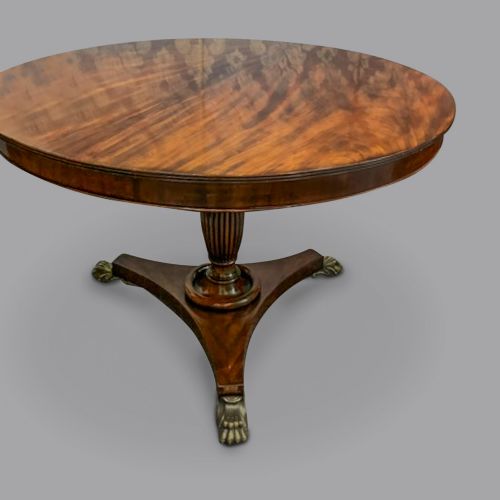


Flame Mahogany Round Table
A flame mahogany round table brings warmth and striking grain patterns to a room, centred around circular top forms from the Georgian to Victorian eras.
Flame Mahogany Round Table
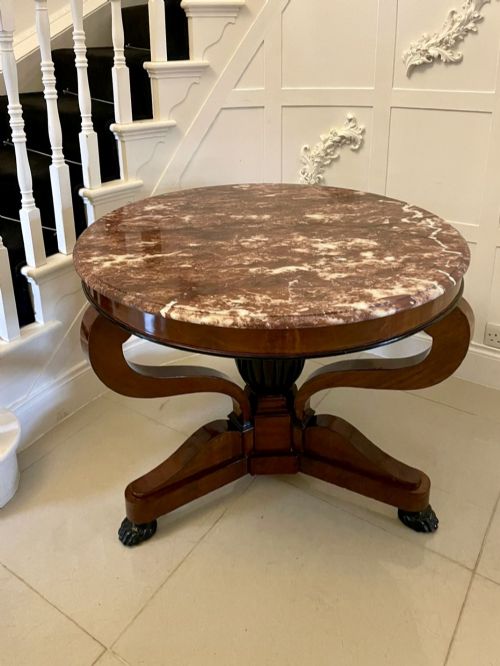
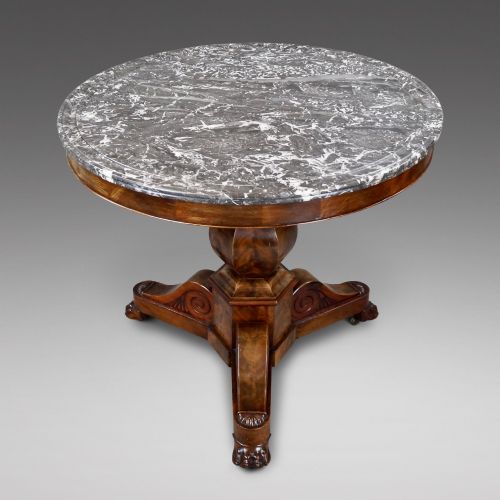
The most common versions on this page are 19th-century centre tables and breakfast tables showcasing prominent circular tops and veneered flame figures. Pieces range from French gueridons with marble inserts to English tilt-top breakfast tables designed for domestic utility.
How they were made
Cabinetmakers constructed these tables using solid mahogany frames and applied highly figured flame mahogany veneer to the circular tops, often accented with satinwood inlay or brass fittings. Structural elements beneath the surface frequently incorporated oak for stability.
Makers utilised techniques like cross-banding to frame the swirling grain patterns of the veneer, while tilt-top mechanisms relied on sturdy brass or iron latches to allow the circular surfaces to drop vertically when not in use.
Tilt-top tables were originally tipped vertically to hug the drawing-room wall like polite wooden sentinels when midnight dancing began.
What varies in quality
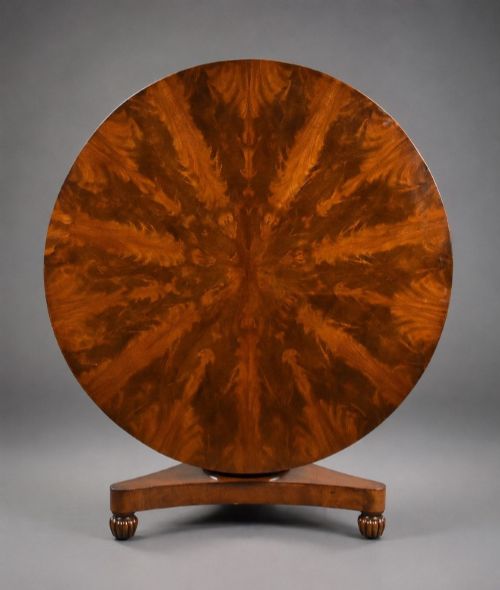
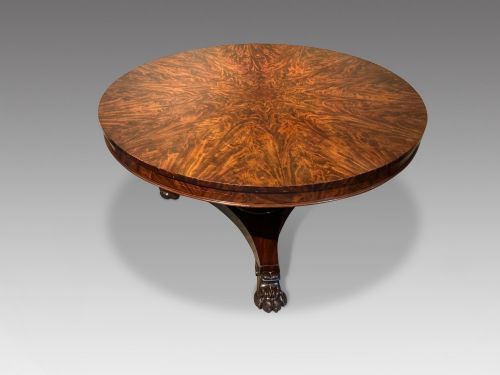
The standard of a flame mahogany round table is determined by the symmetry and intensity of the veneer figure across the circular top, alongside the crispness of any carving or inlay. Superior examples display continuous, book-matched flame patterns that ripple across the timber without disruption.
Construction methods also dictate grade, where heavier pedestals, stable tripod legs, and fine secondary timbers like oak indicate higher workshop standards than mass-produced later variants.
Walker-Lancaster·Gillows
The Flame Mahogany Round Table Glossary
- Flame mahogany veneer
- A thin slice of wood cut from the fork of the mahogany tree, producing a distinctive fire-like ripple pattern across the tabletop. This figure is prized for its dramatic visual movement.
- Gueridon
- A small French round table supported by a central pillar or tripod base, frequently topped with white marble. These originated in the seventeenth century and remained popular through the nineteenth.
- Tilt-top table
- A table featuring a hinged mechanism beneath the circular surface, allowing the top to pivot upright for storage against a wall. This design saved valuable floor space in historic interiors.
- Cross-banding
- A border technique where narrow strips of veneer are laid perpendicular to the grain of the main tabletop. It creates a neat framing effect around the central flame mahogany.
- Tripod table
- A piece supported by three legs radiating from a central pillar. This stable configuration prevents rocking on uneven historic floorboards.
Flame Mahogany Round Table: Frequently Asked Questions
What is a flame mahogany round table used for?
These tables function primarily as centrepieces in entrance halls or reception rooms, where their decorative veneer can be viewed from all angles. Breakfast tables and gueridons also serve practically for intimate dining or displaying lamps.
Larger pedestal formats accommodate seating for several people when utilised as small dining tables. Their circular footprint allows them to occupy the middle of a room smoothly without sharp corners.
How do I identify a Regency period table?
Regency pieces typically date from the early nineteenth century and often feature bold architectural pedestals, brass paw feet, or delicate stringing. The timber selection prioritises deep colour and pronounced grain figures.
Proportions during this era remained classical and restrained, frequently drawing inspiration from French Empire or ancient Roman designs.
Can I use a tilt-top table daily?
Tilt-top tables handle normal daily use well provided the operating mechanism beneath the circular surface is handled with care. The pivot joint allows the top to remain horizontal during meals or display.
Lowering the top upright should be done gently to protect the hinge and the timber edges from unnecessary impact against the pedestal column.
What is the difference between a gueridon and a centre table?
A gueridon is specifically a French table type, often smaller in scale and frequently fitted with an inset marble slab rather than wood. Centre tables encompass a broader British and continental category meant to stand free in the middle of a room.
Both share a circular top supported by a central pillar, but French gueridons lean towards decorative reception uses while British centre tables often served functional breakfast or writing roles.