

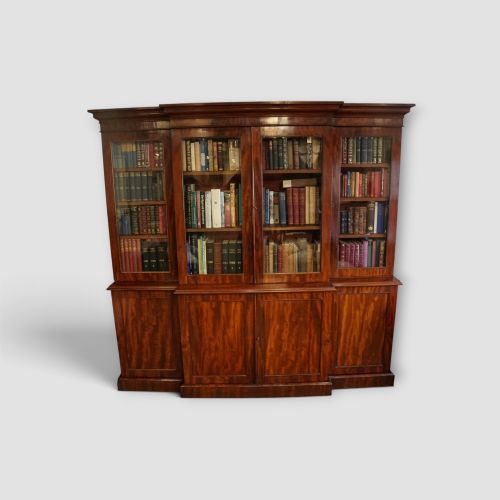
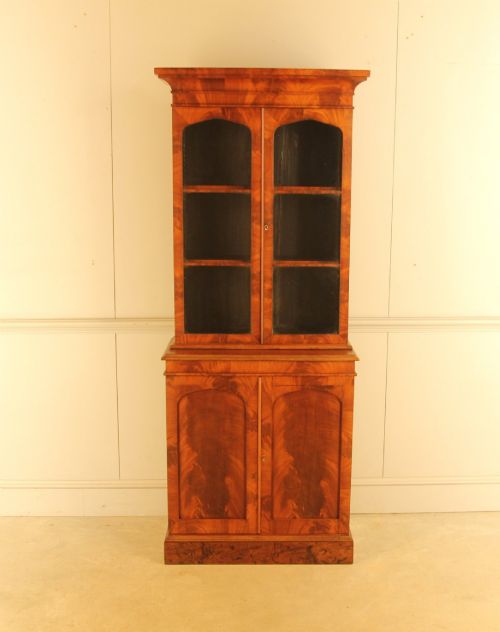
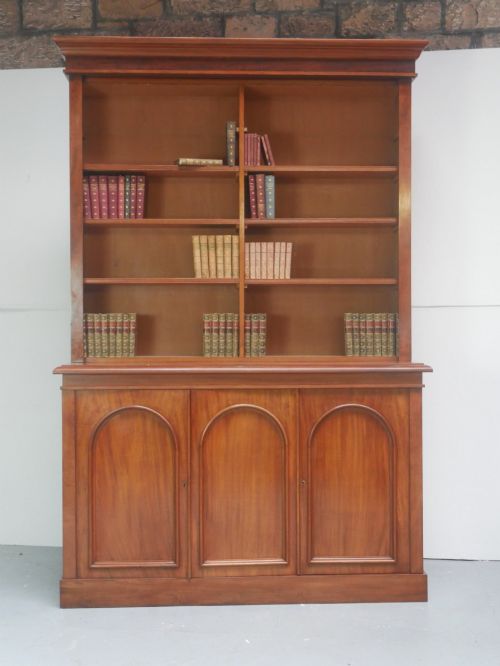
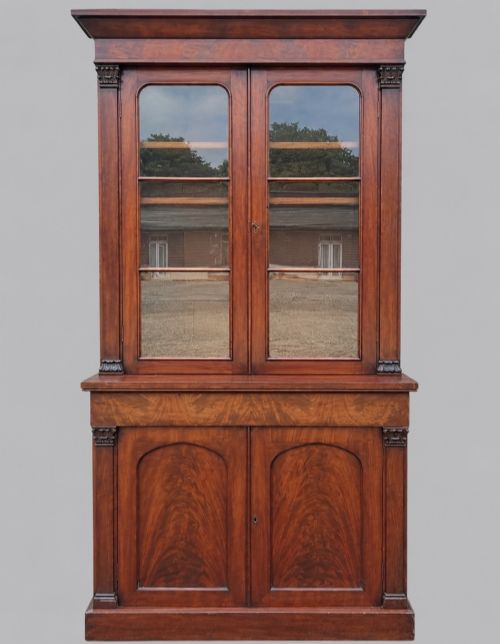
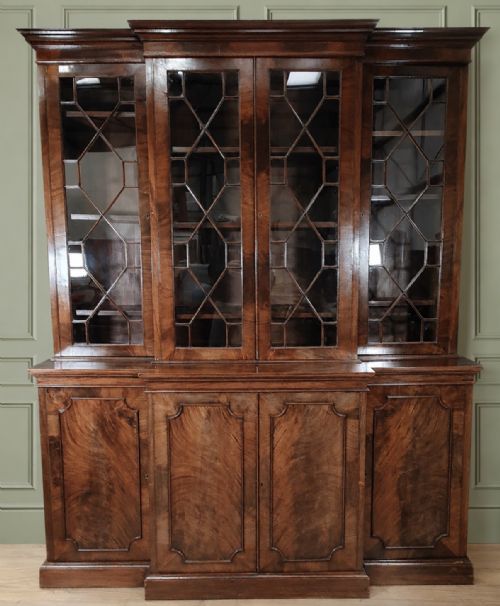
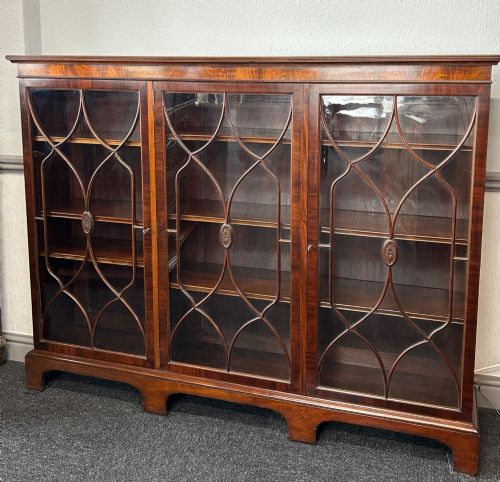


Flame Mahogany Library Cupboard
A flame mahogany library cupboard brings grand timber grain and serious storage into a room, uniting display space with enclosed shelving.
Flame Mahogany Library Cupboard
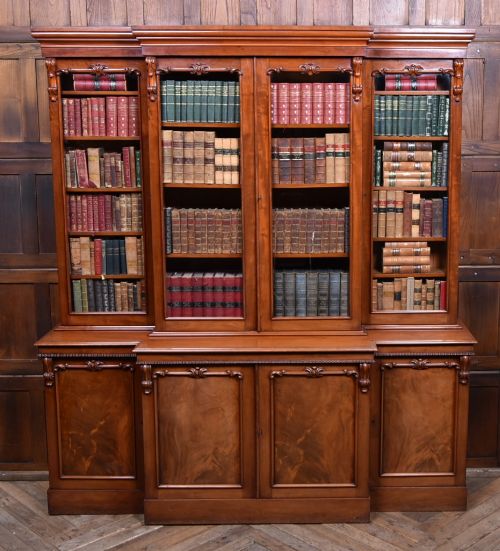
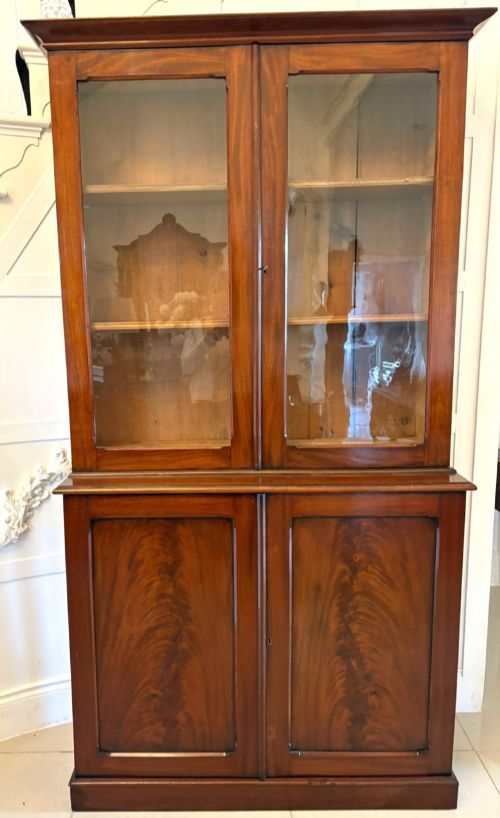
When you search for a flame mahogany library cupboard, you are looking at substantial timber storage units designed to house books and papers. The examples gathered here span the eighteenth, nineteenth, and early twentieth centuries, drawing on Georgian, Regency, and Victorian aesthetics. Most pieces you will encounter combine an upper glazed or open bookcase section with a lower cupboard base.
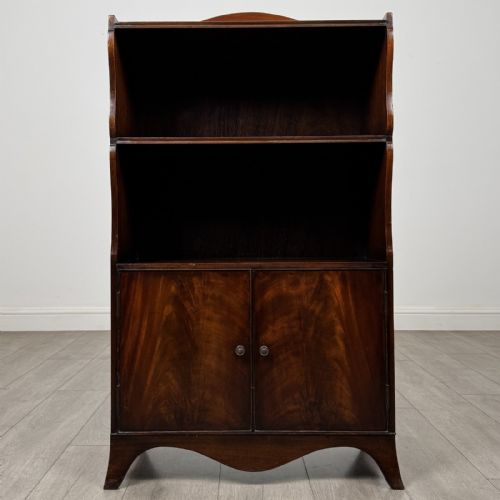
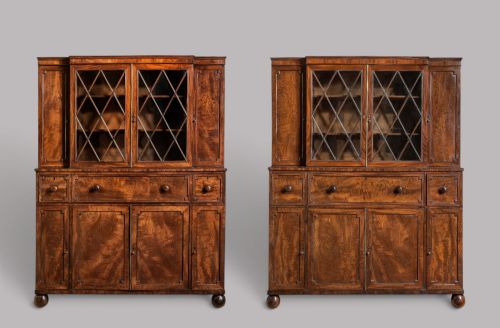
Forms vary from large breakfront bookcases with multiple doors to smaller two-door cabinets and waterfall bookcases. Makers constructed these items using solid timbers alongside rich flame mahogany veneers to create striking visual movement on the primary doors. Many listings combine display shelving behind glass or wire mesh with hidden lower storage for ledgers and folios.
Materials and construction methods
Cabinet makers utilised dense mahogany and applied figured flame mahogany veneer across the principal surfaces to catch the light. Secondary structural elements inside these cupboards often include oak or other sturdy timbers. Glazed upper doors required precise joinery to hold individual panes of glass securely within wooden frames.
Brass fittings, including locks, hinges, and escutcheons, frequently secure the doors of these large cabinets. Selected pieces incorporate fine inlay work in contrasting timbers such as satinwood to accentuate the geometric lines of the cabinet base. Wire mesh occasionally replaces glass in specific library applications.
Flame Mahogany Library Cupboard Retail Price Guide 2026
Typical asking prices for flame mahogany library cupboard among the pieces listed under this phrase on Sellingantiques today, from the lower quarter to the upper quarter. They describe what is for sale here now, not the wider market.
Listings for this phrase span the eighteenth, nineteenth, and early twentieth centuries, featuring materials such as mahogany, glass, brass, wire mesh, oak, and satinwood.
Distinctions in craftsmanship
The visual impact of a flame mahogany library cupboard rests upon the choice of veneer and how symmetrically the grain patterns mirror each other across large surfaces. Superior examples display bold, rolling flame figures that remain stable across the panels without lifting or extensive splitting. The crispness of the mouldings and the proportion of the upper glazed section relative to the solid cupboard base also separate standard output from exceptional cabinet work.
Internal engineering dictates the longevity of these heavy pieces, visible in the snug fit of panel doors and the smooth operation of internal shelving supports. Finer pieces demonstrate meticulous attention to secondary timbers and hidden joints, maintaining structural integrity despite the natural movement of large mahogany boards over centuries.
Gillows·Wylie and Lochhead·S and H Jewell
The Flame Mahogany Library Cupboard Glossary
- Flame mahogany veneer
- A thin slice of wood cut from the point where a branch joins the main trunk, producing a rippling, flame-like pattern. This decorative surface defines the aesthetic appeal of the best library cupboards.
- Breakfront
- A cabinet design where the central section projects forward from the flanking wings. This architectural arrangement creates depth and visual rhythm in large library bookcases.
- Waterfall bookcase
- A shelving unit with receding tiers stepped back from bottom to top. These pieces offer an open profile distinct from the traditional glazed cabinet format.
- Wire mesh
- Fine metal screening fitted into door panels instead of glass. It allows ventilation for stored books while keeping volumes protected.
- Escutcheon
- A flat protective plate surrounding a keyhole. These hardware details are often cast in brass and match the period of the cabinet.
Flame Mahogany Library Cupboard: Frequently Asked Questions
What rooms suit a flame mahogany library cupboard?
These large cabinets require adequate wall space and ceiling height to sit comfortably without dominating a domestic interior. Studies, libraries, and generous living rooms provide the right scale for housing such substantial furniture.
The deep shelving and lower cupboards offer practical storage for modern books, ceramics, and tableware alongside traditional volumes. Their dark timber tones pair well with neutral walls and traditional architectural details.
How do I care for flame mahogany veneer?
Keep these cupboards away from direct sunlight and strong heat sources to prevent the thin veneer from drying out and lifting. Regular dusting with a dry, soft cloth maintains the finish without introducing excess moisture.
Apply a microcrystalline wax periodically to nourish the timber and protect the polished surface from minor scuffs. Avoid silicone-based polishes that can sink into the grain and damage older finishes.
How do I distinguish Regency from Victorian examples?
Regency pieces often display cleaner classical lines influenced by ancient Greek and Roman design, sometimes featuring brass inlay or restrained brass gallery rails. Their proportions tend to feel architectural and balanced.
Victorian cabinets generally exhibit heavier mouldings, deeper cornices, and more robust plinth bases to reflect nineteenth-century taste. The figured mahogany on Victorian pieces can be exceptionally dramatic, matched with darker internal carcase woods.
Can the shelving inside the bookcase be adjusted?
Most antique library cupboards feature fixed shelving systems built directly into the structural carcase of the upper cabinet. Altering shelf heights is rarely straightforward in pieces predating the widespread use of modern metal tracks.
When planning what to store behind the glass doors, check the clearance height between individual shelves. Taller art books or folios may need to live in the lower cupboard base.