


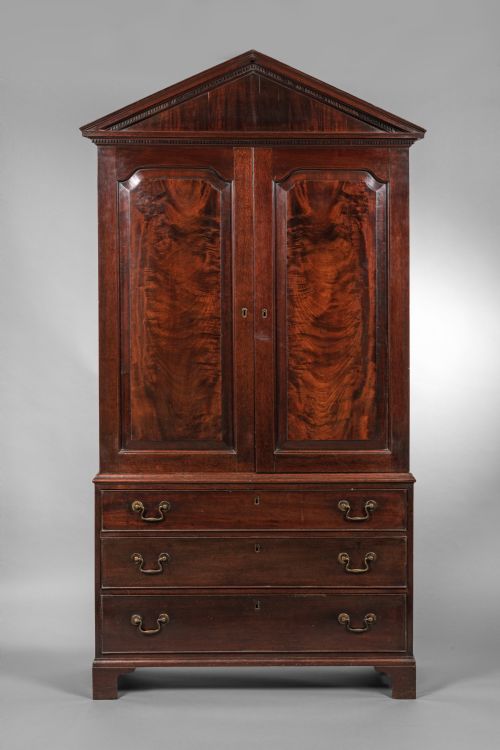

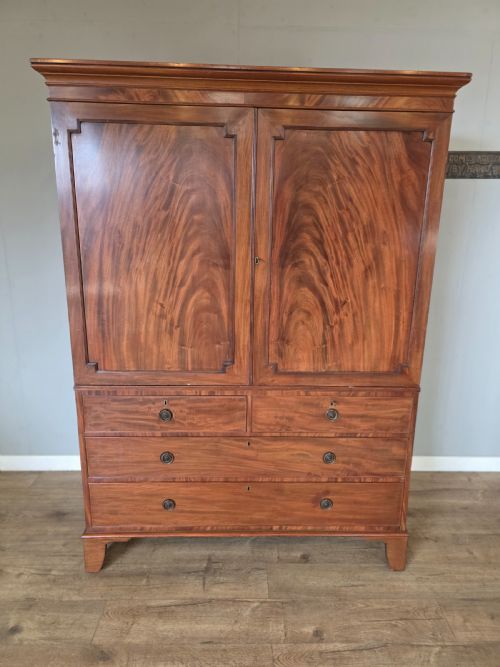
Flame Mahogany Double Chest
A flame mahogany double chest brings commanding presence and exceptional grain figure to a room, offering vast storage in two stacked sections.
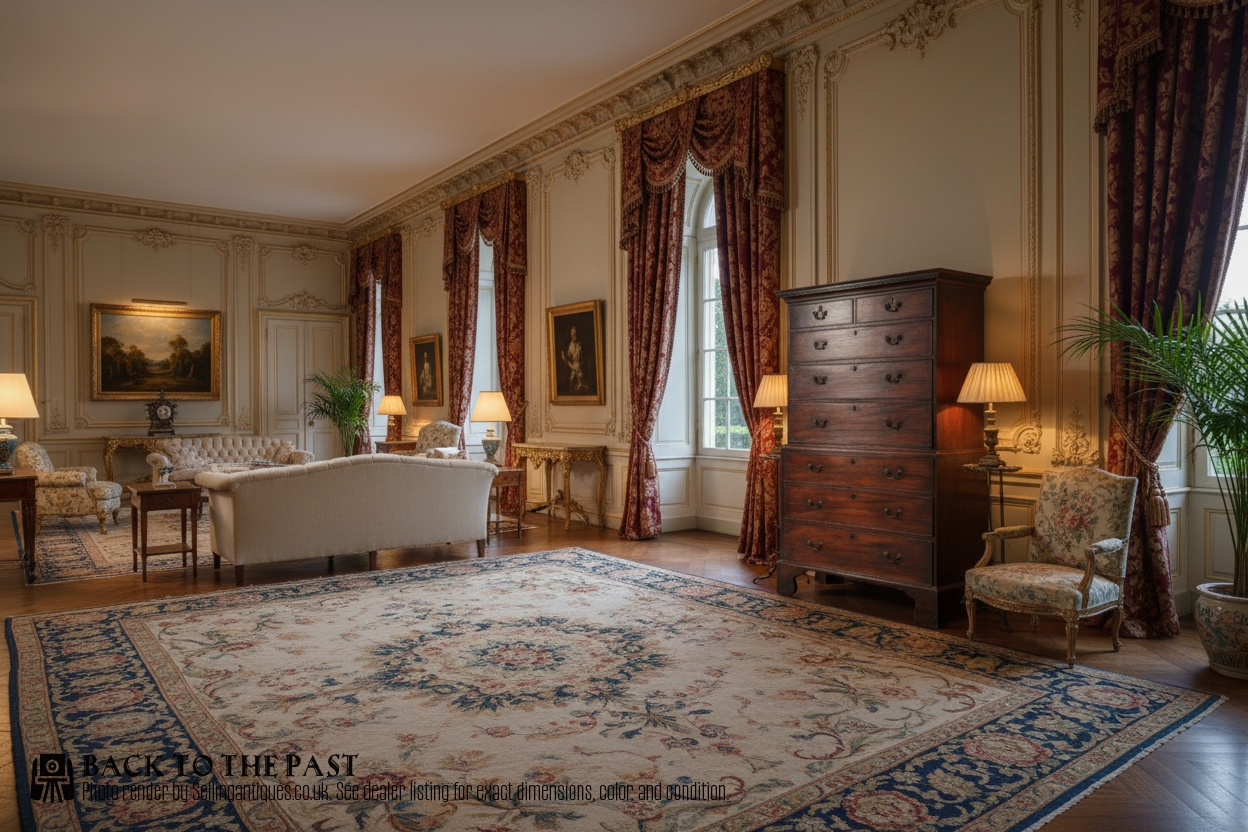
Flame Mahogany Double Chest
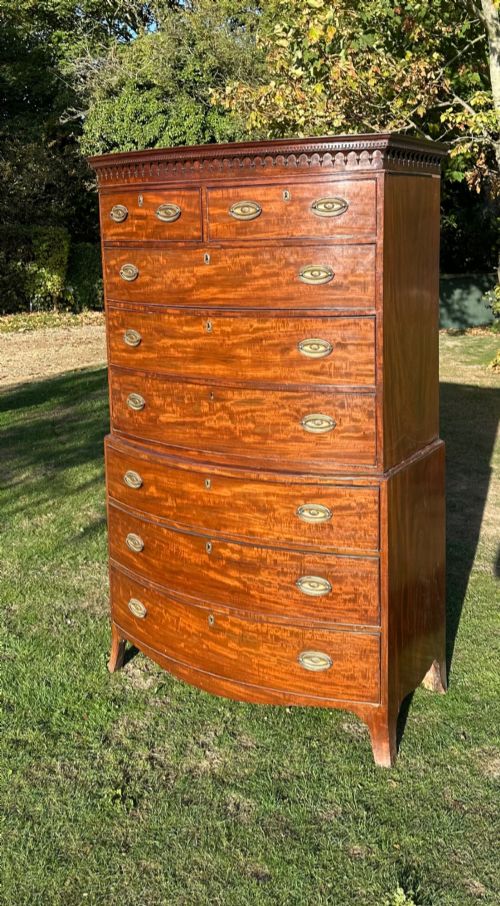
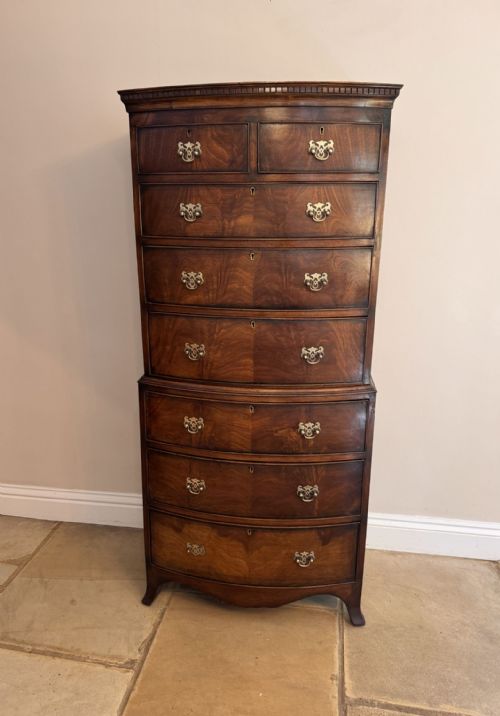
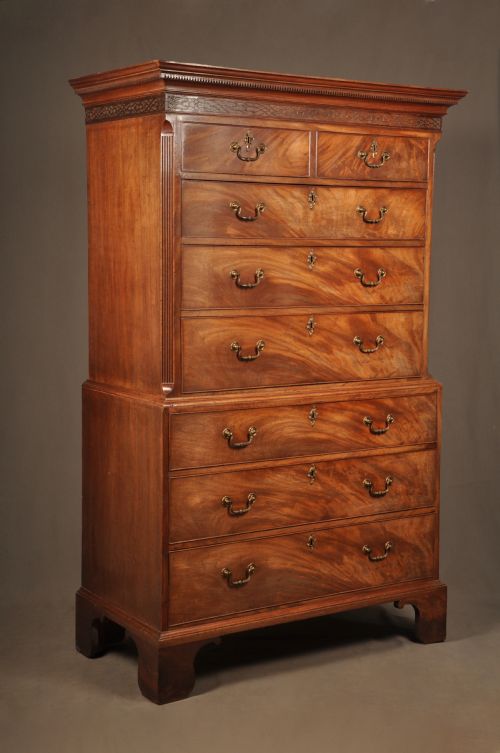
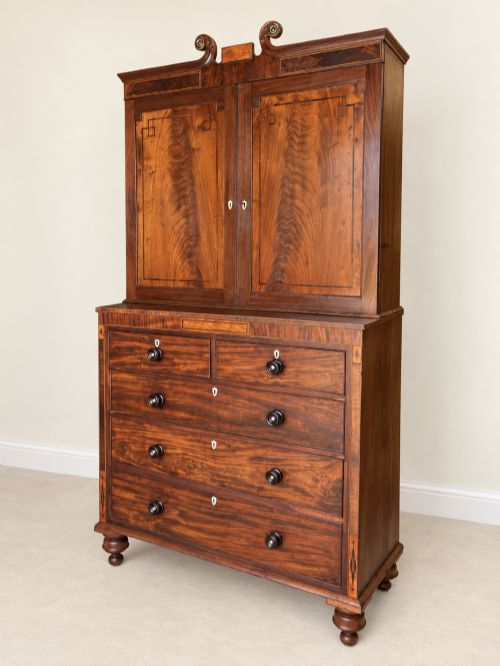
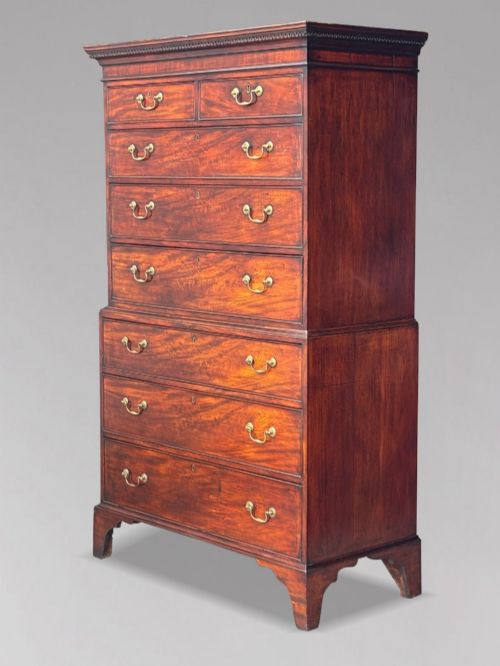
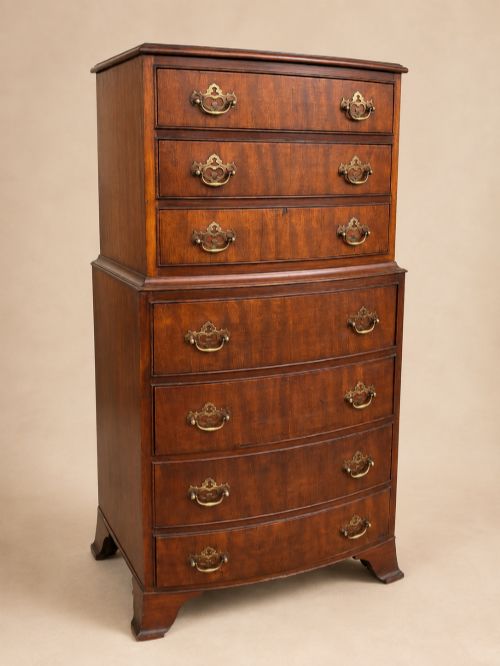
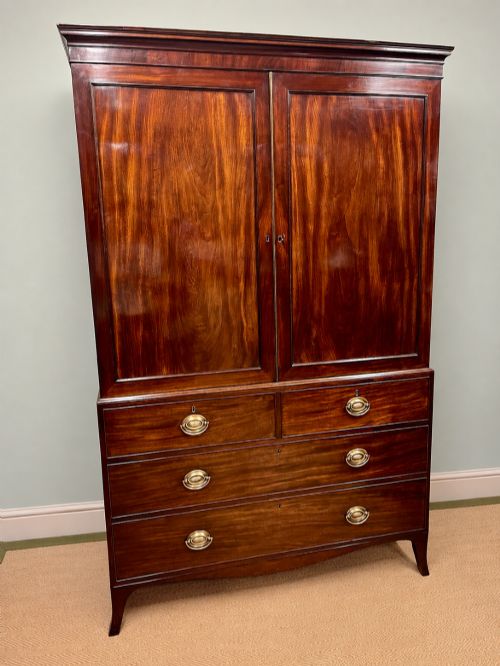
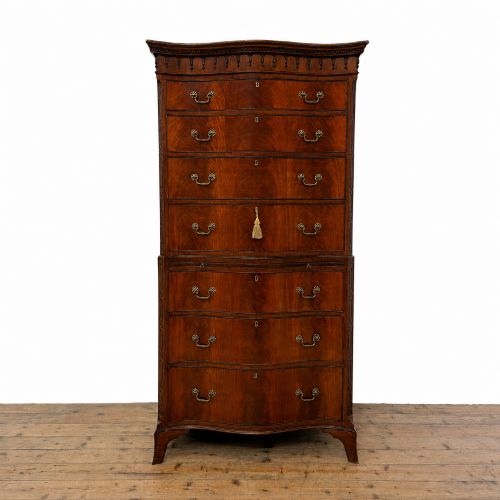
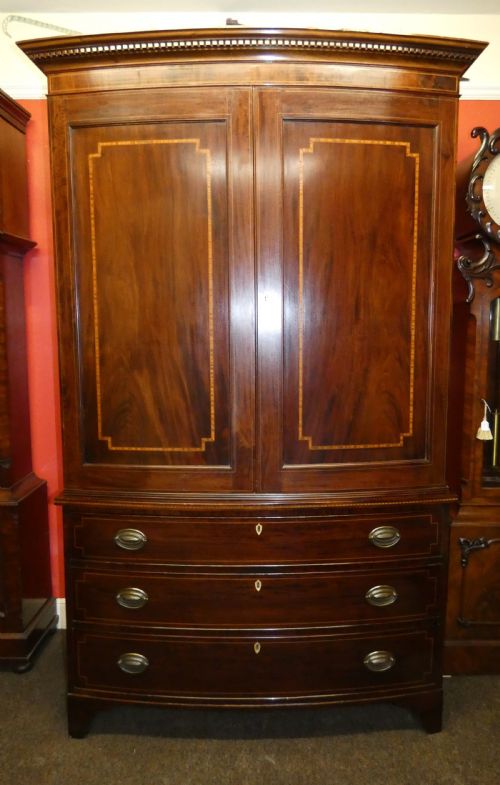
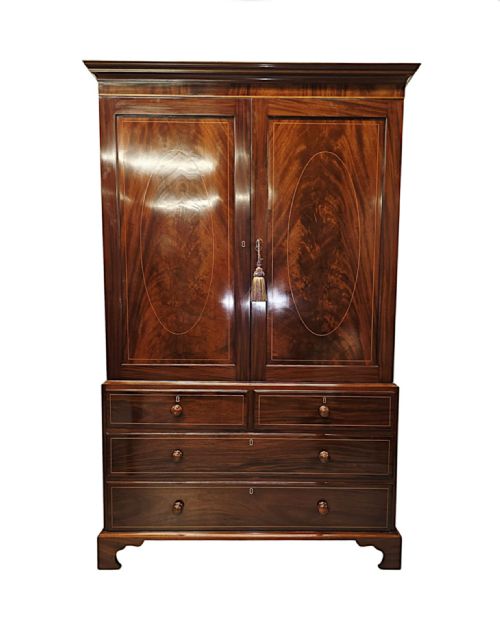
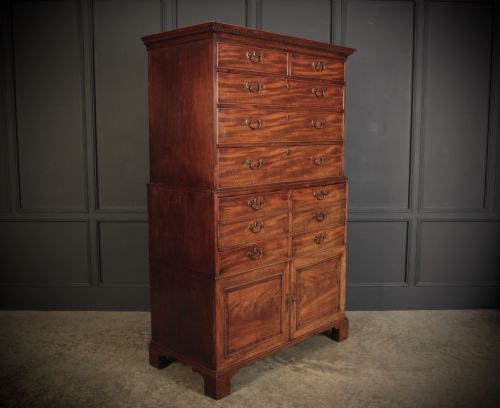
A flame mahogany double chest comprises two stacked cabinetry sections, frequently appearing as tallboys, linen presses, or chests on chest spanning the eighteenth and nineteenth centuries. These pieces combine substantial storage capacity with a commanding architectural presence suited to traditional interiors.
Georgian examples dominate the available selection, often exhibiting refined proportions, bracket feet, and dental mouldings alongside later Victorian and Regency interpretations. Makers from the Channel Islands and cabinetmakers such as Thomas Bradshaw contributed distinct regional variations to this form.
Buyers will encounter configurations featuring upper linen press cupboards or secretaire drawers alongside standard drawer arrangements. The lower carcase typically houses deeper drawers while the upper section maintains a narrower profile.
Dating ranges from mid-eighteenth-century George III pieces through to early twentieth-century revivals, reflecting enduring demand for figured timber. Each era brings subtle shifts in cornice design, brass handle hardware, and timber selection.
Materials and Construction
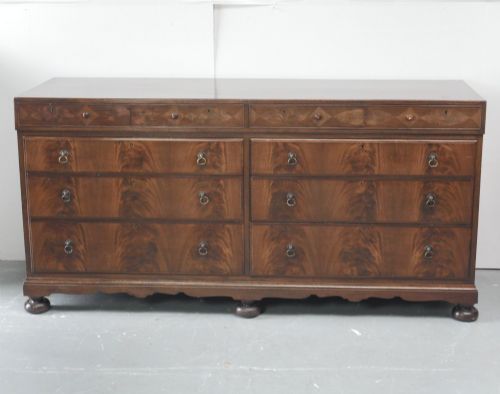
Cabinetmakers constructed these carcases using solid secondary woods like oak and pine, applying highly figured flame mahogany veneers to the primary drawer fronts and facades. Satinwood and boxwood stringing frequently provide contrasting geometric inlay around the drawer edges and cornices.
Makers selected timber specifically for its dramatic rippled grain patterns, book-matching the veneer across drawer fronts to create symmetrical flame motifs. Brass drop handles, escutcheons, and bracket feet complete the structural assembly.
Flame Mahogany Double Chest Retail Price Guide 2026
Typical asking prices for flame mahogany double chest among the pieces listed under this phrase on Sellingantiques today, from the lower quarter to the upper quarter. They describe what is for sale here now, not the wider market.
Hidden candle slides occasionally pull out from beneath the upper waist mouldings to illuminate the room while selecting evening garments.
Assessing Quality
The sophistication of the timber figure and the precision of the veneer matching dictate the visual hierarchy of these pieces. Higher-grade examples display continuous, richly figured flame mahogany across all drawer tiers without disruption.
Construction integrity separates workshop output, seen in hand-cut dovetailing on drawer linings and the survival of original brass hardware. Regional variations, such as Channel Islands stringing, introduce distinct craftsmanship standards.
Whytock And Reid·Thomas Bradshaw
The Flame Mahogany Double Chest Glossary
- Flame mahogany
- A veneer cut from timber where the branch meets the trunk, producing a rippled, flame-like grain pattern. This highly decorative wood defines the visual impact of upper-tier case furniture.
- Chest on chest
- A form comprising two separate stacked drawer sections, with a narrower upper carcase resting on a wider base. This configuration maximises vertical storage while retaining architectural balance.
- Linen press
- A tall cabinet featuring upper panelled doors enclosing sliding trays or shelves above a chest of lower drawers. Originally designed for storing household linens before hanging wardrobes became standard.
- Secretaire
- A desk drawer fitted with a drop-front writing flap, pigeonholes, and small drawers concealed within the upper chest section. It combines the utility of a writing desk with a tallboy storage format.
- Stringing
- Thin inlaid lines of contrasting timber, such as boxwood or satinwood, embedded into the mahogany surface. This technique creates geometric borders around drawer fronts and cornices.
Flame Mahogany Double Chest: Frequently Asked Questions
How are the two sections joined?
The upper carcase rests directly upon the lower chest section, held in place by its own weight and locating mouldings. A decorative waist moulding usually conceals the horizontal join where the two halves meet.
Because the top section is heavy, dismantling the piece into two parts is essential for transport and moving between rooms.
What is inside a linen press?
Opening the upper doors reveals sliding wooden trays, often referred to as slides, designed for stacking folded garments and linen. Some examples have had these internal trays removed later in life to convert the upper space for hanging clothes.
The lower section provides conventional drawer storage, ranging from two short drawers over three long ones down to deep base drawers.
Where should a tall chest be placed?
These tall pieces require a room with adequate ceiling height and wall space that can support a large, dark timber silhouette. Bedrooms and dressing rooms remain the traditional locations for maximising garment storage.
Securing the upper carcase to the wall using discreet brackets is recommended for stability, particularly on older uneven floors.
How do I identify a Georgian period piece?
Georgian pieces generally exhibit hand-cut dovetails, oak drawer linings, and proportioned bracket or ogee feet. Cornices often feature dentil moulding or Greek key patterns carved directly into the solid mahogany or secondary timbers.
Secondary woods like oak and pine inside the carcase, combined with period brasses matching the drawer bore holes, confirm eighteenth-century origins.