
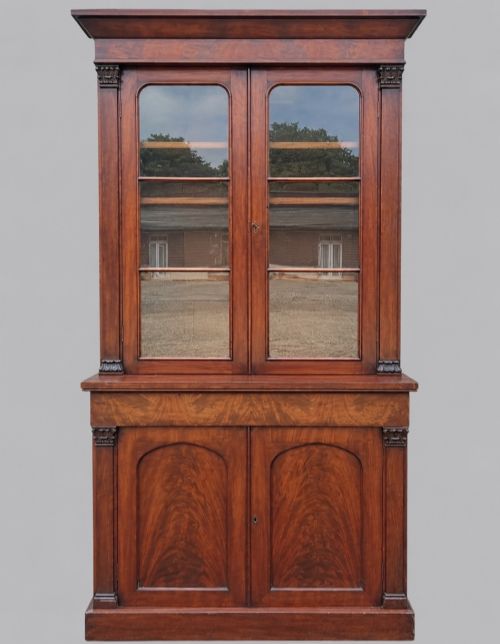
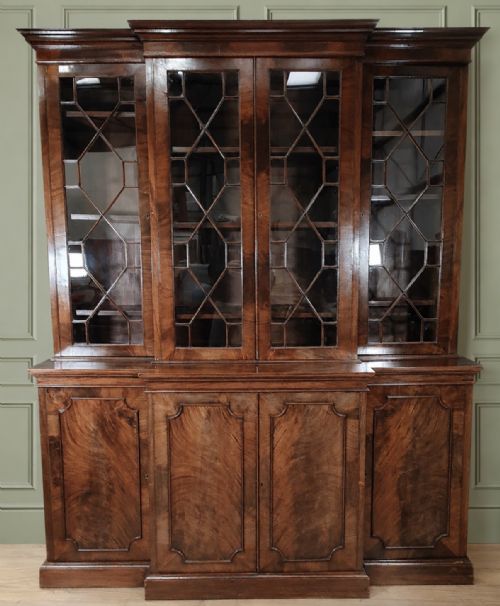
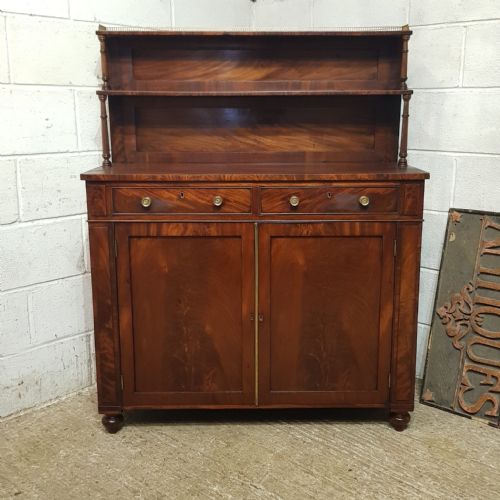
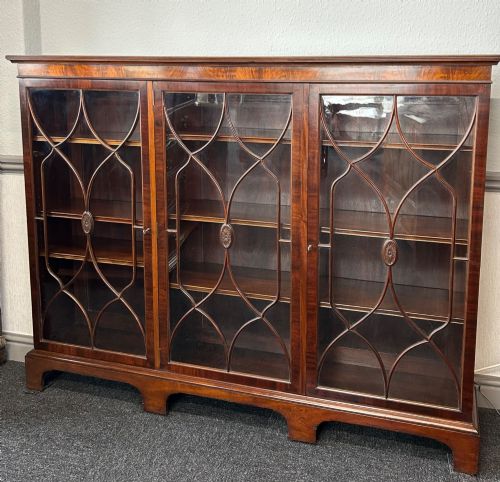
Flame Mahogany Cupboard Bookcase
A flame mahogany cupboard bookcase brings rich timber grain and architectural presence into a room, combining display shelving with enclosed storage.
Flame Mahogany Cupboard Bookcase
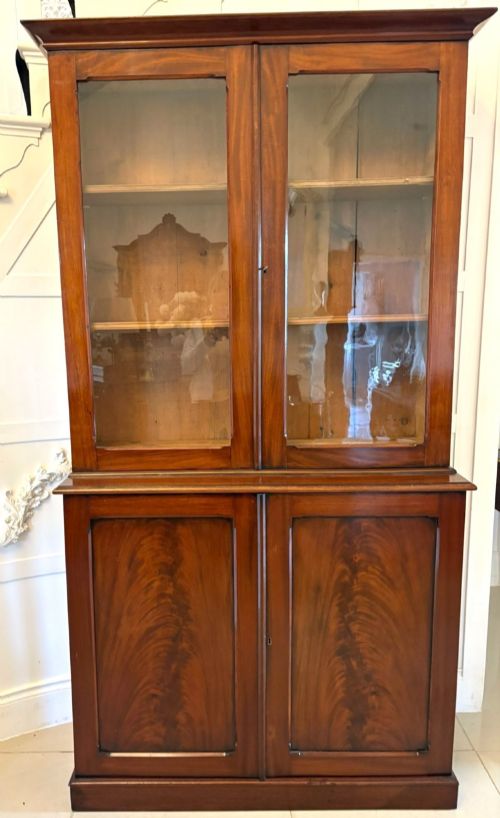
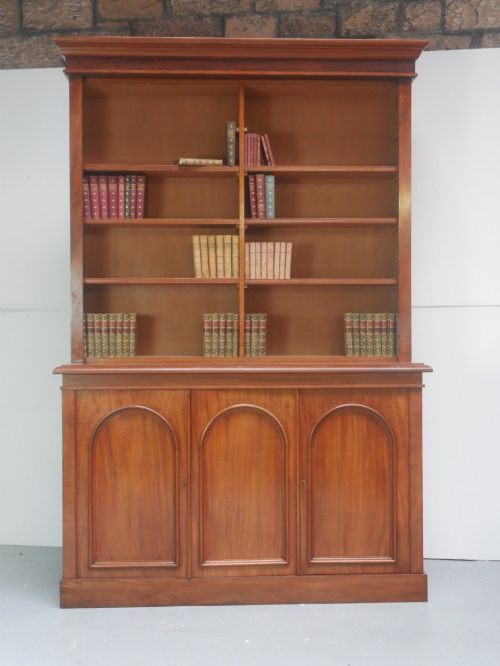
A flame mahogany cupboard bookcase unites upper display shelving with lower cupboard storage, forming a substantial architectural piece for libraries and living spaces. These items span periods from the eighteenth century through the nineteenth and twentieth centuries, incorporating Georgian, Regency, and Victorian aesthetics.
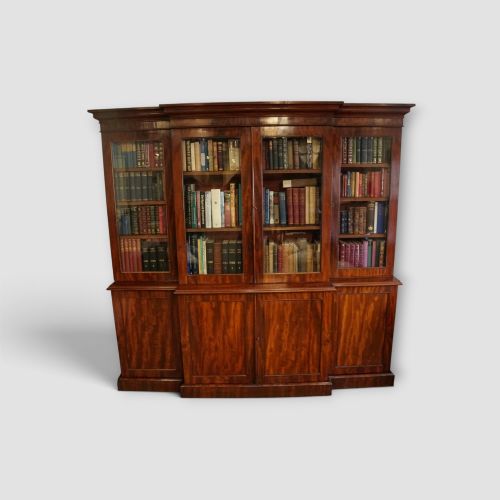
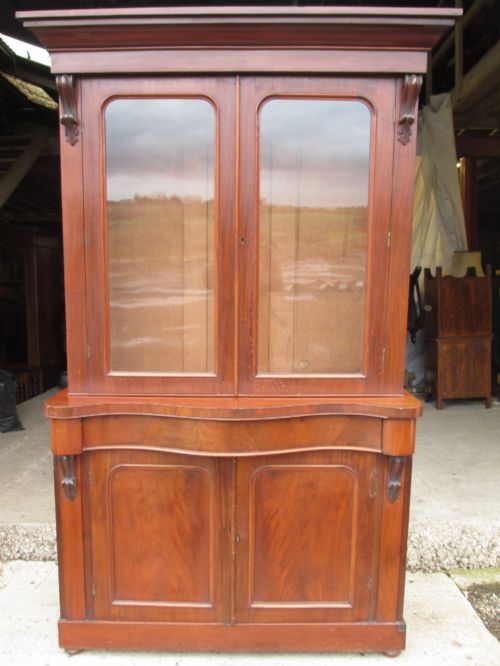
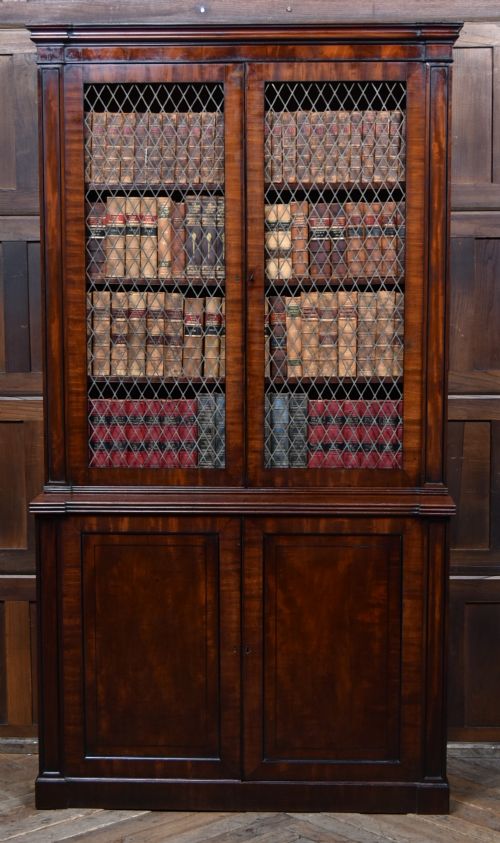
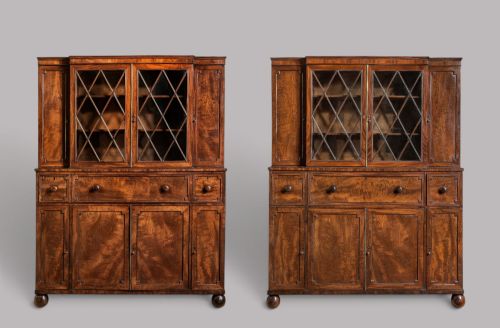
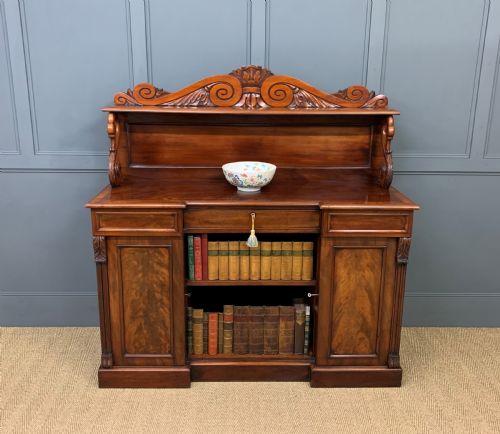
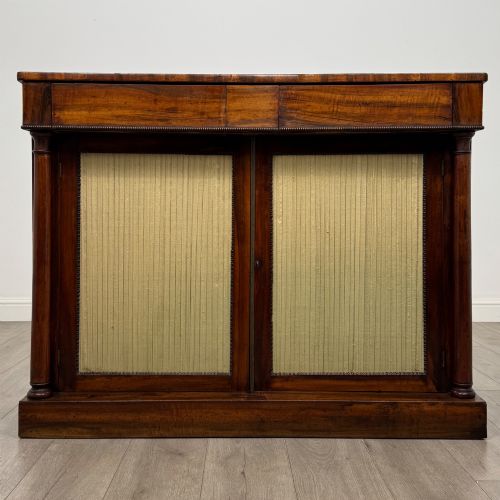
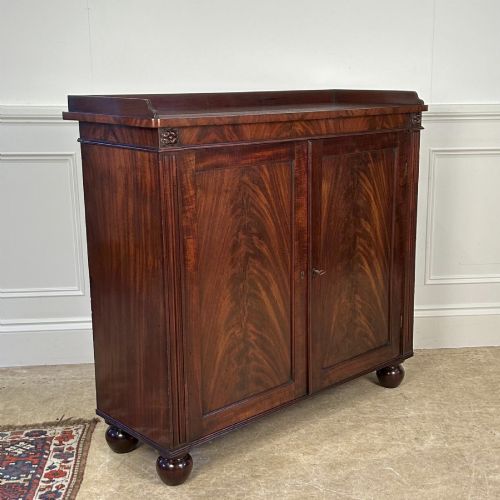
Most examples encountered on this page date to the nineteenth century, including Victorian and Regency periods, while earlier Georgian or later revival interpretations appear alongside them. The primary forms include tall library bookcases, breakfront configurations, and compact chiffoniers or side cabinets with cupboard bases.
Makers such as Gillows, Wylie and Lochhead, and S&H Jewell occasionally appear in the record, representing high workshop standards. Buyers encounter everything from large breakfront library bookcases to diminutive corner cupboards and secretaire desks adapted for storage and display.
What varies in quality
Quality rests upon the selection and preservation of the flame mahogany veneer, where deeply figured, highly active grain patterns command greater attention than plain stock. The crispness of architectural mouldings, original brass fitments, and intact glazing bars further distinguish superior workshop production.
Proportion and scale dictate the success of the piece, from diminutive cabinets to large breakfront library bookcases with balanced lower cupboard doors. Maker attribution, such as works associated with Gillows or Wylie and Lochhead, elevates the standing of an individual piece.
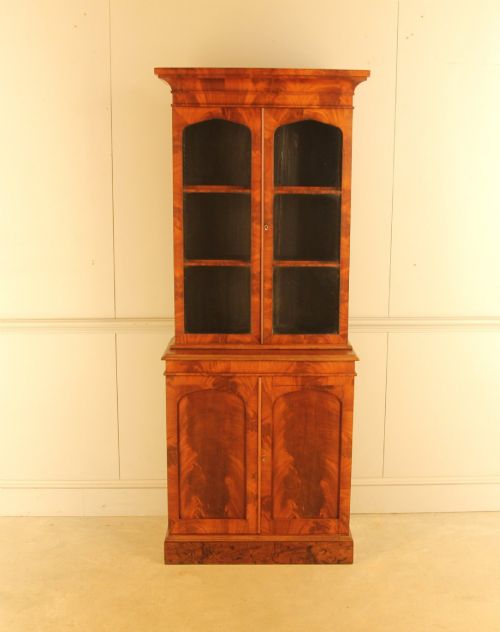
Some diminutive cupboard bookcases were scaled down specifically for tighter Victorian parlours without sacrificing storage.
Gillows·Wylie and Lochhead·S&H Jewell
The Flame Mahogany Cupboard Bookcase Glossary
- Flame mahogany veneer
- A thin slice of mahogany timber cut from the fork of the tree where branches meet, producing a distinctive flame-like pattern. This veneer is applied to primary display surfaces for decorative effect.
- Breakfront
- A cabinet design where the central section projects forward from the flanking wings. This architectural arrangement creates depth and shadow across large bookcases and sideboards.
- Secretaire bookcase
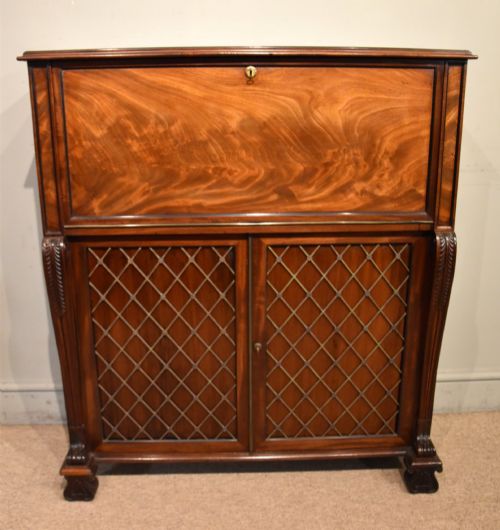
- A tall storage piece containing a pull-out writing drawer with fitted pigeonholes and small drawers behind a drop-front panel. It combines a desk workspace with upper shelving.
- Chiffonier
- A low cupboard or sideboard featuring shelving or a small superstructure above. These pieces developed during the Regency and Victorian periods for smaller entertaining spaces.
- Glazing bar
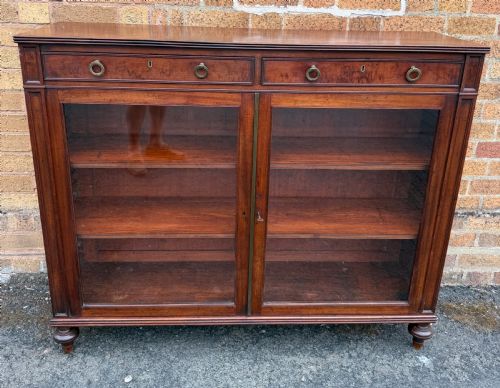
- A wooden or metal strip that holds individual panes of glass within a sash. Finer bars create delicate geometric patterns across bookcase doors.
Flame Mahogany Cupboard Bookcase: Frequently Asked Questions
What is a flame mahogany cupboard bookcase?
A flame mahogany cupboard bookcase is a dual-purpose furniture form featuring glazed upper shelving for display and solid lower doors enclosing storage space. The exterior surfaces showcase highly figured veneer with distinctive swirling patterns.
These pieces served traditionally in libraries, studies, and formal reception rooms to house bound volumes and display prized collections while keeping utilitarian items concealed below.
How do I date a flame mahogany bookcase?
Dating relies on observing structural proportions, timber characteristics, and stylistic markers associated with periods such as Georgian, Regency, and Victorian. Cabinet construction methods and hardware types also offer clear chronological clues.
Earlier eighteenth-century pieces often display restrained classical lines, whereas Regency and Victorian examples introduce bolder breakfront forms and elaborate veneer selections.
Where should I place a large bookcase?
Large breakfront and library bookcases require stable wall space away from direct heat sources and strong sunlight to protect the timber and veneer. Placing them in studies, libraries, or spacious living rooms allows the architectural proportions to anchor the interior.
Ensure the floor surface is level, as these tall carcases require proper alignment to ensure cupboard doors and drawers operate smoothly.
How do I care for flame mahogany veneer?
Maintain flame mahogany surfaces by dusting regularly with a soft, dry cloth and avoiding harsh chemical polishes or silicone sprays. Keeping the room at a stable humidity level prevents the timber and veneer from drying out or splitting.
Occasional application of appropriate furniture wax helps preserve the lustre of the polish and protects the grain from minor surface marks.