


Five Stone Claw Ring
A five stone claw ring places a line of gems directly across the finger, offering a classic silhouette shaped by Victorian and Edwardian makers.
Five Stone Claw Ring
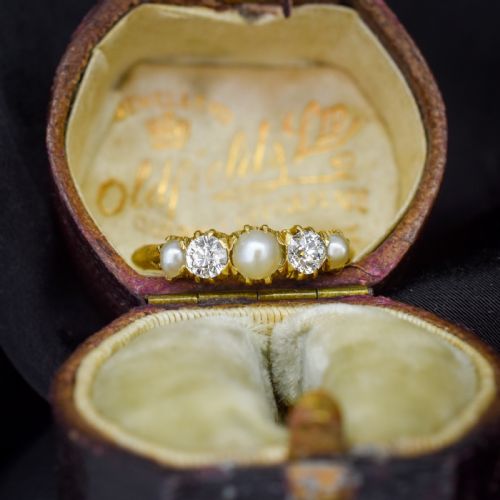
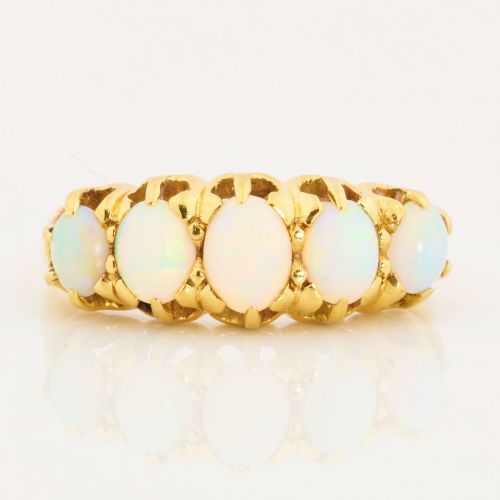
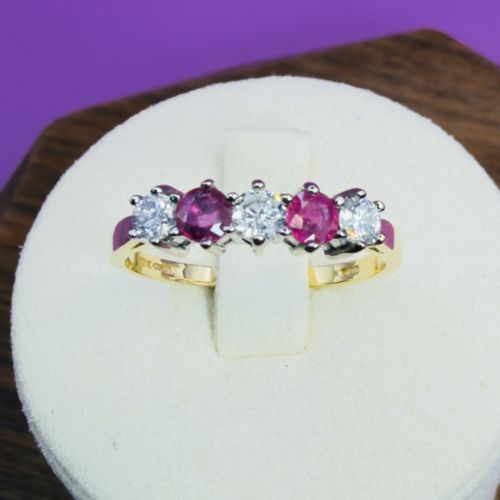
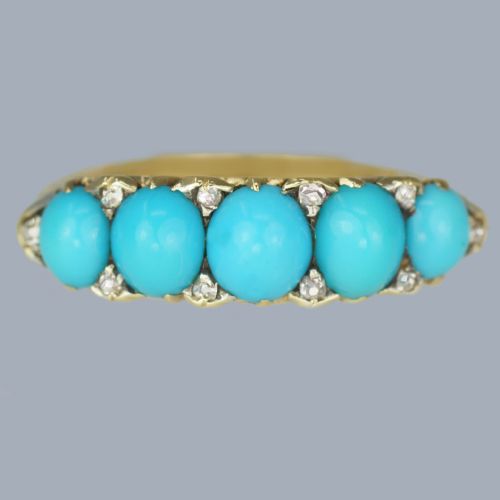
A five stone claw ring places a sequence of gems in a single horizontal line along the finger. The pieces seen here span Victorian, Edwardian, Art Deco, and mid-century periods, capturing shifts in design from the nineteenth century onward.
Most examples pair diamonds with sapphire, ruby, emerald, opal, pearl, or turquoise. These gemstones sit within 18ct yellow gold, 18ct white gold, or platinum settings, reflecting the materials favoured by period jewellers.
Band rings and half hoop variations make up the primary forms available in this selection. Each piece shows the traditional arrangement of graduated or uniform stones designed to catch the light across the hand.
How they were made
Gems in a five stone claw ring are held by individual metal prongs that allow light to pass through the sides of each stone. Makers utilised 18ct gold and platinum to construct robust settings capable of securing multiple stones in a row.
Stones often feature old cut or old mine cut faceting in older pieces, showing hand-cut proportions shaped before modern machinery standardisation. Later twentieth-century examples incorporate brighter, uniform cuts set into yellow or white gold bands.
Some Victorian makers hid tiny turquoise stones beside diamonds, letting people wear secret colour messages right on their fingers.
What varies in quality
The weight and visual presence of the central and flanking stones determine the prominence of a five stone claw ring. Larger diamond carat weights and rich, even colour saturation in sapphires or rubies elevate the overall impact.
The precision of the claw work and the thickness of the underlying metal band dictate longevity. Substantial gold or platinum shanks maintain structural integrity better over decades of daily wear.
The Five Stone Claw Ring Glossary
- Claw setting
- A mounting style where individual metal prongs hold a gemstone in place. This technique maximises the amount of light entering the stone from the sides.
- Half hoop ring
- A ring design where gemstones span the upper half of the band in a continuous arc. This form sits flat against the finger and pairs easily with other bands.
- Old mine cut
- An early diamond cut shape with a cushion outline and high crown. These stones display softer, broader light reflections compared to modern brilliant cuts.
Five Stone Claw Ring: Frequently Asked Questions
Can I wear a five stone claw ring every day?
These rings were built for regular wear using durable metals like 18ct gold and platinum. Standard daily activities suit them well, though softer stones like opal or pearl require extra care.
Removing the ring during heavy manual tasks protects the claws and stones from impact. Regular checks by a jeweller ensure the prongs remain tight.
How do I identify a Victorian five stone claw ring?
Victorian examples often feature old cut or old mine cut diamonds paired with pearls, turquoise, or yellow gold bands. Hallmarks and the specific hand-cut facets offer clues to the nineteenth-century origins.
Later Edwardian and Art Deco pieces introduced white gold and platinum settings alongside brighter geometric arrangements. Comparing the metal colour and stone cuts helps separate the eras.
What does old cut mean for these rings?
Old cut refers to diamonds faceted by hand before the development of modern cutting machines in the early twentieth century. These stones have smaller tables and deeper pavilions that create a warm, distinctive glow under candlelight.
Their presence confirms the antique status of nineteenth-century and early twentieth-century pieces. Each stone has unique proportions due to the manual shaping process.
Do these rings pair well with modern wedding bands?
The straight profile of a five stone claw ring allows it to sit alongside many traditional wedding and eternity bands. Low-profile settings may require a shaped band to fit flush against the finger.
Matching the metal type, such as 18ct yellow gold or platinum, creates a cohesive look when worn together. Many collectors mix gold colours for a stacked, layered effect.