



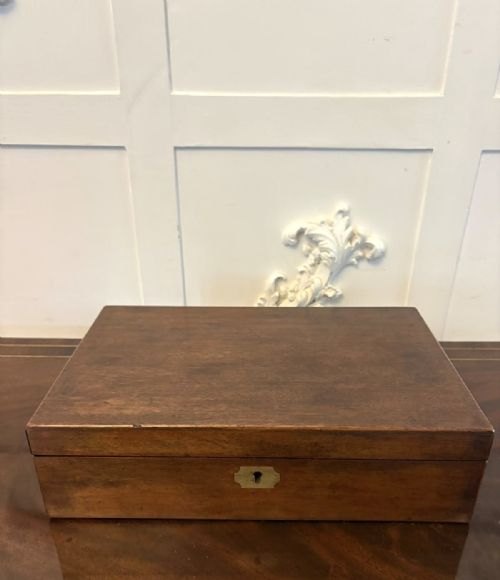
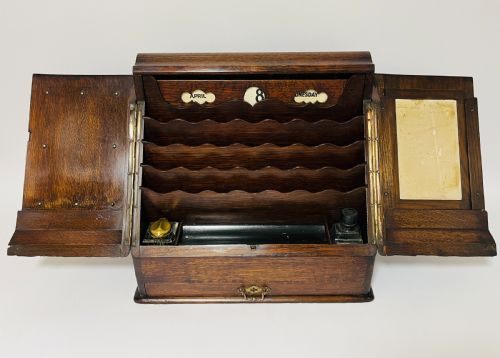


Fitted Writing Desk Box
A fitted writing desk box organises letters and papers with hinged compartments, secret drawers and folding writing surfaces.
Fitted Writing Desk Box
When you search for a fitted writing desk box, you encounter portable writing slopes, lap desks, stationary cabinets and campaign boxes designed for correspondence. These pieces originate across the Georgian, Victorian and Regency periods, utilising dense timbers like mahogany, walnut, rosewood and oak.
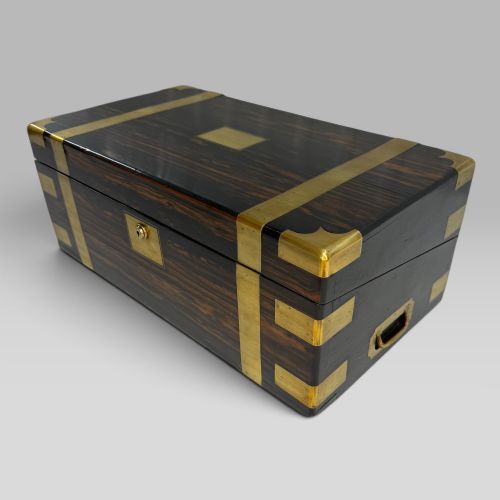
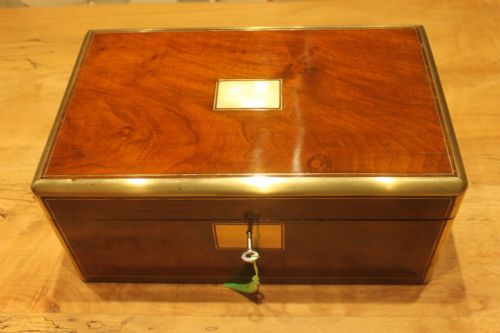
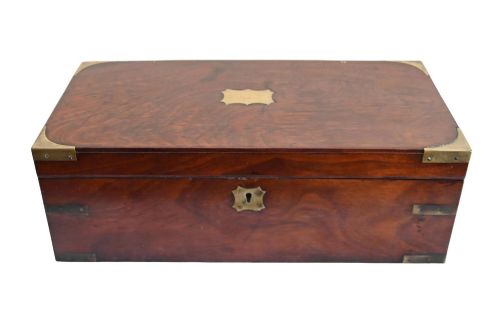
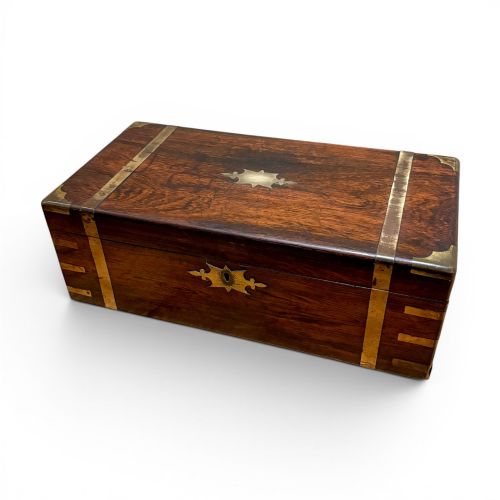
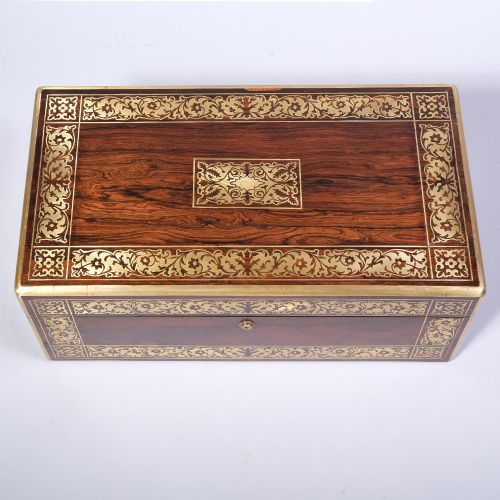
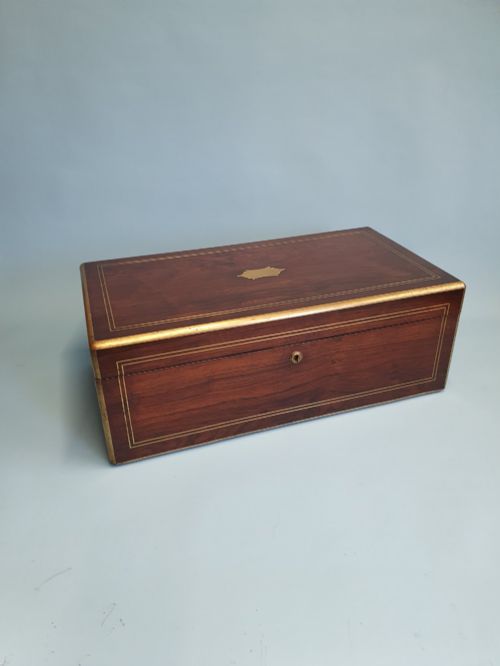
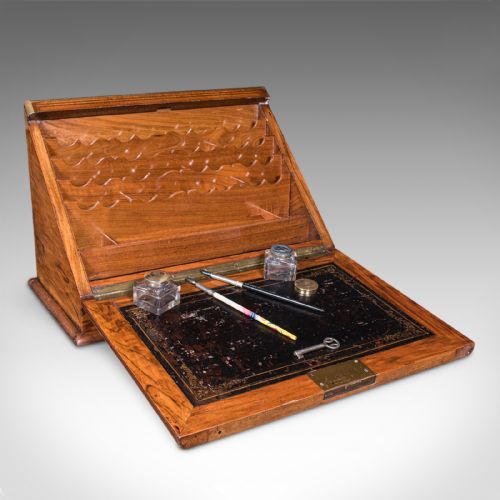
The most frequent examples on this page are Victorian and 19th century writing slopes bound in brass with fitted interiors. They open to reveal sloping writing surfaces lined with leather, alongside inkwells, pen trays and concealed compartments for private papers.
Materials and construction
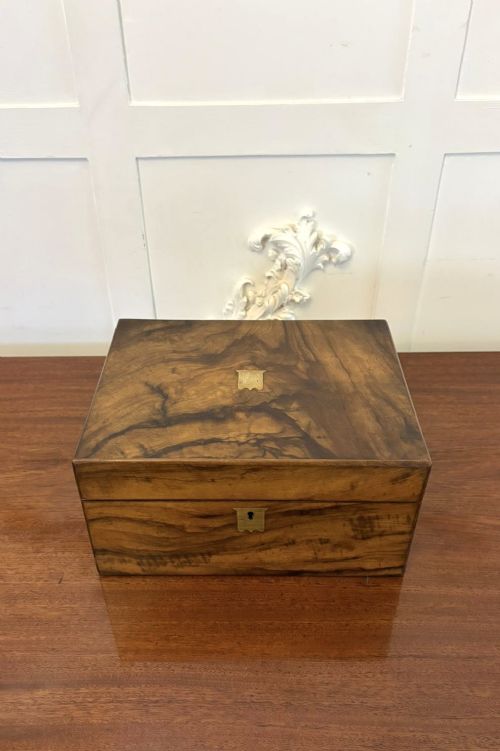
Cabinet makers constructed these boxes from durable hardwoods such as mahogany, walnut and oak, frequently applying decorative veneers like burr walnut or rosewood. Many examples feature contrasting brass binding, corner plates and flush carrying handles intended to withstand travel.
Interiors incorporate tailored sections for stationery, glass ink bottles and small drawers secured by secret panels or functioning locks. Detail work includes mother-of-pearl inlay, bone accents, ivory details and parquetry geometric patterns.
Fitted Writing Desk Box Retail Price Guide 2026
Typical asking prices for fitted writing desk box among the pieces listed under this phrase on Sellingantiques today, from the lower quarter to the upper quarter. They describe what is for sale here now, not the wider market.
Listings feature writing slopes, stationery cabinets and desk accessories in mahogany, walnut, rosewood, oak and camphor wood across Georgian and Victorian periods.
Distinctions in quality
The hierarchy of these pieces rests on the choice of timber figure, the precision of the brass inlay and the complexity of the interior mechanism. Elaborate grain patterns in burr walnut or rosewood denote superior material selection by the maker.
Execution of internal secret compartments, functioning Bramah locks, and matched glass ink bottles elevate an example above standard utility pieces. Structural integrity in the folding hinges and tight alignment of internal pigeon holes distinguish finer workshops.
The Fitted Writing Desk Box Glossary
- Writing slope
- A portable box with a hinged sloping lid designed to hold paper and provide an angled writing surface. Most versions fold open completely to reveal an internal compartment.
- Campaign box
- A sturdy portable desk or chest reinforced with brass corners and flush handles for military or travel use. These units often conceal secret drawers and candle sconces.
- Stationery cabinet
- A vertical desktop cabinet with doors or a roll top enclosing letter racks, shelves and compartments. They keep writing paper organised in a fixed study.
- Secret compartment
- A concealed drawer or sliding panel hidden behind standard pigeon holes or false bottoms. Makers utilised these spaces to secure valuables and private letters.
- Bramah lock
- A high security cylindrical lock invented by Joseph Bramah in the late eighteenth century. These mechanisms require a specially notched cylindrical key to operate.
Fitted Writing Desk Box: Frequently Asked Questions
How did people use writing slopes?
Users placed these portable boxes on tables or laps to write letters while travelling or moving between rooms. The folding lid opened to form a firm angled writing surface lined with leather.
Fitted compartments inside held ink bottles, sanders, wax seals and spare stationery. Secret drawers beneath the pen tray stored valuable documents and private correspondence.
What is a campaign writing box?
Campaign boxes were built for officers and travellers on military campaigns or long sea voyages. They utilised robust timbers like mahogany, camphor wood and oak, reinforced with heavy brass corners.
Flush inset handles and secure locks protected the contents during transit. Some campaign examples included candle sconces and specialised compartments for sovereign coins.
How do I identify a Victorian writing box?
Victorian writing boxes typically date from the nineteenth century and often feature brass binding, escutcheons and corner reinforcement. Walnut, rosewood and mahogany predominate, frequently displaying distinctive grain patterns.
Inside, you usually find a leather writing surface split into two flaps, accompanied by glass ink bottles and pen trays. Secret drawers operated by concealed wooden pins are common in this era.
What is an Anglo-Indian writing box?
Anglo-Indian writing boxes were manufactured in India during the nineteenth century for British officials and the export market. They frequently incorporate exotic hardwoods like ebony, padauk or sandalwood.
These boxes are distinguished by intricate ivory, bone or brass inlay work featuring floral and geometric motifs. Their construction combines traditional British box forms with regional decorative techniques.