
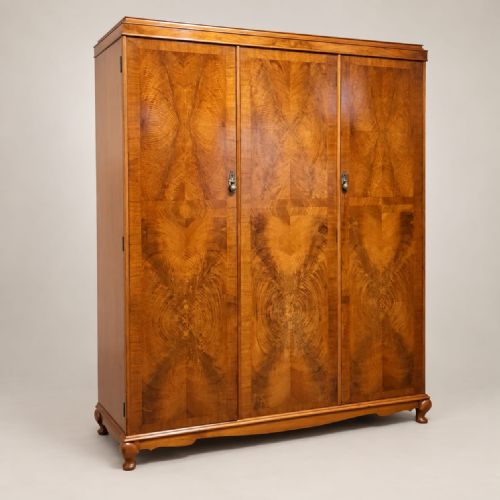
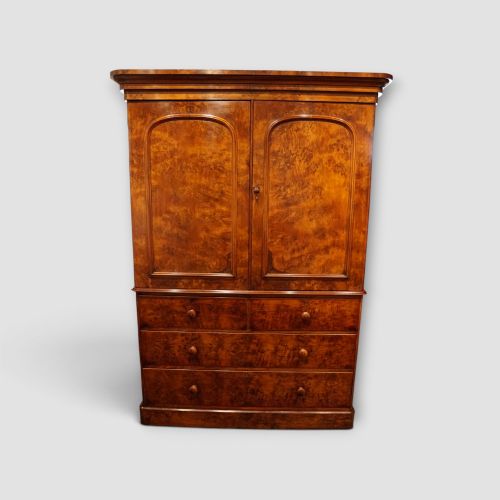
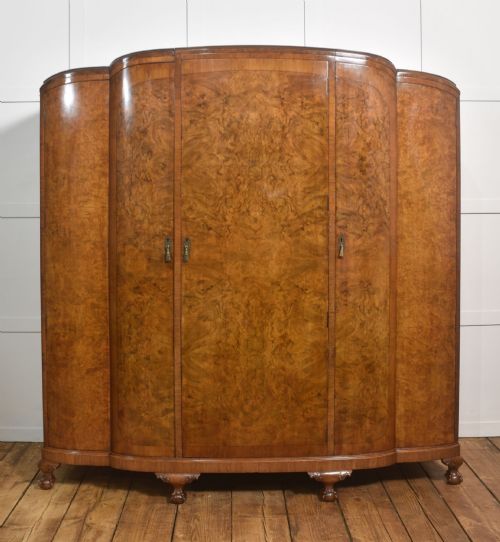
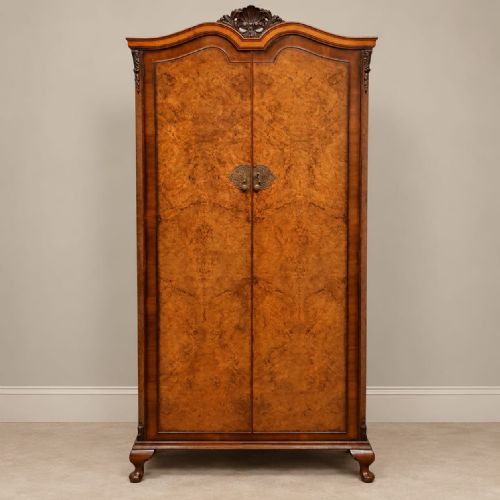


Fitted Walnut Wardrobe
A fitted walnut wardrobe offers substantial bedroom storage while showcasing rich timber grain and period craftsmanship.
Fitted Walnut Wardrobe
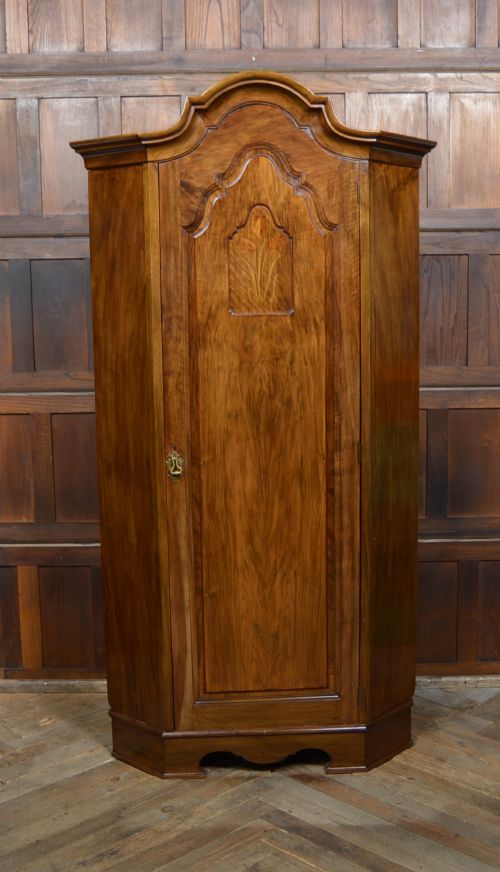
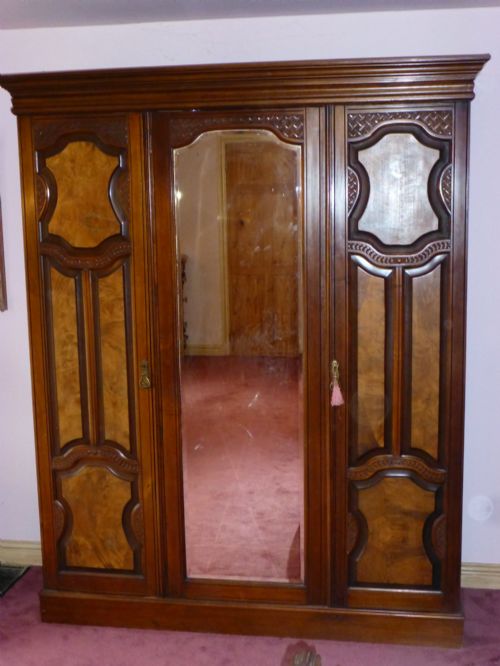
A fitted walnut wardrobe represents a significant piece of bedroom furniture designed for interior organisation, frequently incorporating compartments, drawers, and hanging space. When searching for a fitted walnut wardrobe, buyers encounter examples ranging from late nineteenth-century Victorian designs to twentieth-century Art Deco iterations.
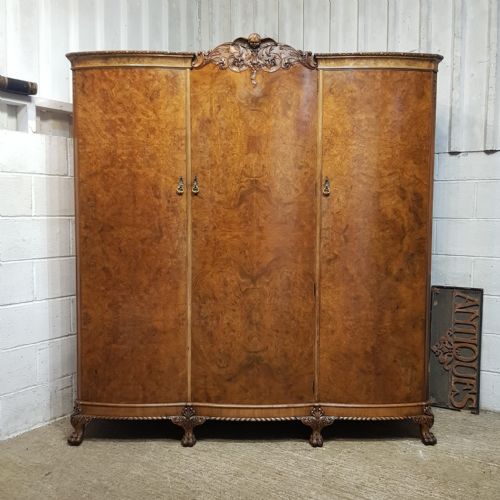
The pieces listed span multiple decades, with strong representation from the 1920s and 1930s alongside Victorian and Edwardian examples. Forms vary from double and triple wardrobes to compactums, tallboys, and breakfront designs.
Origins include English workshops and cabinet makers, alongside continental pieces in styles such as Queen Anne Revival and Art Nouveau. Buyers select these items for their combination of architectural presence and functional internal fittings.
How they were made
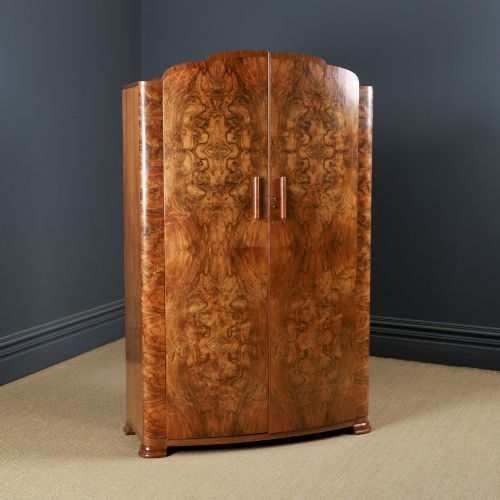
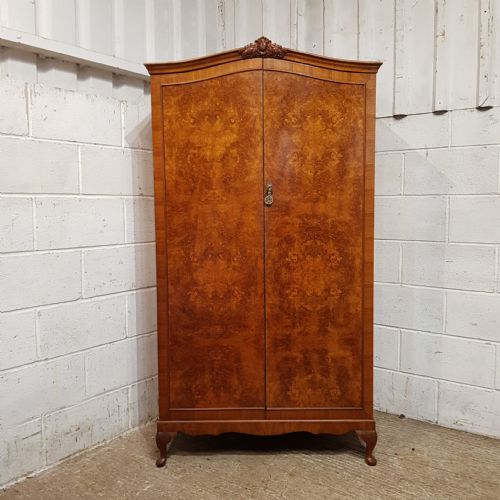
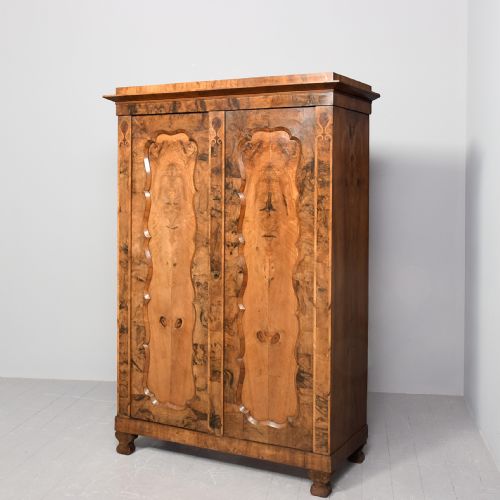
Cabinet makers utilised solid walnut, ash, and maple alongside decorative veneers such as burr walnut and figured walnut to create striking exterior surfaces. Timber panels were frequently applied to sturdy framing, taking advantage of the grain patterns inherent in burr sections.
Hardware details typically include brass handles, hinges, and occasional glass elements, with later twentieth-century pieces incorporating modern plastics like bakelite. Interiors were structured with timber shelving, linen slides, and hanging rails tailored to domestic storage needs.
Several gentleman's wardrobes still retain their original internal tie racks, collar boxes, and specialised compartments designed for Edwardian tailoring.
What varies in quality
Quality in these wardrobes rests on the selection and matching of the veneer timbers across the doors and facade, where symmetrical grain alignment separates standard production from finer cabinet work. The complexity of the internal fittings, such as custom pigeonholes, lined drawers, and integrated trays, also indicates the original tier of manufacture.
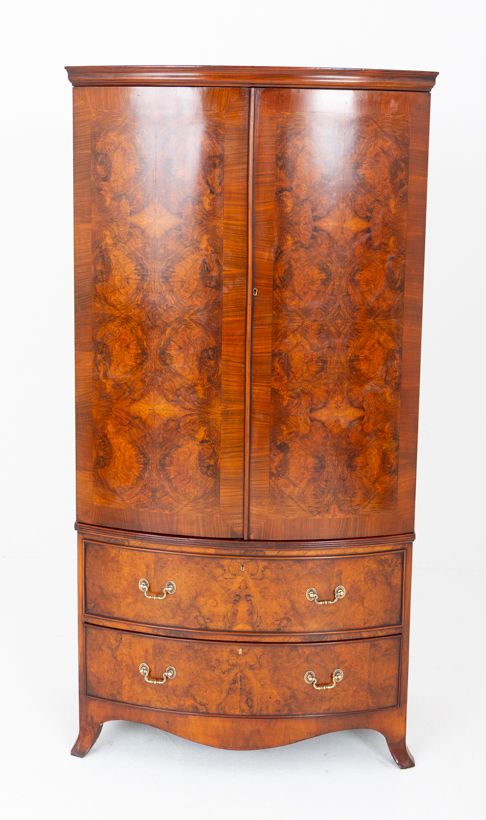
Structural execution defines the durability of the piece, visible in the precision of the door alignment, the integration of serpentine or bow-front curves, and the substance of the internal framework. Pieces bearing attribution to established cabinet makers or firms generally exhibit a higher standard of internal joinery and secondary timber selection.
Holland and Sons·Harry and Lou Epstein·Maples and Co·Waring and Gillows
The Fitted Walnut Wardrobe Glossary
- Burr walnut
- A veneer sliced from the deformed growth or burr of a walnut tree, prized for its swirling, highly figured grain patterns. It appears frequently on the doors of twentieth-century pieces.
- Compactum
- A multi-functional wardrobe combining hanging space with internal drawers, shelves, and sometimes shoe racks. This form provides comprehensive storage within a single footprint.
- Breakfront
- A cabinet design where the central section projects forward from the flanking outer sections. This architectural arrangement adds depth and shadow lines to the facade.
- Linen press
- A tall storage piece featuring upper cupboard doors enclosing sliding trays, traditionally used for flat textiles, positioned above a base of lower drawers.
- Tallboy
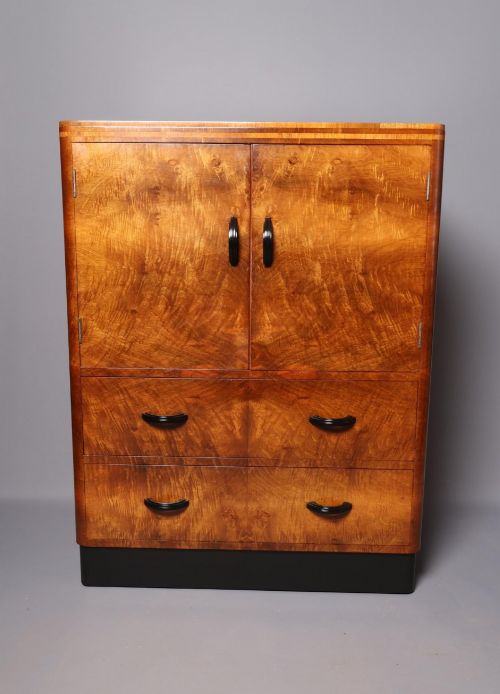
- A tall chest of drawers or a hybrid wardrobe and chest standing high off the floor. It offers vertical storage capacity for rooms with limited wall space.
Fitted Walnut Wardrobe: Frequently Asked Questions
How do I care for walnut veneer?
Walnut veneer benefits from regular dusting with a soft, dry cloth and protection from direct sunlight, which can fade the warm tones of the timber over time.
A light application of quality beeswax conditioner once or twice a year helps nourish the wood and maintain the natural lustre of the polished surface.
Can these wardrobes be dismantled for moving?
Many larger period wardrobes, particularly Victorian and Edwardian triple or breakfront examples, were constructed with sectional elements that allow them to be disassembled for transport.
Simpler double wardrobes or compactums from the Art Deco period are often built as single rigid carcases, requiring careful measurement of stairwells and doorways prior to delivery.
How do I distinguish Art Deco from Victorian pieces?
Victorian and Edwardian models typically display heavier architectural cornices, moulded panel doors, and stylistic nods to traditional revival periods like Queen Anne or Regency.
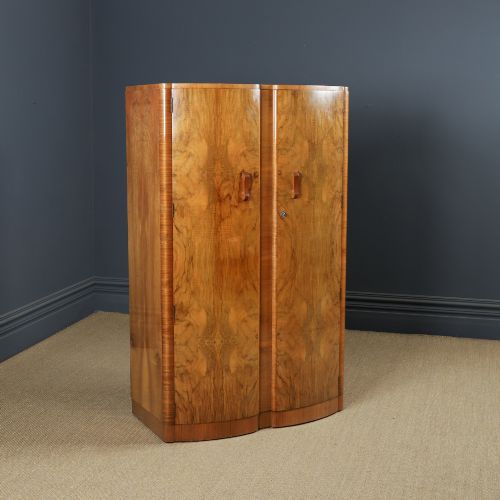
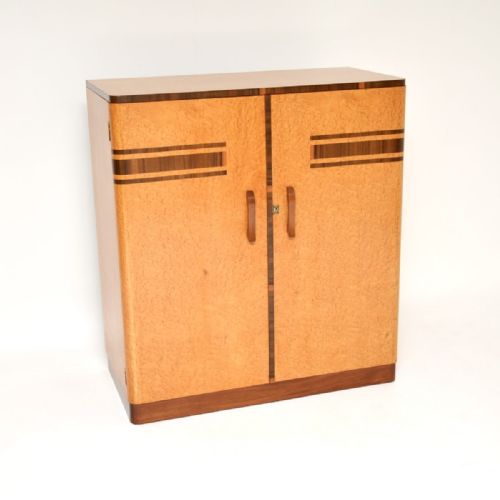
Art Deco examples embrace streamlined geometry, waterfall edges, symmetrical burr walnut panels, and occasional contrasting woods like bird's eye maple.
What is a compactum wardrobe?
A compactum is a specialised storage cabinet that integrates multiple functions into one unit, combining wardrobe hanging space with banks of internal drawers and linen slides.
These pieces were designed to maximise bedroom organisation by housing garments, linens, and accessories within a single enclosed structure.