


Fitted Vanity Case
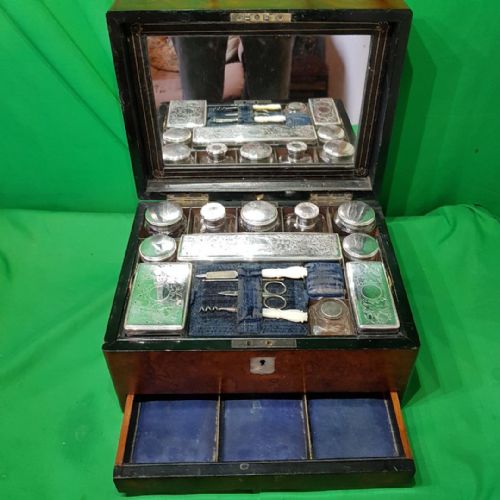
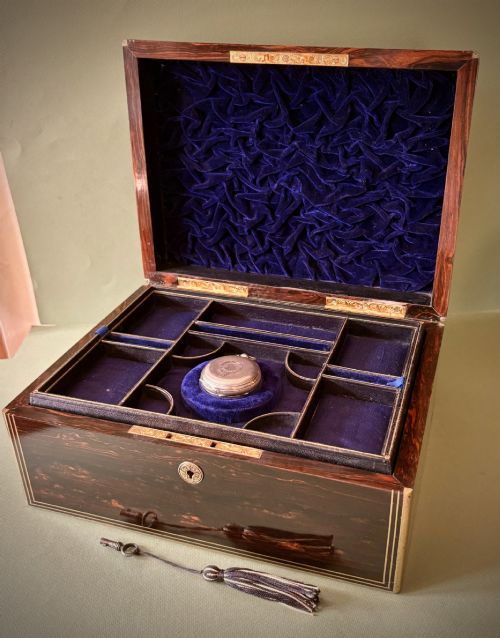
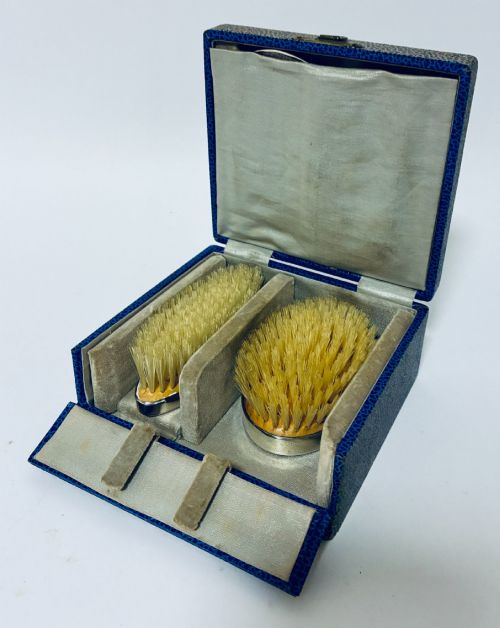
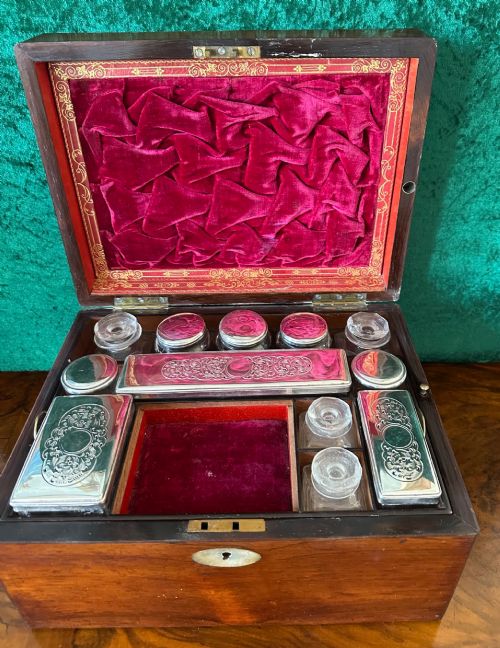
A fitted vanity case organises travel essentials with compartments for bottles, mirrors and brushes.
Fitted Vanity Case
A fitted vanity case brings together various personal grooming items inside a portable box designed for travel or dressing table use. These pieces date across the Georgian, Victorian and Edwardian periods, extending into the 1920s.
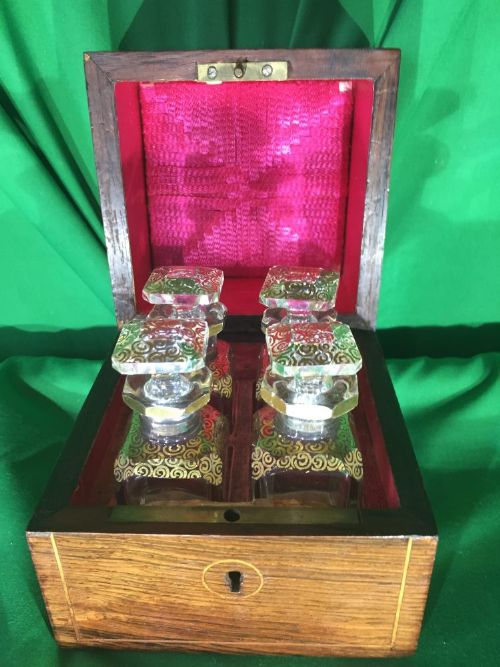
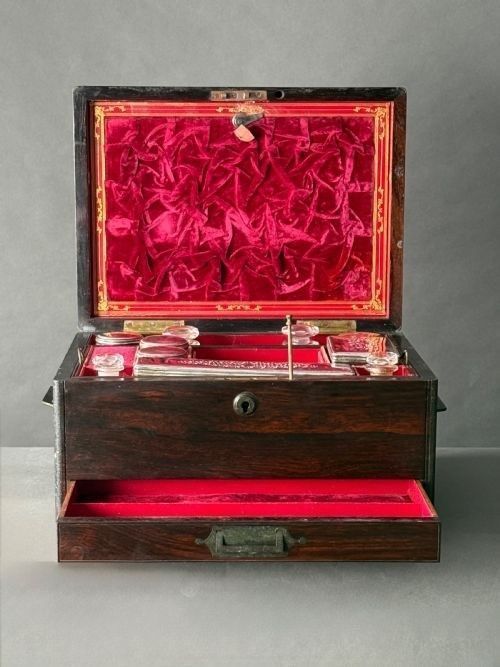
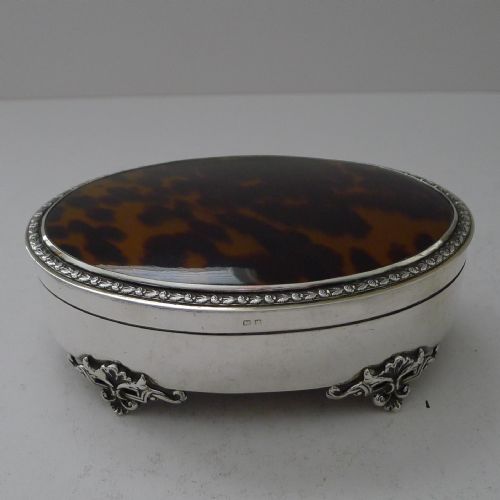
The most common examples on this page are Victorian wooden boxes housing glass bottles, mirrors and compartments. They appear in forms such as travelling sets, dressing cases and jewellery boxes.
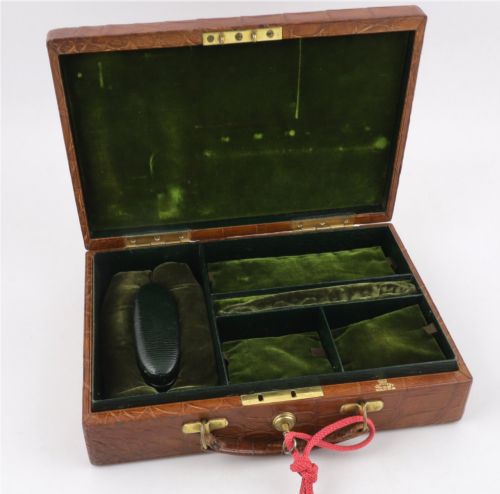
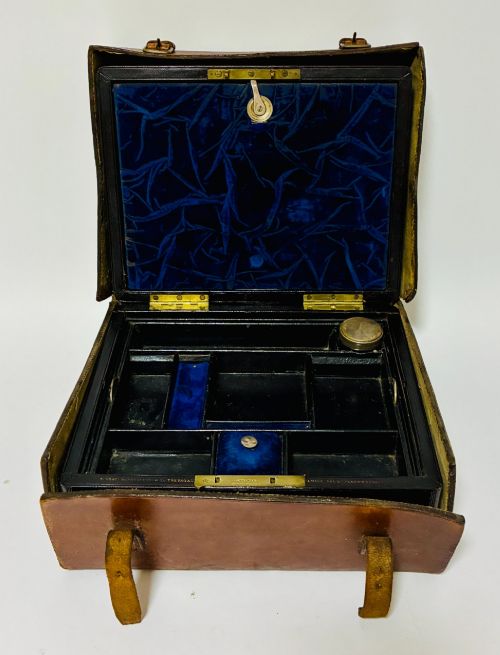
Materials range from rich hardwoods like rosewood, burr walnut and coromandel to leather suitcases and brass-bound trunks. Interiors feature fitted velvet or silk linings designed to secure individual tools.
How they were made
Craftsmen built the exterior shells using durable timbers like mahogany, rosewood and coromandel, often reinforcing corners with brass or employing leather over a rigid frame. Wood surfaces receive polished finishes that highlight natural grains and figure.
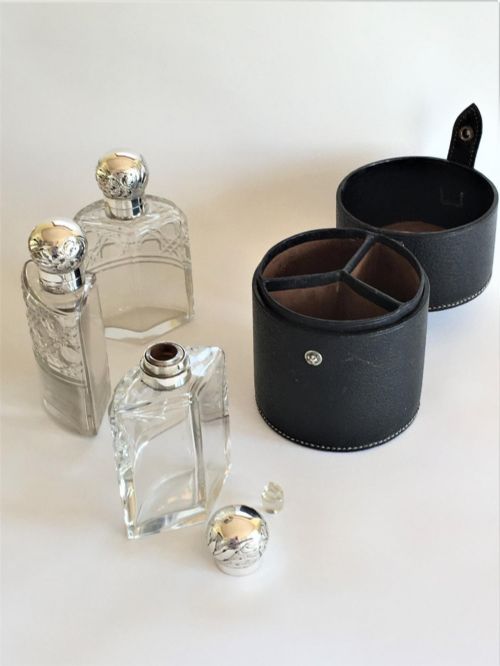
Interiors rely on precise carpentry to create custom trays, secret drawers and partitioned sections lined in velvet, satin or leather. Glass bottles and jars feature cut crystal designs paired with sterling silver or silver-gilt tops.
Listings feature items from the Georgian, Regency, Victorian and Edwardian periods alongside 1920s travel goods.
What varies in quality
Quality rests on the completeness of the internal fittings and the integrity of the original contents. Sets retaining matching cut-glass bottles with hallmarked silver lids and undamaged velvet linings sit at the upper end of the range.
Cabinetwork precision distinguishes standard boxes from exceptional commissions. Fine examples incorporate secret compartments, smoothly operating mechanisms, working locks with original keys and superior timber selection.
J C Vickery·F. West·Mappin & Webb·H Mitchell·Asprey·Harrods·LEVI AND SALAMAN
The Fitted Vanity Case Glossary
- Coromandel wood
- A dense, heavily figured southeast Asian timber prized for dark brown colouring and contrasting black grain. It frequently appears on luxury Victorian boxes.
- Burr walnut
- Wood taken from the burl growth of a walnut tree, producing intricate swirling patterns. Cabinetmakers utilised this timber for decorative veneers on high-end Victorian cases.
- Sterling silver-gilt
- Sterling silver coated with a thin layer of pure gold. This treatment protected metal containers from tarnishing against cosmetics and liquids.
- Cut glass
- Glass decorated by cutting facets or patterns into the surface using a wheel. It appears on the perfume bottles and jars housed inside these cases.
- Fitted interior
- An organised compartment system built into a box to hold specific tools, bottles and accessories securely during travel.
Fitted Vanity Case: Frequently Asked Questions
What do fitted vanity cases hold?
These boxes contain compartments for perfume bottles, jars, brushes, mirrors and manicure instruments. Many examples also include sections for jewellery or writing materials.
Interior layouts vary according to whether the box was intended for a gentleman or a lady, with gentleman's sets often prioritising shaving gear and grooming brushes.
How are wooden boxes dated?
Dating relies on timber choices, brass hardware styles, lock mechanisms and construction techniques. Rosewood and mahogany appear across Georgian and early Victorian eras, while coromandel and burr walnut become prominent during the mid-Victorian period.
Maker marks stamped onto leather linings, silver hallmarks on bottle caps and inscribed brass plaques offer precise manufacturing dates.
Were these cases used for travel?
Yes, these items were designed for transport by carriage, train or ship during the Georgian, Victorian and Edwardian eras. Sturdy leather exterior cases and brass-bound wooden trunks protected fragile glass and silver contents on long journeys.
Heavier wood cases functioned primarily on extended stays, remaining stationary on dressing tables while smaller leather versions travelled.
What maintenance do these boxes need?
Wood surfaces benefit from occasional waxing with traditional formulations to nourish the grain and preserve the finish. Leather sections require gentle cleaning to prevent drying and cracking.
Interior velvet and silk linings should be kept away from direct sunlight and moisture to prevent fading and fabric degradation.