
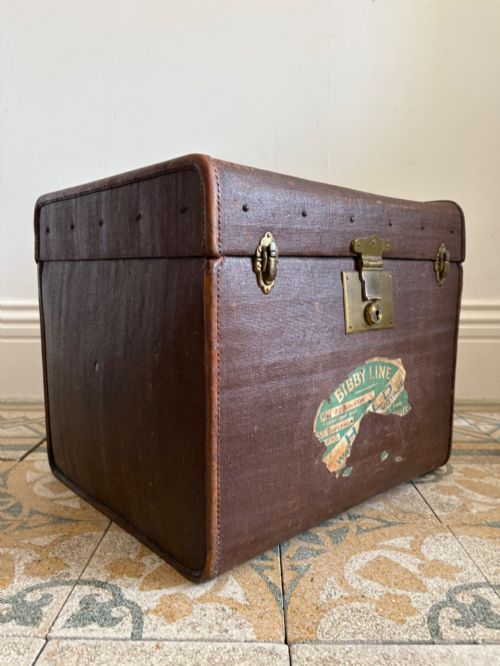


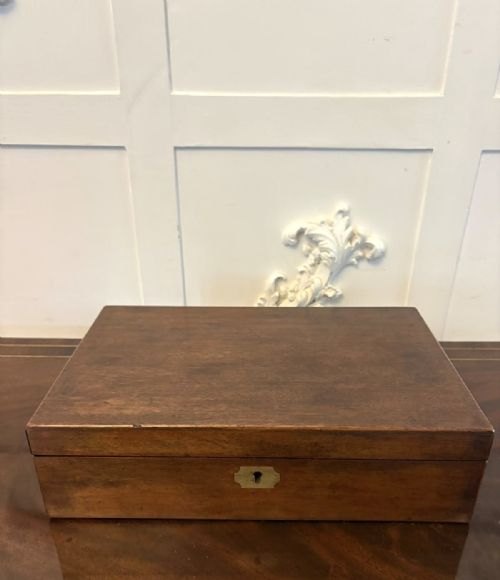


Fitted Travelling Box
A fitted travelling box combines personal storage with mobility, offering compartments for bottles, silver, and correspondence designed for movement.
Fitted Travelling Box
A fitted travelling box encompasses a variety of portable containers designed for personal care, writing, and sustenance during journeys. When searching for a fitted travelling box, buyers encounter examples spanning from the Georgian and Regency periods through the Victorian era and into the 1920s vintage period.
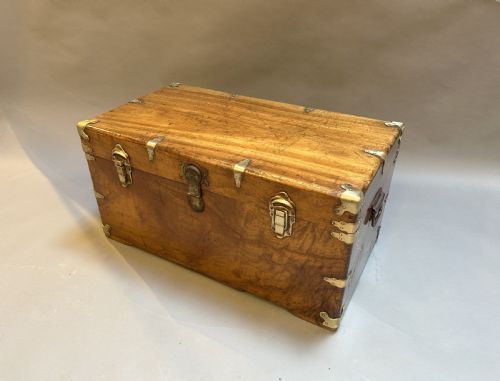
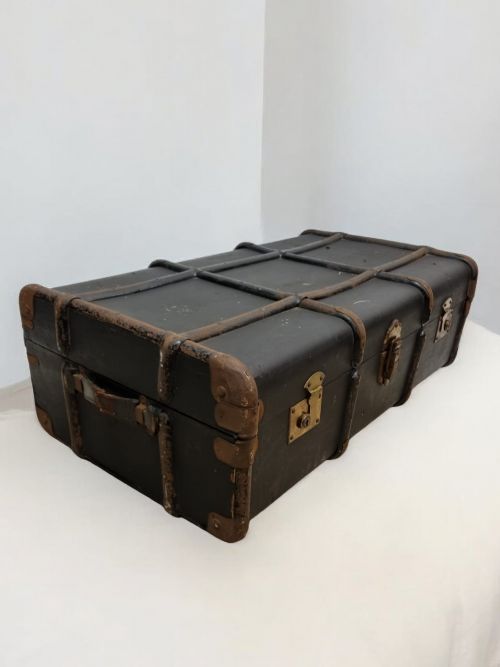
The selections on this page include mahogany vanity boxes, coromandel dressing cases, camphor wood campaign trunks, and leather suitcases. These objects range from compact apothecary cases with original glass bottles to large steamer trunks and military chests.
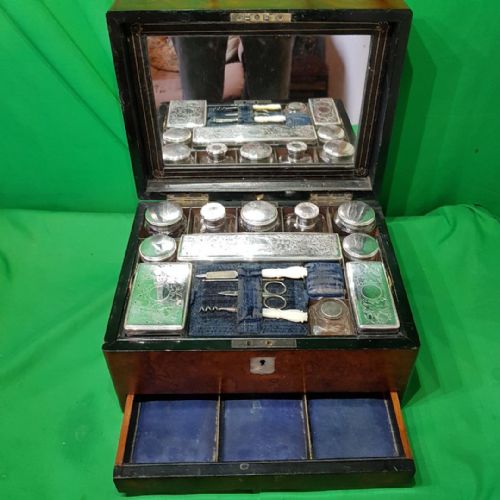
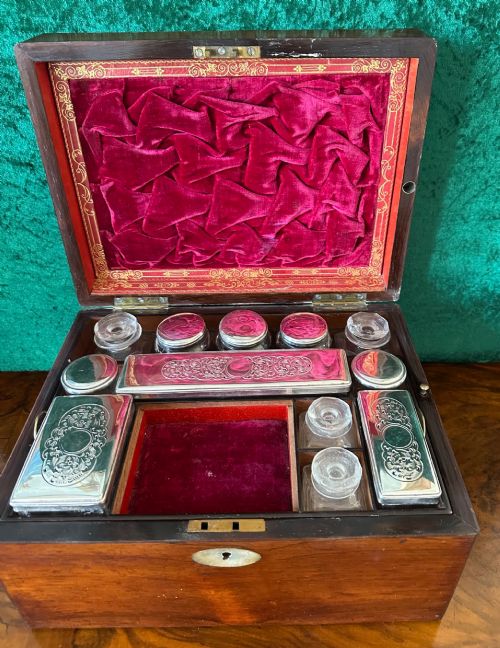
Many specimens feature dedicated fitted interiors containing sterling silver items, scent bottles, and secret compartments. They originate from British workshops and international makers, reflecting the travel requirements of different eras.
How they were made
Cabinet makers utilised dense timbers such as mahogany, rosewood, burr walnut, and camphor wood to construct the exterior carcases. These woods were often selected for their grain or durability, then reinforced with brass banding, metal mounts, and original hardware for transport.
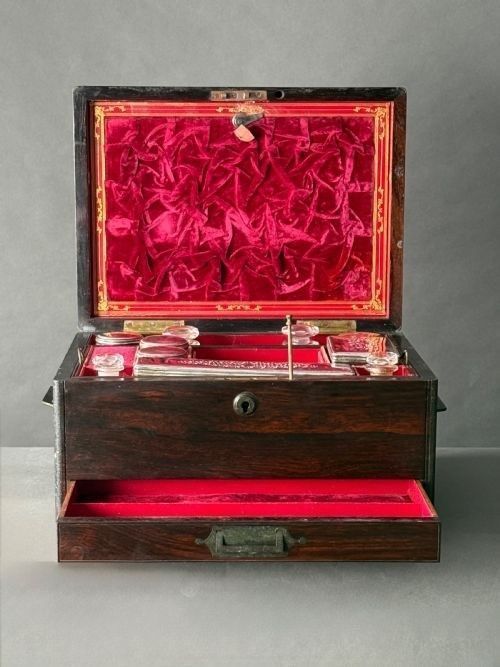
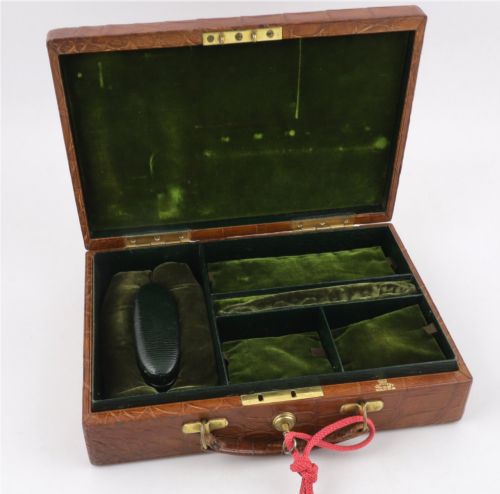
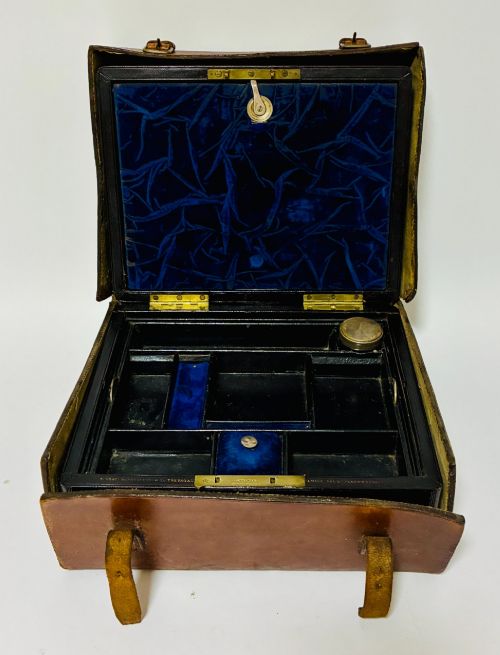
Interiors were fitted with precision using velvet or leather linings to cushion glass scent bottles, sterling silver gilt items, and surgical or writing instruments. Leather cases and trunks utilised stitched canvas, heavy hide, and brass locks to withstand the rigours of carriage and steam travel.
Some gentleman's vanity cases manage to pack glass bottles, shaving gear, and secret compartments into a space smaller than a bread bin.
What varies in quality
The distinction between tiers rests upon the completeness of the fitted interior and the retention of original components. Pieces retaining their full complement of cut glass bottles, silver lids, and original keys command greater interest than those with replacement fittings.
Material selection and secondary touches also divide the range. Solid burr walnut or coromandel with secret compartments and flush brass campaign handles represent finer craftsmanship than simpler pine or painted metal trunks.
J C Vickery·F. West·Elkington·Asprey·C.Antrobus·Finnegans of Bond Street·Winsor & Newton
The Fitted Travelling Box Glossary
- Campaign trunk
- A robust chest constructed in sections or with recessed brass hardware for military transport. These boxes were built to withstand frequent relocation by sea or land.
- Dressing case
- A portable box fitted with compartments for cosmetics, brushes, and mirrors. They often incorporate secret drawers beneath the primary tray.
- Coromandel
- A dense, heavy timber from Asia displaying dark brown grain with contrasting lighter streaks. It was favoured for luxury Victorian vanity boxes.
- Writing slope
- A hinged box that opens to reveal a slanted writing surface and pigeonholes. Many include inkwells and secret compartments for correspondence.
- Apothecary case
- A compact travelling chest designed to hold medical vials and ingredients. They feature fitted wooden grids to secure glass bottles during transit.
Fitted Travelling Box: Frequently Asked Questions
What is a fitted travelling box?
A fitted travelling box is a portable container designed to transport personal possessions securely during journeys. They include internal partitions, trays, and slots tailored for specific items like bottles or writing materials.
These boxes served officers, gentlemen, and ladies on the move. Their internal arrangements protected fragile items from the bumps of carriage and steam travel.
How do I date a travelling box?
Dating relies on the style of the timber, the locks, and the nature of the internal fittings. Regency and Georgian examples often feature simpler mahogany or rosewood with brass inlay, while Victorian versions frequently utilise burr walnut and coromandel.
Maker marks, patent stamps on locks, and the style of glass or silver accessories provide further chronological clues. Examining construction methods inside secret compartments also helps confirm the period.
What were fitted boxes used for?
Fitted boxes served multiple purposes depending on the owner's needs. Vanity and dressing boxes held grooming equipment and cosmetics, while apothecary cases carried medical supplies.
Other variants functioned as writing slopes, correspondence boxes, or communion sets for travelling clergy. Each design was tailored to maintain order and gentility away from home.
How do I care for leather trunks?
Leather trunks and suitcases require stable humidity and protection from direct sunlight to prevent the hide from drying out. Gentle cleaning with appropriate leather balms helps maintain the flexibility of the material.
Original brass hardware and locks benefit from light dusting rather than aggressive polishing. Preserving the original lining materials maintains the historical integrity of the interior.