



Fitted Secretaire Tallboy
Fitted secretaire tallboy pieces are tall storage furniture with a pull-down writing drawer, combining a chest with a desk.

Fitted Secretaire Tallboy
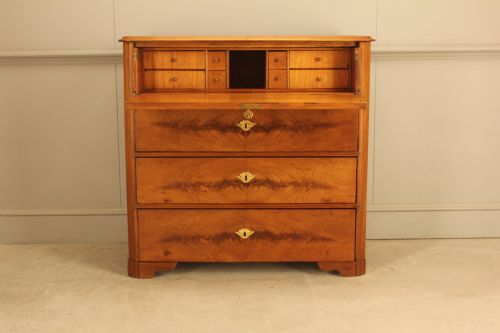
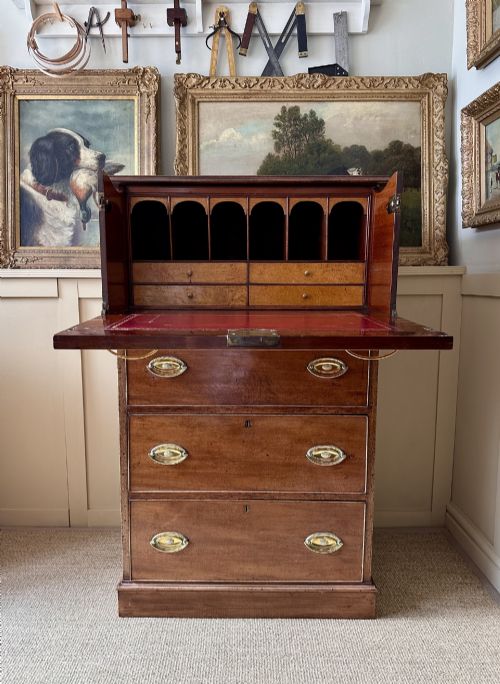
A fitted secretaire tallboy combines vertical chest storage with a dedicated writing drawer, appearing across Georgian, Regency, and Victorian periods. These pieces stack one carcase upon another or rise as tall single units, often incorporating fitted internal drawers and pigeonholes behind a drop-front panel.
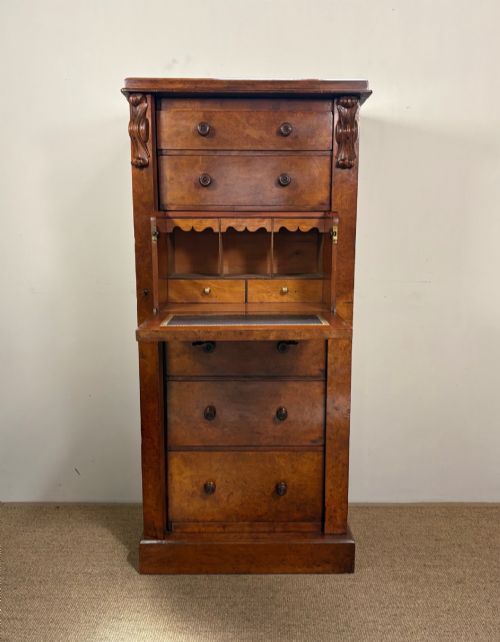
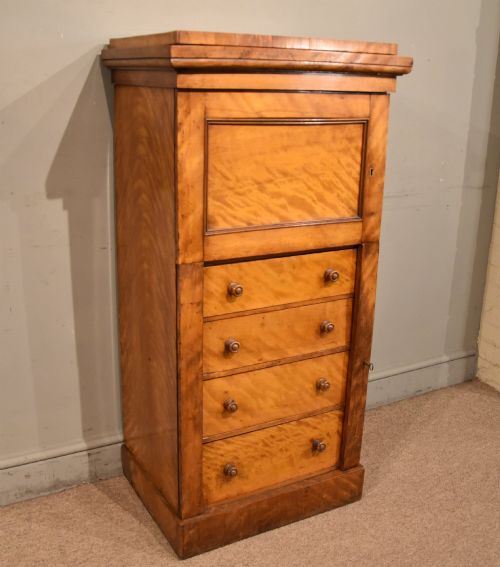
The most common examples on this page are mahogany chests on chest from the eighteenth century, alongside rosewood and satin birch Wellington chests from the nineteenth century. Alongside these tower forms, buyers encounter related press cupboards and campaign cabinets equipped with secretaire drawers.
How they were made
Cabinet makers built these pieces using solid timbers like mahogany, oak, walnut, and rosewood, frequently applying decorative veneers to drawer fronts and door panels. Interiors often feature secondary woods like oak, complemented by brass hardware such as drop handles, escutcheons, and campaign mounts.
Writing surfaces inside the pull-down drawers are typically lined with leather or baize, providing a practical writing plane. Joinery methods rely on traditional drawer construction, internal pigeonhole partitions, and fitted compartments secured by working brass locks.
Fitted Secretaire Tallboy Retail Price Guide 2026
Typical asking prices for fitted secretaire tallboy among the pieces listed under this phrase on Sellingantiques today, from the lower quarter to the upper quarter. They describe what is for sale here now, not the wider market.
Camphorwood was utilised for campaign pieces so the furniture naturally repelled insects while travelling across the British Empire.
What varies in quality
Quality rests upon the choice of timber and the figuration of the mahogany, rosewood, or walnut veneers used across the front. Higher grade examples display carefully matched grain patterns, fine dovetailing on drawer construction, and intricate internal fittings within the secretaire section.
The complexity and completeness of the interior stationery compartments distinguish finer pieces from simpler utilitarian storage. Original brass hardware, sound structural timber lining such as oak, and uncompromised writing surfaces also mark the upper tier of the range.
Gillows of Lancaster
The Fitted Secretaire Tallboy Glossary
- Secretaire
- A desk drawer or compartment featuring a drop-down front that conceals small drawers and pigeonholes for writing materials.
- Tallboy
- A tall chest of drawers made in two sections, often taking the form of a chest on chest.
- Wellington chest
- A tall, narrow chest of drawers secured by a hinged locking side pilaster.
- Campaign chest
- Portable furniture built in sections with recessed brass hardware, designed for military travel.
- Press cupboard
- A large storage cabinet featuring upper doors enclosing shelves or hanging space above lower drawers.
Fitted Secretaire Tallboy: Frequently Asked Questions
Where were fitted secretaire tallboy pieces used in a home?
These tall pieces stood in bedrooms, dressing rooms, or private studies where vertical storage saved floor space while providing a private writing surface.
Because the drop-down drawer functioned as an escritoire, owners used them for correspondence and document storage without needing a separate standalone desk.
How do I tell an 18th century piece from a 19th century one?
Eighteenth-century examples often employ solid mahogany or figured walnut with traditional bracket feet and oak drawer linings. The proportions tend to follow Georgian architectural lines with classic cornice mouldings.
Nineteenth-century pieces frequently introduce rosewood, satin birch, or pollard oak veneers, alongside alternative formats like the locking side-pilaster Wellington chest or campaign brass corners.
What is inside the secretaire drawer?
Opening the drop-front reveals an arrangement of small stationary drawers, pigeonholes, and occasionally concealed compartments or central small doors. Many retain their original leather or baize writing inserts.
The layout provided a compact bureau space that could be locked away securely when not in use, keeping papers out of sight.
How should I care for timber surfaces and leather inserts?
Keep mahogany, walnut, and rosewood surfaces away from direct heat sources and strong sunlight to protect the polish and prevent veneer splitting. Regular dusting with a dry cloth maintains the timber.
For leather writing inserts, apply suitable leather dressings sparingly if needed, and avoid excess moisture when cleaning inside the writing compartment.