
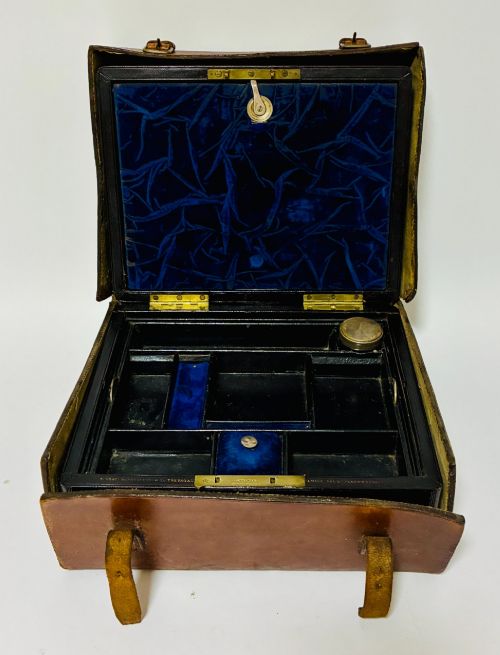


Fitted Gentlemans Dressing Case
A fitted gentlemans dressing case is a portable travelling companion for grooming and personal care, offering fitted compartments for daily necessities.
Fitted Gentlemans Dressing Case
When you search for a fitted gentlemans dressing case, you encounter portable boxes and luggage designed for personal grooming during travel. These pieces range from compact vanity boxes to larger leather suitcases and travelling cases.
You are most likely to meet Victorian and Edwardian examples on this page, alongside pieces from the Regency and Art Deco periods. Materials span leather, rosewood, brass, and glass, reflecting the needs of travellers across different decades.
How they were made
Cases are constructed from sturdy woods like rosewood or heavy leather over a rigid frame, often enhanced with brass inlays, brass hardware, and protective outer boxes. Interiors utilise fitted compartments lined in silk plush, velvet, or leather to secure bottles, razors, and brushes.
Internal fittings incorporate glass bottles, metal or silver plate, celluloid, and sterling silver gilt components. Each compartment is tailored to hold specific grooming tools securely in place during transport.
Listings feature cases spanning the Regency period through the 1920s, utilising leather, rosewood, brass, glass, and velvet.
What varies in quality
The distinction between tiers rests upon the choice of exterior materials and the complexity of the internal fitments. Higher grade cases employ solid rosewood, fine leather, and precious metals for their fittings, demonstrating careful assembly by established makers.
Construction details such as precision brass inlays, robust lock mechanisms, and intact original silk or velvet linings separate standard travel boxes from exceptional examples. The completeness of the internal set further influences the standing of a piece.
F West·Harrods·JH Browne of The Waldorf Hotel·Au Départ
The Fitted Gentlemans Dressing Case Glossary
- Fitted interior
- An internal arrangement designed specifically to hold bottles, brushes, and accessories securely in place. This layout defines the utility of a travel box.
- Vanity case
- A portable container for cosmetics, grooming tools, and personal items. These cases often include mirrors and small compartments.
- Shellac
- A natural resin finish applied to wooden surfaces to provide a protective gloss. It highlights the grain of rosewood and other timbers.
- Silk plush
- A woven fabric with a thick, soft pile used to line the interior compartments of luxury cases. It cushions delicate glass and silver items.
Fitted Gentlemans Dressing Case: Frequently Asked Questions
What is a fitted gentlemans dressing case?
A fitted gentlemans dressing case is a portable box or suitcase containing dedicated compartments for grooming items, shaving tools, and personal accessories used during travel.
These pieces were essential luggage for gentlemen on the move, keeping bottles, brushes, and razors organised and secure.
How were these cases used?
Travellers used them to transport personal grooming equipment, clothing accessories, and shaving gear while staying away from home. The fitted interior ensured every bottle and razor remained secure during carriage in a train, carriage, or early motor car.
Many double as portable dressing table boxes, opening to reveal mirrors and organised trays for daily routines.
What materials are common in these boxes?
Outer shells typically consist of heavy leather, rosewood, or metal frames, frequently accented with brass corners, handles, and inlay work. Interiors feature linings of silk plush, velvet, or leather alongside glass bottles and metal fittings.
Some pieces incorporate silver plate, sterling silver gilt, and celluloid within the fitted compartments.
How do I date a dressing case?
Dating relies on stylistic cues, construction methods, and materials associated with periods such as the Regency, Victorian, Edwardian, and Art Deco eras. Maker marks, silver hallmarks, and the specific design of internal fittings provide further chronological clues.
Victorian and Edwardian examples often feature substantial leather construction and elaborate silver or glass bottles.