


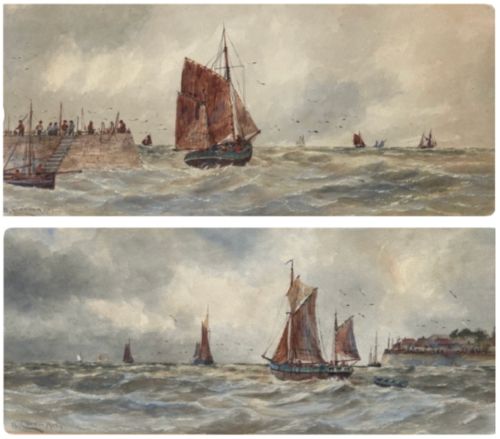

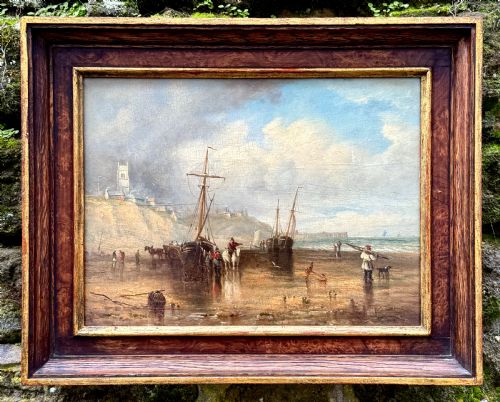
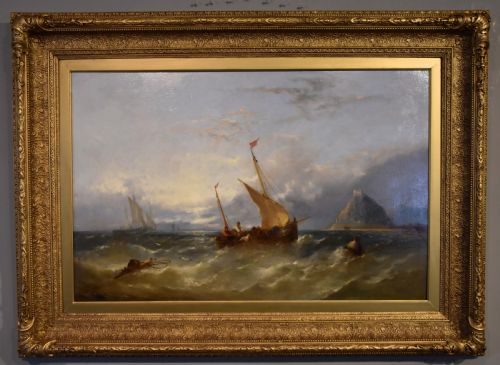
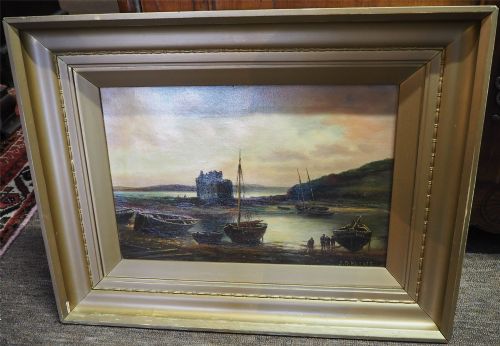


Fishing Boat Seascape Art
Fishing boat seascape art captures the rugged maritime heritage of British and European coastlines through historical oil and watercolour paintings.
Fishing Boat Seascape Art
Fishing boat seascape art portrays coastal life, working vessels, and maritime weather across centuries of painting. Buyers searching this phrase encounter works ranging from Victorian watercolours to mid-twentieth-century oils.
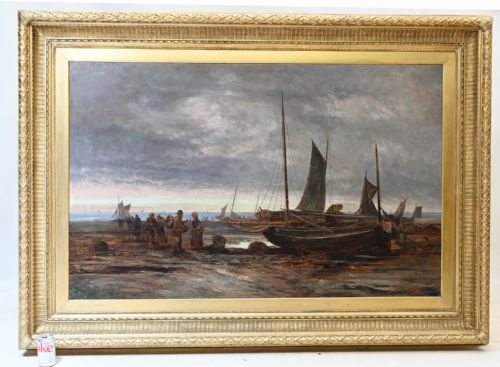
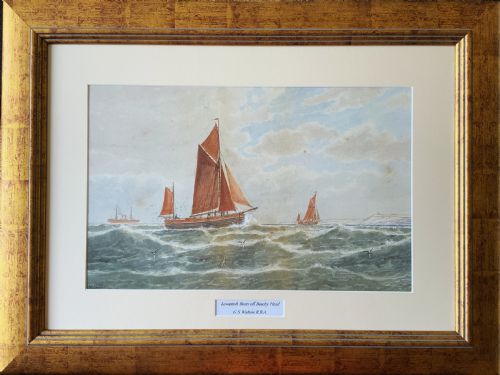
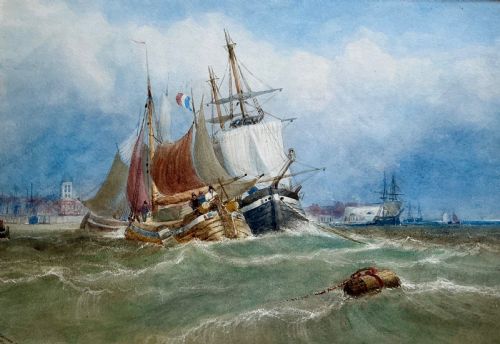
The selections on this page are dominated by nineteenth-century and early twentieth-century British and Dutch school paintings. These include depictions of harbours, stormy seas, and coastal villages from Cornwall to Scotland.
Mediums vary between oil on canvas, oil on board, and watercolour pigment on paper. Traditional framing often complements the historical nature of these marine works.
How They Were Made
Artists applied oil paint to canvas, panel, or card to build rich textures that captured turbulent waves and moody skies. Others used watercolour pigment on paper to achieve lighter, atmospheric transparencies of coastal light.
Brushes of varying weights rendered the intricate rigging of fishing trawlers and the restless motion of the sea. Protective varnishes preserved the integrity of the pigments over decades of exposure to light and air.
Several artists painted stormy waters so convincingly that viewers can almost smell the salt spray.
What Varies in Quality
Skill in draftsmanship dictates how convincingly a vessel sits upon the water and how accurately rigging is rendered. Superior works capture the weight of the sea and the atmospheric conditions of the coast with confident brushwork.
Provenance and signature clarity elevate certain pieces, particularly those attributed to known members of regional marine schools or exhibited artists. The harmony between the painting and its period frame also influences the overall integrity of the piece.
James Orrock·Thomas Creswick·William Henry Williamson·George Stanfield Walters·Henry Barlow Carter·Charles Napier Hemy·William Lee Hankey·Gustave De Bréanski·Pieter Cornelis Dommersen·George SHAW·Thomas Bush Hardy·George Gregory·George Morland·George Henry Knight·Fred Mayor·Hendrik Yan Wolter·Martin Snape
The Fishing Boat Seascape Art Glossary
- Seascape
- A work of art depicting the sea, coastlines, and maritime activity. These paintings focus heavily on water, weather, and working vessels rather than inland scenery.
- Watercolour
- A paint consisting of colour pigments suspended in a water-based solution applied to paper. It allows for delicate washes and translucent effects common in maritime sketches.
- Oil on Canvas
- A painting technique using pigments bound in a drying oil applied to stretched fabric. This method permits rich colour blending and textured applications suitable for stormy seas.
- Marine Art
- Artistic representation of the sea, ships, and coastal life. This genre encompasses historical naval engagements, port scenes, and working fishing vessels.
- British Impressionism
- A painting style influenced by the French movement focusing on light and everyday subjects. British practitioners applied these principles to coastal fishing communities and harbours.
Fishing Boat Seascape Art: Frequently Asked Questions
What subjects appear in fishing boat seascape art?
These paintings typically show working vessels such as trawlers, barges, and fishing boats navigating choppy seas, entering harbours, or resting at low tide. Coastal landmarks, village ruins, and beaches also frequently frame the maritime activity.
Scenes range from calm continental ports in Normandy and Holland to rugged British shores in Cornwall, Yorkshire, and Scotland. The emphasis remains firmly on the relationship between the sea and the people who sailed upon it.
How do I date a maritime oil painting?
Dating relies on stylistic clues, framing techniques, and the type of canvas or board used by the artist. Changes in vessel design over the centuries also provide reliable chronological markers.
Signatures, exhibition labels on the reverse, and historical records help narrow down the decade of creation. Victorian and Edwardian works often display distinct framing conventions typical of their era of production.
Where should I hang a marine painting?
Marine art suits spaces with stable humidity away from direct sunlight to protect delicate watercolours and oil pigments. Wall placement should consider the substantial weight of large giltwood frames common to nineteenth-century works.
Rooms with natural light that mimics the atmospheric tones of the coast complement the subdued palettes often found in British and Dutch school paintings.
How do oil and watercolour marine works differ?
Oil paintings on canvas or board offer heavier textures and deeper colour saturation suitable for depicting stormy weather and churning waves. Watercolour on paper provides a more translucent, immediate record of coastal light and atmosphere.
Watercolours generally require protective glass framing, whereas oil paintings on canvas remain open to the air beneath a protective varnish layer.