
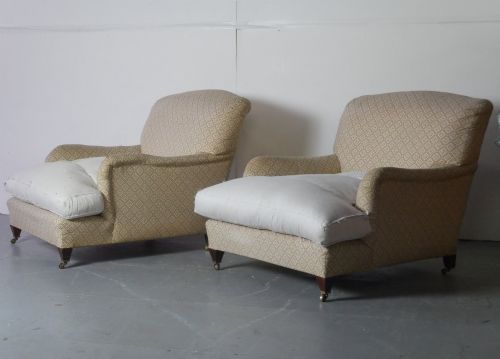
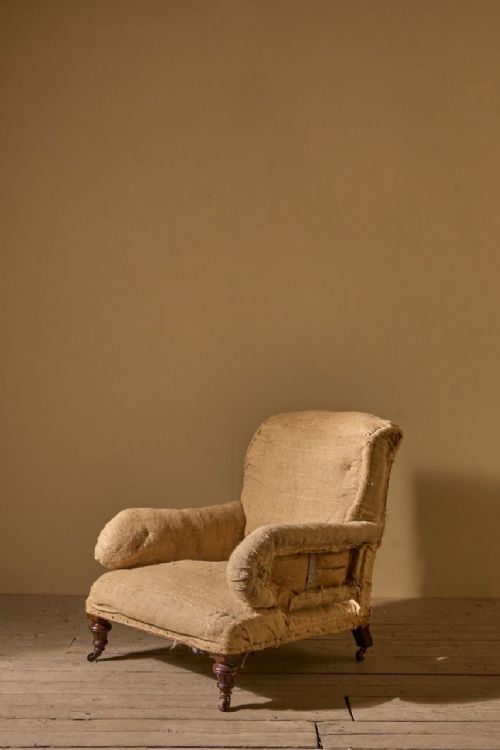
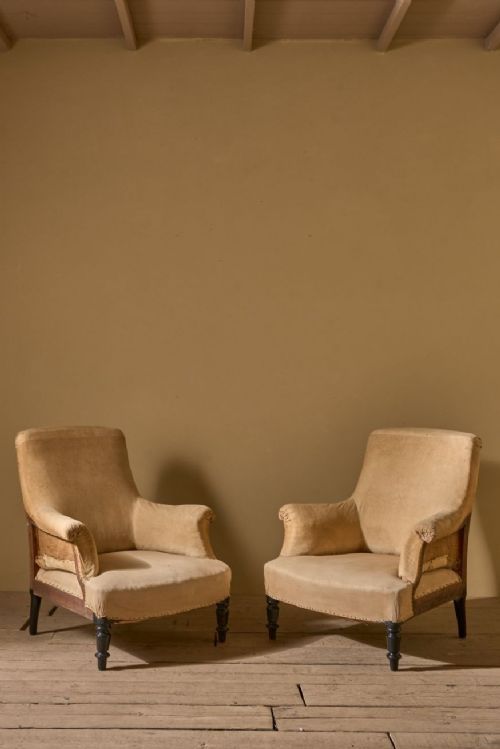
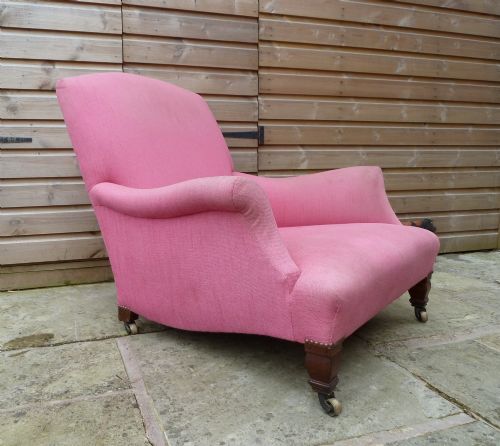

Fireside Club Armchair
A fireside club armchair provides deep comfort by the hearth, drawing on nineteenth and early twentieth century English and French traditions.
Fireside Club Armchair
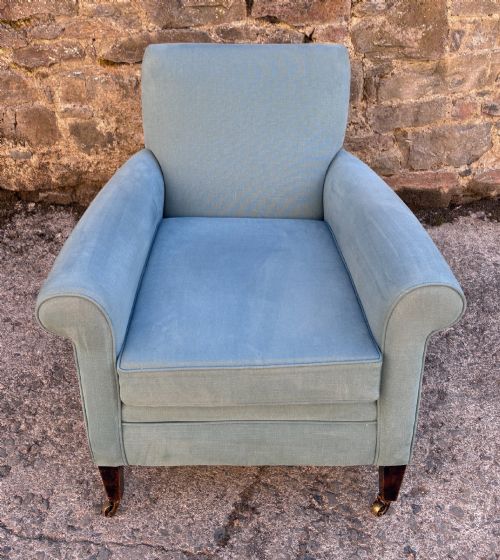
A fireside club armchair brings together low, deep seating and robust proportions designed for long hours of reading or resting near a fireplace. Buyers find substantial forms rooted in nineteenth century and early twentieth century domestic interiors.
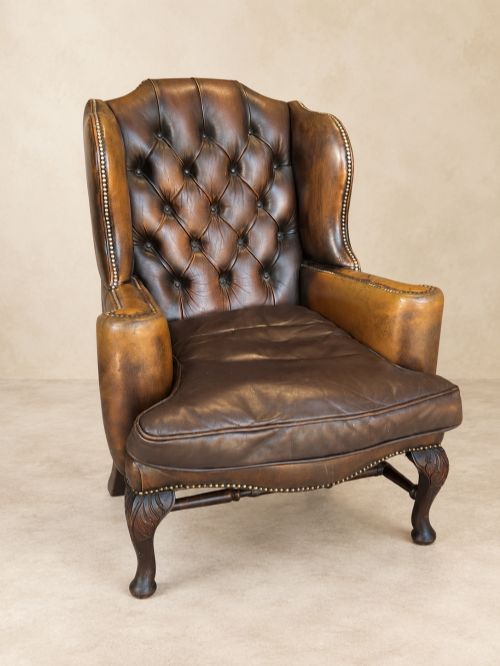
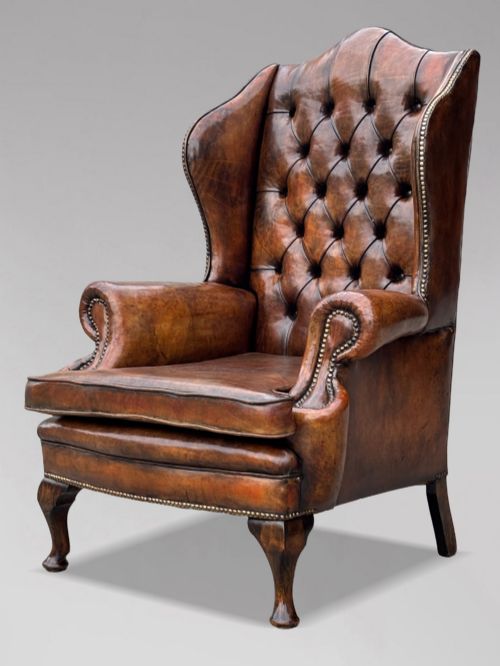
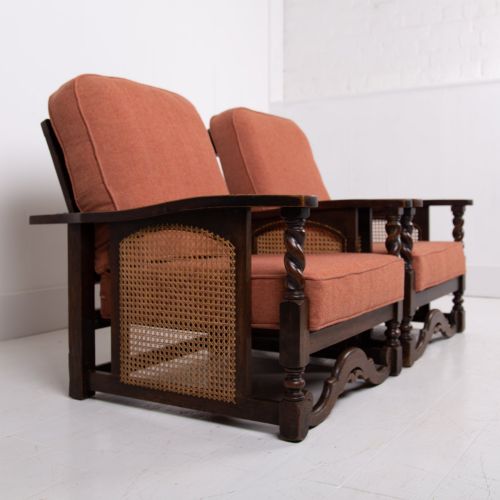
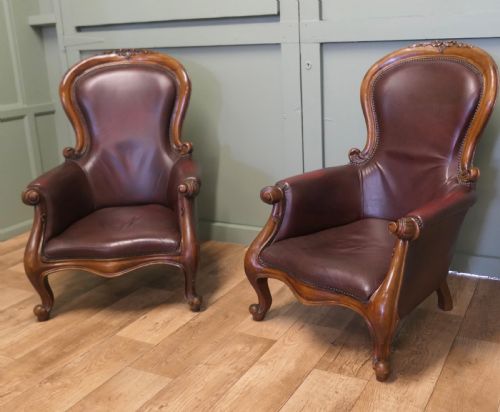
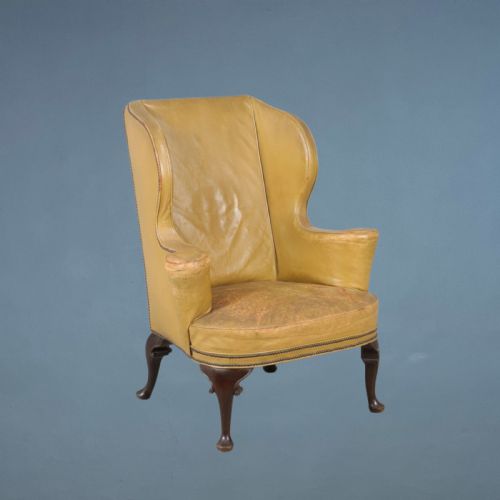
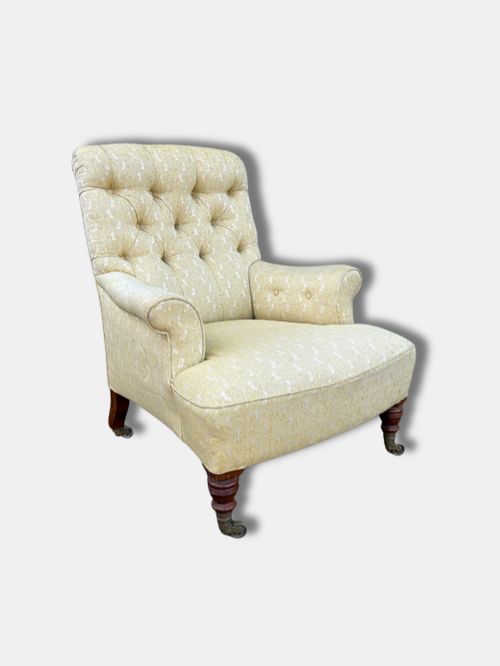
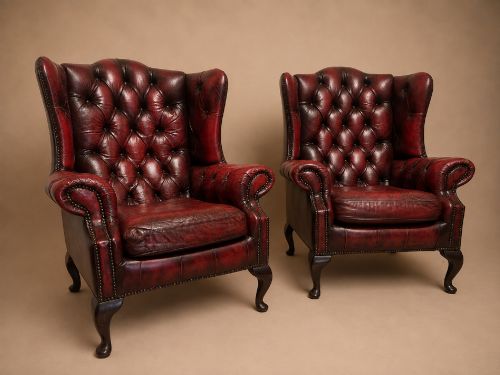
The pieces on this page lean heavily toward leather wing armchairs, Chesterfield styles, and low club chairs originating from Victorian, Edwardian, and 1920s workshops. Examples range from simple country house seating to grand library and spoon back armchairs.
Makers and makers' styles represented across the selection include Howard and Sons, Shoolbred, Mellier and Co, and the Scottish School. Many pieces present generous padding and supportive wings meant to block draughts in period rooms.
How they were made
Framing relies on dense timbers such as mahogany, oak, and rosewood, ensuring structural longevity beneath heavy upholstery. Joinery is traditionally concealed, holding up deep springs and webbed seat foundations.
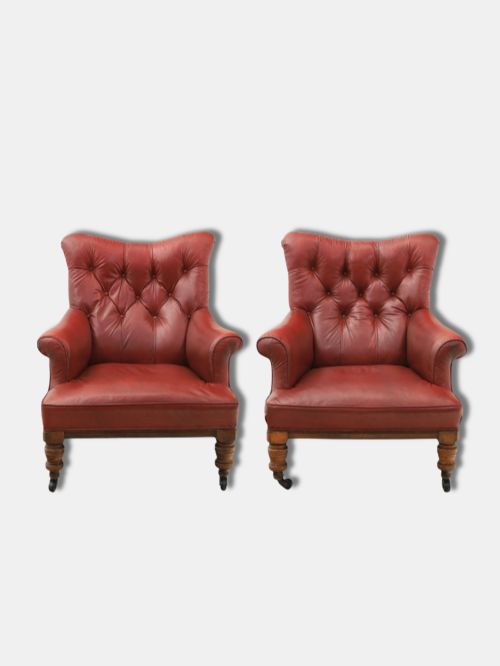
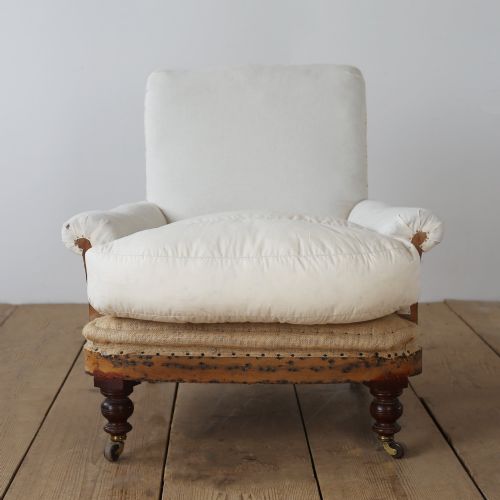
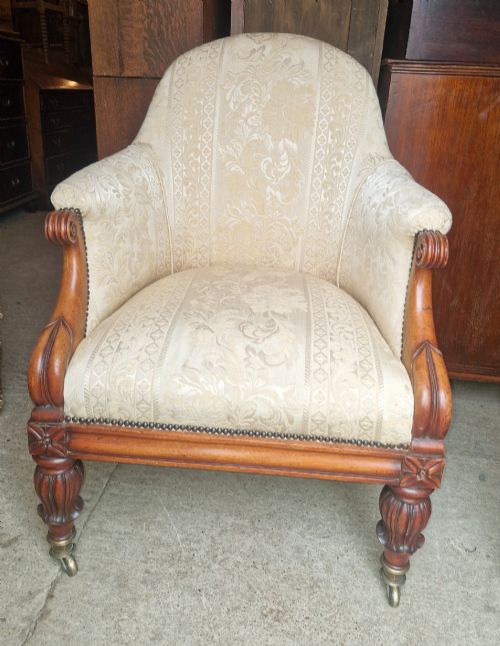
Upholstery materials span traditional tan and oxblood leather, velvet, calico, and fabric such as plaid wool. Brass details frequently appear in castors and nailhead trim securing the outer edges of the hides and textiles.
Listings feature wood and brass alongside leather, velvet, calico, and fabric across Victorian, Edwardian, and 1920s periods.
What varies in quality
The integrity of the internal springing and webbed base dictates the physical comfort and structural resilience of each chair. Original frames retain their balance better when timber joints remain tight without excessive movement.
The quality of the covering material, whether aged leather with natural patination or rich velvet, defines the visual character of the piece. Subtle hand-carving on mahogany or oak framework further separates standard workshop production from finer maker-attributed pieces.
Howard and Sons·SF Cullen·Mellier and Co
The Fireside Club Armchair Glossary
- Wingback
- An armchair featuring protective side panels designed to shield the sitter from draughts. These high wings extend upward from the arms toward the backrest.
- Button back
- An upholstery style where depressions are formed across the backrest by stitching pulled tight and anchored with buttons. This secures the internal stuffing and creates a distinct geometric pattern.
- Library armchair
- A sturdy seating form typically framed in mahogany or oak with upholstered seat and back. Such chairs were built for prolonged reading in private studies and libraries.
- Rexine
- A branded leathercloth material utilised as an artificial upholstery alternative. It offers a leather-like grain and wipeable surface often seen on mid-century and early twentieth century club seating.
- Castor
- A small wheel fitted to the base of furniture legs for ease of movement. Brass versions are common on nineteenth century upholstered library and club chairs.
Fireside Club Armchair: Frequently Asked Questions
What defines a club armchair?
A club armchair is typically characterised by low, deep seating and generous padding designed for relaxation. These chairs often feature heavy leather upholstery and robust wooden frames built for everyday use.
Historically associated with gentlemen's clubs and country houses, the style prioritises comfort and durability above formal ornamentation.
How do I date a leather armchair?
Dating relies on examining the timber frame beneath, the method of upholstery, and the wear patterns on the leather. Victorian and Edwardian examples show distinct turning on wooden legs and specific stitching techniques.
Consulting maker stamps on castors or webbing can also help narrow down the decade of production.
Where should I place a fireside chair?
These armchairs suit living rooms, studies, and reading corners where deep seating creates a comfortable focal point. Their proportions work well beside fireplaces or bookshelves.
Ensuring adequate surrounding space lets the substantial wings and arms sit comfortably within the room layout.
Are these chairs suitable for daily use?
Most of these pieces were constructed with durable timber frames and supportive springs intended for heavy domestic use. Many retain sturdy internal structures capable of handling regular sitting.
Checking the condition of the webbing and padding ensures the chair remains comfortable for modern lounging.