

Brass Castor Club Chair
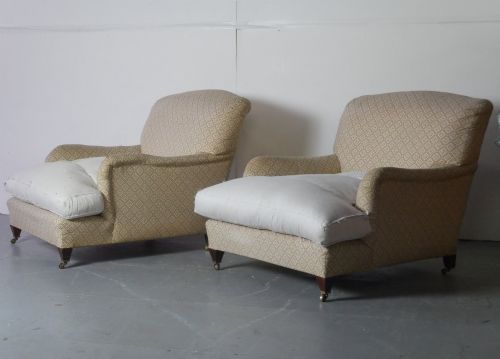
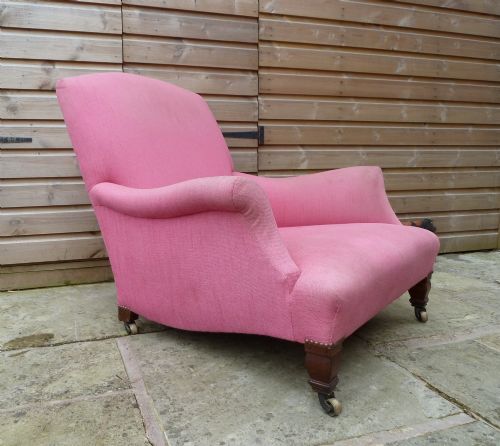
A brass castor club chair offers deep seating and sturdy mobility, anchoring a traditional country house interior with understated authority.
Brass Castor Club Chair
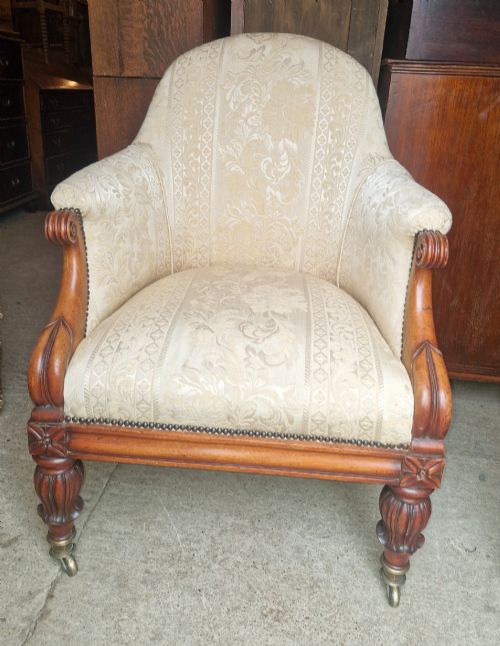
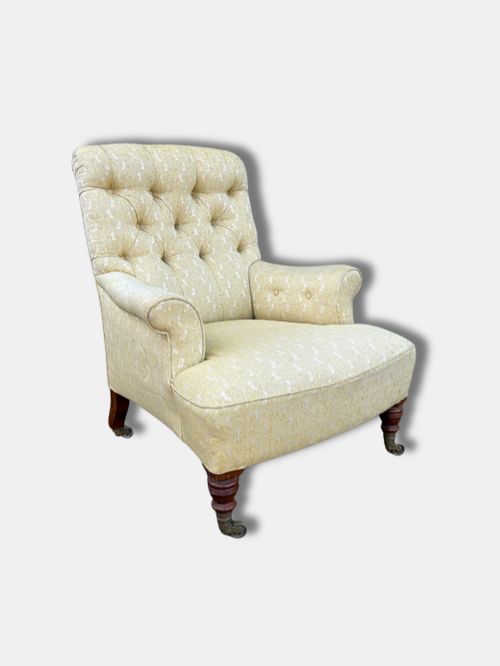
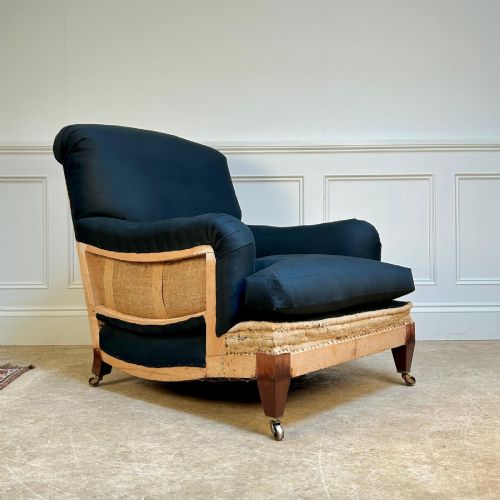
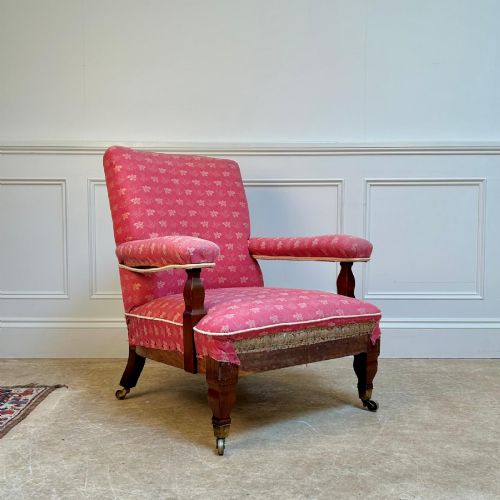
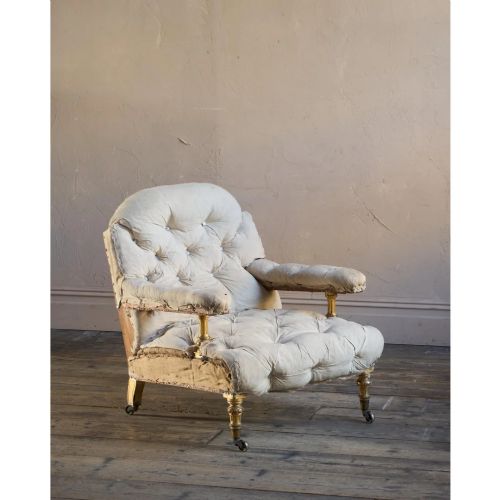
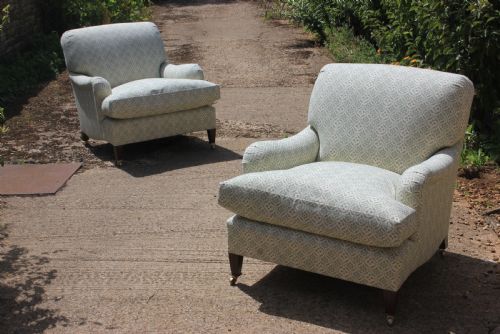
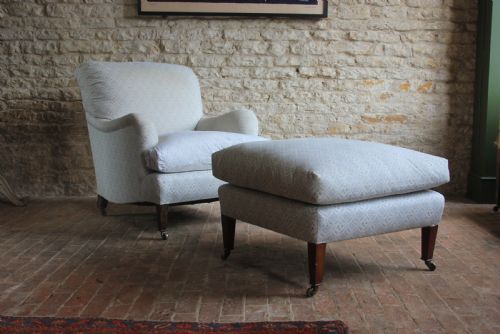
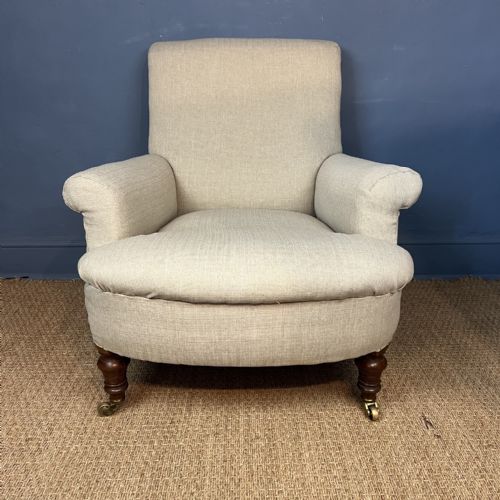
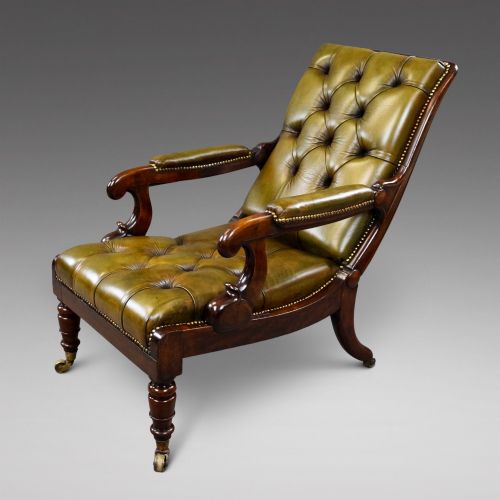
A brass castor club chair brings together low, generous proportions and upholstered comfort designed for long periods of sitting. These armchairs appear in various traditional forms, from nineteenth-century library seats to early twentieth-century country house models.
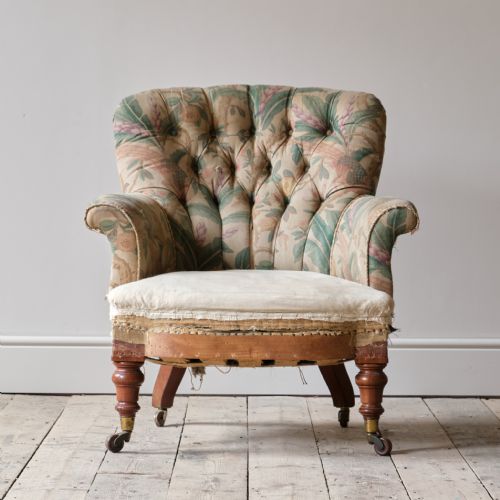
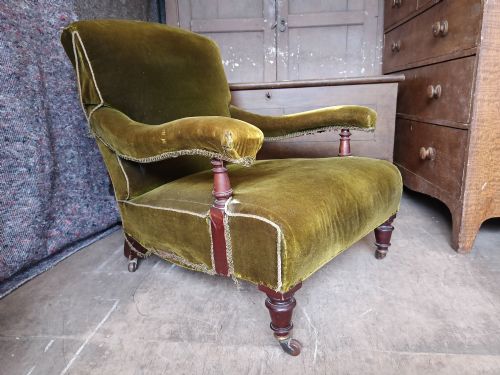
The version most commonly met on this page combines a heavy wooden frame with deep padding and characteristic brass castors attached to the feet. Makers such as Howard and Sons and Whytock and Reid produced notable examples during the Victorian, Edwardian, and nineteen-thirties periods.
Buyers seek these pieces for their supportive frames and relaxed silhouettes, which suit both formal libraries and informal sitting rooms. Styles range from plain mahogany and walnut frames to fully upholstered models covered in ticking, calico, or leather.
Materials and construction
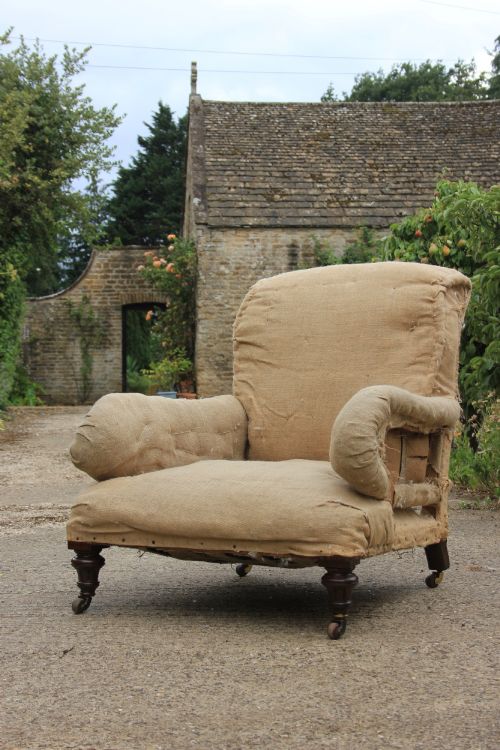
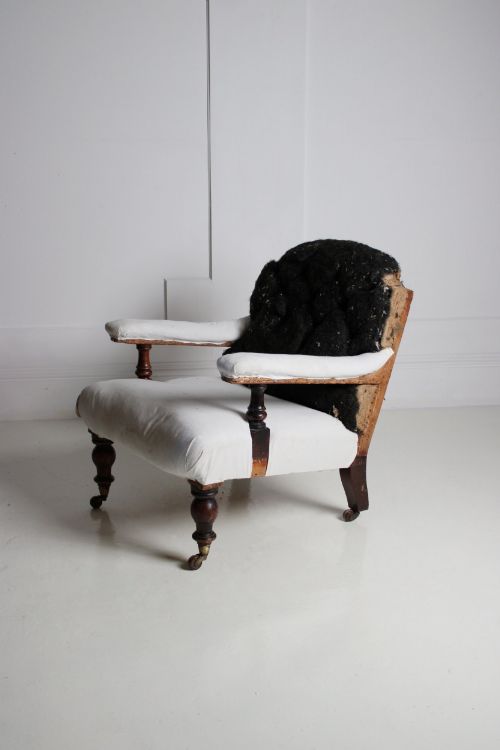
Carpenters built the internal skeletons of these chairs using hardwoods such as mahogany, walnut, and general hardwood frames. These robust structures support heavy sprung interiors designed to retain their shape over decades of daily use.
Upholstery techniques relied on traditional stuffing materials like hessian, calico, and fabric coverings, often finished with ticking or buttoned leather. Turned wooden legs or exposed frames carry metal castor fittings that allow the heavy chairs to move smoothly across carpets and wooden floors.
Listings feature armchairs spanning the nineteenth century, the Victorian and Edwardian eras, Regency periods, and nineteen-thirties traditional designs.
Judging quality
The distinction between standard commercial production and superior workshop output rests in the integrity of the frame and the depth of the upholstery build. Pieces bearing maker stamps or attribution to notable firms demonstrate finer joinery and carefully balanced proportions.
Materials also dictate the tier of a piece, with select walnut or mahogany frames and original brass castor hardware commanding greater interest than later replacements. The handling of the armrests and the spring tension reveal the maker's commitment to comfort and longevity.
Whytock and Reid·Howard and Sons·George Jack For Morris and Co·SF Cullen·Hampton and Sons·Harrods London
The Brass Castor Club Chair Glossary
- Castor
- A small wheel mounted on a swivel assembly attached to the base of a furniture leg. This mechanism allows heavy armchairs to be repositioned easily across a room.
- Library chair
- A heavy upholstered armchair traditionally designed for reading rooms and studies. These chairs often feature mahogany or walnut frames and deep seats.
- Ticking
- A tightly woven cotton or linen fabric traditionally used as an under-upholstery layer or visible outer covering. It is strongly associated with country house style seating.
- Bridgewater style
- An upholstered armchair design characterised by low rolled arms and a deep seat. This form prioritises relaxed comfort over rigid formality.
Brass Castor Club Chair: Frequently Asked Questions
How do I identify a Howard and Sons chair?
Authentic pieces often feature stamped leg timber, specific serial numbers, and distinctive webbed upholstery foundations. The quality of the carpentry and the characteristic shape of the low arms provide further clues.
Many pieces made in the manner of the firm follow these same generous proportions and low profiles without carrying the physical stamp.
What is a country house armchair?
These large, comfortable seats were designed for relaxed family sitting rooms rather than formal reception spaces. They prioritise deep padding and low arms above strict stylistic symmetry.
Upholstery on these chairs typically consists of simple ticking, linen, or faded leather suited to domestic comfort.
Are brass castors original to the chairs?
Original castors are usually made of brass and attached securely to the lower legs of nineteenth and early twentieth-century frames. They show appropriate wear and match the anticipated weight of the armchair.
Replacements are common due to heavy use over the decades, so checking the seating timber around the fixing points is essential.
How do I care for leather club chairs?
Antique leather requires gentle cleaning and regular conditioning to prevent the hide from drying and cracking. Avoiding direct sunlight and strong heat sources preserves the natural patina.
Maintenance involves simple dusting and occasional application of appropriate conservation waxes recommended for historic leather.