





Fireplace Surround Seat
A fireplace surround seat provides a practical fireside bench, combining sturdy metal framework with upholstered leather seating for warmth and comfort.
Fireplace Surround Seat
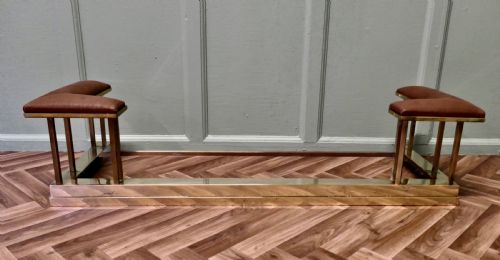
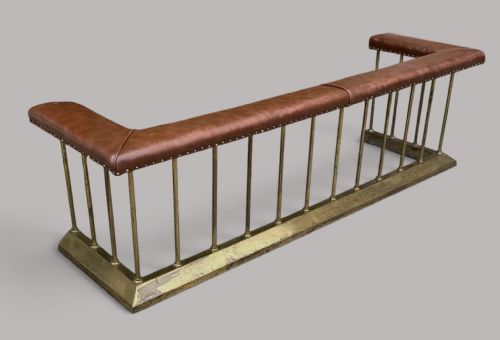
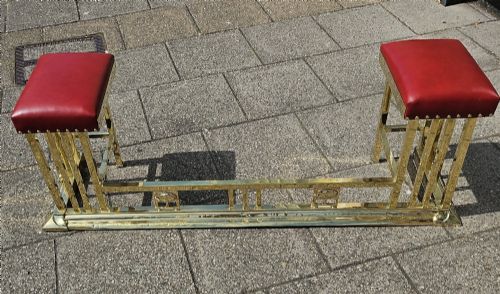
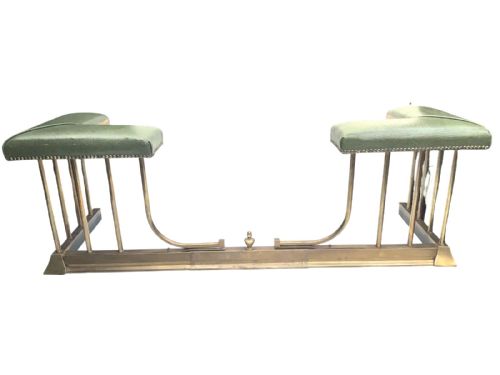
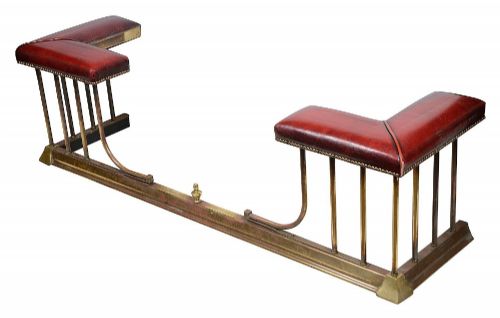
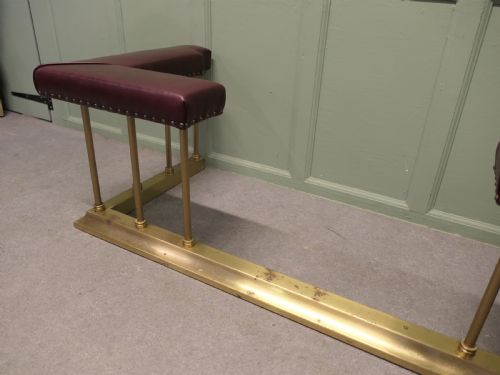
A fireplace surround seat, commonly known as a club fender, frames the hearth while offering low bench seating on either side. These pieces originate across the nineteenth and early twentieth centuries, spanning Victorian, Edwardian, and Art Deco periods.
The most common examples encountered on this page combine polished or patinated brass frames with leather upholstered top rails. Alternative forms utilise steel, iron, oak, and copper, reflecting traditional English country house interiors.
Materials and construction
Metal fabrication forms the backbone of these pieces, employing cast or tubular brass, wrought iron, and steel to build the supportive low-level frames. Metalwork is frequently combined with secondary metals like copper and silvered finishes.
Seating portions utilise dense padding covered in leather, fabric, or mahogany tops, secured directly to the metal structure. Certain pieces incorporate adjustable mechanisms or carved oak details reflecting Arts and Crafts traditions.
Listings span from the 1880s through the 1940s, capturing Victorian, Edwardian, and Art Deco design movements.
Factors determining quality
Substantial weight in the metal framework and depth of the brass or steel gauge separate robust examples from lighter variants. Solid timber components, such as oak, also indicate higher build integrity.
The quality of the upholstery work, particularly traditional leather finishing like Chesterfield tufting, distinguishes finer craftsmanship. Period specific details like hand-hammered ironwork or bespoke corner mounts further elevate the piece.
The Fireplace Surround Seat Glossary
- Club fender
- A low, U-shaped fireside bench featuring upholstered seats flanking the hearth. This form gained popularity in gentlemen's clubs and country houses.
- Chesterfield seat
- A deep-buttoned upholstered cushion style frequently applied to the top rail of brass or steel fenders. It provides cushioned support for sitting close to the fire.
- Wrought iron
- Iron heated and hammered into shape by hand, resulting in textured, durable architectural framework. It appears in traditional and Arts and Crafts examples.
- Arts and Crafts
- A design movement prioritising visible handcraftsmanship, simple forms, and honest materials. Pieces from this tradition often feature carved oak or plain metal construction.
Fireplace Surround Seat: Frequently Asked Questions
What is a fireplace surround seat used for?
These pieces serve as low benches built around the hearth, allowing people to sit close to the fire for warmth. They also act as physical guards protecting the room from stray embers.
Historically, they provided additional seating in reception rooms without obstructing the view of the fireplace. Today, they function as both practical furniture and decorative focal points in period interiors.
How do I date a club fender?
Dating relies on identifying material choices, construction methods, and stylistic cues present in the frame. Victorian examples frequently feature substantial polished brass, while Edwardian and Art Deco pieces introduce sleeker lines or distinct metal alloys.
Secondary materials like wrought iron, oak, and specific leather treatments help narrow the period of manufacture. Examining the fasteners and joinery provides further clues to the age of the metalwork.
Are these seats adjustable in size?
Certain examples include adjustable mechanisms built into the metal framework to alter the overall width. This engineering allowed the fender to fit precise hearth dimensions during installation.
Fixed-size configurations remain more common across the nineteenth-century selections. Buyers should check specific dimensions to ensure proper clearance around their fireplace surround.
What metals are typically found in these pieces?
Polished and patinated brass appears most frequently across the listed periods. Steel and iron provide alternative structural materials, sometimes finished with silvered or copper elements.
These metals are often paired with organic materials like tan or green leather, oak, and fabric for the seating surface. The combination of heavy metal and soft upholstery defines the aesthetic.