



Fire Hearth Rail
A fire hearth rail grounds the open hearth, protecting the room and framing the fire with brass, iron, and steel.
Fire Hearth Rail
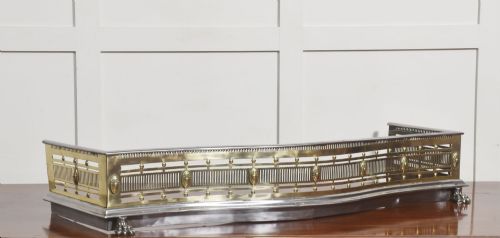
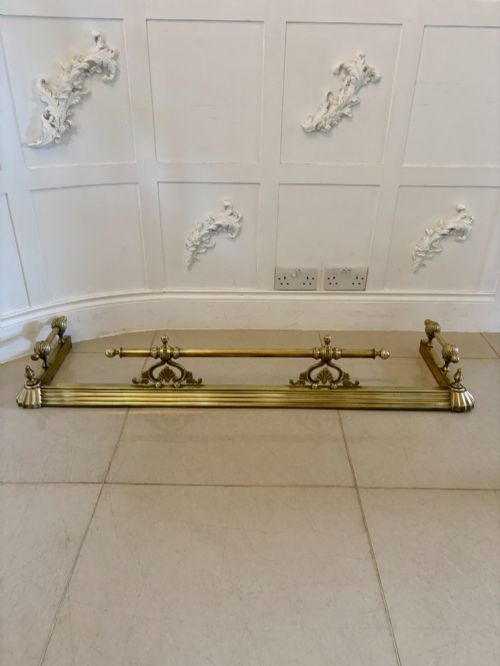
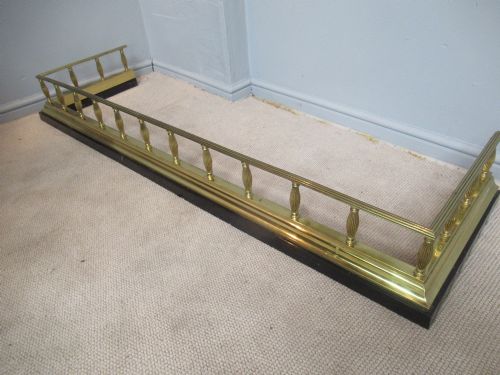
A fire hearth rail frames the fireplace, keeping embers contained and providing a tidy boundary for the hearth. Buyers searching for a fire hearth rail encounter various forms of fireplace fenders, fire guards, and adjustable curbs designed to sit directly on the floor. Victorian and Edwardian examples dominate the selection, alongside pieces from the nineteenth century, Georgian period, and early twentieth century.
How they were made
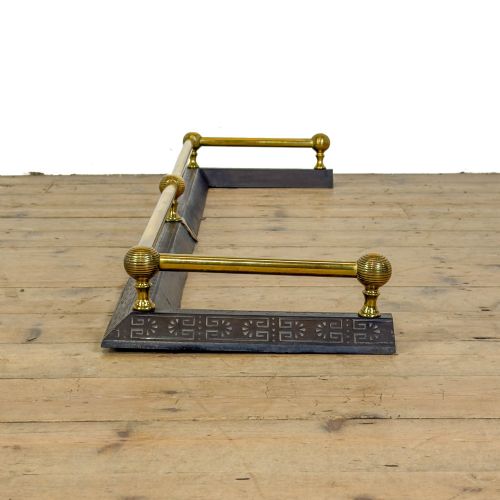
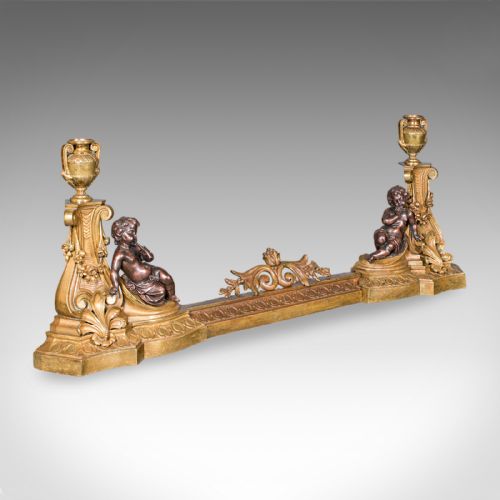
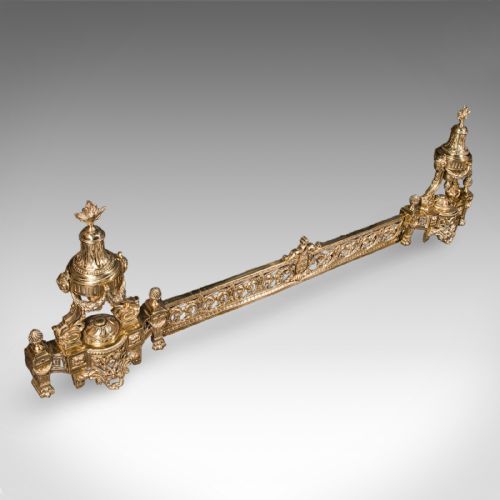
Makers utilised heavy gauge cast iron, brass, and steel to construct robust curbs that could withstand daily proximity to open flames. Pierced metalwork, applied bronze ornaments, and applied brass mouldings required skilled foundry casting and hand-finishing.
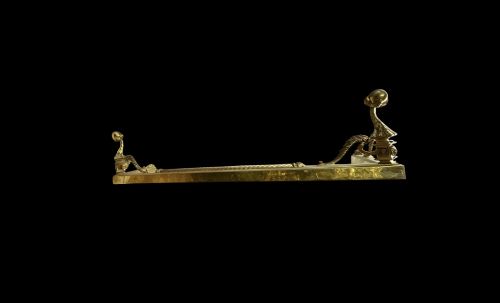
Extending mechanisms relied on sliding internal bars of iron or steel, allowing the outer brass or bronze housing to expand smoothly. Gilded brass and gilt bronze treatments involved applying fine metal leaf or chemical gilding to base metals for a polished finish.
Listings feature Victorian, Edwardian, and Georgian periods, spanning brass, iron, steel, and bronze materials.
What varies in quality
The weight of the metal distinguishes standard production runs from heavier, exhibition-standard pieces. Solid cast brass and thick gauge iron demand greater material cost and offer superior structural rigidity compared to thin sheet metal.
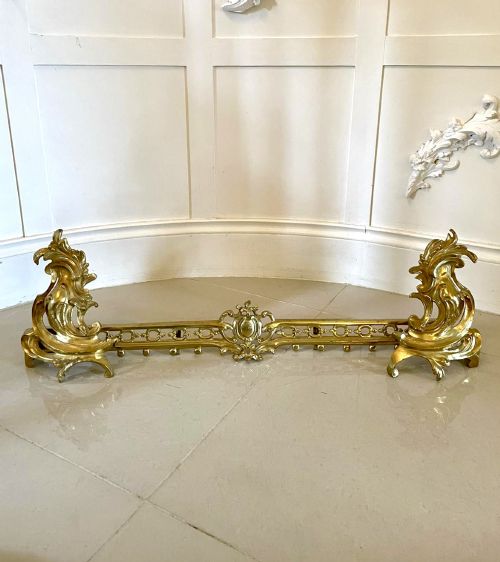
The crispness of the casting and the finesse of the hand-finishing dictate visual merit. Ornate Rococo scrolls, neoclassical motifs, and pierced patterns display sharper detail on superior examples, while simpler pieces rely on plain rails and standard joints.
The Fire Hearth Rail Glossary
- Fender
- A low metal barrier placed around a hearth to contain ash and burning embers. It frames the fireplace opening.
- Curb
- An alternative term for a hearth fender, often denoting a heavy metal frame fixed or resting upon the floor. It creates a formal boundary for the hearth.
- Fire guard
- A protective barrier placed in front of an open fire to catch sparks. Some versions include an integrated top rail for drying textiles.
- Gilt bronze
- Bronze treated with a gold or gold-coloured finish to enhance decorative appeal. It appears frequently in French-influenced nineteenth-century designs.
- Pierced
- Metalwork perforated with decorative patterns or slots. This technique lightened the visual weight of heavy iron and brass fenders.
Fire Hearth Rail: Frequently Asked Questions
How do I measure for a fire hearth rail?
Measure the width and depth of your hearth stone to ensure the fender sits securely within the perimeter. Account for extending mechanisms if you require a precise fit between existing fireplace masonry.
Check the internal and external dimensions listed, as adjustable models offer flexibility across varying hearth sizes.
Were these rails used for drying clothes?
Certain specialised nursery fenders and designs feature integrated rails specifically intended for airing small garments. Most standard hearth rails primarily function as protective safety barriers.
Heavier rails provide a stable physical boundary rather than a dedicated laundry rack.
What metal combinations are common?
Victorian and Edwardian pieces frequently combine a polished brass top rail with a black finish iron or steel base. This dual-metal construction offered both decorative warmth and structural strength.
Bronze and gilt brass also appear, particularly on pieces influenced by French styling.
How do I clean brass and iron fenders?
Dust regularly with a dry cloth to prevent soot buildup on the metal surfaces. Avoid harsh abrasives that can strip historical patina or damage gilt finishes.
Cast iron components benefit from light oiling to maintain a dark, stable finish.
Are these fenders adjustable?
Many nineteenth and twentieth-century examples incorporate sliding sections that allow the overall length to expand. This adjustability accommodated different fireplace widths in period homes.
Fixed-length curbs also exist, requiring precise measurement before placement.