



Fine Persian Isfahan
Fine Persian Isfahan carpets and rugs are masterworks of central Persia, prized for intricate medallion designs and exceptionally fine weaves that anchor a room with enduring elegance.
Fine Persian Isfahan
When you search for fine Persian Isfahan, you are looking at woven floor coverings originating from central Persia during the early twentieth century. These pieces encompass both smaller rugs and larger carpets, spanning the decades from nineteen hundred to nineteen thirty.
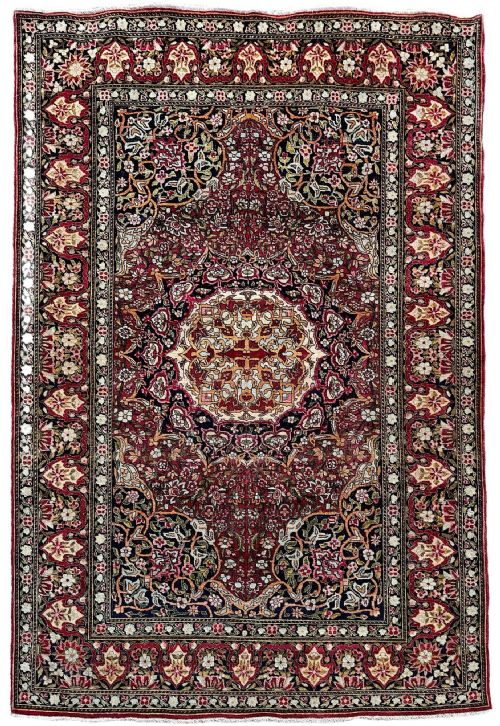
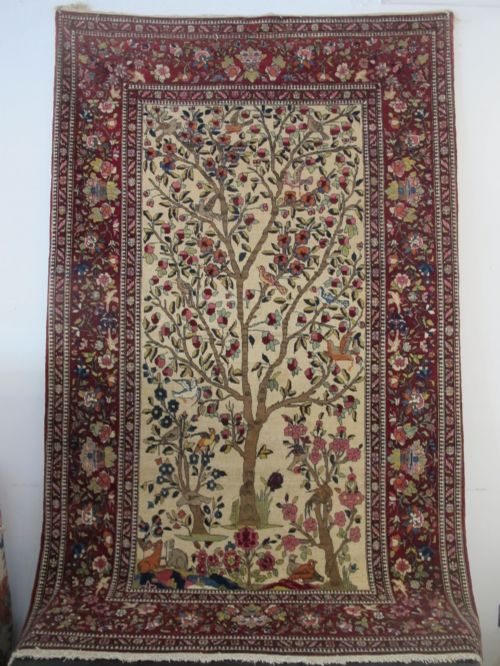
The versions you are most likely to encounter on this page feature classic medallion designs and traditional Persian motifs. Central Persian workshops produced these textiles with a distinct focus on pictorial detail and refined composition.
How they were made
Weavers constructed these carpets using wool, lambswool, and cotton, often employing a silk foundation to achieve a very fine weave. This combination of materials allowed for intricate knotting and structural durability.
The interplay between a silk foundation and soft lambswool surface creates the characteristic drape and crisp definition seen in these central Persian pieces.
Fine Persian Isfahan Retail Price Guide 2026
Typical asking prices for fine persian isfahan among the pieces listed under this phrase on Sellingantiques today, from the lower quarter to the upper quarter. They describe what is for sale here now, not the wider market.
Listings span four decades from nineteen hundred to nineteen thirty, showing wool, cotton, silk, and lambswool across rugs and large carpets.
What varies in quality
The density of the weave dictates the sharpness of the pattern, separating standard execution from exceptional craftsmanship. Tightly knotted examples display crisper floral and medallion contours.
Material selection also defines the tier of a piece, particularly where silk foundations and fine lambswool are utilised to enhance handle and visual depth.
Ahmadi
The Fine Persian Isfahan Glossary
- Medallion
- A central ornamental motif set into the middle of the carpet field. This design element defines the symmetrical layout of traditional Isfahan rugs.
- Foundation
- The underlying structure of warp and weft threads that supports the pile. In finer pieces, this foundation consists of silk.
- Pictorial
- A style of rug featuring figurative representations of people, animals, or historical scenes rather than purely geometric or floral patterns.
- Pile
- The upright yarn loops that form the usable surface of the carpet. Lambswool and standard wool provide this soft, tactile layer.
Fine Persian Isfahan: Frequently Asked Questions
How were these rugs used?
These rugs served primarily as decorative floor coverings in formal rooms and reception spaces. Their intricate designs were meant to be admired as central visual elements of an interior.
Larger carpets anchored expansive drawing rooms, while smaller formats suited intimate studies and sitting areas.
How do I care for one?
Living with these textiles requires gentle maintenance, including regular low-suction vacuuming without a rotating brush head. Professional cleaning by specialists in antique oriental rugs is essential to preserve the wool and silk fibres.
Keeping them out of direct sunlight prevents the natural dyes from fading over time.
How do I tell periods apart?
Differentiating pieces relies on structural evidence and stylistic nuances recorded across the early twentieth century. Earlier examples from nineteen hundred often display classic medallion formats, while later pieces from nineteen twenty and nineteen thirty introduce varied scales and pictorial elements.
Examining the weave density and foundation materials also provides clues to the specific decade of production.