





Fine Art River Landscape
Fine art river landscape paintings capture waterways and rural banks, bringing historic outdoor scenery indoors through painted canvas and paper.
Fine Art River Landscape
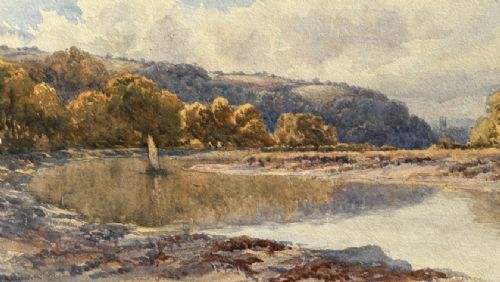
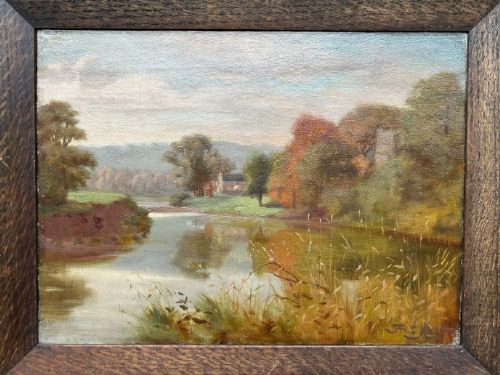
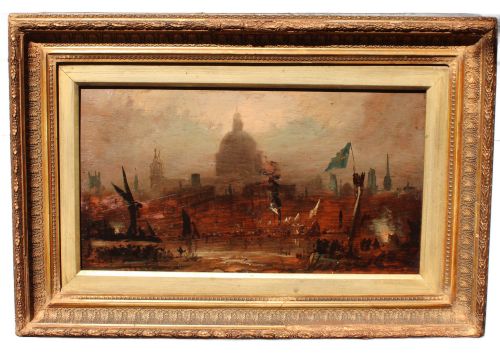
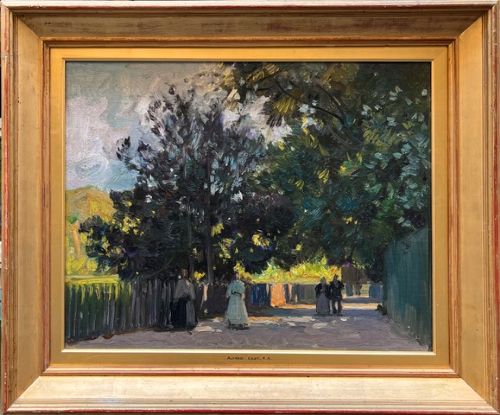
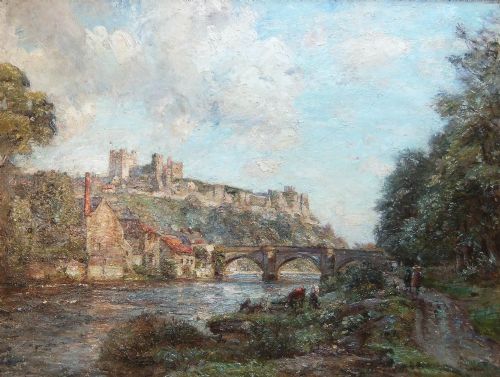
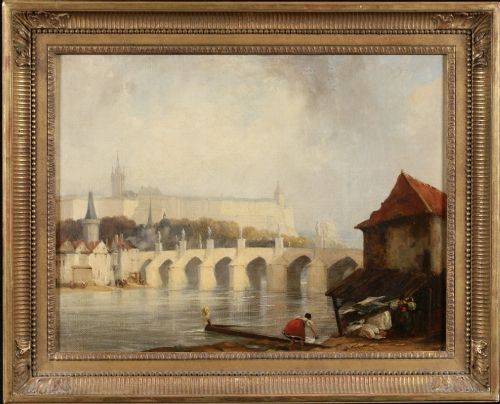
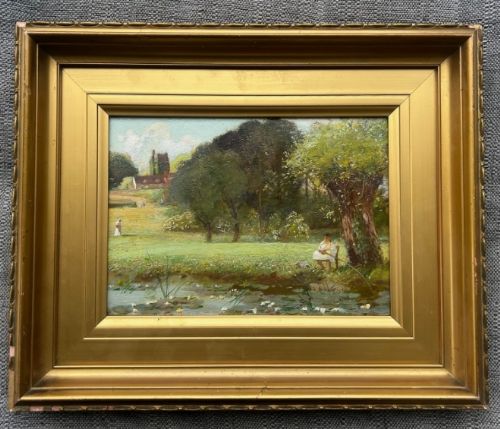
A fine art river landscape depicts natural waterways, rural banks and estuarine views created by artists from the nineteenth century into the early twentieth century. These works range from intimate British watercolour studies of local rivers to large continental oil paintings featuring distant castles and bustling bridges.
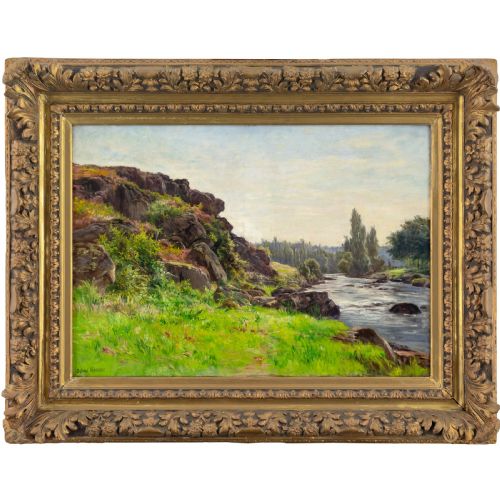
Buyers encounter oil paintings on canvas or wood panel alongside watercolour paintings on paper, often preserved in original giltwood frames. The selection spans distinct movements including British Impressionism, the Barbizon School and Victorian Naturalism.
Scenes vary from Welsh mountain streams and Yorkshire rivers to continental waterways such as the Seine and the Danube. Figures such as fishermen, cattle watering or boats frequently animate the water's edge.
Materials and Techniques
Artists built these river landscapes using oil paint on stretched canvas or wooden panels, applying pigment to capture the shifting reflections and light upon the water. Watercolour on paper offered a lighter medium for detailed topographical studies and atmospheric river views.
Prepared grounds and gesso provided stable surfaces for the brushwork, while heavy giltwood frames completed the presentation of the finished paintings. Canvases were occasionally laid onto board in later conservation to ensure the structural survival of the work.
Listings feature works from the seventeenth century through to the mid-twentieth century, executed in oil and watercolour.
Markers of Quality
Quality rests in the handling of light, atmosphere and fluid brushwork rather than the mere recording of scenery. Works by recognised painters demonstrate a confident grasp of perspective, depth and water surface reflection.
The condition of the original paint layer and the presence of a period gilt frame influence the overall integrity of the piece. Greater artistic ambition shows in the balance between the natural landscape and human or animal elements.
Frederick Marriott·Gabriel Mathieu·Sir Alfred East·Herbert Royle·Paul Désiré Trouillebert·Cornelius Pearson·Alexandre Le Bihan·Sir David Murray·Arthur Herbert Rigg·Carl Johan Fahlcrantz·Owen Bowen·George Vicat Cole·Thomas Spinks·George Hilditch·Sidney Richard Percy·William Grant Murray·Robert Winchester Fraser·Alfred Grey·Benjamin Williams Leader·William Pitt·Florence Hess·Walter Follen Bishop·Tom Seymour·Thomas Baker·Phyllis Morgans
The Fine Art River Landscape Glossary
- Oil on Canvas
- Pigment bound in drying oil applied to a woven fabric support stretched across a wooden frame. This primary medium allows for rich colour blending and textured brushwork.
- Giltwood
- Wood carved and coated with a thin layer of gold leaf or metallic gilt paint. It is commonly found on the traditional frames housing nineteenth-century paintings.
- Barbizon School
- A nineteenth-century French movement focused on plein-air painting and realist landscape depictions. Artists in this circle prioritized direct observation of nature.
- Gesso
- A paint mixture consisting of a neutral binder mixed with chalk, gypsum, or pigment. It serves as a preparatory layer for wooden panels and frames before gilding or painting.
- Watercolour
- A paint consisting of water-soluble pigments used on paper supports. It produces translucent washes well-suited to capturing atmospheric river light.
Fine Art River Landscape: Frequently Asked Questions
What subjects appear in fine art river landscapes?
These paintings depict winding rivers, coastal estuaries, rural bridges and industrial waterways set across Britain and continental Europe. Common elements include figures fishing from the banks, cattle watering in the shallows and boats navigating the current.
Artists frequently set these scenes during specific times of day, such as early morning strolls or autumn dusks, emphasising natural light upon the water.
How do I date a nineteenth-century river landscape?
Dating relies upon artist lifespan records, clothing styles of figures within the composition, and the construction methods of the canvas or frame. Inscriptions on the reverse of the stretcher or panel often record the specific location and year of creation.
Stylistic shifts also provide clues, moving from Romantic topographical precision towards the looser brushwork of late Victorian and Impressionist movements.
How should I care for an antique oil painting?
Antique oil paintings require stable indoor humidity away from direct sunlight and heat sources to prevent canvas slackening and paint cracking. Dust should be removed gently from the surface and frame using a soft, dry brush without applying moisture.
Professional cleaning should be left to conservators to preserve the original varnish layers and delicate glazes applied by the artist.