

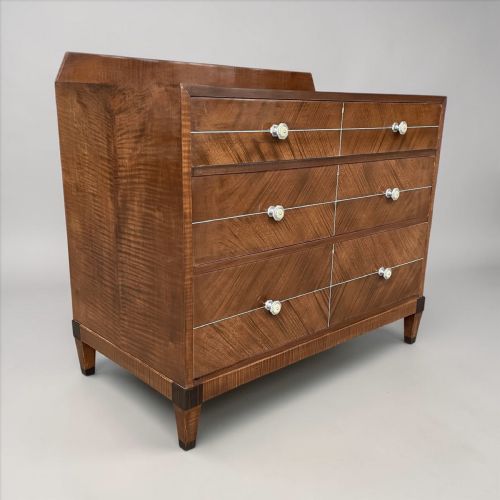
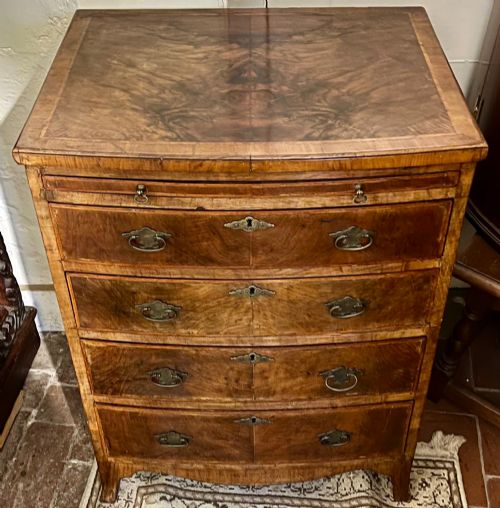
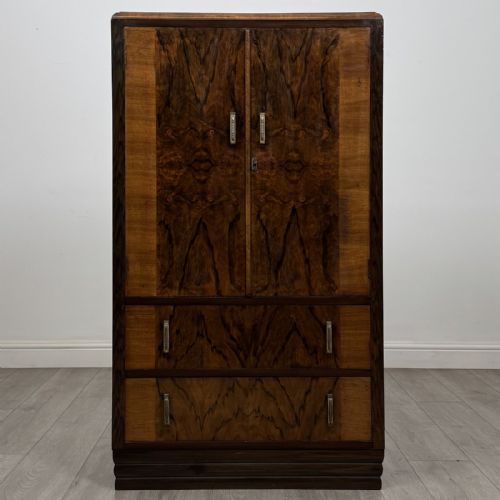
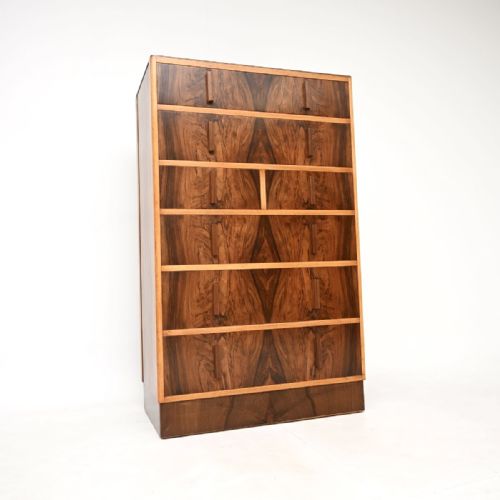

Figured Walnut Bedroom Chest
A figured walnut bedroom chest brings rich, undulating timber grain and understated proportion into a sleeping space.
Figured Walnut Bedroom Chest
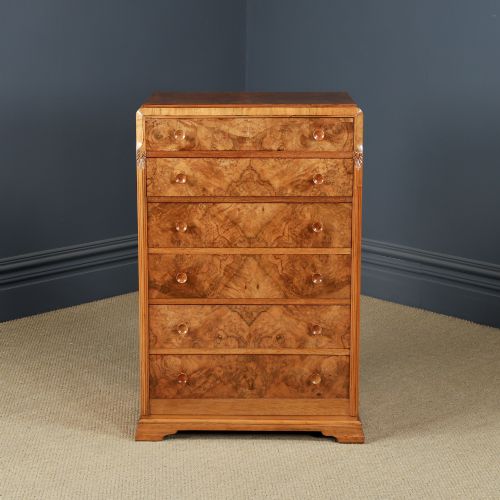
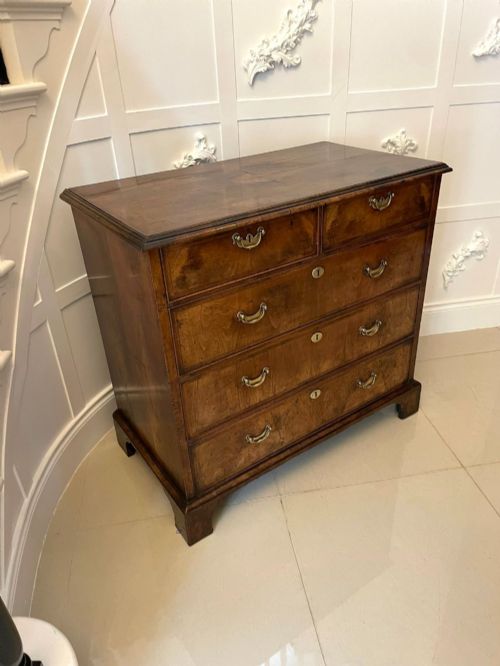
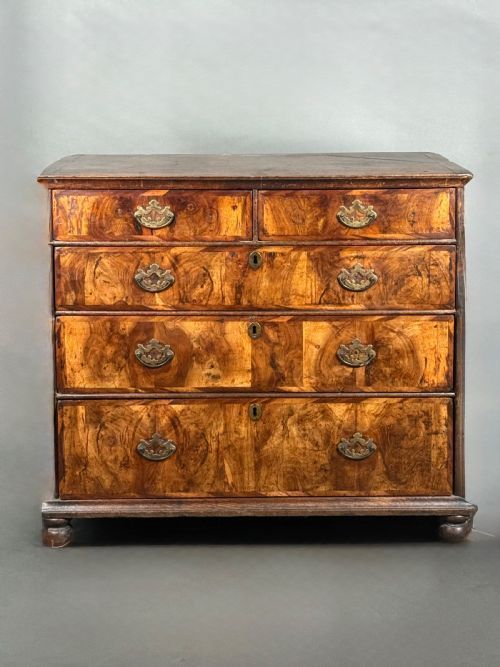
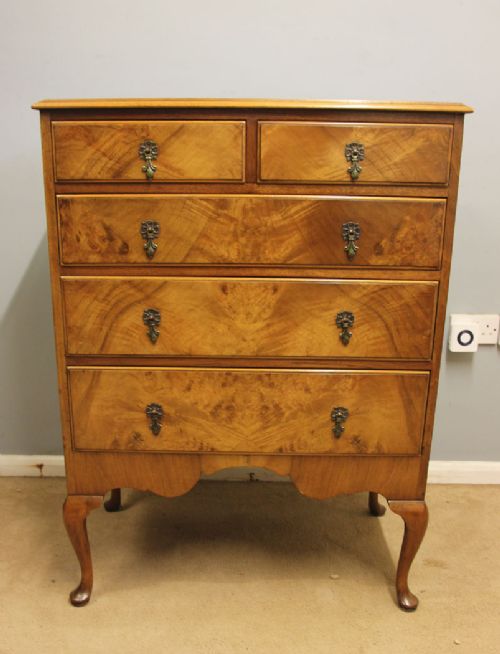
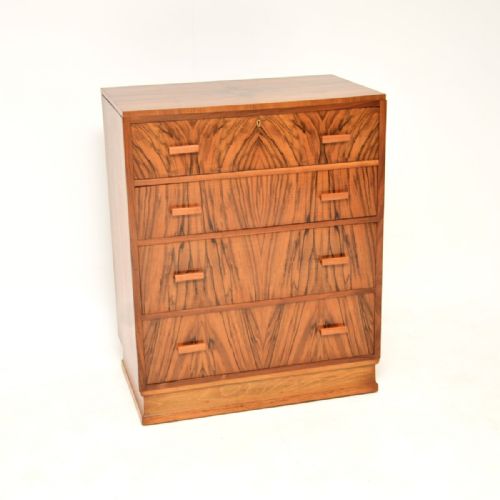
A figured walnut bedroom chest is a storage form defined by its decorative grain patterns, appearing across centuries of cabinet making. When you explore a figured walnut bedroom chest, you encounter everything from early eighteenth century examples to 1930s Art Deco pieces.
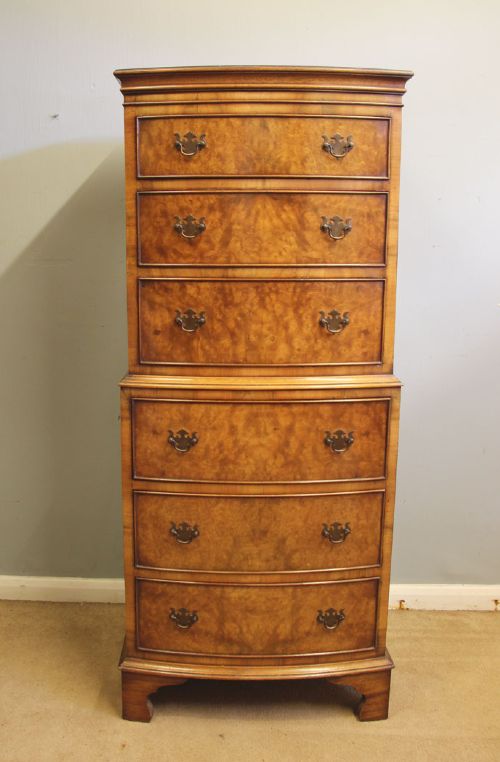
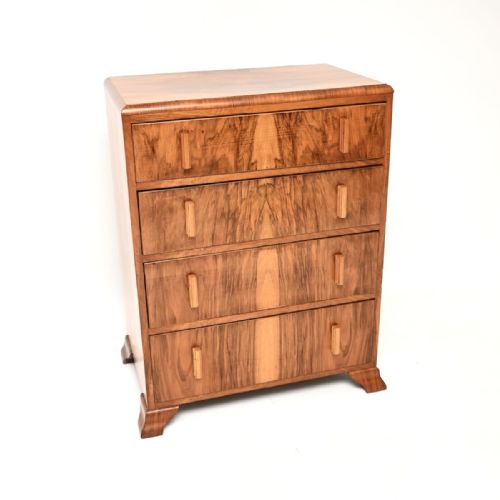
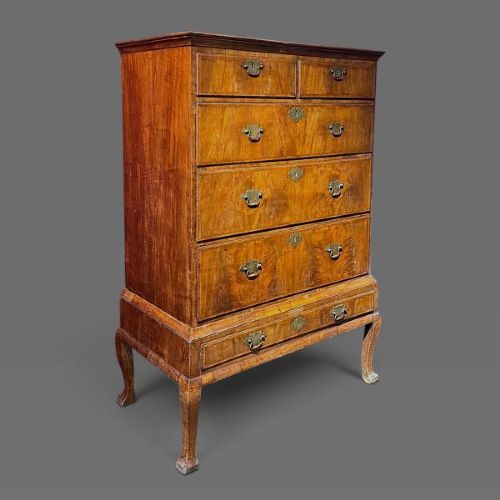
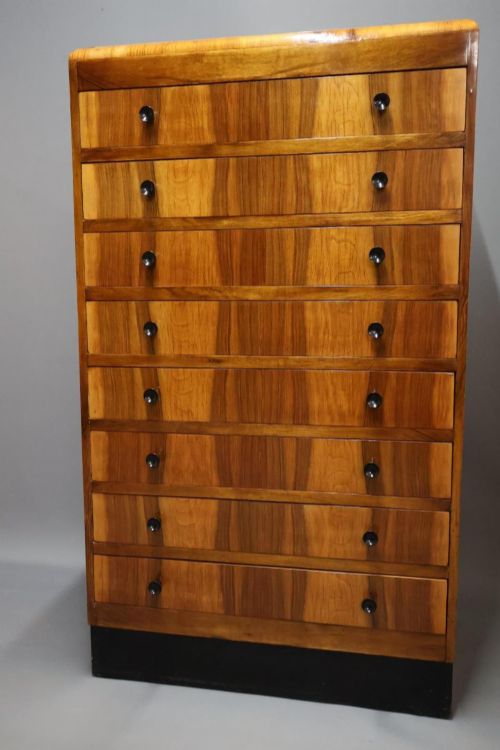
The selection ranges widely in form and proportion. Alongside standard chests of drawers, the evidence includes tallboys, chests on stands, dressing tables, and compact bow front designs.
Origins stretch from early Georgian periods through Edwardian revivals up to mid twentieth century modernism. Pieces span foundational eras including Queen Anne, George I, and later stylistic revivals.
How they were made
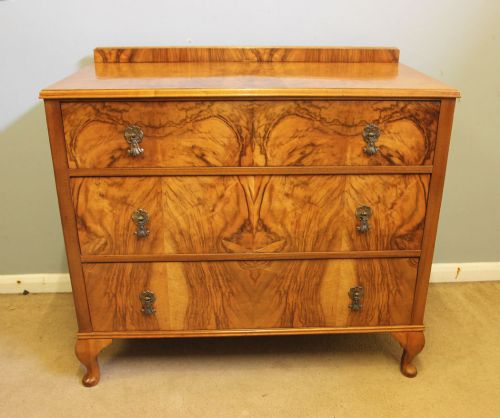
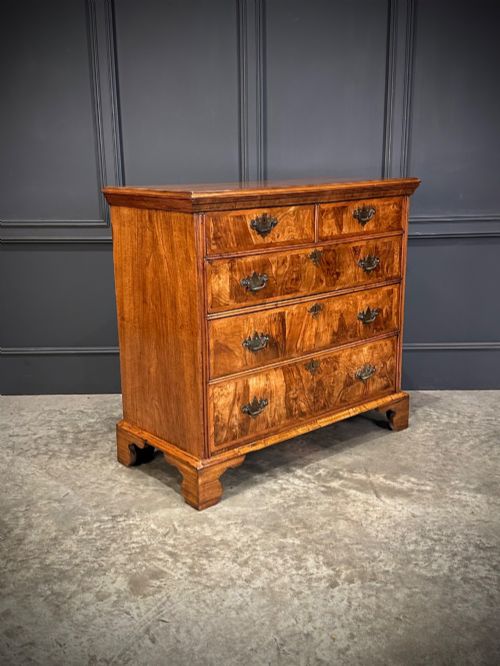
Cabinet makers utilised walnut veneer and burr walnut alongside solid timber to display dramatic grain swirls across the primary surfaces. Carcasses often incorporate secondary woods such as oak, providing structural stability behind the decorative facades.
Finishing touches include cast brass handles, escutcheons, and occasionally glass or bakelite details on later twentieth century iterations. Construction methods adapt from early dovetailed drawer boxes to sophisticated pedestal and tallboy framing.
Figured Walnut Bedroom Chest Retail Price Guide 2026
Typical asking prices for figured walnut bedroom chest among the pieces listed under this phrase on Sellingantiques today, from the lower quarter to the upper quarter. They describe what is for sale here now, not the wider market.
Listings span from 1700 through the 18th Century, Georgian, 1890, Edwardian, 1910, 1930, to 1940.
What varies in quality
Quality rests primarily on the selection and matching of the timber veneers across the drawer fronts. Finer examples display symmetrical grain patterns that flow seamlessly from top to bottom.
Proportion and secondary wood choice also divide the standard of execution. Pieces retaining original brass hardware and stable, unwarped carcases demonstrate superior historical integrity.
Heal's·Gillows of Lancaster
The Figured Walnut Bedroom Chest Glossary
- Figured walnut
- Timber sourced from walnut trees exhibiting exceptional grain variations, such as curls or waves, chosen for decorative surfaces. This timber forms the visual centrepiece of the furniture.
- Tallboy
- A tall chest of drawers, often comprising a smaller chest stacked atop a larger base. These vertical storage pieces maximise floor space while offering substantial drawer capacity.
- Chest on chest
- A two part storage unit where a smaller upper chest sits directly upon a larger lower chest. This form allows for impressive height and displays large expanses of matched veneer.
- Bow front
- A furniture front that curves outward in the centre, softening rectilinear room layouts. This shaping demands precise woodworking to ensure drawers operate smoothly within a curved frame.
- Wellington chest
- A tall, slender chest of drawers secured by a single hinged locking stile on one side. Originating in the nineteenth century, it provides secure storage with numerous shallow drawers.
Figured Walnut Bedroom Chest: Frequently Asked Questions
What is a figured walnut bedroom chest?
A figured walnut bedroom chest is a drawer-based storage unit fronted in decorative, highly patterned walnut timber. These pieces range from early eighteenth century Georgian forms to streamlined 1930s Art Deco designs.
They serve as focal storage furniture in bedrooms, combining practical drawer capacity with rich visual texture.
How do I date an antique walnut chest?
Dating relies on examining the construction methods, hardware, and stylistic details of the piece. Eighteenth century examples often feature feather banding and oak linings, while 1930s pieces show Art Deco influences and newer veneers.
Hardware placement and drawer dovetailing also shift noticeably across the decades between early Georgian production and twentieth century revivals.
Where should I place a tallboy?
A tallboy suits corners or wall spaces where floor area is limited but vertical height is available. Its elevated design provides substantial drawer storage without dominating the room's footprint.
Ensure placement allows adequate clearance for opening drawers or side-locking stiles if the piece incorporates them.
How do I care for walnut veneer surfaces?
Walnut veneer requires protection from direct sunlight and excessive humidity to prevent fading and lifting. Regular dusting with a soft, dry cloth preserves the polished finish.
Avoid harsh chemical cleaners, utilising traditional wax polishes sparingly to maintain the timber's natural lustre.